
STR Regulations

Key Takeaways
- STR regulations differ sharply between cities, counties, and states — there is no single national standard
- Core components include permits, taxes, zoning, safety codes, and operational rules
- The trend is toward stricter oversight; AirROI data shows New York's active listings fell ~60% after Local Law 18 enforcement
- Regulation reshapes supply and minimum stays — heavily regulated markets push median minimum nights to 25.8, versus 2.1 in light-touch markets
- Non-compliance can mean fines, permit revocation, and forced delisting; HOA restrictions add a private layer on top of public law
Components of STR Regulations
| Component | What It Covers | Key Terms |
|---|---|---|
| Permitting | Authorization to operate | STR permit, CUP, business license |
| Taxation | Revenue collection from stays | TOT, lodging tax, tourism fees |
| Land use | Where STRs can operate | Zoning, overlay districts, density caps |
| Residency | Who can operate STRs | Primary residence, owner-occupied |
| Operational limits | How STRs can operate | Occupancy limits, night caps, noise rules |
| Safety | Guest and property safety | Fire codes, inspections, emergency plans |
| Enforcement | Compliance monitoring | Fines, permit revocation, platform coordination |
How Regulation Reshapes a Market
Regulation is not abstract — it shows up directly in the data. New York City's Local Law 18, enforced in September 2023, requires hosts to register and bars platforms from displaying unregistered listings. AirROI's listing counts capture the result: total active listings fell roughly 60%, from 26,775 just before enforcement to about 10,500 by early 2026.
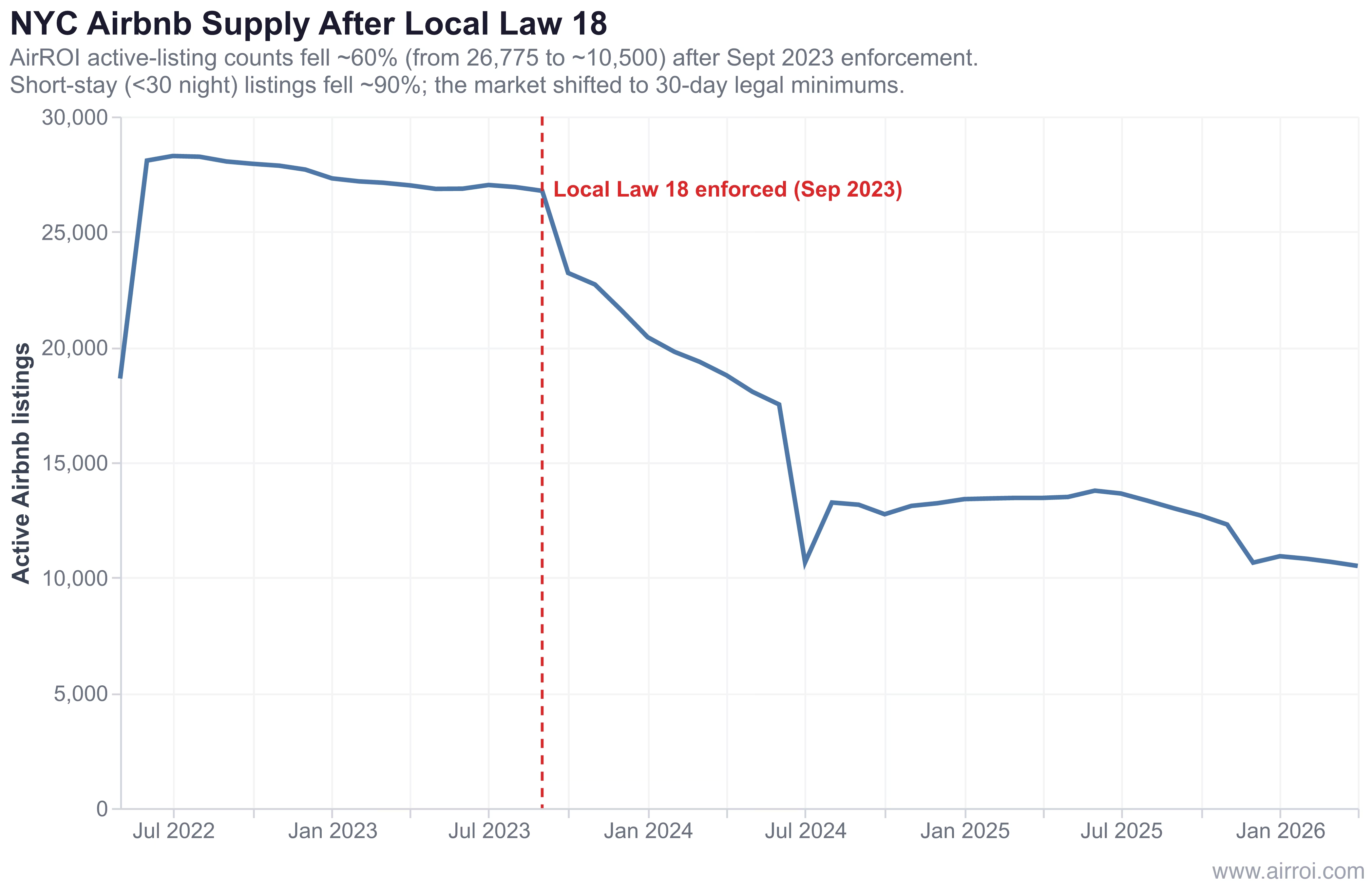
Regulation rarely "bans" a market outright. More often it reshapes it — converting a nightly-rental city into a long-stay one, as New York's minimum-stay data makes clear.
That conversion shows up cleanly when you compare median minimum-night requirements across markets at opposite ends of the regulatory spectrum.
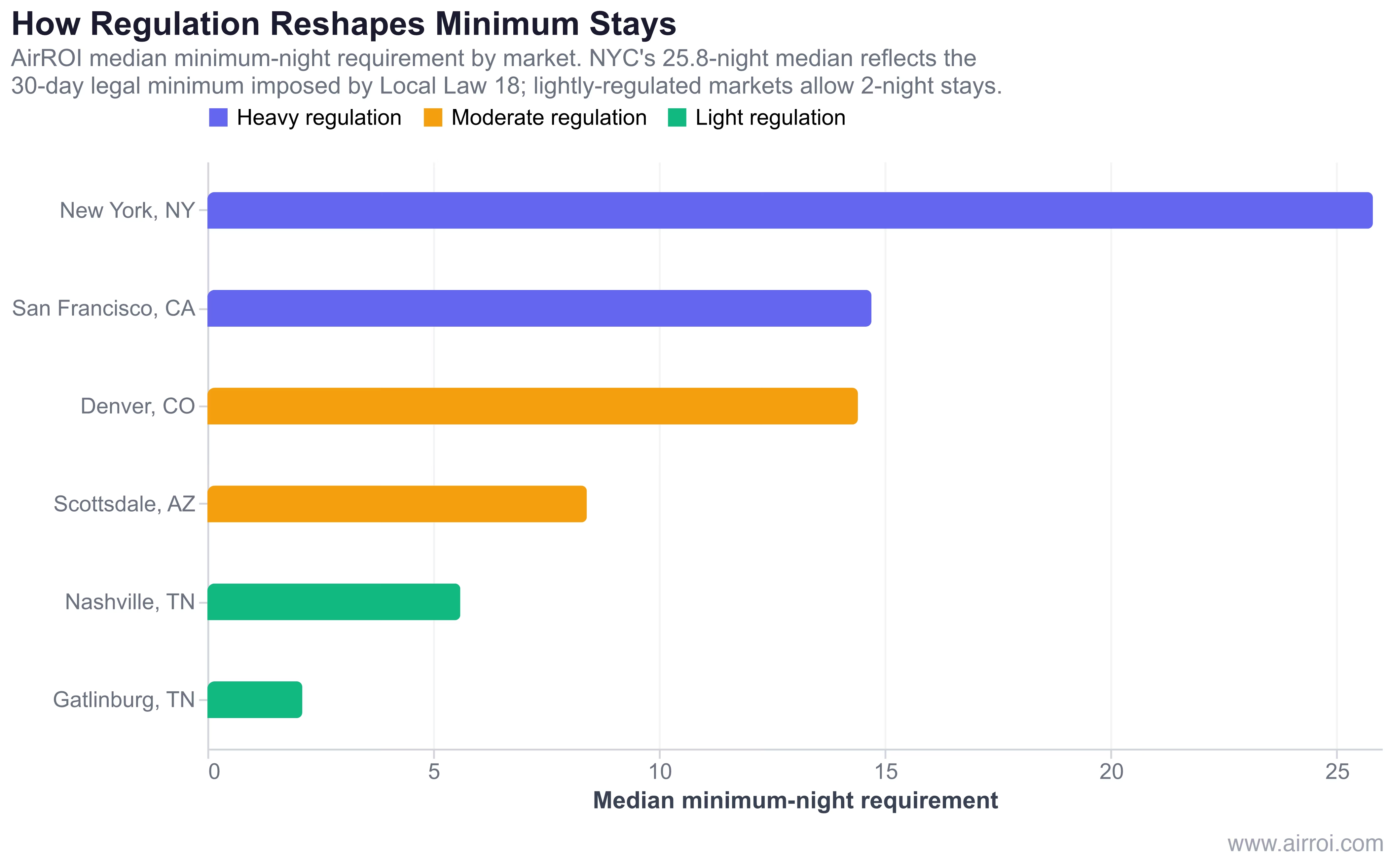
New York's 25.8-night median minimum sits right at the 30-day legal threshold, and San Francisco's 14.7 nights reflects its strict registration regime. Lightly regulated markets tell the opposite story: Gatlinburg's median minimum stay is just 2.1 nights and Nashville's is 5.6. The regulatory environment, more than guest preference, sets the floor on how short a stay can be.
Regulatory Spectrum Across Markets
| Approach | Characteristics | Example Markets |
|---|---|---|
| Minimal regulation | Basic registration, tax collection only | Many rural areas, small towns |
| Light regulation | Permit required, standard safety rules | Gatlinburg, many resort communities |
| Moderate regulation | Permits, inspections, night caps, zones | Denver, Los Angeles, Portland |
| Heavy regulation | Primary residence only, strict caps, registration | San Francisco, New York, Barcelona |
| Effective ban | Rules so restrictive that nightly STR is impractical | Parts of NYC, Amsterdam |
Why STR Regulations Matter for Airbnb Hosts
- Legal operation: Operating out of compliance can mean fines, lawsuits, and in some jurisdictions criminal charges
- Investment due diligence: Night caps and permit availability directly cap revenue potential — screen regulations before you buy, not after
- Platform enforcement: Airbnb increasingly requires permit numbers, collects taxes, and delists non-compliant properties
- Future-proofing: Tracking regulatory trends lets you anticipate changes and adapt before they hit your bottom line
Staying Compliant with STR Regulations
- Research before investing — investigate every applicable rule before purchasing for STR use
- Obtain all required permits — apply for your STR permit, business license, and any other authorizations
- Register for tax collection — set up TOT collection and remittance with your local tax authority
- Meet safety standards — install required equipment, complete inspections, and post emergency information
- Track operational limits — monitor your night count and guest numbers to stay within permitted limits
- Monitor regulatory changes — follow city council agendas and recheck rules at every permit renewal
- Check HOA rules — verify compliance with private community restrictions alongside public law
Frequently Asked Questions
Search your city or county government site for 'short-term rental,' 'vacation rental ordinance,' or 'transient occupancy,' and contact the planning department or city clerk to confirm current rules. Many cities maintain a dedicated STR page. AirROI's Market Atlas provides regulatory context for many popular markets so you can screen before you buy.
In general, yes. Regulation has tightened across most major markets since the mid-2010s through primary-residence requirements, lower annual night limits, higher permit fees, and capped permit counts. New York City's Local Law 18 is the clearest example: total active listings fell roughly 60% after September 2023 enforcement. Some states, however, have passed preemption laws blocking cities from banning STRs outright.
Penalties vary by jurisdiction but commonly include fines of $500 to $10,000 per violation or per day, permit revocation, forced delisting from booking platforms, and back taxes with interest. Some cities pursue misdemeanor charges for repeat offenders and publish violation records publicly.
Directly. Night caps, occupancy limits, and minimum-stay rules cut available booking nights, while permit scarcity limits supply. AirROI data shows heavily regulated markets push minimum stays far higher — New York's median minimum stay is 25.8 nights versus 2.1 nights in lightly regulated Gatlinburg — which reshapes which guests you can serve and what you can charge.