
Night Cap / Annual Night Limit

Key Takeaways
- Annual night limits set a hard ceiling on total STR booking nights within a calendar year — once reached, no further short-term stays are permitted
- Limits range from 30 nights (Amsterdam) to 90 nights (London, San Francisco) to 120–180 nights (Los Angeles, Paris) depending on the jurisdiction
- Night caps most commonly apply when the host is absent; many cities exempt owner-occupied stays or apply a higher ceiling when the host is present
- AirROI data shows that stringent night-cap regimes push median minimum booking lengths sharply upward — New York hosts average 25.8 minimum nights versus 2.1 in lightly regulated markets
- Maximizing revenue under a cap requires concentrating bookings in peak periods, raising ADR, and pairing short-term stays with a mid-term or long-term rental strategy for the remainder of the year
How Annual Night Limits Work
Night limits count cumulative booked nights within a calendar or rolling 12-month period. A host in a 90-night city who books 10 nights per month exhausts the limit in September. A host who front-loads summer demand can reach the ceiling in May.
| Booking Pattern | 90-Night Cap Impact |
|---|---|
| 10 nights/month, spread | Cap reached in September |
| 20 nights/month, front-loaded | Cap reached in May |
| Peak-season only (Jun–Aug) | 90 nights consumed in 3 months; dark the rest of year |
| Hybrid approach | 90 nights STR + balance as 30+ day rental |
The counting mechanism varies by ordinance: some cities count any night with a guest present, others count calendar nights the property is listed as available. That distinction matters — a property blocked off but not booked may or may not count toward the cap depending on local rules.
Night Limits in Major Markets
| City | Annual Night Limit | Key Condition |
|---|---|---|
| Amsterdam, Netherlands | 30 nights | Among the strictest limits globally |
| London, UK | 90 nights | Applies to all STRs; no planning permission required below cap |
| San Francisco, CA | 90 nights | Unhosted stays only; unlimited when host is present |
| Edinburgh, UK | 90 nights | Without full planning permission |
| Portland, OR | 95 nights | When host is not present |
| Paris, France | 120 nights | Primary residence only |
| Los Angeles, CA | 120 nights | Extendable to 180 with enhanced compliance registration |
| Denver, CO | 365 nights | Primary residence; effectively year-round operation permitted |
Regulations change frequently. Verify current rules with your local planning department before investing.
How Night Caps Reshape Markets — What the Data Shows
Night-cap regulations leave a measurable fingerprint on booking data. When cities cap how many nights a property can rent, hosts respond by setting longer minimum stays to extract more revenue from each booking slot — and the aggregate effect is visible in market-level minimum-night medians.
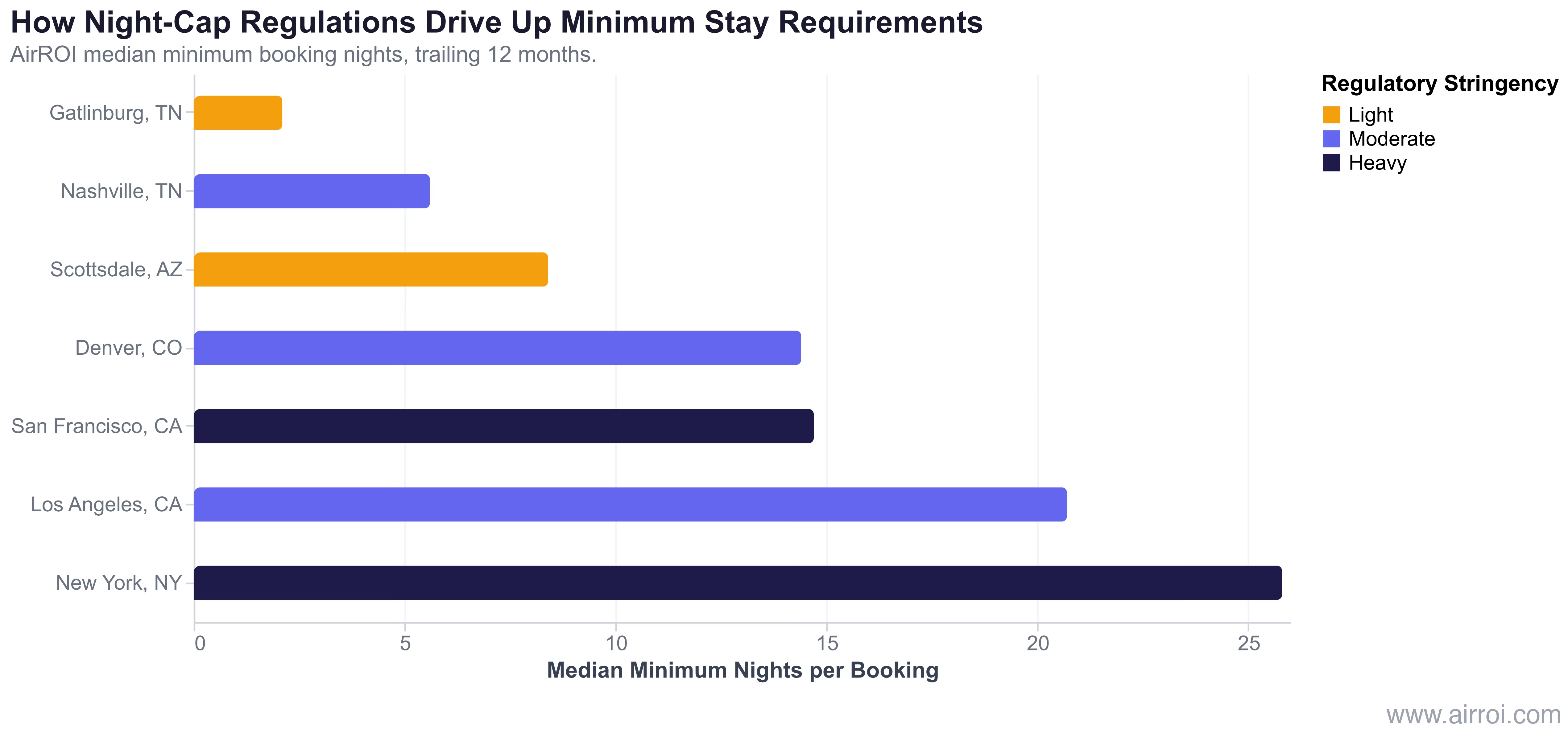
Night caps rarely kill a market. They convert it — trading high-frequency, short-stay demand for lower-frequency, higher-value bookings that extract maximum revenue from each permitted night.
The implication for hosts: in a capped market, average length of stay is not just a guest preference metric — it is a revenue engineering lever. Longer minimum stays reduce orphan gaps, lower cleaning and turnover costs per night, and make each capped night count.
Why Annual Night Limits Matter for Airbnb Hosts
Platform compliance. Airbnb enforces London's 90-night cap automatically, blocking calendar availability once the threshold is reached. Other platforms and cities are adopting similar automated mechanisms, reducing the practical ability to operate over the limit even if a host were willing to try.
Strategies to Maximize Revenue Under a Night Cap
Raise minimum stay length. Longer minimums reduce turnover costs and prevent low-value orphan gaps that waste capped nights. If your cap is 90 nights, a 3-night minimum means at most 30 bookings — each cleaning, each guest communication, each key exchange has a higher revenue floor.
Track your nights accurately. Hosts in capped markets need reliable systems — a channel manager, a dedicated calendar, or property management software — to monitor cumulative booked nights across all platforms. Exceeding the cap risks fines, permit revocation, and forced delisting.
Plan the hybrid model. If 30-day-plus rentals are unrestricted in your market, structure the calendar so your STR nights cover peak season and your medium-term rentals carry the shoulder and off-season months. This approach captures the best of both regimes.
Frequently Asked Questions
The most common annual night limits fall between 90 and 180 nights per year. London enforces a 90-night limit for all STRs, San Francisco caps at 90 nights when the host is absent, Los Angeles allows 120 nights (extendable to 180), and Amsterdam restricts hosts to just 30 nights. Some jurisdictions set 365-night limits for owner-occupied rentals, effectively permitting year-round operation.
Cities enforce night limits through platform data-sharing agreements with Airbnb and other booking platforms, mandatory host self-reporting, transient occupancy tax filings, STR permit renewal audits, and automated monitoring software that tracks listing availability. Some platforms automatically delist properties that reach the local cap — Airbnb enforces London's 90-night limit directly on its platform.
In many jurisdictions, annual night limits apply only when the host is absent during the guest's stay. Owner-occupied rentals — where the host is on-site throughout — are frequently exempt from the cap or subject to a much higher ceiling. San Francisco is an example: the 90-night cap applies to unhosted stays, with no limit when the host is present. Always verify local rules, as exemption criteria vary widely.
A night cap creates a hard ceiling on bookable nights, which makes each available night more valuable. Hosts operating under a 90-night limit who price to the same average daily rate as an uncapped listing will earn roughly 25% of what a full-year operator earns. To close that gap, capped hosts must raise ADR, concentrate bookings in peak-demand periods, and minimize low-value nights through longer minimum stays and dynamic pricing.
Yes, and many hosts intentionally plan for this. Once your annual STR night cap is exhausted, renting for 30 nights or more is typically unrestricted — it falls outside the short-term rental definition in most jurisdictions. A hybrid model — STR during peak season, then medium-term or long-term rental for the remainder of the year — lets you maintain cash flow after the cap is reached.