Airbnb market data · 202512 months to May 2025
Ha-ri, South Korea Airbnb Market Data: Revenue, Occupancy & Trends
The average Airbnb in Ha-ri brought in ₩12,688,717 over the 12 months through May 2025, across just 29 active listings, so a single property can move that figure.
AirROI's latest figures for Ha-ri run through May 2025.
The short answer
Ha-ri Airbnb Market at a Glance
Listings averaged ₩153,402 a night and were booked on 30% of available nights.
Timing matters: in August, the best month, the average listing earned about 3.8 times as much as in November, the slowest. With only 29 active listings, a few bookings can reorder the months.
With 29 active listings, Ha-ri is the fourth-largest of 6 North Chungcheong markets AirROI tracks.
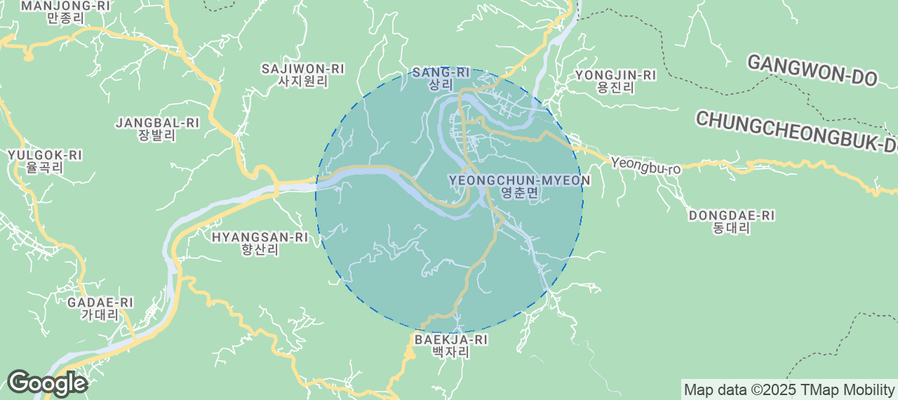 Browse the live Ha-ri Airbnb market See Every Ha-ri Listing
Revenue
How Much Do Airbnb Hosts Make in Ha-ri?
Gross bookings per Ha-ri listing averaged ₩12,688,717 over the 12 months to May 2025 (North Chungcheong average: ₩15,987,172), before cleaning, platform and management costs and taxes.
The average Ha-ri listing brought in ₩3,300,000 in August, its best month, and ₩876,000 in November, its slowest. The three strongest months bring in 36% of a full year's revenue, where an even calendar would give any three months 25%.
Across Ha-ri's 29 active listings, monthly revenue by tier:
- Best-in-class properties (top 10%) earn ₩2,880,000+ a month, about twice the typical property.
- Strong performers (top 25%) earn ₩2,260,000 or more, roughly ₩850,000 a month above the median.
- Typical properties (median) earn about ₩1,410,000 a month.
- Entry-level properties (bottom 25%) earn ₩1,020,000 or less, about three-quarters of the median.
These are monthly figures for listings active in each month. The annual average above also counts listings that operated for only part of the year, so it runs below twelve times these figures.
August earned about 3.8 times what November did
Average revenue per active listing, by month
The dashed line is the average of the months shown, ₩1,690,000.
Ha-ri Airbnb Data by Month
Latest 12 months in the May 2025 data.
August led on revenue and bookings; nightly rates peaked in January.
| Month | Avg. Revenue | Occupancy | Avg. Nightly Rate | Booking Lead Time |
|---|---|---|---|---|
| Jun 2024 | ₩1,529,516 | 31.7% | ₩150,679 | 19 days |
| Jul 2024 | ₩1,513,109 | 23.7% | ₩152,414 | 7 days |
| Aug 2024 | ₩3,298,630 | 50.8% | ₩155,480 | 20 days |
| Sep 2024 | ₩1,500,743 | 26.3% | ₩148,083 | 35 days |
| Oct 2024 | ₩1,741,768 | 32.6% | ₩147,240 | 24 days |
| Nov 2024 | ₩876,270 | 17.8% | ₩148,137 | 11 days |
| Dec 2024 | ₩1,610,713 | 36.9% | ₩147,850 | 19 days |
| Jan 2025 | ₩1,936,600 | 35.0% | ₩171,001 | 19 days |
| Feb 2025 | ₩1,309,704 | 26.7% | ₩165,549 | 12 days |
| Mar 2025 | ₩1,605,172 | 28.8% | ₩166,717 | 16 days |
| Apr 2025 | ₩1,324,564 | 27.1% | ₩156,538 | 22 days |
| May 2025 | ₩1,974,890 | 35.3% | ₩168,814 | 43 days |
Averages per active listing in each month. Highlighted: the highest-revenue month. Booking lead time is the days between booking and check-in for stays in that month.
For a figure on one home rather than the whole Ha-ri market, enter its address and size in the Airbnb calculator, which compares it with similar listings nearby.
Profit
Is an Airbnb in Ha-ri Profitable?
Yes, when it's run well. The average Ha-ri Airbnb took in ₩12,688,717 in the 12 months to May 2025, and run by its owner at everyday costs, about ₩770,000 a month of that is left after running costs, so a home that costs less than that to own or rent makes money. A listing in the top quarter leaves about ₩1,250,000 a month.
These amounts come before housing costs. Where the mortgage or rent is less each month, the difference is profit; a home owned outright keeps it all after property tax, home insurance and any building or condo fees.
Ha-ri Airbnb Income, Expenses and Profit per Year
| Line | Average listing | Top-quarter listing |
|---|---|---|
| Money in | ||
| Gross bookings | ₩12,688,717 | ₩20,400,000 |
| Running costs | ||
| Airbnb's fee15.5% of bookings, Airbnb's standard host-only fee | −₩1,970,000 | −₩3,160,000 |
| Utilities and internetAbout 5% of bookings | −₩630,000 | −₩1,020,000 |
| Guest suppliesToiletries, coffee, paper goods: about 2% | −₩250,000 | −₩410,000 |
| Repairs and upkeepIncluding linens and small replacements: about 3% | −₩380,000 | −₩610,000 |
| Short-term rental insuranceOne policy, on top of Airbnb's free AirCover | −₩130,000 | −₩130,000 |
| Permit and registrationWhere one is required | −₩60,000 | −₩60,000 |
| Management₩0 when you run it; co-hosts charge from about 10% of nightly bookings | ₩0 | ₩0 |
| Pricing and messaging toolsOptional; Airbnb's own tools are free | ₩0 | ₩0 |
| Lodging taxesAdded to the guest's bill and passed on | ₩0 | ₩0 |
| Total running costsAbout 27% of bookings | −₩3,420,000 | −₩5,390,000 |
| Left for housing costs, then profit | ₩9,268,717about ₩770,000 a month | ₩15,010,000about ₩1,250,000 a month |
| Housing costs | ||
| Mortgage or rent, property tax, home insurance, building or condo fees | Depend on the home | |
Estimate Your Own Ha-ri Airbnb Profit
The estimate starts from Ha-ri's average listing, run by its owner. Change how the listing performs, who runs it and who cleans to see what is left for the mortgage or rent.
To work out the profit on one Ha-ri home, with its price, its mortgage or rent and your own costs, use the Airbnb profit calculator. It starts from the comparable listings around the address.
How Ha-ri's Top Earners Get There
- More nights booked. The busiest quarter of Ha-ri listings are booked on 36% or more of their nights, against 28% for the median listing. Ten more booked nights a year at the median rate of ₩142,000 adds about ₩1,420,000 in bookings.
- Prices that follow demand. Ranked by price, the top quarter charge ₩195,000 a night or more, against a median of ₩142,000. That is a separate ranking from the busiest quarter, so the two marks don't multiply into one listing's takings. For the average listing, a 10% higher rate on the nights it already books adds about ₩1,270,000 a year.
- Open for the busy months. August brought the average listing about ₩3,300,000, against ₩876,000 in November, so a calendar that is open and full in the busy months carries the year.
What a listing keeps comes down to the figures this page measures: nightly rate, nights booked and the months it's open. A listing at the top-quarter mark takes in about ₩1,700,000 a month, against ₩1,060,000 for the average one.
Occupancy
What Is the Airbnb Occupancy Rate in Ha-ri?
Ha-ri listings were booked on 30% of the nights they were open over the past year, in line with the North Chungcheong average and 10 percentage points below the South Korea average (40%). Occupancy swings from 18% in November to 51% in August.
Across Ha-ri's 29 active listings, the share of open nights booked by tier:
- Best-in-class properties (top 10%) are booked 51%+ of open nights, 23 points above the median.
- Strong performers (top 25%) fill 36% or more, roughly two and a half nights a week.
- Typical properties (median) fill about 28% of open nights.
- Entry-level properties (bottom 25%) fill 22% or less, under two nights a week.
August was the busiest month in Ha-ri, November the quietest
Share of open nights booked, by month
Nightly rates
How Much Does an Airbnb Cost per Night in Ha-ri?
The average nightly rate in Ha-ri, known as ADR (average daily rate), was ₩153,402 over the past year, about 21% below the North Chungcheong average of ₩194,000 and about the same as the South Korea average (₩159,000). Rates peak in January and May at about ₩171,000 and bottom out in October and December at about ₩147,000.
Across Ha-ri's 29 active listings, nightly rates by tier:
- Best-in-class properties (top 10%) charge ₩258,000+ a night, about 1.8 times the median.
- Strong performers (top 25%) charge ₩195,000 or more, about ₩53,000 above the median.
- Typical properties (median) charge about ₩142,000 a night.
- Entry-level properties (bottom 25%) charge ₩99,600 or less, about two-thirds of the median.
January rates ran 16% above October's
Average nightly rate (ADR), by month
The dashed line is the average of the months shown, ₩157,000.
Seasonality
Best and Worst Months for Airbnb in Ha-ri
With only 29 active listings, the monthly pattern in Ha-ri is noisy, since a few long or pricey stays can lift a month; revenue peaked in August and bottomed out in November.
How Far in Advance Do Guests Book Airbnb in Ha-ri?
Guests book Ha-ri stays 20 days ahead on average (about three weeks), so many trips are booked close to arrival. May stays are booked furthest out, about 43 days ahead, and July stays closest to arrival, about 7 days. A typical May booking is made in early April.
May stays are booked furthest ahead
Average days between booking and check-in, by month of stay
Permits
Airbnb Permits and Registration in Ha-ri
38% of the 29 active listings in Ha-ri display a registration, permit or license number. The share shows what hosts display, not what local rules allow: it can't show whether new permits are still issued, or whether limits on nights, zones or property types apply.
Registration, permit, zoning and tourist-tax rules vary by address and change often, so confirm them with the local authority before buying or listing in Ha-ri.
Neighborhoods
Best Neighborhoods for Airbnb in Ha-ri
AirROI's area guide picks five Ha-ri neighborhoods that draw short-term rental guests, led by Jincheon, Okcheon and Yeongdong. The picks reflect guest appeal, not earnings data or permit eligibility, so check local permit rules for a specific address before buying.
| Area | Who it suits | Landmarks nearby |
|---|---|---|
| Jincheon | A quieter area known for its natural scenery and outdoor activities. Jincheon is appealing for guests looking for relaxation and nature, which can be attractive for families and solo travelers. | Jincheon Sports Park, Sangseong Fortress, Jincheon National Sports Center, Local hiking trails, Cultural heritage sites |
| Okcheon | A small and peaceful town surrounded by mountains, Okcheon is perfect for travelers wanting to escape the city hustle and enjoy nature. It's a great spot for those seeking tranquility. | Okcheon Seowon, Mount Bulam, Rural farm experiences, Okcheon Hot Springs, Local guesthouses |
| Yeongdong | Famous for its wine production, Yeongdong has wineries and beautiful landscapes, appealing to tourists interested in wine and culinary experiences. | Yeongdong Wine Tunnel, Vineyard tours, Local wineries, Scenic countryside, Culinary festivals |
| Boeun | Known for historic sites and traditional Korean culture, Boeun attracts visitors interested in exploring Korea's philosophy and history. It's a great option for cultural tourism. | Baekje Historic Areas, Deokjusa Temple, Boeun Agricultural and Scenic Development Area, Local traditional markets |
| Samsong-dong | A residential area with easy access to Cheongju and surrounding attractions. Preferred for its peaceful environment while being close to urban conveniences. | Parks and recreational areas, Local eateries, Community cultural events, Proximity to Cheongju |
Area descriptions are AI-assisted from public sources and are not checked against zoning.
Nearby markets
Ha-ri vs. Nearby Airbnb Markets
Of the eight nearby markets in the table, all within 58 km, Chungju-si (48 km away, 68 listings) earned the most per listing, about 43% more than Ha-ri.
| Market | Listings | Avg. annual revenue | Avg. nightly rate | Occupancy |
|---|---|---|---|---|
| Danyang-gun 12 km | 34 | ₩10,291,841 | ₩192,547 | 21% |
| Yeongwol-eup 17 km | 42 | ₩9,735,917 | ₩151,909 | 24% |
| Yeongju-si 23 km | 45 | ₩14,482,991 | ₩206,705 | 24% |
| Jecheon-si 30 km | 84 | ₩17,152,587 | ₩262,023 | 20% |
| Chungju-si 48 km | 68 | ₩18,100,843 | ₩217,317 | 27% |
| Mungyeong-si 55 km | 43 | ₩11,988,569 | ₩220,488 | 21% |
| Andong-si 57 km | 193 | ₩18,054,516 | ₩206,112 | 30% |
| Wonju-si 58 km | 141 | ₩12,679,132 | ₩175,898 | 28% |
Other Airbnb Markets in North Chungcheong
- Cheongju-si Airbnb data 155 listings
See all 6 North Chungcheong Airbnb markets
Markets Similar to Ha-ri
Markets elsewhere in South Korea with a similar nightly rate and occupancy to Ha-ri:
- Sokcho-si Airbnb data South Korea · ₩152,532/night · 28.0%
- Gongju-si Airbnb data South Korea · ₩163,317/night · 30.0%
- Jeonju-si Airbnb data South Korea · ₩145,539/night · 27.4%
- Suncheon-si Airbnb data South Korea · ₩159,119/night · 25.9%
- Incheon Airbnb data South Korea · ₩129,672/night · 28.8%
- Mokpo-si Airbnb data South Korea · ₩138,214/night · 26.4%
FAQ
Ha-ri Airbnb FAQ
How much do Airbnb hosts make in Ha-ri?
An active Ha-ri Airbnb grossed ₩12,688,717 on average in the 12 months to May 2025, according to AirROI's tracking of 29 active listings. That is before cleaning, management, taxes and financing. Busier, better-run listings do far better: the top quarter took in ₩2,260,000 or more in a typical month.
How much can I make on Airbnb in Ha-ri?
It depends most on the home's size, location and how it's run. The middle half of Ha-ri listings earn between ₩1,020,000 and ₩2,260,000 in a typical month, and the top tenth ₩2,880,000 or more. For one home, enter its address and bedroom count in the Airbnb income calculator: it compares the home with similar listings nearby.
What is the average Airbnb occupancy rate in Ha-ri?
Listings in Ha-ri were booked on 30% of available nights over the past year. That compares with 29% for the North Chungcheong average. August was the busiest month.
How much does an Airbnb cost per night in Ha-ri?
The average booked night in Ha-ri cost ₩153,402 before fees. Half of listings charge between ₩99,600 and ₩195,000, so bedroom count and location move the price more than the average suggests.
Do you need a permit for an Airbnb in Ha-ri?
In Ha-ri, 38% of active listings display a registration, permit or license number. The share shows what hosts display, not what the rules allow, so confirm registration, permit and tourist-tax rules with the local authority before buying.
Is Airbnb profitable in Ha-ri?
Yes, when it's run well. The average Ha-ri Airbnb grossed ₩12,688,717 in the 12 months to May 2025, 21% below the North Chungcheong average of ₩15,987,172, though with only 29 active listings a single property can move that figure. Run by its owner, with everyday costs for Airbnb's fee, utilities, supplies, upkeep and insurance, ₩9,268,717 a year (about ₩770,000 a month) is left before the mortgage or rent. A home that costs less than that to own or rent makes a profit, and a listing at the top-quarter mark leaves about ₩1,250,000 a month. Check a specific home in the Airbnb estimator.
When is Airbnb peak season in Ha-ri?
August paid best over the past year, at ₩3,300,000 per active listing, and November paid least. The month-by-month table above shows how rates and bookings each move.
How far in advance do guests book Airbnbs in Ha-ri?
Ha-ri stays were booked 20 days (about three weeks) before arrival on average over the past year, so a listing can still fill close to the date.
What are the best neighborhoods for Airbnb in Ha-ri?
Jincheon, Okcheon and Yeongdong draw the most short-term rental interest in Ha-ri. The neighborhood guide explains what brings guests to each.
How many Airbnbs are there in Ha-ri?
AirROI counted 29 active Airbnb listings in Ha-ri as of May 2025. The closest tracked market is Danyang-gun, 12 km away.
Method
About This Data
Figures on this page cover 29 active Airbnb listings in Ha-ri from June 2024 to May 2025 (trailing twelve months). AirROI refreshes them monthly from listing-level booking and calendar data covering 20+ million properties worldwide. AirROI measures bookings in US dollars; this page shows them in South Korean won at ₩1,448 per US$, the typical rate from October 2025 to September 2026. Annual revenue averages every listing active during the period, including those listed for only part of it; monthly figures average the listings active in each month; the tier lists show the spread. Neighborhood descriptions are AI-assisted. See the methodology for definitions.
Need this programmatically? The same metrics are available through the AirROI Airbnb Data API and bulk downloads in the data portal.