Check-In / Check-Out

Key Takeaways
- Standard check-in is 3:00–4:00 PM and check-out is 10:00–11:00 AM, producing a 4–6 hour turnover window that must accommodate cleaning, restocking, and inspection
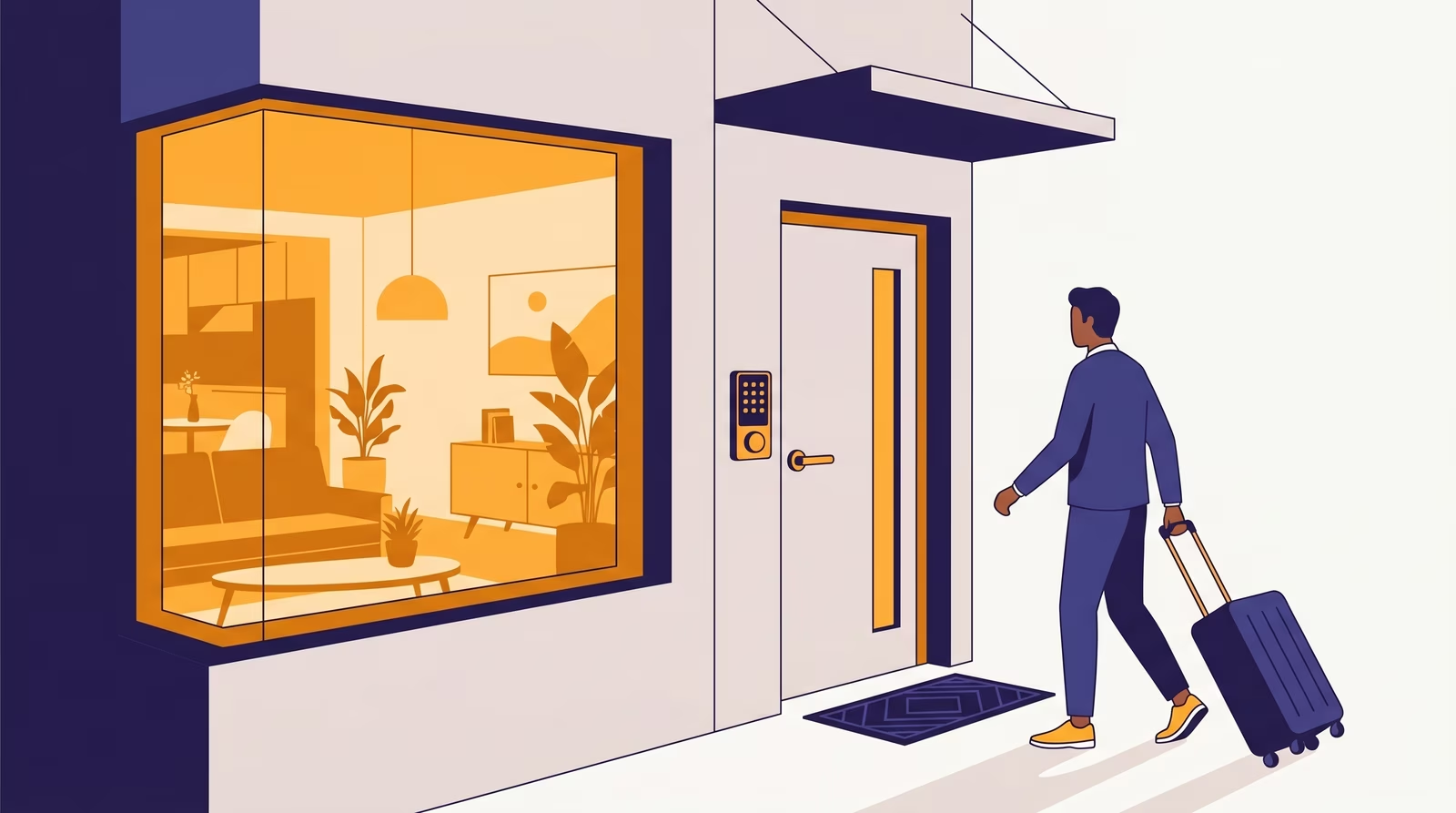
- Self check-in via a smart lock or lockbox is preferred by most travelers and is critical for hosts managing multiple properties or late arrivals
- Airbnb scores check-in as a distinct sub-rating; a weak check-in score suppresses search visibility and Superhost eligibility even when other scores are strong
- Automated messaging — timed to send 24–48 hours before arrival and the evening before departure — reduces host workload and eliminates the most common guest confusion points
- Early check-in and late check-out can improve reviews and justify a small fee ($25–$50), but only when no same-day turnover follows
The Check-In Process
A smooth check-in sets the tone for the entire stay. The process has three distinct phases:
Entry Method — Access options range from least to most operationally robust:
| Entry Method | Pros | Cons | Best For |
|---|---|---|---|
| Smart lock (keypad) | Unique per-guest codes, audit log, no key loss | Hardware cost ($100–$300), requires power/connectivity | All property types; scales to portfolio |
| Lockbox | Low cost, no connectivity required | Fixed code risk, physical wear | Single properties, backup option |
| Key handoff | Personal touch | Requires scheduling; fails for late arrivals | Rarely practical at volume |
| Building front desk | No hardware required | Hours limited; staff turnover creates risk | Condos/apartments only |
Arrival Confirmation — A brief "Welcome! Let us know if anything needs attention" message shortly after check-in resolves minor issues before they become review complaints. Hosts who send this message resolve in-stay problems earlier and receive higher satisfaction scores.
The Check-Out Process
Time Enforcement — Late departures cascade: a guest who leaves 90 minutes late compresses the cleaning window, potentially delaying check-in for the next booking and generating a negative review from the arriving guest who paid for a 3:00 PM arrival. A firm, politely worded reminder sent on the morning of departure reduces late check-outs more effectively than relying on house rules alone.
Turnover Window Configuration
The right check-in/check-out combination depends on property size and cleaning complexity, not guest preference.
| Configuration | Check-In | Check-Out | Turnover Window | Best For |
|---|---|---|---|---|
| Standard | 3:00 PM | 11:00 AM | 4 hours | 1–2 bedroom properties with standard cleaning |
| Extended buffer | 4:00 PM | 10:00 AM | 6 hours | Large properties, deep-clean requirements |
| Guest-friendly | 2:00 PM | 11:00 AM | 3 hours | Properties with fast turnover and reliable crews |
| Same-day pause | 4:00 PM | 10:00 AM | Buffer day | Hosts who block 1 night between bookings |
Hosts who undersize the turnover window pay for it in cleanliness reviews. Hosts who oversize it pay in lost booking revenue. Tracking actual cleaning duration over 2–3 months and setting the window to cleaning time plus a 30–45 minute buffer is the most reliable calibration approach.
Getting check-in and check-out right is a systems problem, not a hospitality problem. The hosts who nail it build a repeatable process — templated messages, scheduled automation, a trusted cleaning team — and then protect that process by setting times that the system can actually hold.
Why Check-In/Check-Out Drives Review Outcomes
Airbnb's guest review form scores check-in, cleanliness, accuracy, communication, location, and value as separate categories. The check-in sub-score reflects the entire arrival experience: clarity of instructions, ease of access, and how well the property matched the listing description upon arrival. Properties with check-in scores below 4.7 face algorithmic suppression in search results even when overall ratings remain above 4.5.
Optimizing Check-In and Check-Out Operations
Create a visual check-out prompt — A laminated card or framed sign near the exit with 4–5 specific check-out steps (not a paragraph of text) produces better compliance than in-app messages alone. Guests read physical prompts before leaving.
Build buffer into the window — If your cleaning crew consistently needs 3 hours, set a 4-hour window. Unexpected delays — a guest who checks out late, a maintenance issue discovered during turnover — should be absorbed by the buffer, not borrowed from the next guest's arrival.
Offer flexibility strategically — Block a calendar night between bookings when you want to offer early check-in or late check-out as a paid add-on. Attempting to offer flexibility within a same-day turnaround fails operationally and produces the worst reviews: guests promised flexibility who then get a late check-in because cleaning ran over.
Frequently Asked Questions
The most common check-in time for Airbnb properties is 3:00 PM or 4:00 PM, and the standard check-out time is 10:00 AM or 11:00 AM. This provides a 4–6 hour turnover window for cleaning between guests. Hosts with larger properties or longer cleaning needs often set check-in at 4:00 PM to guarantee adequate prep time.
Send check-in instructions 1–2 days before arrival via the platform's messaging system. Include the property address, parking details, entry method (lockbox code, smart lock instructions, or key pickup), WiFi password, and any immediate need-to-know items. Automating delivery through a property management system (PMS) eliminates the risk of forgetting on a busy booking calendar.
Offer early check-in or late check-out only when no same-day turnover follows. In high-occupancy markets where back-to-back bookings are common, flexibility is rarely possible without a cleaning buffer day. Some hosts charge $25–$50 for the accommodation; others offer it free when the calendar allows to generate review goodwill.
Yes — Airbnb scores check-in as a distinct sub-rating, and it feeds directly into the overall star score used for Superhost qualification and search ranking. A property with consistently poor check-in reviews will see its visibility suppressed even if cleanliness and amenities scores are strong.
Self-check-in via a smart lock with a unique per-guest code is the most operationally reliable entry method. It eliminates key logistics, supports late arrivals without requiring host availability, and generates an audit log of entry times. Lockboxes are a lower-cost alternative; in-person key handoff introduces scheduling dependency that scales poorly across multiple properties.