Tiny, Ontario Airbnb Market Data 2026: STR Report & Statistics
How much can you earn on Airbnb in Tiny, Ontario? Based on AirROI's 2026 dataset (August 2025 – July 2026), the short answer is $24,822 per year — at a $323 nightly rate, 34.8% occupancy, and a $124 RevPAR that reflects moderate rate-to-revenue efficiency with room to optimize.
At 189 active listings, Tiny is a boutique market where selective demand that rewards strong listing quality and pricing strategy. The market trimmed 5.5% of its supply while nightly rates moved higher — fewer listings competing for the same travelers, and those travelers are paying more. Hosts who can unlock occupancy through standout listings, flexible policies, and targeted marketing have clear revenue upside.
Regulation data is limited for this market, and hosts should verify short-term rental rules with the local government. In a market this size, differentiated listings with strong reviews can capture outsized returns relative to the competition.

Table of Contents [hide] [show]
What Are the Key Airbnb Metrics in Tiny?
In Tiny, the headline Airbnb metrics are $24,822 in average annual revenue,34.8% occupancy, $323 ADR, and $124 in RevPAR, and guests book about 72 days in advance.
How Much Do Airbnb Hosts Earn Monthly in Tiny?
Understanding the monthly revenue variations for Airbnb listings in Tiny is key to maximizing your short term rental income potential. Seasonality significantly impacts earnings. Our analysis, based on data from the past 12 months, shows that the peak revenue month for STRs in Tiny is typically August, while April often presents the lowest earnings, highlighting opportunities for strategic pricing adjustments during shoulder and low seasons. Explore the typical Airbnb income in Tiny across different performance tiers:
- Best-in-class properties (Top 10%) achieve $7,489+ monthly, often utilizing dynamic pricing and superior guest experiences.
- Strong performing properties (Top 25%) earn $5,034 or more, indicating effective management and desirable locations/amenities.
- Typical properties (Median) generate around $2,688 per month, representing the average market performance.
- Entry-level properties (Bottom 25%) see earnings around $1,333, often with potential for optimization.
Average Monthly Airbnb Earnings Trend in Tiny
What Is the Monthly Airbnb Occupancy Rate in Tiny?
Maximize your bookings by understanding the Tiny STR occupancy trends. Seasonal demand shifts significantly influence how often properties are booked. Typically, Augustsees the highest demand (peak season occupancy), while April experiences the lowest (low season). Effective strategies, like adjusting minimum stays or offering promotions, can boost occupancy during slower periods. Here's how different property tiers perform in Tiny:
- Best-in-class properties (Top 10%) achieve 70%+ occupancy, indicating high desirability and potentially optimized availability.
- Strong performing properties (Top 25%) maintain 47% or higher occupancy, suggesting good market fit and guest satisfaction.
- Typical properties (Median) have an occupancy rate around 27%.
- Entry-level properties (Bottom 25%) average 15% occupancy, potentially facing higher vacancy.
Average Monthly Occupancy Rate Trend in Tiny
What Is the Average Airbnb Nightly Rate in Tiny?
Effective short term rental pricing strategy in Tiny involves understanding monthly ADR fluctuations. The Average Daily Rate (ADR) for Airbnb in Tiny typically peaks in July and dips lowest during February. Leveraging Airbnb dynamic pricing tools or strategies based on this seasonality can significantly boost revenue. Here's a look at the typical nightly rates achieved:
- Best-in-class properties (Top 10%) command rates of $544+ per night, often due to premium features or locations.
- Strong performing properties (Top 25%) achieve nightly rates of $386 or more.
- Typical properties (Median) charge around $262 per night.
- Entry-level properties (Bottom 25%) earn around $187 per night.
Average Daily Rate (ADR) Trend by Month in Tiny
What Is the RevPAR for Airbnb in Tiny?
RevPAR in Tiny is currently $124. Because RevPAR combines nightly rates with realized occupancy, it is one of the cleanest ways to compare how efficiently listings turn demand into revenue across the market.
- Entry-level properties (Bottom 25%) see $67 RevPAR.
- Typical properties (Median) generate $107 RevPAR.
- Strong performers (Top 25%) earn $166 RevPAR.
- Best-in-class (Top 10%) achieve $215 RevPAR.
Average Monthly RevPAR Trend in Tiny
RevPAR Insights for Tiny
- The average RevPAR in Tiny is $124. This metric combines nightly rates with realized occupancy, making it one of the best single-number indicators of market efficiency.
- The gap between the top 10% ($215) and bottom 25% ($67) is $148, indicating significant performance disparity driven by property quality, pricing strategy, and location.
- RevPAR peaks in Aug and bottoms out in Apr, mirroring the broader seasonal demand pattern and suggesting opportunities for dynamic pricing.
Recommendations for Hosts
- Track your own RevPAR monthly against these Tiny benchmarks. If your RevPAR falls below the median of $107, examine whether low occupancy or low ADR is the primary drag.
- Top-quartile listings achieve $166+ RevPAR through a combination of competitive pricing, strong reviews, and strategic amenities. Target this tier through incremental improvements.
- Use RevPAR rather than revenue alone when comparing properties of different sizes — it normalizes for available nights and gives a more accurate picture of performance.
Get Live Tiny Market Intelligence 👇
Explore Real-time Analytics
When Is the Peak Season for Airbnb in Tiny?
Tiny's peak Airbnb season falls in August, July, September, while the softest stretch is January, March, April. Overall, the market shows highly seasonal trends requiring careful strategy, which should guide pricing, minimum stays, and cash-flow planning.
Peak Season (August, July, September)
- Revenue averages $5,857 per month
- Occupancy rates average 47.4%
- Daily rates average $344
Shoulder Season
- Revenue averages $3,272 per month
- Occupancy maintains around 30.2%
- Daily rates hold near $311
Low Season (January, March, April)
- Revenue drops to average $2,465 per month
- Occupancy decreases to average 25.4%
- Daily rates adjust to average $305
Seasonality Insights for Tiny
- Airbnb seasonality in Tiny is pronounced. Revenue swings sharply between peak and low months, which means pricing strategy, minimum-stay settings, and cash reserves all need to account for extended slower periods.
- During the high season, the absolute peak month showcases Tiny's highest earning potential, with monthly revenues climbing to $8,850, occupancy reaching 71.4%, and ADRs peaking at $384.
- Conversely, the slowest single month marks the market's lowest point — revenue may dip to $2,027, occupancy could drop to 20.8%, and ADRs may adjust to $293.
- Lower occupancy paired with meaningful seasonality means hosts in Tiny need to maximize every peak-season booking and seriously consider whether off-season pricing adjustments or minimum-stay changes can capture incremental revenue.
Seasonal Strategies for Maximizing Profit
- Peak Season: Maximize revenue through premium pricing and potentially longer minimum stays. Ensure high availability and consider tightening cancellation policies to reduce last-minute gaps.
- Low Season: Offer competitive pricing, extended-stay discounts, and flexible cancellation policies. Target off-season travelers like remote workers, budget-conscious guests, and travelers with flexible schedules.
- Shoulder Seasons: Implement dynamic pricing that bridges peak and low rates. Target weekend travelers, local events, and business visitors. Slightly more flexible terms than peak season can help maintain occupancy without deep discounting.
- In a highly seasonal market like Tiny, building a cash reserve during the top months is essential for covering fixed costs during the slow period. Automated pricing tools can help capture demand shifts in real time.
Do You Need a License for Airbnb in Tiny?
With 27% of listings showing registration in 2026, understanding potential Airbnb license requirements is crucial in Tiny. Always verify the latest short-term rental regulations and Airbnb license requirements directly with local government authorities for Tiny to ensure full compliance before hosting.
(Source: AirROI data, 2026, based on 27% licensed listings)
What Are the Best Neighborhoods for Airbnb in Tiny?
Tiny is a smaller vacation rental market where a handful of neighborhoods drive most of the booking activity. Choosing the right area is especially important in boutique markets — there is less room for a mediocre location to succeed on volume alone. The areas below highlight where short-term rental demand is strongest and why.
| Neighborhood / Area | Why Host Here? (Target Guests & Appeal) | Key Attractions & Landmarks |
|---|---|---|
| Tiny Beaches | Popular for summer vacations, with beautiful sandy shores along Georgian Bay. Ideal for families and beachgoers looking for a relaxing getaway. | Wasaga Beach, Lamont Creek Conservation Area, Tiny Marsh Provincial Wildlife Area, Reed's Bay, Bluewater Beach |
| Cranberry Point | A serene community known for its historical charm and access to waterfront activities. Attracts visitors seeking peace and nature. | Cranberry Marsh, Tiny Cove, Georgian Bay, local hiking trails |
| Thornbury | A quaint town offering a mix of scenic beauty and local culture, popular in both summer and winter. | Thornbury Harbour, Beaver Valley, Blue Mountain Resort, Apple pie shops |
| Penetanguishene | Rich in history and a gateway to the 30,000 Islands, it's great for boating and exploring. | Penetanguishene Bay, Discovery Harbour, Penetanguishene Museum, local marinas |
| Midland | A vibrant town with cultural events and historical attractions, making it suitable for year-round visitors. | Huronia Museum, Midland Cultural Centre, Little Lake Park, local shops and restaurants |
| Wyevale | A small community with rural charm, perfect for those looking to escape the hustle and bustle, attracts nature lovers. | local farms, nature trails, scenic views |
| Christian Island | Accessible by ferry, offers a unique cultural experience and beautiful landscapes. Attracts visitors interested in Indigenous culture. | Beaches, Fishing spots, Cultural experiences, Wildlife viewing |
| Awenda Provincial Park | A natural haven for outdoor enthusiasts with hiking, camping, and nature exploration right on Georgian Bay. | Hiking trails, Camping facilities, Beaches, Cycling paths |
With 8 distinct neighborhoods showing meaningful short-term rental activity, Tiny offers diversification within a single market. Investors can tailor their strategy — from high-turnover tourist zones to quieter residential areas that attract longer stays and remote workers.
What Types of Properties Are on Airbnb in Tiny?
Room Type Distribution
Property Type Distribution
Market Composition Insights for Tiny
- The Tiny Airbnb market composition is heavily skewed towards Entire Home/Apt listings, which make up 98.9% of the 189 active rentals. This indicates strong guest preference for privacy and space.
- Looking at the property type distribution in Tiny, House properties are the most common (88.9%), reflecting the local real estate landscape.
- Houses represent a significant 88.9% portion, catering likely to families or larger groups.
- Smaller segments like hotel/boutique, others, apartment/condo (combined 5.3%) offer potential for unique stay experiences.
Tiny Airbnb Room Capacity Analysis (2026): Bedroom Distribution
Distribution of Listings by Number of Bedrooms
Room Capacity Insights for Tiny
- The dominant room capacity in Tiny is 3 bedrooms listings, making up 43.4% of the market. This suggests a strong demand for properties suitable for families or small groups.
- Together, 3 bedrooms and 4 bedrooms properties represent 65.1% of the active Airbnb listings in Tiny, indicating a high concentration in these sizes.
- A significant 78.3% of listings offer 3+ bedrooms, catering to larger groups and families seeking more space in Tiny.
Tiny Vacation Rental Guest Capacity Trends (2026)
Distribution of Listings by Guest Capacity
Guest Capacity Insights for Tiny
- The most common guest capacity trend in Tiny vacation rentals is listings accommodating 8+ guests (42.9%). This suggests the primary traveler segment is likely larger groups.
- Properties designed for 8+ guests and 6 guests dominate the Tiny STR market, accounting for 81.0% of listings.
- 82.1% of properties accommodate 6+ guests, serving the market segment for larger families or group travel in Tiny.
- On average, properties in Tiny are equipped to host 6.5 guests.
How Do Listings in Tiny Compare on Quality?
Listing quality in Tiny can be approximated through presentation depth, bedroom count, and how often hosts disclose exact locations. These signals show how professionally the local supply base is merchandised.
Listing Quality Insights for Tiny
- At 38.4 photos per listing on average, Tiny hosts invest well in visual presentation. Listings with 20+ photos consistently outperform in search ranking and conversion.
- 20.6% of listings show their exact location. Lower disclosure rates can increase booking hesitation — guests want to know exactly where they are staying.
Recommendations for Hosts
- Enable exact location if possible — it removes a common source of guest uncertainty and can improve your listing's position in map-based searches.
- Use these quality indicators as a self-audit checklist. Listings that exceed the Tiny averages across all three metrics are better positioned for premium pricing.
What Amenities Do Airbnb Guests Expect in Tiny?
Amenity Prevalence
Amenity Insights for Tiny
- Essential amenities in Tiny that guests expect include: Free parking on premises, TV, Smoke alarm, Wifi, Kitchen, Hot water, Dishes and silverware. Lacking these (any) could significantly impact bookings.
- Popular amenities like Coffee maker, Heating, Refrigerator are common but not universal. Offering these can provide a competitive edge.
Recommendations for Hosts
- Ensure your listing includes all essential amenities for Tiny: Free parking on premises, TV, Smoke alarm, Wifi, Kitchen, Hot water, Dishes and silverware.
- Prioritize adding missing essentials: Free parking on premises, TV, Smoke alarm, Wifi, Kitchen, Hot water, Dishes and silverware.
- Consider adding popular differentiators like Coffee maker or Heating to increase appeal.
- Highlight unique or less common amenities you offer (e.g., hot tub, dedicated workspace, EV charger) in your listing description and photos.
- Regularly check competitor amenities in Tiny to stay competitive.
Which Airbnb Amenities Boost Revenue in Tiny?
Not every amenity matters equally. This table focuses on the amenities most associated with higher revenue in Tiny, which makes it more useful for prioritizing upgrades than a simple popularity list alone.
| Amenity | Prevalence | Revenue With | Revenue Without | Revenue Uplift |
|---|---|---|---|---|
Heating | 94.7% | $25,892 | $5,663 | 357.2% |
Carbon monoxide alarm | 90.5% | $26,594 | $7,983 | 233.1% |
Air conditioning | 84.7% | $27,591 | $9,545 | 189.1% |
Pool table | 14.3% | $55,469 | $19,714 | 181.4% |
BBQ grill | 92.6% | $26,026 | $9,774 | 166.3% |
Hot tub | 18.5% | $50,340 | $19,022 | 164.6% |
Noise decibel monitors on propertyHigh opportunity | 7.9% | $57,686 | $21,989 | 162.3% |
Children's playroom | 10.1% | $52,060 | $21,778 | 139.1% |
Patio or balcony | 86.2% | $26,911 | $11,727 | 129.5% |
Ping pong table | 18.0% | $46,174 | $20,138 | 129.3% |
Revenue Impact Insights for Tiny
- Heating tops the revenue impact list with a 357.2% uplift — listings with this amenity earn $25,892 vs. $5,663 without it.
- High-opportunity amenities — Noise decibel monitors on property — combine revenue uplift above 100% with prevalence under 10%, meaning most competitors haven't adopted them yet.
- Heating, Carbon monoxide alarm, Air conditioning, BBQ grill, Patio or balcony — while widespread — still correlate with meaningful revenue gains, making them table stakes rather than true differentiators.
Recommendations for Hosts
- Prioritize adding Noise decibel monitors on property — it has the best combination of high revenue impact and low market saturation in Tiny.
- Focus your upgrade budget on amenities in the top half of this table. Below-median amenities may improve guest experience but contribute less to revenue growth.
- Highlight revenue-impacting amenities prominently in your listing title, photos, and description — guests can't value what they don't notice.
Dive Deeper: Advanced Tiny STR Market Data (2026)
Ready to unlock more insights? AirROI provides access to advanced metrics and comprehensive Airbnb data for Tiny. Explore detailed analytics beyond this report to refine your investment strategy, optimize pricing, and maximize your vacation rental profits.
Explore Advanced MetricsTiny Airbnb Guest Demographics & Profile Analysis (2026)
Guest Profile Summary for Tiny
- The typical guest profile for Airbnb in Tiny consists of primarily domestic travelers (91%), often arriving from nearby Toronto, typically belonging to the Post-2000s (Gen Z/Alpha) group (50%), primarily speaking English or French.
- Domestic travelers account for 90.8% of guests.
- Key international markets include Canada (90.8%) and United States (3.1%).
- Top languages spoken are English (62.5%) followed by French (7.9%).
- A significant demographic segment is the Post-2000s (Gen Z/Alpha) group, representing 50% of guests.
Recommendations for Hosts
- Target domestic marketing efforts towards travelers from Toronto and Brampton.
- Tailor amenities and listing descriptions to appeal to the dominant Post-2000s (Gen Z/Alpha) demographic (e.g., highlight fast WiFi, smart home features, local guides).
- Highlight unique local experiences or amenities relevant to the primary guest profile.
- Consider seasonal promotions aligned with peak travel times for key origin markets.
What Are Airbnb Guest Ratings in Tiny?
Listings in Tiny average 4.88 out of 5 overall, with about 48.2 reviews per active listing and 52.9% of listings carrying the Guest Favorite badge.
Rating Breakdown by Category
Guest Rating Insights for Tiny
- With an overall rating of 4.88, Tiny listings meet an exceptionally high bar. Guests consistently report strong satisfaction, which drives repeat bookings and referral traffic.
- The strongest subcategory is Check-in (4.96), while Value (4.76) trails behind — a useful signal for hosts looking to prioritize upgrades.
- 52.9% of listings carry the Guest Favorite badge, a strong trust signal that can meaningfully lift click-through and booking rates.
Recommendations for Hosts
- Focus improvement efforts on Value — even small gains in the weakest subcategory can lift overall ratings and search ranking.
- Encourage guests to leave reviews after checkout. Listings with more reviews rank higher in search results and convert browsers into bookers more effectively.
Tiny Airbnb Booking Patterns (2026): Available vs. Booked Days
Available Days Distribution
Booked Days Distribution
Booking Pattern Insights for Tiny
- The most common availability pattern in Tiny falls within the 271-366 days range, representing 75.7% of listings. This suggests many properties have significant open periods on their calendars.
- Approximately 94.7% of listings show high availability (181+ days open annually), indicating potential for increased bookings or specific owner usage patterns.
- For booked days, the 31-90 days range is most frequent in Tiny (42.3%), reflecting common guest stay durations or potential owner blocking patterns.
- A notable 5.3% of properties secure long booking periods (181+ days booked per year), highlighting successful long-term rental strategies or significant owner usage.
How Far in Advance Do Guests Book Airbnb in Tiny?
Average Booking Lead Time by Month
Booking Lead Time Insights for Tiny
- The overall average booking lead time for vacation rentals in Tiny is 72 days.
- Guests book furthest in advance for stays during July (average 130 days), likely coinciding with peak travel demand or local events.
- The shortest booking windows occur for stays in March (average 25 days), indicating more last-minute travel plans during this time.
- Seasonally, Summer (103 days avg.) sees the longest lead times, while Spring (38 days avg.) has the shortest, reflecting typical travel planning cycles.
Recommendations for Hosts
- Use the overall average lead time (72 days) as a baseline for your pricing and availability strategy in Tiny.
- For July stays, consider implementing length-of-stay discounts or slightly higher rates for bookings made less than 130 days out to capitalize on advance planning.
- Target marketing efforts for the Summer season well in advance (at least 103 days) to capture early planners.
- Monitor your own booking lead times against these Tiny averages to identify opportunities for dynamic pricing adjustments.
What Is the Average Length of Stay for Airbnb in Tiny?
Guests in Tiny stay about 5.8 nights on average, generating roughly 2,764 reservations and 14.7 bookings per listing in the latest AirROI dataset. The most common check-in time is 4:00 PM and check-out is 11:00 AM.
Monthly Length of Stay in Tiny
Check-in Time Distribution
Check-out Time Distribution
Stay Pattern Insights for Tiny
- A mid-range stay length points to leisure-driven demand — weekend getaways and short vacations. Hosts should optimize for quick turnover efficiency while keeping the guest experience smooth.
- 14.7 bookings per listing is a manageable pace that balances revenue with operational overhead.
- Stay lengths peak in Aug (6.5 nights) and shorten in Oct (3.2 nights). Adjust minimum-night requirements seasonally to match.
Recommendations for Hosts
- Leverage the longer-stay pattern by offering weekly discounts — even 5-10% off can convert browsing into bookings for guests considering an extended stay.
- Set your check-in time to match or beat the market standard of 4:00 PM. Offering early check-in flexibility can be a low-cost differentiator.
- Monitor length-of-stay seasonality to adjust minimum-night requirements — longer minimums during peak periods maximize revenue while shorter minimums fill gaps in shoulder seasons.
Tiny Airbnb Minimum Stay Requirements Analysis
Distribution of Listings by Minimum Night Requirement
1 Night
4 listings
2.1% of total
2 Nights
26 listings
13.8% of total
3 Nights
5 listings
2.6% of total
4-6 Nights
30 listings
15.9% of total
7-29 Nights
39 listings
20.6% of total
30+ Nights
85 listings
45% of total
Key Insights
- The most prevalent minimum stay requirement in Tiny is 30+ Nights, adopted by 45% of listings. This highlights the market's preference for longer commitments.
- Very short stays (1-2 nights) are less common (15.9%), suggesting hosts prefer slightly longer bookings to optimize turnover.
- A significant segment (45%) caters to monthly stays (30+ nights) in Tiny, pointing to opportunities in the extended-stay market.
Recommendations
- Align with the market by considering a 30+ Nights minimum stay, as 45% of Tiny hosts use this setting.
- If feasible, allowing 1-night stays, especially midweek or during low season, could capture last-minute bookings, as only 2.1% currently do.
- Explore offering discounts for stays of 30+ nights to attract the 45% of the market seeking extended stays.
- Adjust minimum nights based on seasonality – potentially shorter during low season and longer during peak demand periods in Tiny.
Tiny Airbnb Cancellation Policy Trends Analysis (2026)
Super Strict 30 Days
1 listings
0.5% of total
Super Strict 60 Days
1 listings
0.5% of total
Limited
8 listings
4.2% of total
Flexible
17 listings
9% of total
Moderate
39 listings
20.6% of total
Firm
94 listings
49.7% of total
Strict
29 listings
15.3% of total
Cancellation Policy Insights for Tiny
- The prevailing Airbnb cancellation policy trend in Tiny is Firm, used by 49.7% of listings.
- A majority (65.0%) of hosts in Tiny utilize Firm or Strict policies, indicating a market where hosts prioritize booking security.
Recommendations for Hosts
- Consider adopting a Firm policy to align with the 49.7% market standard in Tiny.
- Regularly review your cancellation policy against competitors and market demand shifts in Tiny.
How Much Are Airbnb Cleaning Fees in Tiny?
Cleaning fees in Tiny are meaningful operating levers, not just pass-through charges. What matters most is how often hosts charge them, how high they run relative to market norms, and how large a share of gross revenue they consume.
Cleaning Fee Insights for Tiny
- 88.4% of listings charge a cleaning fee, making it standard practice in Tiny. Guests expect it and factor it into their booking decisions.
- The gap between the average ($715) and median ($145) cleaning fee indicates some high-end properties are pulling the average up considerably.
- Cleaning fees represent 8.9% of gross revenue on average — a modest component of the overall booking price.
Recommendations for Hosts
- Price your cleaning fee competitively against the Tiny median of $145. Fees significantly above market norms can deter bookings, especially for shorter stays.
- Monitor competitor cleaning fees regularly. Airbnb's search algorithm factors in total price, so a well-calibrated cleaning fee can improve your listing's ranking.
What Do the Top Airbnb Listings in Tiny Look Like?
Benchmark your potential! Explore examples of top-performing Airbnb properties in Tinybased on Trailing Twelve Month (TTM) revenue. Analyze their characteristics, revenue, occupancy rate, and ADR to understand what drives success in this market.

*NEW* Breathtaking Estate in Tiny | Hot tub | Pool
Entire Place • 9 bedrooms

Bayhaven Luxury Cottage- Georgian Bay
Entire Place • 5 bedrooms
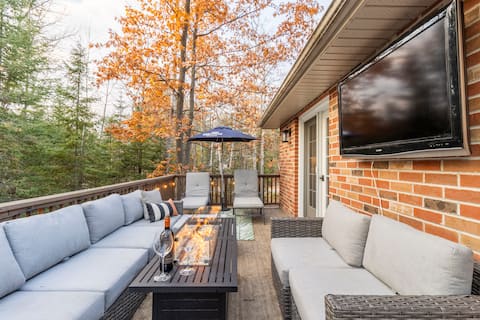
Tiny Oasis: Family Beach Cottage *HOT TUB & SAUNA*
Entire Place • 4 bedrooms
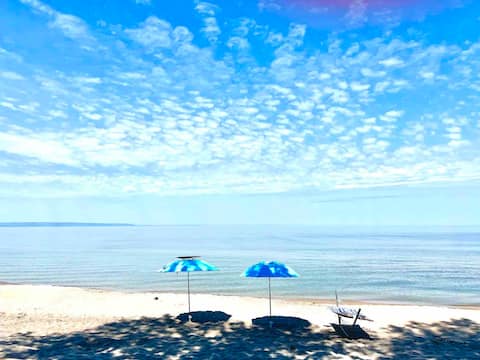
Rare Beachfront Cottage for Sun + Ski Lovers
Entire Place • 5 bedrooms
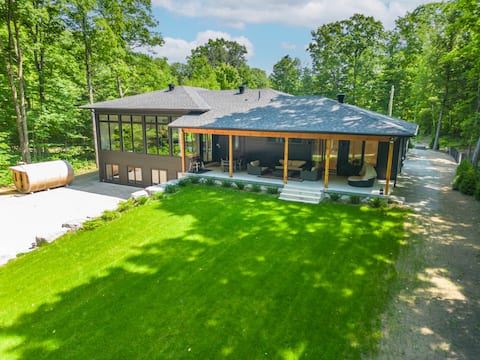
Modern Luxury Cottage! Private & Spacious!
Entire Place • 4 bedrooms
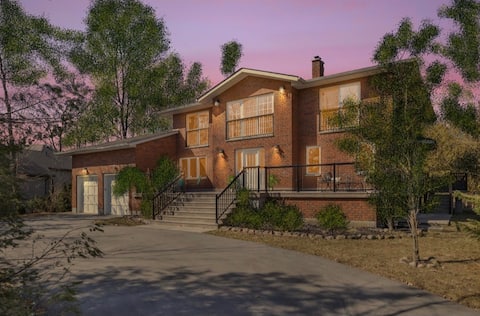
Grandview Family Beach House - Hot Tub & Sauna
Entire Place • 6 bedrooms
Note: Performance varies based on location, size, amenities, seasonality, and management quality. Data reflects the past 12 months.
Who Are the Top Airbnb Hosts in Tiny?
Learn from the best! This table showcases top-performing Airbnb hosts in Tiny based on the number of properties managed and estimated total revenue over the past year. Analyze their scale and performance metrics.
| Host Name | Properties | Grossing Revenue | Stay Reviews | Avg Rating |
|---|---|---|---|---|
| Nicholas | 1 | $245,836 | 55 | 4.87/5.0 |
| Ashley | 1 | $171,689 | 5 | 5.00/5.0 |
| Krista | 1 | $144,862 | 102 | 4.97/5.0 |
| Alexander | 2 | $143,690 | 62 | 4.65/5.0 |
| Nicole | 5 | $129,369 | 168 | 4.94/5.0 |
| Megan | 2 | $118,291 | 333 | 4.88/5.0 |
| Cawaja General | 2 | $117,497 | 70 | 4.98/5.0 |
| Calvin | 2 | $108,500 | 58 | 4.76/5.0 |
| Monica | 1 | $94,751 | 87 | 4.86/5.0 |
| Maia | 1 | $91,343 | 37 | 5.00/5.0 |
Analyzing the strategies of top hosts, such as their property selection, pricing, and guest communication, can offer valuable lessons for optimizing your own Airbnb operations in Tiny.
Who Are the Airbnb Hosts in Tiny?
Tiny has a relatively balanced host base.
Host Profile Insights for Tiny
- A 46.6% Superhost share is healthy — enough experienced operators to anchor quality without making the market impenetrable for newcomers.
- 3.2% of listings are professionally managed, reflecting a market still dominated by individual hosts.
- 4.2% of listings have Instant Book enabled. Lower Instant Book adoption means many guests must request approval, which can slow conversions.
- 50.3% of listings use Airbnb's simplified pricing (host-only fee), where the host pays the entire platform service fee and the guest sees one all-in price with no separate Airbnb service charge. High adoption signals a professional, PMS-connected host base — Airbnb mandates simplified pricing for software-connected listings.
Recommendations for Hosts
- Earning Superhost status can significantly improve search ranking and guest trust. Focus on maintaining high response rates, low cancellations, and strong reviews.
- Consider enabling Instant Book — it reduces booking friction and Airbnb's algorithm tends to favor Instant Book listings in search results.
- With 41.8% cohosted listings, there may be a growing local market for property management services.
- Benchmark your host metrics against these Tiny averages regularly and adjust your hosting strategy based on what top performers do differently.
Top Professional Management Companies in Tiny
These are the highest-grossing professional property management operations in Tiny, ranked by total revenue across their portfolio. Their performance metrics offer a benchmark for what institutional-level hosting looks like in this market.
| Company | Listings | Revenue | ADR | Occ. | Rating |
|---|---|---|---|---|---|
| Nicole | 5 | $129,369 | $274 | 37.3% | 4.94/5 |
| Cawaja General | 2 | $117,497 | $322 | 55.3% | 4.98/5 |
| Adam | 1 | $31,961 | $493 | 36.6% | 5.00/5 |
| Adolphina | 1 | $14,317 | $250 | 22.0% | 4.90/5 |
| John | 1 | $1,788 | $409 | 9.7% | 4.91/5 |
Management Company Insights for Tiny
- The leading management company, Nicole, operates 5 listings with $129,369 in gross revenue — a useful benchmark for what scale looks like in Tiny.
- Top managers average 2 properties each, suggesting professional management in Tiny still operates at a relatively boutique scale.
- Professionally managed listings in the top tier average 4.95/5 in guest ratings — demonstrating that scale and quality can coexist.
Recommendations
- With only 3.2% of listings professionally managed, there may be an opportunity to differentiate through more structured operations and consistent guest experiences.
- Study how top management companies price, position, and maintain their portfolios — their ADR and occupancy rates reflect strategies refined across dozens of listings.
- If you're considering hiring a property manager, compare their portfolio performance against these benchmarks before committing.
How Does Tiny's Airbnb Market Compare to Nearby Cities?
How does the Tiny Airbnb market stack up against its neighbors? Compare key performance metrics like average monthly revenue, ADR, and occupancy rates in surrounding areas to understand the broader regional STR landscape.
Compared with Niagara-on-the-Lake, Tiny has 5 percentage points lower occupancy and about $23 higher ADR. That helps frame whether this market is winning more on demand, pricing, or both.
| Market | Active Properties | Monthly Revenue | Daily Rate | Avg. Occupancy |
|---|---|---|---|---|
| McMurrich/Monteith Township | 25 | $3,969 | $436.17 | 35% |
| South River | 12 | $3,288 | $418.65 | 39% |
| Lake of Bays | 36 | $3,230 | $385.34 | 36% |
| McKellar Township | 40 | $3,161 | $427.97 | 37% |
| The Blue Mountains | 655 | $3,014 | $328.60 | 35% |
| Niagara-on-the-Lake | 456 | $3,008 | $300.69 | 40% |
| Huntsville | 340 | $2,733 | $316.72 | 39% |
| Severn | 152 | $2,680 | $359.46 | 35% |
| Gravenhurst | 249 | $2,613 | $385.01 | 34% |
| Port Carling | 29 | $2,601 | $548.14 | 30% |
Frequently Asked Questions About Airbnb in Tiny
These quick answers summarize the most common investor and operator questions using AirROI's latest market data for Tiny.
How much do Airbnb hosts make in Tiny?
Tiny hosts earn about $24,822 per year on average, with an average nightly rate of $323 and RevPAR of $124. Those figures describe the typical revenue environment for active listings in Tiny, Ontario, not the ceiling for the best operators. Source: AirROI 2026 data, Tiny market, August 2025 to July 2026.
What is the average Airbnb occupancy rate in Tiny?
The average Airbnb occupancy rate in Tiny is 34.8%. August is the strongest month and April is the softest, so hosts should expect demand to move meaningfully throughout the year rather than stay flat.
What is the average Airbnb daily rate in Tiny?
Listings in Tiny average $323 per night. The broader pricing spread also matters: lower-performing listings cluster closer to the lower quartiles, while premium homes can price materially above the city average when demand spikes or listing quality stands out.
How many Airbnb listings are active in Tiny?
Tiny currently has about 189 active Airbnb listings in AirROI's market dataset. That supply count helps explain how competitive the market is, how much depth there is for benchmarking, and whether the market behaves like a niche destination or a scaled urban market.
How strict are short-term rental regulations in Tiny?
AirROI currently classifies the short-term rental regulation level in Tiny as Moderate. The dataset also shows about 27.0% of listings with registration evidence. That is a market signal, not legal advice, so hosts should still confirm current licensing and compliance rules locally before listing.
What is the RevPAR for Airbnb in Tiny?
RevPAR in Tiny is about $124. That metric combines pricing and occupancy into one efficiency number, so it is often a better quick benchmark than ADR alone when investors want to compare how well listings convert nightly rates into realized revenue.
Is Airbnb profitable in Tiny?
Occupancy of 34.8% means Tiny is a more selective market. Profitability is achievable but requires careful cost management, premium positioning, or targeting longer stays to reduce turnover. Average annual revenue is $24,822, but individual returns depend on property type, location within the city, and the host's operating efficiency.
How far in advance do guests book Airbnb in Tiny?
The average booking lead time in Tiny is about 72 days — a longer planning horizon typical of destination or vacation markets where travelers book well in advance. Hosts who understand their market's booking cadence can adjust minimum stays and pricing windows accordingly.
What are the best neighborhoods for Airbnb in Tiny?
Based on AirROI's analysis, some of the top neighborhoods for short-term rentals in Tiny include Tiny Beaches, Cranberry Point, Thornbury. Each area attracts different guest profiles — from business travelers to leisure visitors — so the best location depends on the property type and target audience a host is aiming for. See the full neighborhood breakdown above.
What type of property performs best on Airbnb in Tiny?
entire_home listings make up 98.9% of the active supply in Tiny. The most common configuration does not always mean the most profitable — operators who identify underserved property types or bedroom counts can sometimes outperform the market average by filling a gap in local supply.
How does Tiny compare to nearby Airbnb markets?
Among neighboring markets, McMurrich/Monteith Township posts $47,626 in average annual revenue with 35.1% occupancy, compared to Tiny's $24,822 and 34.8%. Comparing nearby markets helps investors understand whether a destination's performance reflects local demand or broader regional trends.
What is the average length of stay in Tiny?
The average Airbnb stay length in Tiny is about 5.8 nights. That matters for turnover, cleaning operations, and pricing strategy because shorter stays increase changeovers while longer stays can smooth occupancy and reduce operational friction.
What is the average Airbnb guest rating in Tiny?
Airbnb listings in Tiny average 4.88 out of 5 overall. About 52.9% of listings carry the guest favorite badge, which suggests a meaningful share of inventory is competing on review quality rather than price alone.
Which amenities boost Airbnb revenue in Tiny?
Heating and Carbon monoxide alarm are among the strongest revenue-linked amenities in Tiny. In AirROI's latest dataset, listings with these amenities outperform those without on average revenue, which makes amenities analysis useful for prioritizing investment and listing upgrades.
Do Airbnb hosts charge cleaning fees in Tiny?
Yes. About 88.4% of active Airbnb listings in Tiny charge a cleaning fee, and the average fee is $715. The more important operating benchmark is how much of gross revenue that fee consumes, not just the absolute dollar amount.
What percentage of Airbnb hosts are Superhosts in Tiny?
A 46.6% Superhost rate signals a highly competitive market where review quality and responsiveness are table stakes, not differentiators.
About AirROI Market Data
AirROI tracks over 20 million properties across 190+ countries and maintains 15+ years of historical performance data, making it one of the deepest Airbnb and STR intelligence platforms available. The analytics pipeline aggregates listing-level data monthly — revenue, occupancy, nightly rates, RevPAR, guest demographics, booking patterns, and competitive supply — so investors and operators can benchmark any market against its own history and against neighboring destinations.
Real estate investors, property managers, financial institutions, hedge funds, tourism boards, hospitality consultants, tech platforms, and academic researchers rely on AirROI data to underwrite acquisitions, optimize pricing, model macro trends, and conduct peer-reviewed research. Data is available through in-depth market reports like this one and the Airbnb API with 22 endpoints and an Airbnb MCP Server for AI agents.
AirROI proprietary analytics as of 2026-07-31. Metrics reflect trailing twelve-month aggregates from active listings. Revenue figures are market averages, not projections. Neighborhood descriptions are AI-generated and reviewed for accuracy. For full methodology, see the data methodology page.