Longtime U.S. Airbnb Hosts Lost 13% of Winter Bookings, Then Peak Summer Held Level

Airbnb told investors this year that its North American nights booked grew at the fastest pace in almost three years. Many longtime hosts spent the same months asking why their Airbnb bookings were down.
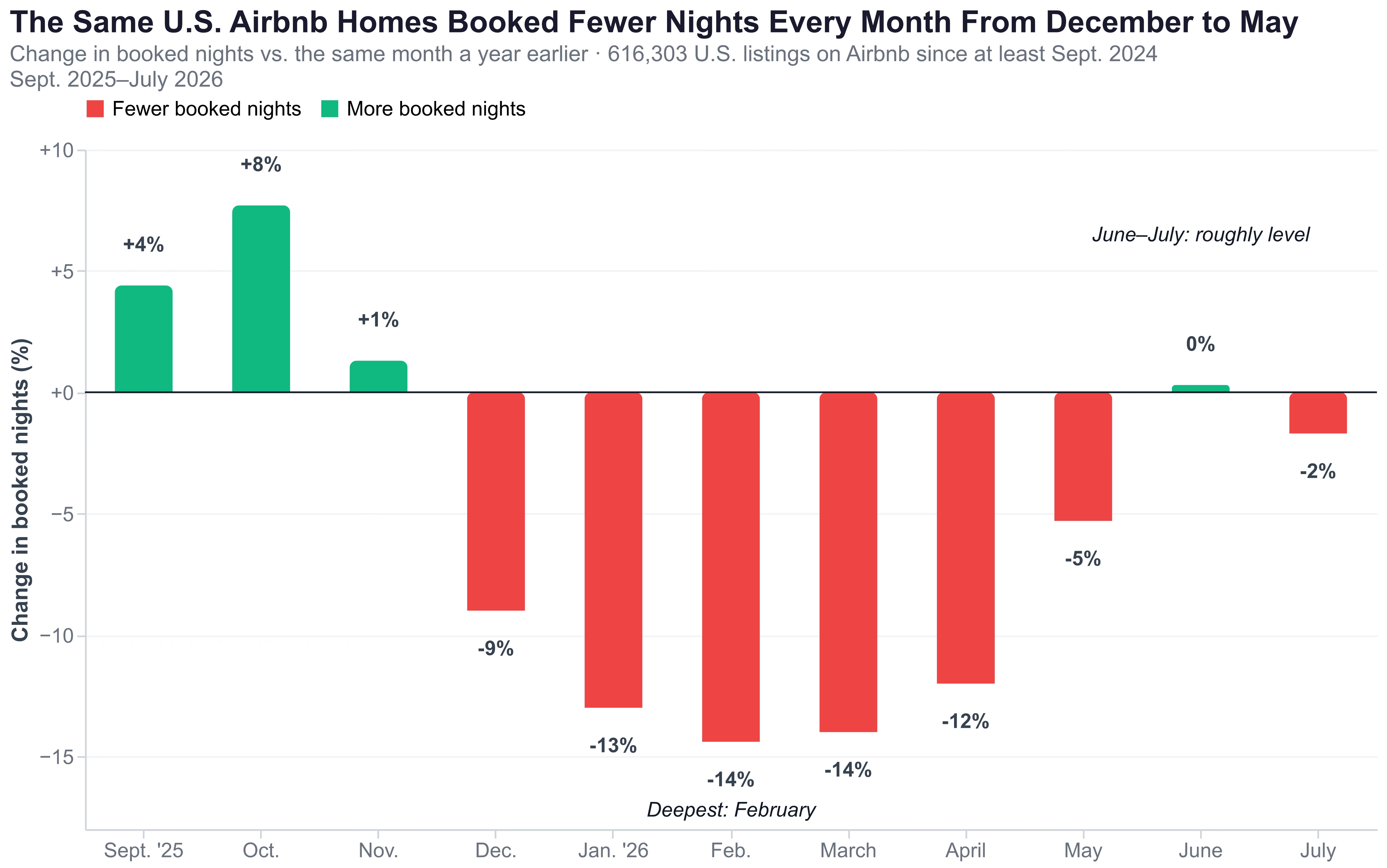
Both turned out to be right, depending on the month. Homes that have been on Airbnb since at least September 2024 booked 13% fewer nights from January through April than a year earlier, according to AirROI, a short-term-rental data firm, which compared the same 616,303 U.S. listings.
In June and July, those homes booked within 1% of last summer's nights.
The count is by night of stay, on homes listed for two years or more; Airbnb's own totals count a night when it is booked and include every newer listing. Through July, the same homes were down about 8% for the year, and more than half had booked fewer nights than in 2025.
The answer reaches past the hosts in the sample. The average established home booked about 42 nights from January through April, down from about 49, and owners are setting prices now for the next winter. Vacation-home buyers and sellers watch those calendars, and Airbnb is expected to report third-quarter results in early November.
The complaints ran across host forums all spring. "Our bookings have fallen off a cliff in 2026," a Superhost with a rural guest suite wrote on Reddit on April 5. "We haven't raised our prices and even have a discount going since early February."
Chris Dickey, who owns a three-bedroom rental in Moab, Utah, told CNBC Make It in August, "We are seeing a slow-down of booking." He suspects the market "has yet to normalize the fee change" Airbnb made to how hosts are charged.
Airbnb has described a different year. Its first-quarter shareholder letter, on May 7, reported high-single-digit growth in North American nights booked, "driven by continued strong demand for domestic travel and trips with longer lead times." The second-quarter letter on Aug. 6 called the region's growth "the highest growth we've seen in almost three years."
"While popular travel destinations may fluctuate, the demand for Airbnb stays has remained strong," a company spokesperson told Business Insider on Sept. 30.
On the evidence, the hosts were right about winter and spring. The summer peak held nationally, though most big cities lost ground, and Airbnb's growth figures measure something different.
A winter slump, from Maine to Utah
The decline began in December, after a fall in which the same homes booked more nights than a year earlier. Every month from December through May came in lower than the year before, and February and March were the worst, at about 14% fewer booked nights.
The slump reached every region. Booked nights fell from January through April in each of the 45 states, plus Washington, D.C., and Puerto Rico, that have at least 2,000 of these homes.
Maine fared worst. Its established homes averaged about 16 booked nights in the off-season months of January through April, down from about 23. Delaware, South Dakota and New Jersey followed. Hawaii, California and Louisiana lost the least, and Florida and Arizona, the winter-sun states, held up better than most.
Mountain towns took some of the sharpest losses. Park City, Utah, booked about a quarter fewer nights, and Breckenridge, Colo., about a fifth fewer, in line with the declines across U.S. ski markets last winter.
Skier visits in the Rocky Mountain region fell to 20.1 million from 26.5 million a season earlier, the Colorado Sun reported in May, citing the National Ski Areas Association. "Few seasons demonstrate as clearly as this one how dependent our industry remains on regional weather patterns," Michael Reitzell, the association's president, said in a statement. Vail Resorts Chief Executive Rob Katz called it "one of the most challenging winters in history."
Snow doesn't explain the Northeast, where resorts counted more skier visits than a season earlier by the association's figures, yet established homes booked about a fifth fewer nights from January through April. The drop coincided with Winter Storm Fern in late January and a late-February storm that meteorologists cited by the Associated Press called the strongest in a decade.
The slump showed up in rental homes already on Airbnb, not in hotels. U.S. hotels sold more than 8 million more room nights in the first four months of 2026 than a year earlier, Jan Freitag of CoStar said in a June 1 release. "Travel activity appears resilient heading into the summer," Aran Ryan of Tourism Economics said in the same release.
Resort towns held up as big cities slipped
By June the drop had all but stopped for the established homes as a group, but the national figure hides a split. Of the 84 U.S. cities with at least 1,000 of these homes, seven in 10 booked fewer nights in June and July. Big Sun Belt metros lost the most, with the Las Vegas Valley, Tampa and Charlotte each down about an eighth, and El Paso about 17%.
The biggest gains came in resort towns.
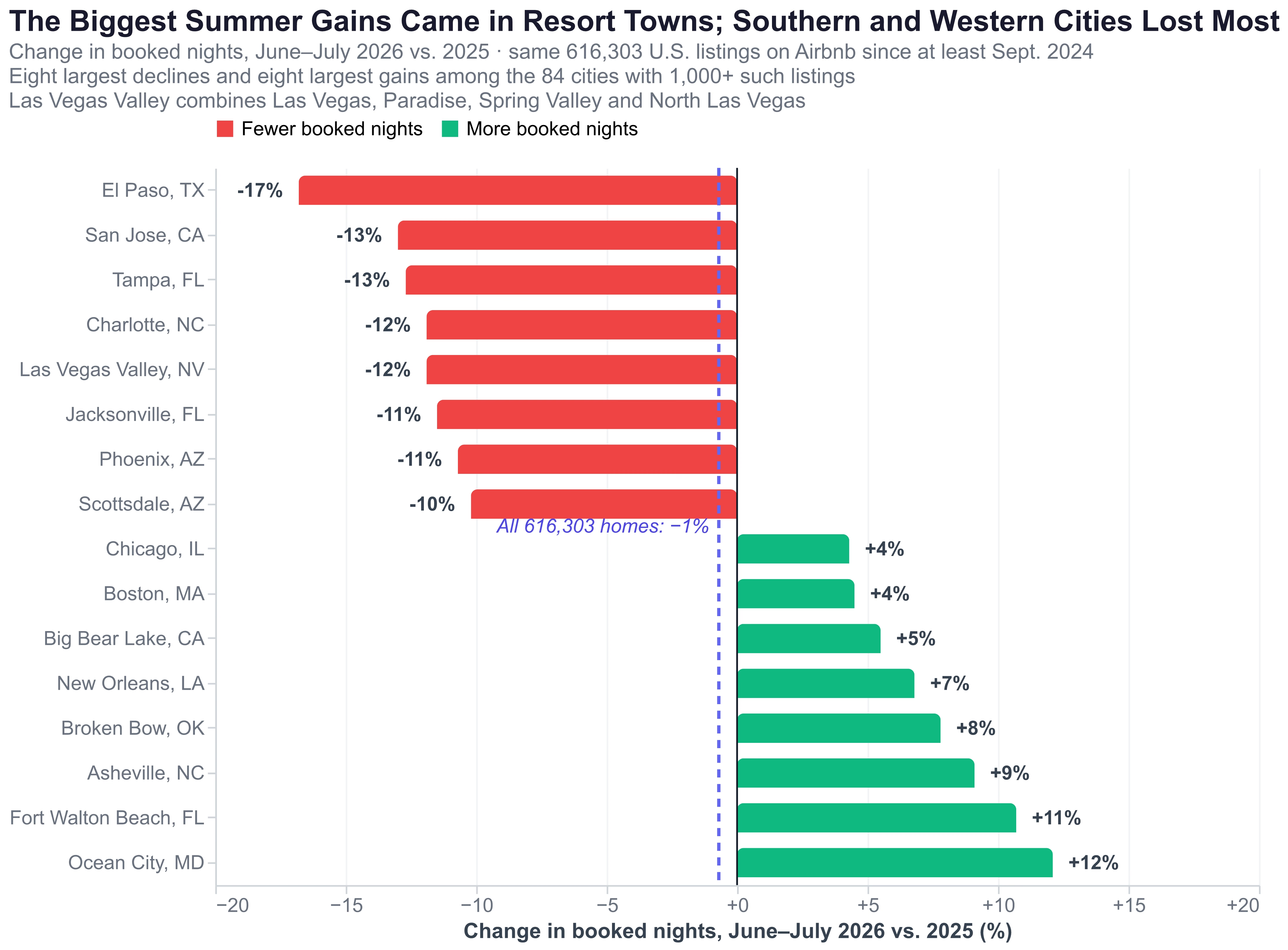
Ocean City, Md., carried the whole year in one town. Its established homes averaged about 9.5 booked nights from January through April, down from about 14, then booked about 12% more nights in June and July. Fort Walton Beach, Fla., Asheville, N.C., and Broken Bow, Okla., also gained.
On the Alabama coast, tourism officials reported a strong year in dollars. "Through July of this year, our area was already at $739 million in lodging revenue, which is $60 million AHEAD of where we were at this point last year," Beth Gendler, president and CEO of Gulf Shores & Orange Beach Tourism, said at a chamber of commerce forum in early September.
Kelly Gross, who rents out a five-bedroom home north of Decatur, Ga., had just three bookings for the more-than-monthlong World Cup, which had matches in Atlanta, she told the Atlanta Journal-Constitution in June. "I expected a great turnout with all the hype," she said. Established homes in Atlanta booked about 5% fewer nights in June and July.
Newcomers join the competition
Competition from newer listings may be part of the squeeze. Among the roughly 952,000 active U.S. listings this summer, a broader count than the established homes, about one in 12 had first appeared on Airbnb since September 2025.
Those newcomers took about one in 20 of the summer's booked nights, filling about a quarter of the nights they had open, roughly half the rate of established listings. Each still competes for the same guests, a pressure already visible in oversaturated markets such as Austin and Las Vegas.
Owners trying to sell face a glut of their own. "There's just a lot of inventory out there that they're competing with," Gary Doss, a real estate agent in Big Bear Lake, Calif., told Business Insider on Sept. 30, describing vacation homes for sale there.
Private rooms lost the most of any major home type in both seasons, and four-plus-bedroom homes were above last year by summer:
| Established U.S. homes | Booked nights, Jan.–April | Booked nights, June–July |
|---|---|---|
| All homes | −13% | −1% |
| Private rooms | −19% | −9% |
| Studios and one-bedrooms | −14% | −3% |
| Four-plus bedrooms | −11% | +2% |
| Homes with beach access | −10% | +1% |
Homes run by professional managers lost somewhat less than other homes.
Airbnb's own letter describes the same shift. "Growth in short-term stays and entire homes, particularly listings with four or more bedrooms, continued to outpace long-term stays … and private rooms," the company wrote in August.
Airbnb's numbers count something else
Airbnb reported 148.3 million nights and seats booked worldwide in the second quarter, up 10% from a year earlier, and has told investors to expect "low double-digit growth in Nights and Seats Booked" in the third.
Its definition helps explain the gap with hosts' calendars. The company counts nights booked in a period "net of cancellations and alterations that occurred in that period," not when the guest arrives, so a July trip reserved in March counts toward the first quarter. That is how Airbnb could credit "trips with longer lead times" for first-quarter growth while January-through-April stays on established homes were falling.
By the second quarter, what is in the count likely matters more than timing: every listing that joined in the past year, guests and homes outside the U.S., and hotels. Hotel nights booked "grew approximately three times as fast as our homes business," the letter said, though hotels "still represent a single-digit percentage of nights booked."
Airbnb's third-quarter report
Airbnb has not announced a date for its third-quarter results; last year's report came on Nov. 6.
Describing Airbnb's pricing strategy on the Aug. 6 earnings call, Chief Financial Officer Ellie Mertz said, "In many cases, that means we encourage our hosts to bring their prices down, and in some cases, it means we want to make sure they're not leaving money on the table."
About the data: AirROI compared booked nights by stay date for 616,303 U.S. listings on Airbnb continuously from September 2024 through August 2026, excluding monthly-minimum rentals. Summer figures for these homes cover June and July. U.S. totals include Washington, D.C., and Puerto Rico.
Frequently Asked Questions
No. Airbnb reported 148.3 million nights and seats booked in the second quarter of 2026, up 10% from a year earlier, with high-single-digit growth in North America. Established U.S. listings booked about as many summer nights as in 2025, even after a weak winter.
The steepest winter losses hit private rooms, Western ski towns, the Northeast and the Midwest; in the Northeast, the slump coincided with two major storms. About one in 12 active U.S. listings this summer had joined since September 2025, adding competition for the same guests. Airbnb's chief financial officer said in August that the company often encourages hosts to lower their prices.
Among cities with at least 1,000 homes listed since at least September 2024, El Paso booked about 17% fewer nights in June and July than a year earlier. Las Vegas Valley, Tampa, Charlotte and Phoenix also lost summer nights, while Maine and Park City, Utah, were among the weakest places in January through April.
Airbnb counts a night in the quarter the reservation is made, net of cancellations, so a July trip reserved in March adds to the first quarter. Its totals also cover newer listings, hotels and every country it operates in. A host's calendar counts nights when guests actually stay, on one existing home.