An Old San Juan Two-Bedroom Grosses $52,000 a Year; One in Cabo Rojo, $18,000

An industry study reported Sept. 29 says Puerto Rico's short-term rentals carry more than $6 billion in economic impact. Whether a single Airbnb is profitable in Puerto Rico depends on its size and its address.
The median entire home listed all year grossed $27,589 in booked Airbnb revenue over the year through September, before Airbnb's fee and running costs, according to AirROI, a short-term-rental data firm, which tracked about 16,000 such homes. A two-bedroom in Old San Juan grossed about $51,900 at the median, nearly triple the $18,100 a two-bedroom in Cabo Rojo took in.
Those are gross takings on one platform, not profit.
The gap matters now. Owners are pricing the winter season, which brings in nearly half a year's booked revenue. The highest electricity rate since 2008 has been in force since Oct. 1. From Jan. 1, new applicants for Act 60's resident-investor tax decree pay 4% on interest, dividends and post-residency gains instead of paying nothing.
A Senate bill to license rentals in all 78 municipalities has sat in a House committee since November 2025 without a hearing or vote. For buyers moving to the island, and for the residents bidding against them, the choice of town sets the economics.
The $6 billion comes from a study by Estudios Técnicos for the Viva Puerto Rico Short-Term Rental Alliance, which El Nuevo Día described as a measure of "economic impact." The study counted about 33,000 short-term rentals and has not been released in full, the paper said.
What reaches hosts on Airbnb is a fraction of the headline. About 17,000 active entire homes took in roughly $650 million in booked revenue in the year to September, AirROI's data show.
Airbnb's own count, of host earnings in calendar 2025, is in the same range: more than $458 million, the company said in February. Its study that month separated that from a larger measure, about $1.9 billion of value added to the island's economy.
"We want people to better understand how this sector works, the nearly 19,000 jobs the industry generates and what its impact is on Puerto Rico," René Acosta-Benítez, the alliance's president, said in a statement in Spanish on Aug. 20.
Where a two-bedroom pays
Location moves both halves of the sum: how often a home is booked and what it charges. Two-bedrooms in Old San Juan, Isla Verde in Carolina, and Condado and Ocean Park filled about half their open nights, at median rates of roughly $190 to $280.
In Cabo Rojo, the southwest beach town, two-bedrooms filled under a third of their nights at about $160. In Ponce, they filled more than a third at under $120.
Old San Juan, Isla Verde, and Condado and Ocean Park each beat the island's two-bedroom median by more than half.
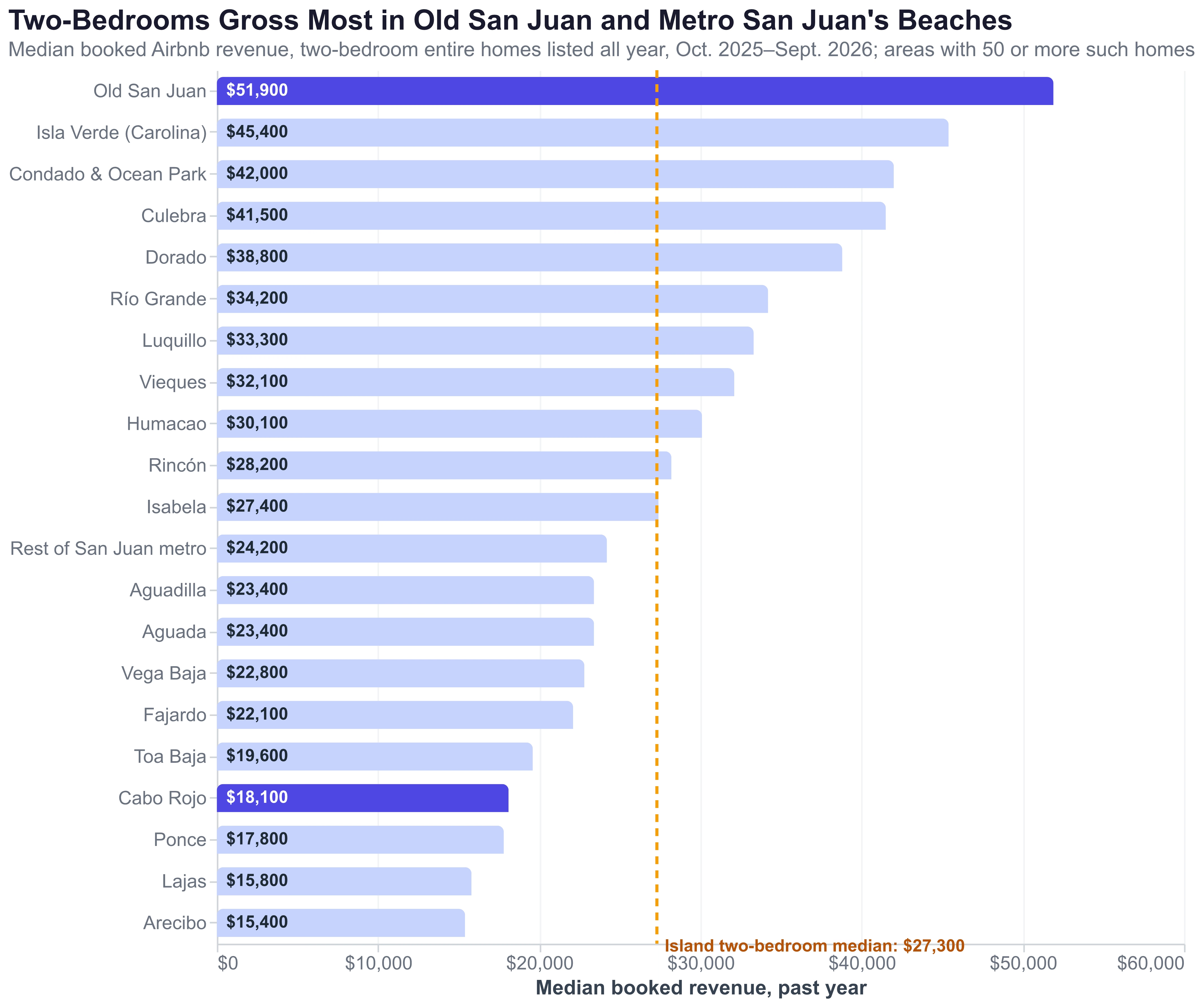
Elsewhere on the island, size muddies the ranking. Dorado's median across all its homes, about $40,100, rivals those three districts, but nearly four in five Dorado homes have two or more bedrooms. Like for like, its two-bedrooms grossed about $38,800 and trail all three.
Culebra's two-bedrooms came close to the leaders, at about $41,500, on a small base of homes. Rincón, the west-coast surf town, landed near the island median.
What a unit keeps
Bedroom count moves revenue more than location does. Look at the jump past three bedrooms, where the median more than doubles.
| Bedrooms | Median booked revenue | After a 15.5% host fee |
|---|---|---|
| Studio or 1 | $19,900 | $16,800 |
| 2 | $27,300 | $23,100 |
| 3 | $39,400 | $33,300 |
| 4 or more | $91,200 | $77,100 |
Those figures come before Airbnb's fee. Most hosts on its host-only fee pay 15.5%, and Airbnb says it is moving all home hosts to that structure; most hosts still on the older split fee pay 3%. The shift is covered in an analysis of Airbnb's 15.5% host-only fee.
The room tax is a separate line. Guests pay 7% on top of the price, and Airbnb collects and remits it on its bookings, cleaning fees included. Hotels pay 9%.
After the 15.5% host fee, the island's median home keeps about $23,300 a year, before electricity, insurance, condo fees, property tax and any mortgage.
Power is dearer this quarter. Non-subsidized residential customers pay 33.85 cents a kilowatt-hour, the highest since 2008, through Dec. 31, up nearly a fifth from last quarter.
Management can take another slice. Hospitri, a Puerto Rico rental-management platform, pitched owners on "the difference between a 20% commission and Hospitri's 8%" in a company announcement reported by News is my Business in April.
At the bottom of the market, a quarter of homes grossed under $14,900 a year.
"Nearly half of the hosts who have only one property do not generate and are unable to generate income," Raúl Santiago Bartolomei, a planning professor at the University of Puerto Rico, told The Latino Newsletter in April. "The key to success in this field is to have multiple housing units located in different parts of Puerto Rico."
Hotels gained; rentals slipped
Hotel occupancy on the island rose to 72.6% in the fiscal year that ended in June, from 69.9%, NotiCel reported.
Rental homes listed all year went the other way. The same homes, listed all year in both periods, booked about 7% fewer nights than a year earlier. Occupancy, the share of open nights that sold, slipped from 49% to 46%.
That slip was steeper than the mainland's, where homes measured the same way booked about 5% fewer nights. Measured as booked nights times nightly rates, the same homes' takings also fared worse over the year than mainland homes'.
Old San Juan held up best of the capital's districts: its same homes booked about 5% fewer nights, against 7% island-wide.
The island's own tourism marketers see crowding. "Leisure rental occupancy remains constrained by the ongoing expansion of rental inventory, limiting occupancy growth," Discover Puerto Rico wrote in January. A September update put rental supply through July up 6.4%, with hotel supply flat.
The industry's promoters read the same growth as strength. "Independent hospitality is no longer a complementary segment," said Pedro Fernández, whose CUBE Events produces the Rebook Hospitality Conference, in a Sept. 25 News is my Business article that put rentals at about 56% of the island's lodging supply.
Winter, summer and a hollow fall
Timing matters too. December through April brought in about 47% of a year's booked revenue island-wide, with March the biggest of those months.
September and October, the peak of hurricane season, brought in under a tenth of the year together.
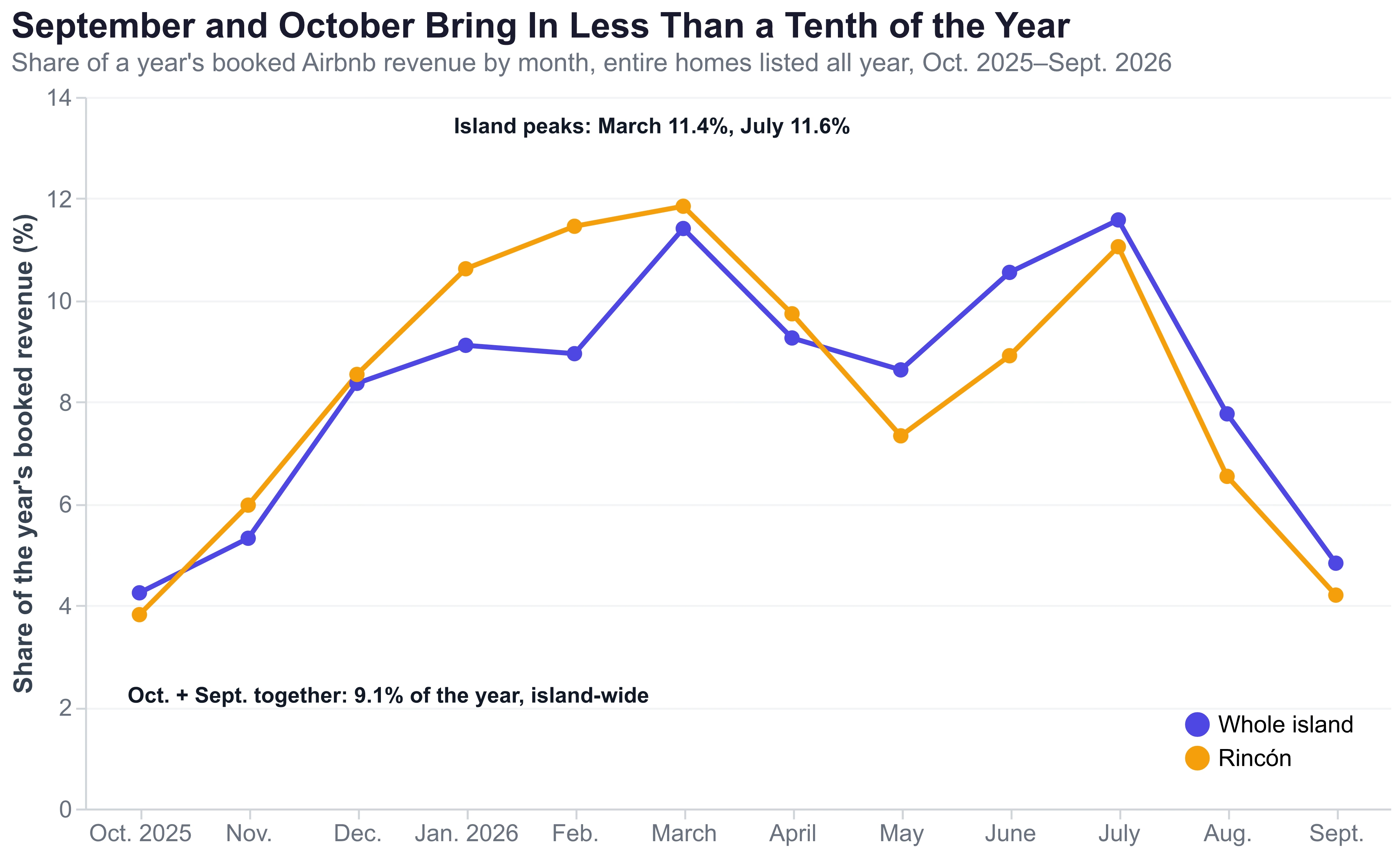
Summer held up. June and July each brought in more than a tenth of the island's year, and July about matched March.
Rincón leans harder on winter than the island as a whole: 52% of its booked revenue landed between December and April.
Rules from town to town
Airbnb wants one statewide rule in place of town-by-town licenses. "Today one municipality comes out with one thing, another day they come out with something else," Carlos Muñoz, the company's public policy director for Central America and the Caribbean, told Metro Puerto Rico in Spanish in February. Dorado already charges for its own license.
Senate Bill 238 would replace the patchwork with licenses and registries in every municipality, and move a point of the 7% room tax to the towns. It passed the Senate in November 2025 and was referred to the House Tourism Committee, where it has had no hearing or vote since, legislative records show.
"You can't have an industry that generates millions of dollars where registering is voluntary," Sen. Nitza Morán Trinidad, the bill's author, told Metro Puerto Rico in Spanish that month.
West-coast innkeepers want existing rules applied. The laws exist, but compliance with them is not checked, Ángel Rodríguez, owner of Parador Boquemar in Boquerón, Cabo Rojo, said in remarks Foro Noticioso published Oct. 4.
The stakes run past hosts. In Cabo Rojo, Marialys Santiago Martínez, a car saleswoman who rents in the town, told the Centro de Periodismo Investigativo in Spanish in March that the last house she visited to buy, in 2025, went to a U.S. resident who paid cash above the appraised value and turned it into a short-term rental.
"I've had such a hard time that I've stopped looking," she said of her search in Cabo Rojo, where a two-bedroom Airbnb grossed about a third of what one did in Old San Juan.
About the data: Revenue is booked Airbnb revenue from nightly rates, before fees and taxes, for entire homes listed all year that booked a night, Oct. 2025 to Sept. 2026, excluding monthly-minimum rentals. AirROI's Puerto Rico market pages average all listing types.
Frequently Asked Questions
It depends mostly on size. Among entire homes listed all year, the median studio or one-bedroom booked about $19,900 in the year through September 2026, and the median home with four or more bedrooms about $91,200. Both are gross figures, before Airbnb's fee and the costs of running the home.
Comparing two-bedrooms, Old San Juan, Isla Verde in Carolina, and Condado and Ocean Park booked the most, led by Old San Juan at about $51,900 a year. Dorado looks stronger town-wide than it is because its homes tend to be larger than the island's. Arecibo, Lajas, Ponce and Cabo Rojo sit at the bottom, with a Cabo Rojo two-bedroom at about $18,100.
Stays shorter than 90 days carry a 7% room tax, against 9% for hotels, and Airbnb collects and remits it on its own bookings, cleaning fees included. The Puerto Rico Tourism Company says short-term hosts must register with it and file a monthly return by the 10th; violations can bring fines of $500 a day, up to $25,000. Some towns require a license, such as Dorado at $1,000 to $3,000 a year, and Senate Bill 238, which would set up licenses and registries in every municipality, went to the House Tourism Committee in November 2025, where it has had no hearing or vote.
September and October are the slowest months: together they brought in less than a tenth of a year's booked revenue for entire homes listed all year. December through April brings in nearly half the year, and March and July are the biggest single months, nearly level. Homes listed all year in both of the past two years filled about 46% of their open nights, down from 49%.