Panhandle and Disney-Area Airbnbs Kept Guests as Tampa and Inland Florida Lost Them

Second-home owners in Destin and the Keys are listing homes at some of the country's highest rates. Rentals there and near Disney World kept their guests; Tampa Bay's mainland and inland Florida lost theirs.
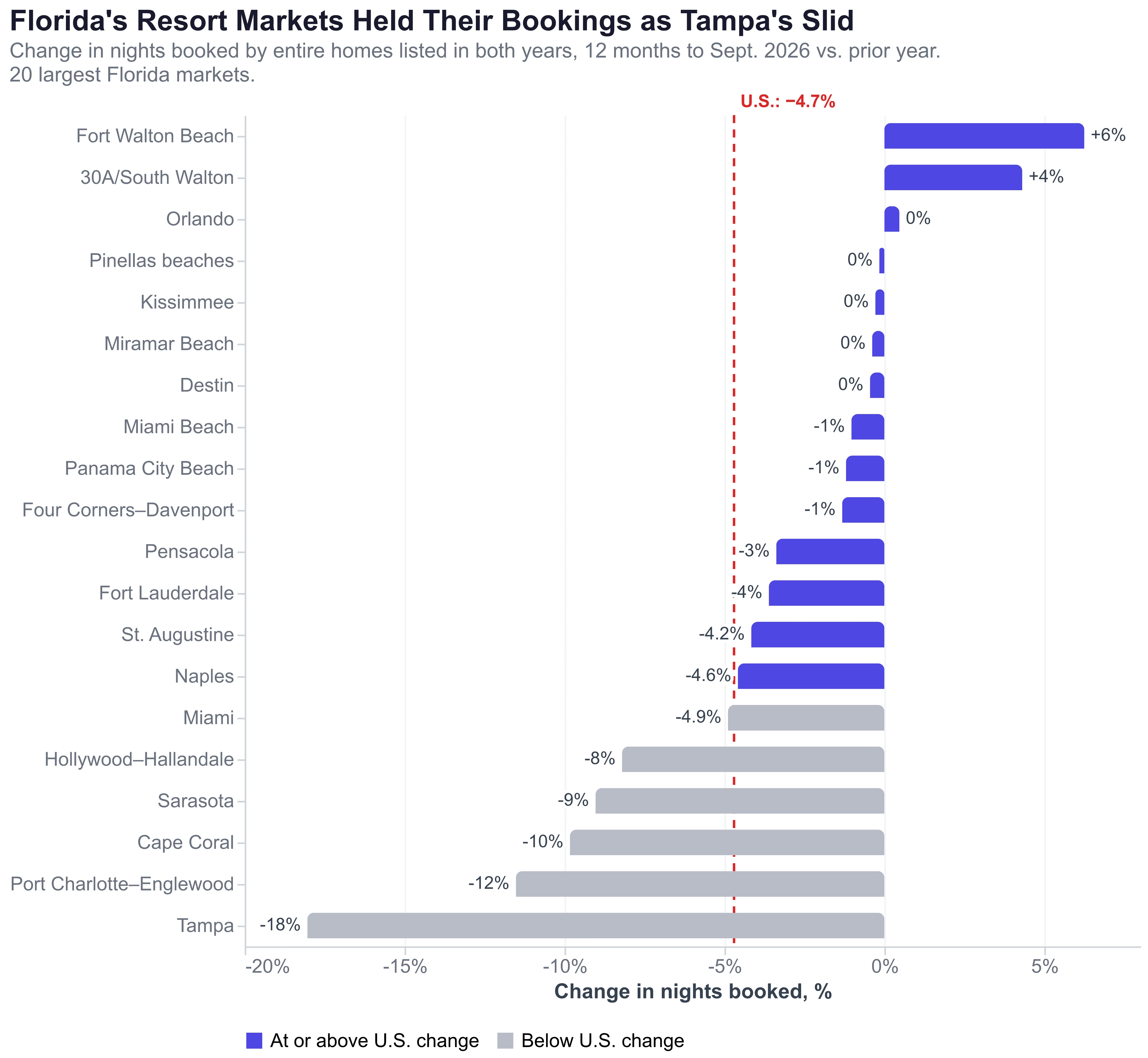
Rentals on the Panhandle beaches, home to several of the best Airbnb markets in Florida, booked about 1% more nights in the 12 months through September than a year earlier, counting only homes listed in both years. Those in the vacation-home belt around Disney World booked about 1% fewer. Nationally, the same comparison fell about 5%, according to AirROI, a short-term-rental data firm, which tracked about 83,000 Florida homes listed on Airbnb in both years.
In Tampa, homes listed in both years booked 18% fewer nights, while active whole-home listings in the city rose about 13%.
Part of that gap is the calendar. Tampa's comparison year opened in October 2024, the month Hurricane Milton made landfall, about two weeks after Hurricane Helene.
At the Feb. 12 meeting of Hillsborough County's Tourist Development Council, officials said the county's 3-cent bed-tax collections for the first quarter of its fiscal year, October through December, ran about 17% below a year earlier. Ron Barton, presenting to the council, tied the gap partly to occupancy bumps from the prior year's hurricane season and cautioned against overreacting to it.
The split matters because the selling has started. Destin, the Keys, the Smokies and Palm Springs had the highest share of vacation-home owners heading for the exits, with 3% to 5% of the stock listed for sale, Parcl Labs found, Business Insider reported on Sept. 30.
The resort markets' edge was built from fall through spring, and it faded this summer.
Statewide, Florida's bookings tracked the country's. Its returning rentals booked about 4.5% fewer nights, close to the national slowdown in bookings, and its active whole-home listings grew about 5%, matching the rise nationally.
Airbnb has played down the cooling. "While popular travel destinations may fluctuate, the demand for Airbnb stays has remained strong," a spokesperson told Business Insider.
The state's tourism agency is warier. "Domestically travelers are tightening their belts because of higher costs," Visit Florida Chief Executive Bryan Griffin said at the agency's Sept. 9 board meeting. Visits to the state fell 1.4% in the first half of the year, by the agency's count.
A commenter on a Reddit hosting forum put it bluntly in January: "Florida is oversaturated in just about every market."
Graded region by region, that claim holds only in part. Among the big regional groups, listings rose faster than the nation's on the Tampa Bay mainland and in the inland cities, where bookings fell hardest. They grew more slowly on the Panhandle and barely changed in the Disney belt, where bookings held.
Where a year of bookings pays most
Among 60 Florida markets with at least 300 active whole-home rentals, Key West leads by a wide margin: a typical home there booked about $115,000 over the year. That is gross booked revenue before mortgage and other costs, not a return.
Key West also tops AirROI's national ranking of beach towns for Airbnb investment. Its listing count fell about 5%, and its returning rentals booked as many nights as the year before.
At the bottom sit the city of Fort Myers and The Villages, where a typical home booked about $22,000.
Ten of the 12 top earners beat the national booking trend; Clermont and Jupiter–Palm Beach Gardens did not.
| Market | Typical year of bookings | Booked nights vs. a year earlier* | Active listings, change |
|---|---|---|---|
| Key West | $115,300 | 0% | −5% |
| 30A/South Walton | $82,600 | +4% | +5% |
| Anna Maria Island | $78,300 | +15% | +16% |
| Marathon | $68,900 | −1% | +7% |
| Clermont | $65,000 | −6% | +62% |
| Sanibel–Captiva | $62,900 | +14% | +64% |
| Siesta Key | $61,200 | +8% | +7% |
| Upper Keys (Key Largo–Islamorada) | $60,300 | −1% | −5% |
| Jupiter–Palm Beach Gardens | $58,500 | −6% | +3% |
| Fernandina Beach | $56,800 | +3% | +11% |
| Pensacola Beach–Gulf Breeze | $56,500 | +1% | +3% |
| Destin | $56,200 | 0% | +5% |
*Homes listed in both years. U.S.: −5%.
The Disney belt stopped adding homes
The pool-home subdivisions south and west of Disney World held up far better than the nation. In Kissimmee, homes listed in both years booked as many nights as the year before; in Four Corners–Davenport, about 1% fewer.
Active listings were flat in both Kissimmee and Four Corners–Davenport, while the nation's rose about 5%.
A typical home in either market booked about $50,000 over the year. The belt's signature product, a pool home with four or more bedrooms, booked about $65,000 in Kissimmee and about $60,000 in Four Corners–Davenport.
County tourism officials saw demand shift toward vacation homes. Vacation-home demand rose 12% in September 2025 while their average nightly rate fell 10%, Experience Kissimmee Chief Marketing Officer Casey Leppanen said at an Osceola County Tourist Development Council meeting in December.
Home values slipped anyway. Zillow's typical value for all homes fell about 3% in Kissimmee and about 4% in Davenport over the year through August, Zillow data show.
West of the parks, Clermont added homes fastest, with listings up by more than half.
The Panhandle's edge came outside summer
On the Panhandle beaches, from Pensacola Beach to Port St. Joe, returning rentals booked about 1% more nights than a year earlier while listings grew about 3%, more slowly than the nation's. In Destin they booked about as many, well ahead of the nation, so the owners Parcl Labs counted are not leaving an empty market.
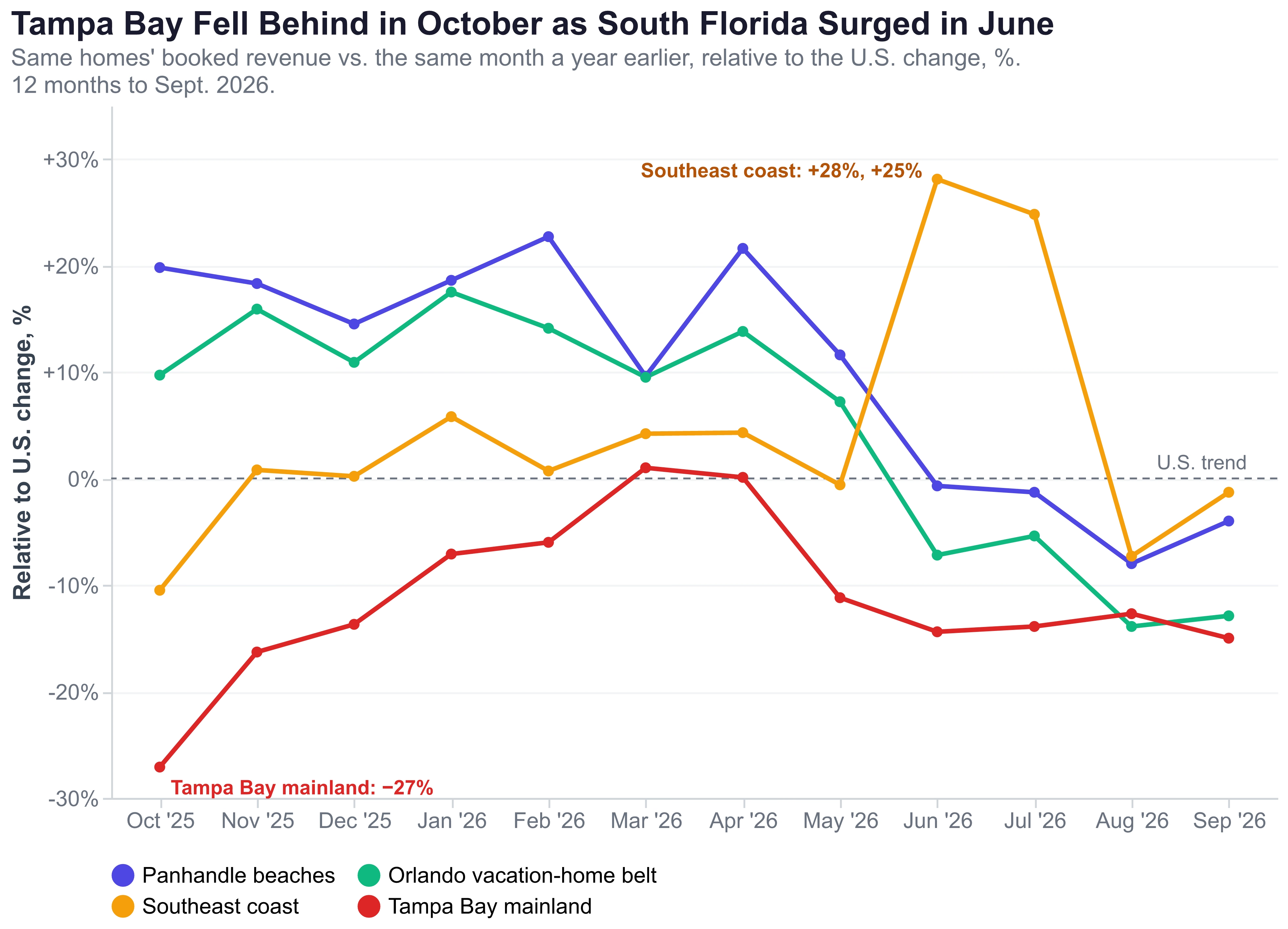
The edge came from fall through spring. Measured by booked revenue, the region's returning rentals outpaced the national change by 15% to 23% each month from October through February, and by 22% in April.
Most of the money still arrives in summer: Destin and Panama City Beach take about half a year's revenue in May, June and July. Naples is the mirror image, earning about 43% of its year from January through March.
"It has been a great season," Griff Griffitts, president of the Bay County Tourist Development Council, told PCB Life on Sept. 26. Bay County's bed tax rose 7% in the 10 months through July, he said.
By booked revenue rather than nights, Florida as a whole ran ahead of the national change every month from October through May, was about even in June, then fell behind: about 9% in August and 4% in September. The Panhandle was about even in June and July and trailed in August and September, after its peak.
The southeast coast ran the other way. From Miami to Jupiter, returning rentals' booked revenue outpaced the national change by about a quarter or more in June and July, as World Cup matches were played at Hard Rock Stadium.
Cory Friedman, a Miami Superhost who oversees more than 60 listings, told FIU's Caplin News in June that he had scaled back planned World Cup rate increases. "The demand is there, the supply just hasn't been taken yet," he said.
Over the full year, the southeast coast's returning rentals booked about 5% fewer nights, level with the nation.
Tampa Bay's slide outlasted the storm months
Homes listed in both years booked 18% fewer nights in Tampa, 13% fewer in St. Petersburg and 15% fewer in Largo–Seminole.
A typical Tampa rental booked about $27,000 over the year, about a third of a 30A home's take.
The gap opened in October, a year after Milton made landfall, when the mainland's booked revenue trailed the national change by more than a quarter. From October through December it ran about a fifth behind.
That fall gap fits the storm calendar; the summer one doesn't. The gap closed in March and April, then reopened in May and was still 15% in September, a month no storm touched in either year.
"We're far beyond bouncing back from 2024," Brian Lowack, chief executive of Visit St. Pete-Clearwater, told the St. Pete Catalyst on July 28, after Pinellas County's record spring. "We're past that."
The Pinellas beach towns bear that out in part: their returning rentals held booked nights about even with a year earlier. St. Petersburg's mainland rentals booked 13% fewer.
The barrier islands that storms had closed came back hardest. On Anna Maria Island, returning rentals booked 15% more nights; on Sanibel and Captiva, 14% more. Across those islands, Siesta Key and Fort Myers Beach, listings rose about a quarter as homes reopened.
Manatee County's bed tax topped the prior year in every month of the fiscal year through February, with the biggest gain, 36.7%, in November, county figures published by The Anna Maria Islander in April show.
"And we've reached a point now where we believe that everything for now that's going to come back, has come back," Pamela Johnson, executive director of the Lee County Visitor & Convention Bureau, said at an Aug. 26 chamber luncheon.
Away from the resort coasts, the losses didn't cluster in the storm months. In six cities from Tallahassee and Jacksonville to Lakeland and The Villages, returning rentals booked 12% fewer nights while listings grew about an eighth. In the city of Fort Myers, bookings fell 17% while listings rose about 40%.
A hurricane warning on the Panhandle
The Panhandle, which built its edge from fall through spring, heads into the fall under a hurricane warning from Ocean Springs, Miss., to the Bay-Gulf county line in Florida.
Tropical Storm Isaias formed on Oct. 7 and is forecast to become the season's first hurricane. The National Hurricane Center expects it to make landfall within the warning area late Friday, Oct. 9, or early Saturday.
Okaloosa County has ordered coastal evacuations, Destin included, starting Thursday, and told out-of-town visitors to leave.
About the data: Typical years are medians for entire homes with minimum stays under 28 nights and full-year data. Booking changes track such homes listed in September 2025 and 2026, with full-year data in each. Listing changes count active entire homes, July–September, a year apart.
Frequently Asked Questions
Not statewide: Florida's active whole-home rentals grew about 5% in the year to September 2026, in line with the U.S. The growth was local. Tampa's listings rose about 13% and Clermont's by more than half, while Kissimmee and Four Corners barely changed and the Panhandle beaches grew more slowly than the nation.
A typical Kissimmee vacation rental booked about $50,000 over the year through September 2026, and homes listed there in both years held their booked nights level while the national comparison fell. Zillow's typical value for all homes in the city slipped about 3% over the year through August.
Mostly not. State law bars local governments from prohibiting vacation rentals or regulating how long or how often they are rented; older local rules adopted on or before June 1, 2011, still apply. Some cities still restrict them: Miami bans rentals shorter than 30 days in multifamily residential condos unless the building is certified as a condo hotel, the Miami Herald reported.
Southwest Florida and Key West peak in the snowbird season: Naples earns about 43% of its year from January through March, and Key West's best months are January through March. The Panhandle runs the other way, with about half its revenue in May through July, though its gains on the national trend over the past year came from fall through spring, not summer.