Florida Snowbird Rental vs Airbnb: A Coin Flip on the Gulf Coast

On Florida's Gulf Coast, a snowbird rental and a nightly Airbnb paid about the same last winter. A two-bedroom booked by one snowbird for all of January through March, at the going Airbnb monthly price, grosses about $14,859. The median nightly two-bedroom on the same coast earned $14,218, and it took seven check-ins to get there.
Two condos in neighboring cities show how differently the same money arrives. A Bradenton two-bedroom with a 30-night minimum was booked 88 of its 90 winter nights, on stays reserved about eight months ahead, and earned $15,827. A Sarasota two-bedroom with a 4-night minimum sold 34 nights across six stays and earned $14,293.
On the Gulf Coast, a Full Snowbird Winter Lands Within $641 of the Median Nightly 2BR
A full snowbird season at the Gulf Coast's median monthly price came to $14,859 last winter, $641 more than the median nightly two-bedroom earned. Of 5,293 nightly two-bedroom Airbnbs in AirROI's data (minimum stays of one to seven nights) on the Gulf Coast (Naples/Marco Island, Fort Myers/Cape Coral, Sarasota/Bradenton, Punta Gorda/Port Charlotte and the Pinellas beaches around Clearwater and St. Pete), 53% earned less from January through March 2026 than that full season. The season figure is simple arithmetic: two-bedrooms with a 28-night minimum asked a median $165 a night, or $4,953 per 30 nights, over 90 nights. Monthly and nightly listings are different properties, so that median monthly price is a market benchmark, not a quote for your unit.
Nightly results spread widely around the line. The bottom quarter of nightly two-bedrooms earned $7,041 or less, the median $14,218, and the top quarter $22,246 or more. And 11.5% of them were open for bookings and sold no winter nights at all. A snowbird season, if it fills, is one fixed number.
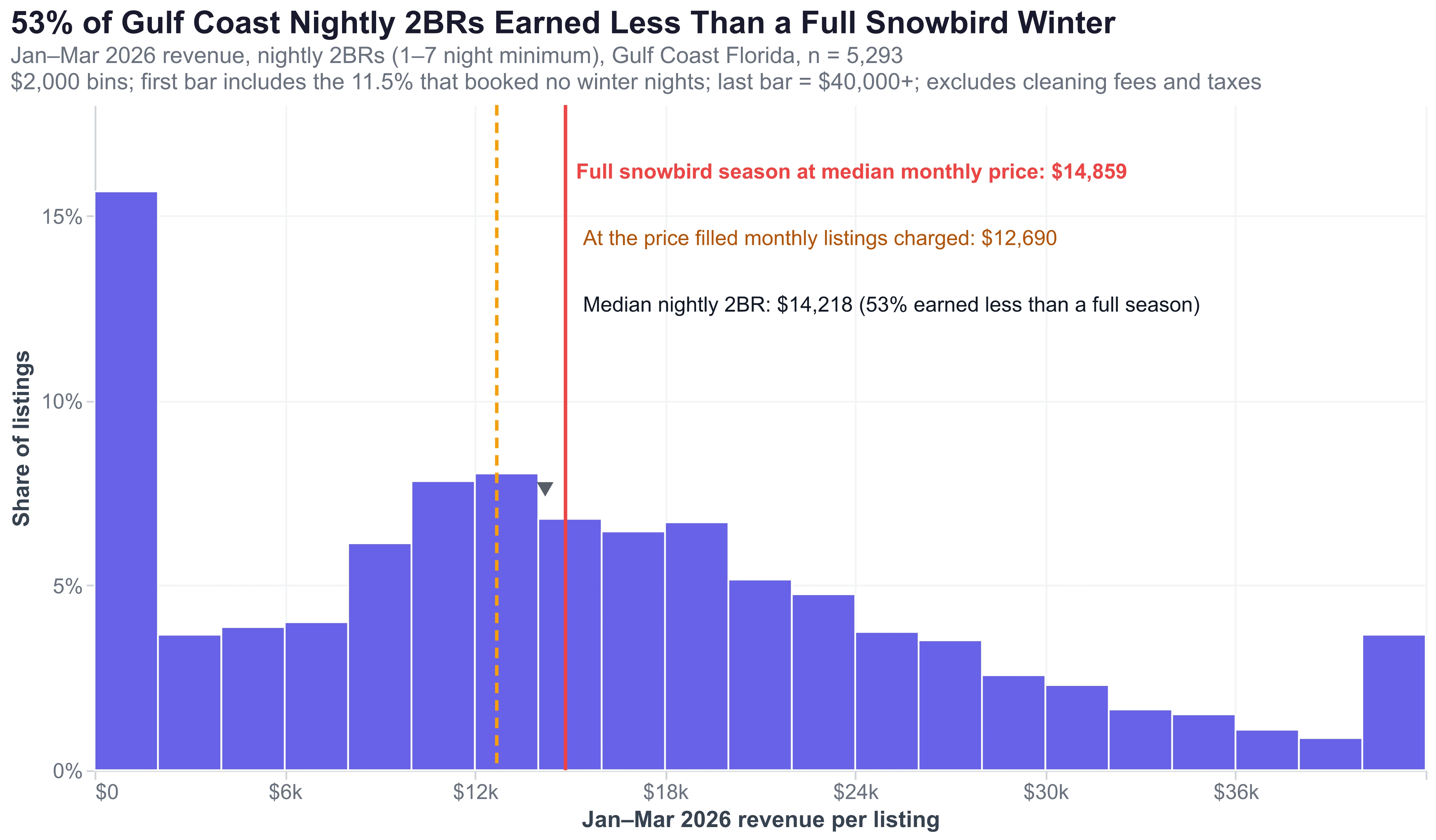
Put both on the same footing and the bar is $165 for every night on the winter calendar. That is what a full season at the median monthly price earns. The median nightly two-bedroom earned $158 per calendar night ($14,218 over 90 nights), just under it.
Not every snowbird pays the asking price. Gulf Coast monthly two-bedrooms that filled most of the winter, meaning 60 or more booked winter nights (112 listings), booked at a median $141 a night, about $4,230 per 30 nights and $12,690 for the season. At that price, 44% of nightly two-bedrooms earned less. So "about even" means a snowbird season somewhere between roughly $12,700 and $14,900 against a nightly median of $14,218.
The pattern holds across sizes. Among nightly studios and one-bedrooms, 54% earned less than a full season in their size class; for three-bedrooms and for four-bedrooms and up, it was 57%. One limit applies to all of these comparisons: we see Airbnb only, so the snowbird side assumes all 90 nights sell at the median monthly price and can't account for a month that goes unsold, a snowbird booked off Airbnb, or a discount agreed at checkout.
Florida Snowbird Rental vs Airbnb by Market: Nightly Wins Clearly Only in the Keys
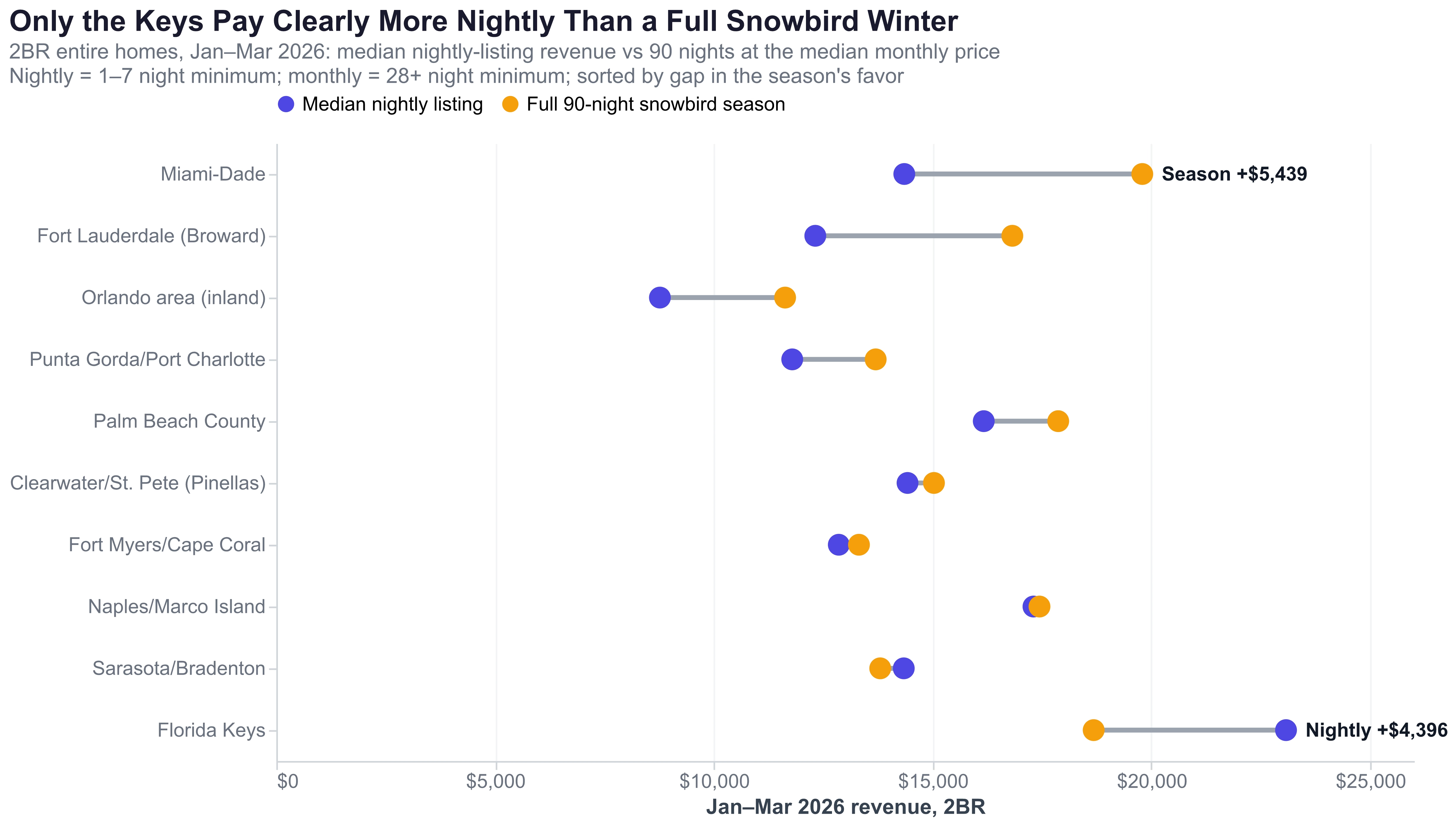
In all five Gulf markets, a full snowbird season landed within $2,000 of the median nightly two-bedroom. The Florida Keys were the one place where nightly clearly won, by $4,396. On the Atlantic side and inland, the balance tipped the other way: a full season beat the median nightly two-bedroom by $2,861 in the Orlando area, $4,503 in Fort Lauderdale and $5,439 in Miami-Dade.
In the table, ADR is the average nightly rate of booked nights, occupancy is the share of open nights that were booked, and check-ins are the median per listing from January through March. The last column is the share of nightly listings that earned less than a full season; the one before it shows which way each market leans.
| Market (2BR) | Nightly median, Jan–Mar | Nightly ADR | Occupancy | Check-ins | Monthly price per 30 nights | Full season (90 nights) | Season minus nightly median | Nightly listings below season |
|---|---|---|---|---|---|---|---|---|
| Naples/Marco Island | $17,304 | $391 | 55% | 6 | $5,814 | $17,442 | +$138 | 50% |
| Fort Myers/Cape Coral | $12,855 | $327 | 54% | 6 | $4,438 | $13,316 | +$461 | 53% |
| Sarasota/Bradenton | $14,340 | $324 | 58% | 7 | $4,600 | $13,802 | −$538 | 48% |
| Punta Gorda/Port Charlotte | $11,791 | $244 | 59% | 6 | $4,566 | $13,698 | +$1,907 | 60% |
| Clearwater/St. Pete (Pinellas) | $14,426 | $317 | 55% | 7 | $5,010 | $15,030 | +$604 | 52% |
| Florida Keys | $23,076 | $478 | 62% | 10 | $6,226 | $18,680 | −$4,396 | 37% |
| Palm Beach County | $16,168 | $352 | 62% | 8 | $5,956 | $17,870 | +$1,702 | 55% |
| Fort Lauderdale (Broward) | $12,318 | $334 | 48% | 7 | $5,607 | $16,821 | +$4,503 | 64% |
| Miami-Dade | $14,352 | $386 | 50% | 10 | $6,597 | $19,791 | +$5,439 | 67% |
| Orlando area (inland) | $8,767 | $186 | 50% | 9 | $3,876 | $11,628 | +$2,861 | 68% |
Palm Beach filled 62% of open nights too; what set the Keys apart was pairing that occupancy with a $478 ADR, the highest in the table. Only 37% of Keys nightly two-bedrooms earned less than a full season. Broward, Miami-Dade and the Orlando area show the opposite pairing: nightly two-bedrooms filled only 48% to 50% of open nights, while monthly prices held relatively high, $220 a night in Miami-Dade. Two-thirds of Miami-Dade's nightly two-bedrooms fell short of a full snowbird winter.
Within the Gulf, Naples was a dead heat ($17,304 nightly against $17,442 for the season), and Sarasota/Bradenton was the one market where the nightly median edged ahead, by $538. The same split shows up at three bedrooms: on the Atlantic side a full season beat 60% of nightly three-bedrooms, while in the Keys it beat only 39%.
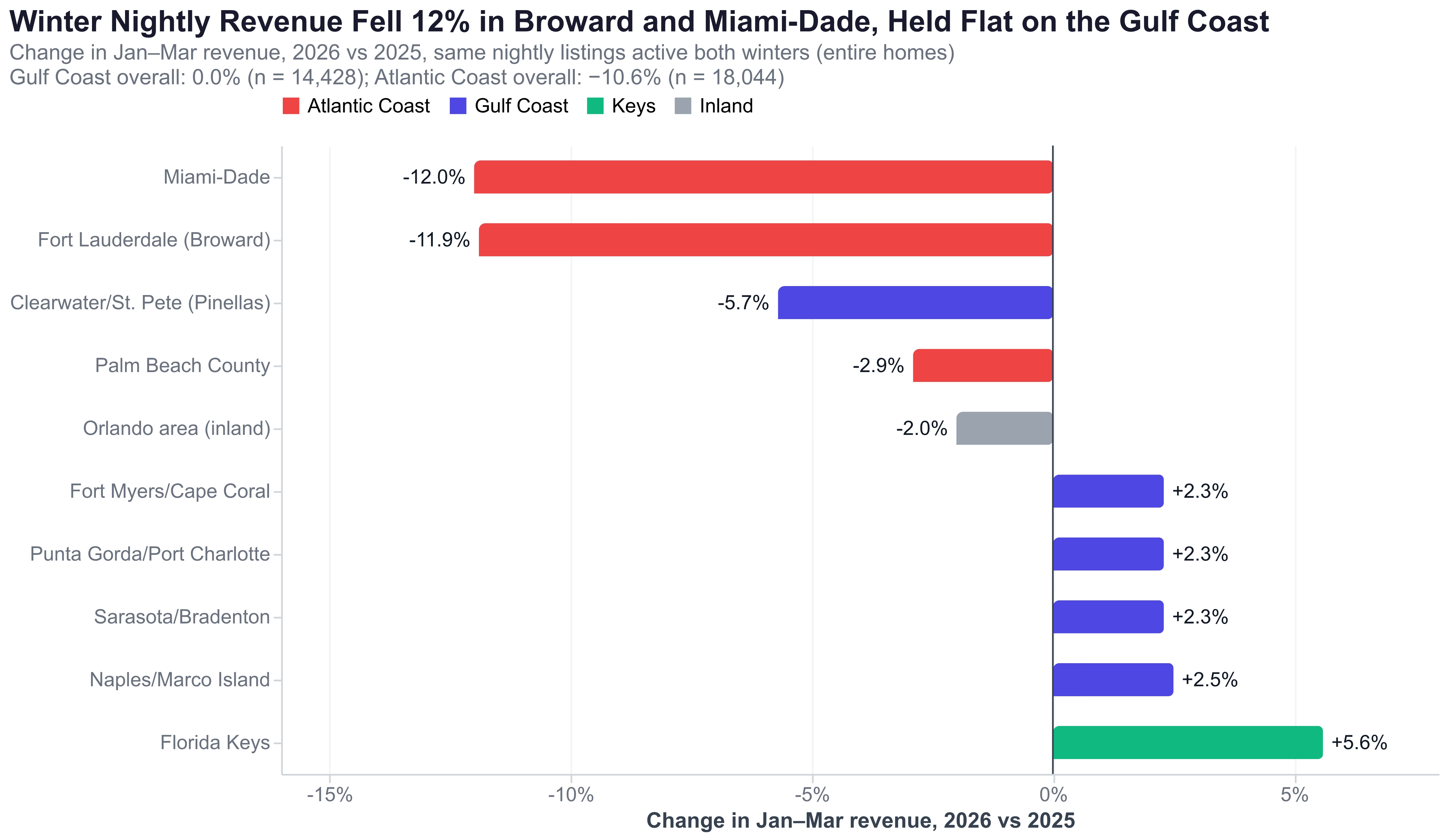
A better nightly year would not have flipped the Atlantic answer. The same Miami-Dade two-bedrooms earned a median $16,023 in winter 2025, and the Broward ones $14,745, both still below this year's full-season values of $19,791 and $16,821 (we don't have 2025 monthly prices to compare).
Half the Nightly Rate, All of the Nights: Why the Two Land Close
Airbnb's monthly listings ask roughly half what nightly listings do per night, and nightly listings sell a little more than half the winter, so the two cancel out. For winter 2027, Gulf Coast two-bedrooms with a 28-night minimum are asking a median $168 a night against $308 for nightly ones, 45% less. Nightly listings then sold 56% of their open nights last winter. The net result for the median listing: $158 per calendar night for nightly against $165 for a full snowbird season.
A Snowbird Trades Seven Check-Ins for One Guest's Risk
The snowbird side concentrates that risk instead. Nightly spreads it across many stays; a snowbird season puts a whole month, or three, on one guest. A South Florida host described that exposure during a slow fall:
"I have February booked completely with one month-long guest (who will totally screw me if he cancels), but nothing in any of the other months."
— u/Lugh_Lamfada, South Florida host, r/airbnb_hosts, "The bottom has fallen out", September 2023 (644 upvotes)
Snowbirds Book Five Months Out; Nightly Guests Book Three Weeks Out
Stays of 28 nights or more that checked in at coastal Florida Airbnbs from January through March 2026 were booked a median of about five months (153 days) ahead. Of those 8,888 stays, 44.5% were booked more than six months ahead. Stays of one to three nights at coastal listings were booked a median 22 days ahead, and only 4.8% of them more than six months out.
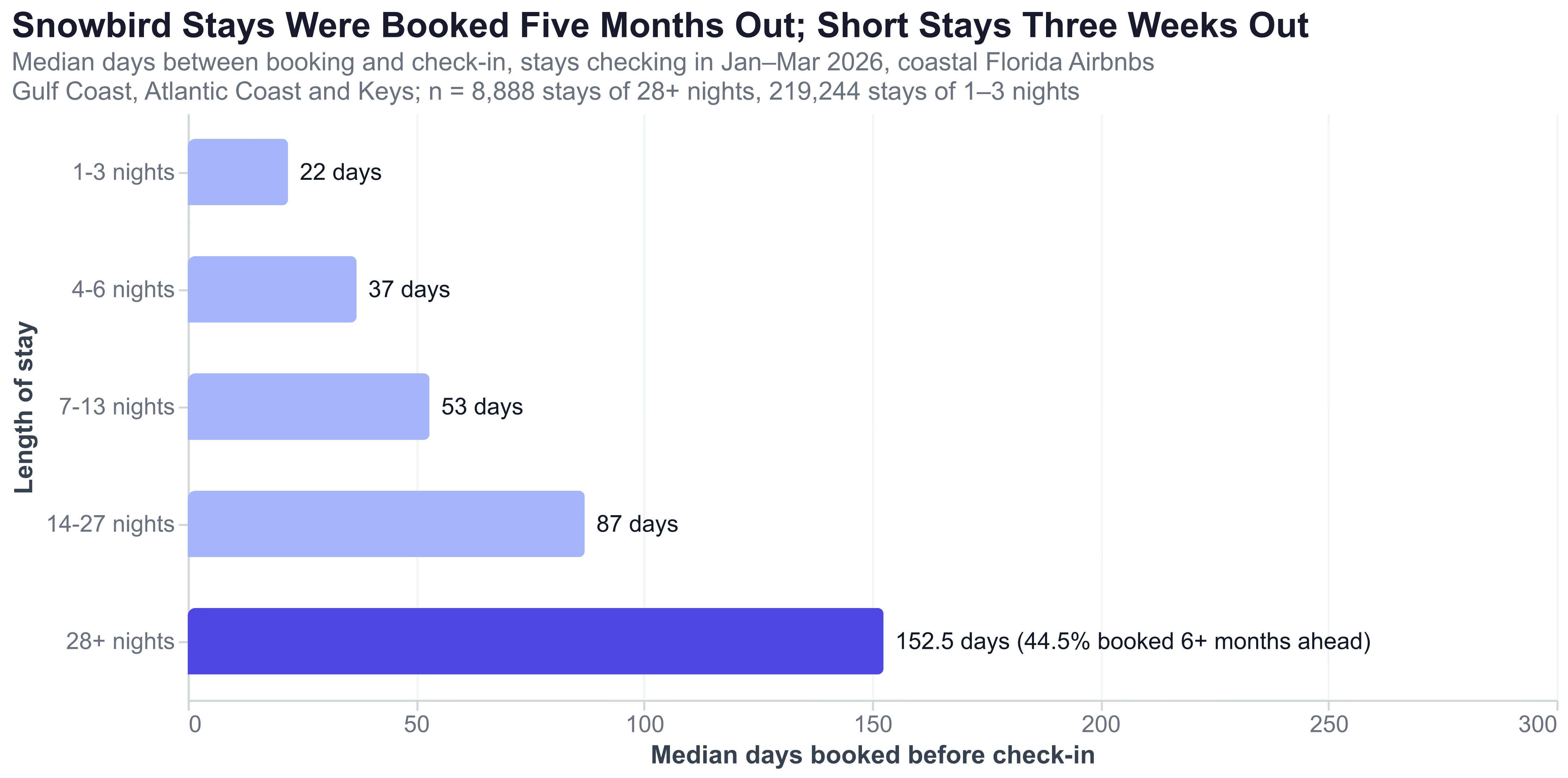
The snowbird decision is made in late summer and fall, before you know how nightly demand for the winter will shape up. The Bradenton condo from the opening had its winter stays booked about eight months ahead. Late snowbirds exist, but they are the minority: 26.7% of those 28-night-plus stays were booked within 60 days of check-in. One host with three Florida seasonal rentals described the timing, and a channel our data can't see:
"I have three Florida seasonal rentals. I only use Kijiji (It's the Craigslist of Canada). Mine are all already rented for 2024."
— u/Friend-of-thee-court, r/airbnb_hosts, "Advice on how to rent to Snow Birds", July 2023 (thread with 30 comments)
That was written in July, for a season starting the following winter. Snowbird bookings also happen off Airbnb, through Kijiji, Furnished Finder and snowbird Facebook groups, which another host in the same thread called "probably 10x better than a random airbnb listing."
Whether Gulf Coast Nightly Demand Holds in Winter 2027
Half of next winter's comparison is already on the calendar: monthly two-bedrooms on the Gulf Coast ask a median $168 a night for winter 2027. The other half, how many nights a nightly listing sells from January through March, won't be known until the season is under way, months after its snowbird stays are booked. Last winter, Gulf Coast nightly occupancy was just low enough for a full season to recover about all of the median nightly gross.
If that occupancy holds, a Gulf Coast two-bedroom faces the same coin flip, decided by seven check-ins against one guest's risk. If it rises, nightly pulls ahead. If it slips, as nightly revenue did on the Atlantic side last winter, a season booked this fall wins. The margin is thinnest in Naples, where last winter's nightly median and a full season finished $138 apart.
Frequently Asked Questions
It depends on the coast. On the Gulf Coast it is close to even: a two-bedroom booked for all of January through March at the median Airbnb monthly price grosses about $14,859, while the median nightly two-bedroom earned $14,218 in winter 2026. In Miami-Dade, Fort Lauderdale and the Orlando area a full snowbird season beat most nightly listings, and only the Florida Keys clearly favored nightly.
Airbnb's two-bedroom monthly listings on the Gulf Coast asked a median $4,953 per 30 nights in winter 2026. By market, that was $4,438 in Fort Myers/Cape Coral, $4,600 in Sarasota/Bradenton, $5,010 in Clearwater/St. Pete, $5,814 in Naples and $6,597 in Miami-Dade. Monthly listings that actually filled on the Gulf Coast priced lower, at a median $141 a night, or about $4,230 per 30 nights.
Stays of 28 nights or more that checked in at coastal Florida Airbnbs in January through March 2026 were booked a median 153 days ahead, about five months, and 44.5% were booked more than six months ahead. Stays of one to three nights were booked a median 22 days ahead, so the monthly decision is made in late summer and fall.
Yes. Florida taxes rentals of six months or less, so a three-month stay carries the 6% state sales tax plus the county tourist tax, the same as a weekend booking; county rates include 5% in Collier and Lee and 6% in Sarasota, Pinellas and Broward. Airbnb collects the state tax and, in counties such as Collier, Lee, Sarasota and Pinellas, the county tax. In Manatee, Palm Beach and Monroe you remit the county tax yourself, and a snowbird who pays you directly means you register and remit both.
Airbnb applies a long-term cancellation policy to stays of 28 nights or more. The guest pays the first month up front and the rest in monthly installments, and if the guest cancels after the trip has started, the following month of the reservation is nonrefundable.