
World Cup 2026 Airbnb Earnings: How Much Hosts Can Make in Every Host City

FIFA just canceled up to 70% of hotel room blocks in some World Cup 2026 host cities. That accommodation gap -- 2,000 rooms in Philadelphia, 15,000 nights in Vancouver, 800 rooms in Mexico City -- is now a $156 million opportunity for US Airbnb hosts alone. According to a Deloitte economic impact study commissioned by Airbnb, hosts across the 11 US cities will earn an average of $4,000 each during the June 11 to July 19 tournament, with top markets like New York–NJ projected at $5,700 and Boston at $5,200 per host.
FIFA Canceled Thousands of Hotel Rooms -- and Created a $156 Million Airbnb Opportunity
The accommodation crisis nobody expected arrived this month. FIFA canceled thousands of hotel room reservations across host cities, citing geopolitical uncertainty, visa concerns, and demand patterns that no longer matched original projections. According to Reuters, the cancellations hit hard: 2,000 rooms in Philadelphia, 15,000 room-nights in Vancouver, 800 rooms in Mexico City, and reductions of up to 70% of original hotel blocks in some cities.
For short-term rental hosts, this is an inflection point. The hotel rooms that FIFA released back to the market do not come close to covering the accommodation gap for 380,000+ expected Airbnb guests alone -- a figure that represents just a fraction of total tournament attendance. Meanwhile, Airbnb reports searches in host cities are up 80% year-over-year, and group stage demand has surged 200%+ above year-ago levels per AirDNA.
The Deloitte study puts the total STR-related spending across US host cities at $865 million, with $156 million flowing directly to Airbnb hosts. To accelerate supply, Airbnb has rolled out its largest-ever new host incentive: $750 for first-time entire-home hosts who welcome guests by July 31, 2026. It is the clearest signal yet that the platform sees a supply shortfall that needs fixing fast.
Hotels are sounding the alarm on soft early demand despite surging rates -- but for STR hosts, the math is different. Flexible pricing, lower overhead, and proximity to neighborhoods (not just downtown hotel corridors) give short-term rentals a structural advantage in event-driven markets.
City-by-City Earnings Ranking: Where Hosts Will Earn the Most
Not all host cities are created equal. Deloitte's projections reveal a wide earnings gap -- from $5,700 per host in New York–NJ down to $1,900 in Philadelphia. Three factors determine a city's earning potential: baseline accommodation cost (higher-cost cities command higher premiums), match schedule density (more matches = more booked nights), and the number of expected Airbnb guests relative to available hosts.
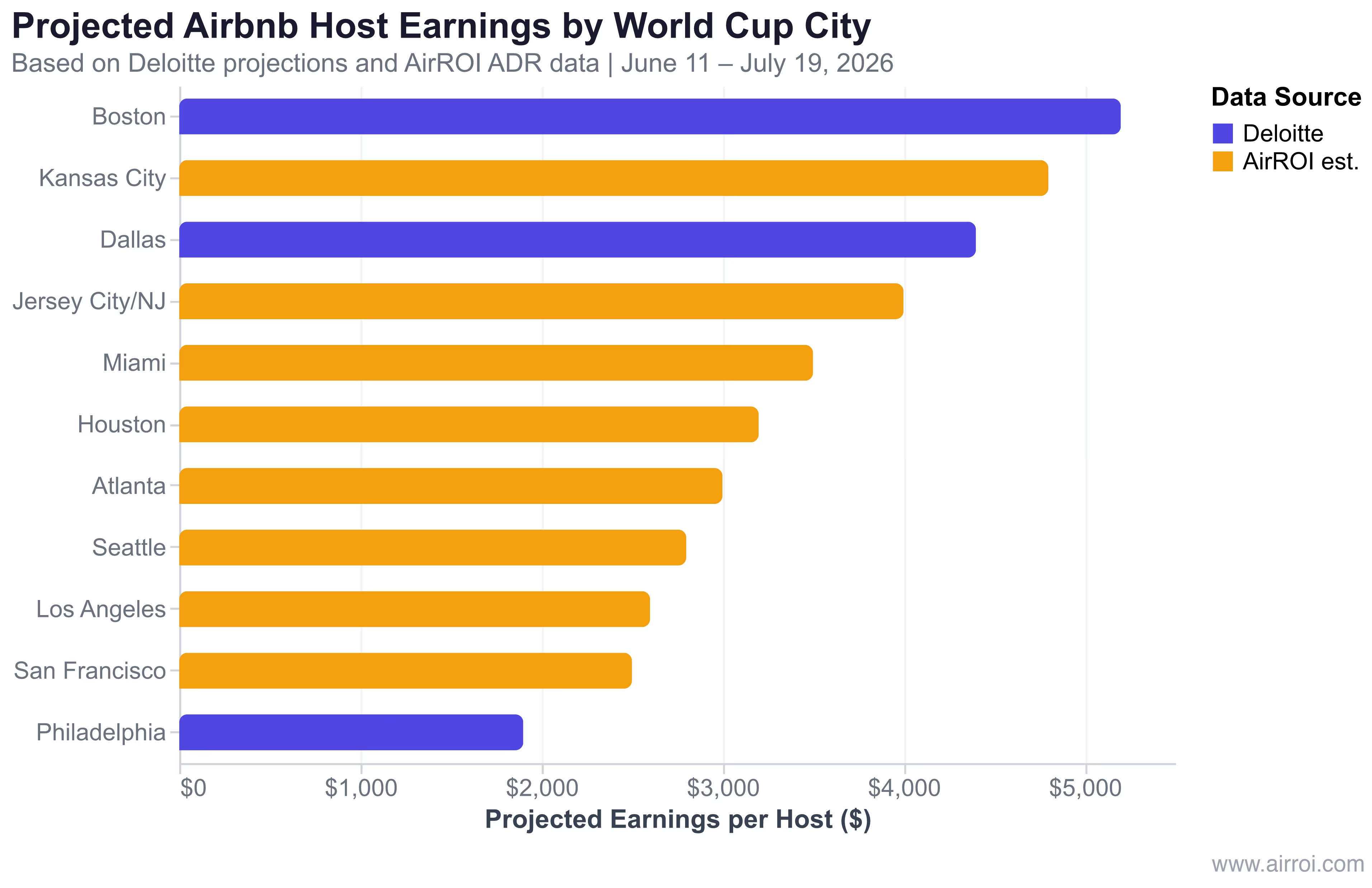
| City | Deloitte Projected Earnings/Host | Per Night | Matches | Booked ADR (as of Mar 2026) | Current Fill Rate |
|---|---|---|---|---|---|
| New York–NJ | $5,700 | $268 | 8 | $338–$387 | 21–29% |
| Boston | $5,200 | $339 | 7 | $447–$461 | 58–63% |
| Los Angeles | $5,100 | $305 | 8 | $385–$402 | 16–17% |
| Miami | $5,000 | $255 | 7 | $361–$377 | 20–29% |
| Dallas | $4,400 | $250 | 9 | $301–$356 | 29–37% |
| Seattle | $3,800 | $303 | 6 | $396–$527 | 30–62% |
| Atlanta | $3,700 | $209 | 8 | $314–$344 | 15–21% |
| Kansas City | $3,500 | $233 | 6 | $447–$528 | 42–49% |
| Houston | $3,000 | $257 | 7 | $250–$301 | 16–23% |
| San Francisco | $3,000 | $282 | 6 | $268–$287 | 20–23% |
| Philadelphia | $1,900 | $160 | 6 | $264–$345 | 24–33% |
Source: Deloitte, "The Role of Airbnb in the FIFA World Cup 2026." Earnings projections assume 60% occupancy during the event and a 90% price increase over baseline rates. Booked ADR and fill rates are AirROI pacing data as of late March 2026 — these represent current bookings, not final occupancy. Fill rates will continue climbing as the tournament approaches.
New York–NJ leads Deloitte's projections at $5,700 per host ($268/night), driven by 8 matches including both semifinals and the final at MetLife Stadium. But NYC's Local Law 18 Airbnb restrictions mean most of that earning potential flows to NJ-side hosts -- see the NYC paradox section below.
Boston ranks second at $5,200 per host ($339/night) -- the highest per-night rate of any city. AirROI data confirms the demand: Boston is already 63% booked for the June 13 opening weekend at $453/night average. With only 3,470 active listings and 7 matches, Boston's combination of tight supply and premium pricing makes it the strongest per-night earner.
Kansas City projects lower total earnings at $3,500 per host ($233/night), but AirROI pacing data tells a more interesting story: match-day ADRs already hit $508 with fill rates at 49%. With just 1,640 active listings (the smallest supply of any US host city), KC's pricing power on peak nights may exceed Deloitte's baseline assumptions.
Philadelphia sits at the bottom at $1,900 per host ($160/night). But this understates the opportunity for the hosts who are there -- because Philadelphia's supply constraint is the most extreme of any host city, as we explore next.
The Supply-Demand Mismatch: 426 Licenses for 149,000 Visitors
Philadelphia has 426 active short-term rental licenses for an expected 149,000 tournament visitors. That is a 350-to-1 visitor-to-listing ratio -- the tightest supply-demand mismatch of any US host city by a wide margin. And it just got tighter: FIFA canceled 2,000 hotel rooms in the city this month.
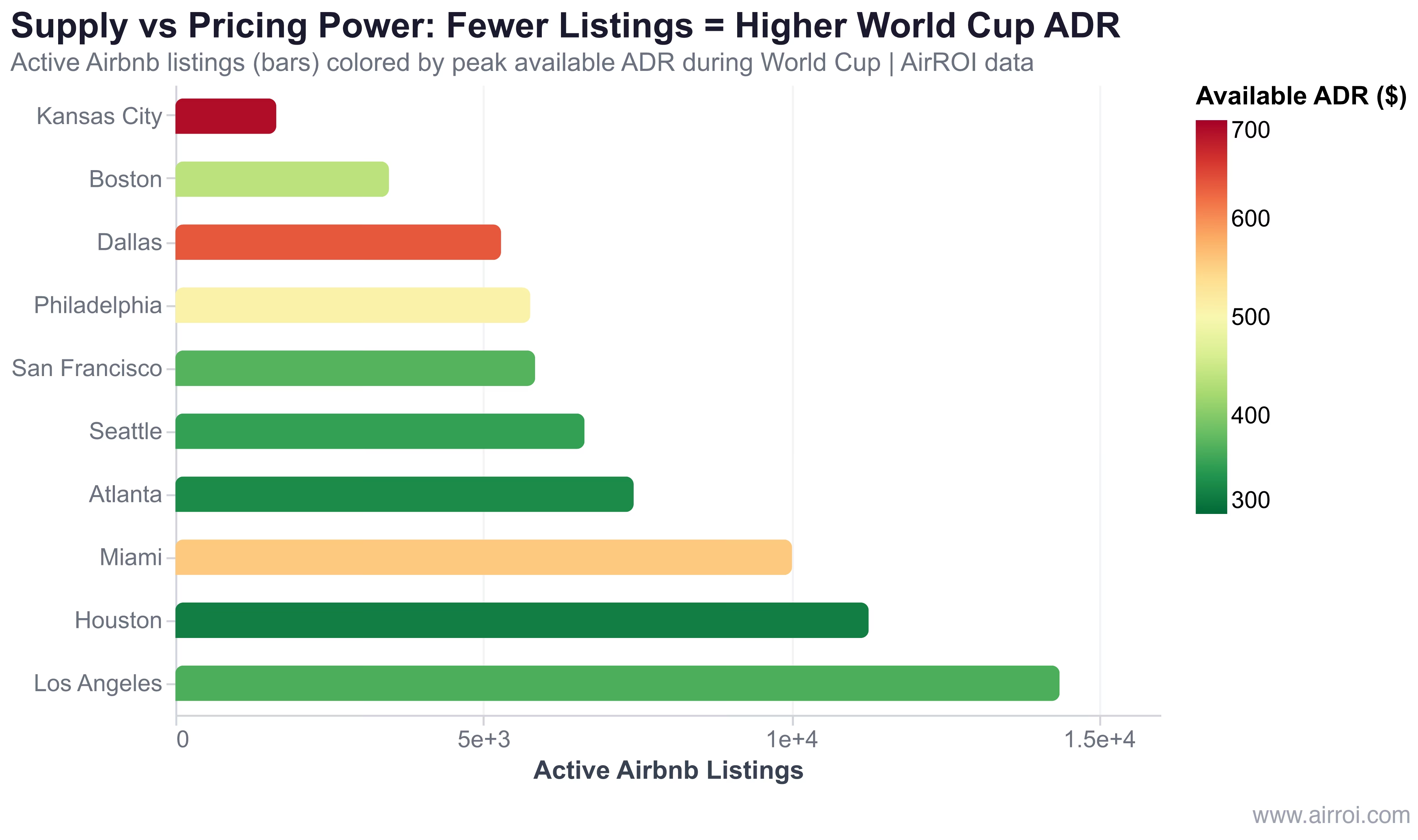
The supply-demand ratio varies dramatically across host cities:
| City | Active Listings | WC Peak Available ADR | Supply Category |
|---|---|---|---|
| Kansas City | 1,640 | $665–$702 | Tightest |
| Jersey City | 1,795 | $430–$493 | Very tight |
| Boston | 3,470 | $425–$438 | Tight |
| Dallas | 5,291 | $614–$662 | Moderate |
| Philadelphia | 5,766 | $469–$507 | Moderate (but only 426 licensed) |
| San Francisco | 5,845 | $360–$380 | Moderate |
| Seattle | 6,648 | $340–$360 | Moderate |
| Atlanta | 7,445 | $320–$340 | Ample |
| Miami | 10,018 | $534–$560 | Large |
| Houston | 11,263 | $310–$330 | Large |
| Los Angeles | 14,365 | $348–$367 | Largest |
The pattern is clear: markets with fewer than 3,500 active listings -- Kansas City, Jersey City, and Boston -- show the strongest pricing power, with available ADRs climbing well above $400. Kansas City's available ADR of $665–$702 reflects a market where demand is outrunning supply by the widest margin.
What AirROI Pacing Data Reveals About World Cup Demand
Projections from Deloitte provide a useful baseline, but AirROI's booking pacing data offers something more valuable: real-time evidence of which cities are filling and how fast. Pacing data measures the percentage of listings already booked for future dates -- a forward-looking indicator that reveals demand trends months before check-in.
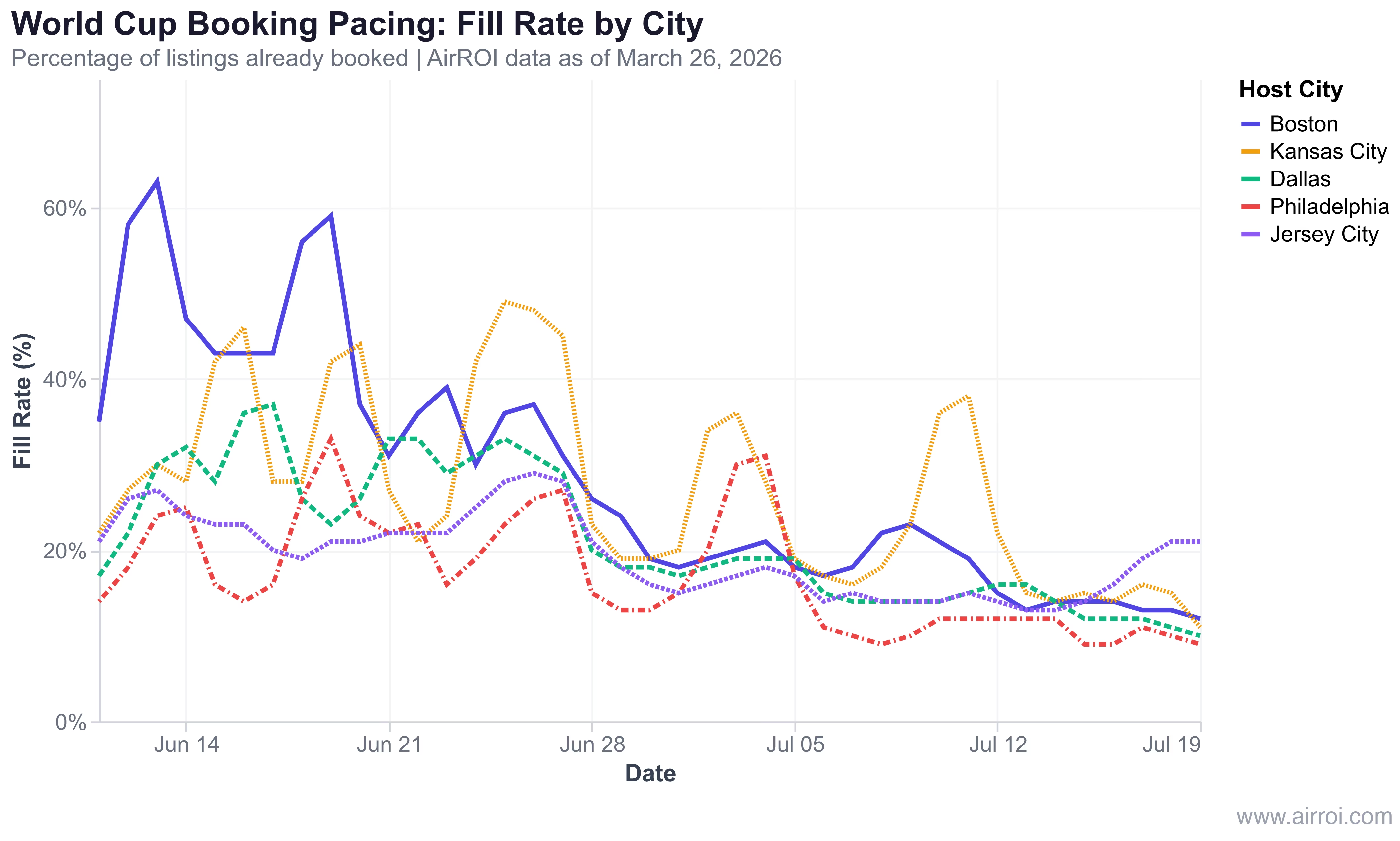
Here is what AirROI data shows for the June 11–July 19 tournament window, as of late March 2026:
Boston is the most booked market. Fill rates spike to 63% on June 13 (opening weekend) and remain above 40% through mid-June. Booked ADRs on those peak dates average $447–$461 -- well above the city's typical summer rate of $280–$320. Even mid-tournament non-match days hold at 24–37% fill with ADRs above $400.
Kansas City shows the most volatile pacing, with dramatic spikes on match days. Fill rates swing from 19% on quiet days to 49% on June 25 (peak match day), with booked ADRs jumping from $279 to $508. The available-rate ADR tells an even more dramatic story: listings that remain unbooked are priced at $665–$702 during peak match windows, signaling that remaining supply is commanding premium rates.
Dallas pacing reveals a market with room to grow. Fill rates reach 37% on June 17 with booked ADRs at $341. But the gap between booked ADRs ($301–$356) and available ADRs ($614–$662) is the largest of any market -- suggesting early bookers locked in relatively low rates, while hosts pricing for the tournament premium are still waiting for demand to catch up. With the tournament still 11 weeks away, Dallas bookings have significant upside.
Philadelphia shows moderate pacing at 33% fill on June 19 with booked ADRs at $345. Given the city's extreme supply constraint (426 licensed STRs), the relatively modest fill rate suggests that many would-be hosts have not yet listed. Those who do list in the next 8 weeks will enter a market where available ADRs already range from $469 to $507.
Jersey City is pacing at 21–29% fill during the World Cup window, with available ADRs of $430–$493. These numbers will accelerate sharply as the tournament approaches, particularly for the semifinal and final at MetLife Stadium (see the NYC paradox section below).
The $750 Incentive Playbook: Who Qualifies and Is It Worth It?
Airbnb's $750 new-host incentive is the largest the platform has ever offered, and its timing is no coincidence. With fill rates climbing and supply-demand gaps widening, Airbnb needs more entire-home inventory in host cities before June 11. Here is what the fine print says:
Eligibility requirements:
- Must be a new host on Airbnb (never hosted before)
- Must list an entire home (not a shared room or private room)
- Must welcome your first guest by July 31, 2026
- Must complete at least one reservation
Key exclusions:
- Not available in New York City (due to the city's Local Law 18 Airbnb restrictions)
- Airbnb has not confirmed availability in all international host cities
Is the math worth it? The $750 incentive is effectively a 19% bonus on top of the Deloitte-projected $4,000 average US host earnings. For hosts in high-earning markets like NY-NJ ($5,700) or Boston ($5,200), the incentive is gravy on top of a substantial windfall. For hosts in lower-earning markets, it may represent a meaningful share of total tournament income.
The strategic move for prospective hosts: list now, price competitively for pre-tournament bookings to build reviews and visibility, then shift to World Cup premium pricing for the June–July window. Hosts who wait until May to list will miss the early booking wave that AirROI data shows is already 30–63% filled in top markets.
Airbnb has also launched an Azteca Stadium overnight stay promotion -- a marketing activation that underscores the platform's investment in positioning itself as the primary alternative to traditional hotels for World Cup fans.
Pricing Strategy by Match Tier
AirROI pacing data reveals a clear pricing hierarchy based on match importance. Hosts who set a flat nightly rate for the entire tournament will leave significant revenue on the table. Here is a data-backed tiered pricing framework:
| Match Tier | ADR Premium vs Baseline | Example (Boston) | Example (Kansas City) |
|---|---|---|---|
| Group stage match day | +40–65% | $450–$550/night | $400–$500/night |
| Group stage adjacent day | +20–35% | $350–$420/night | $300–$380/night |
| Knockout round match day | +60–80% | $550–$650/night | $500–$600/night |
| Semifinal/Final | +80–120% | $650–$800/night | $600–$750/night |
| Non-match day (mid-tournament) | +15–25% | $320–$380/night | $280–$350/night |
Baseline: typical summer ADR for each market. Premiums based on AirROI booked vs post-tournament ADR ratios.
The most dramatic pacing spike in any market illustrates why match-level pricing matters. AirDNA projects a 296% occupancy jump in the NJ/MetLife Stadium area on June 27 for England vs Panama. That single match day could generate more revenue than a typical week of summer bookings.
Boston's data tells the tiering story clearly. On the June 12–13 opening weekend, booked ADRs average $447–$453 with a 58–63% fill rate. By the time we reach non-match days in late June, ADRs drop to $379–$404 with fill rates of 18–22%. Post-tournament (after July 19), ADRs fall to $316 with fill rates at 12%. That is a 43% premium on match days versus the post-tournament baseline.
The NYC Paradox: A World Cup Final With No Airbnb
MetLife Stadium in East Rutherford, New Jersey, hosts the World Cup final on July 19 -- the single most-watched sporting event on the planet. It also hosts two semifinals. Yet the nearest major city, New York, rejected lifting its Airbnb restrictions for the tournament. Airbnb's $750 incentive explicitly excludes NYC. The result is a paradox: the biggest match of the biggest tournament has no meaningful Airbnb supply in the largest nearby city.
Where will final-goers stay? The overflow is already visible in AirROI data.
Jersey City (1,795 active listings) and Newark (1,871 active listings) are absorbing demand that NYC cannot accommodate. Jersey City's pacing shows fill rates of 21–29% during the World Cup window, with available ADRs climbing to $430–$493. For the semifinal and final dates specifically, these numbers will surge as the knockout bracket narrows and travel plans firm up.
The AirDNA projection of a 296% occupancy jump in the NJ/MetLife area for the June 27 England-Panama match illustrates the magnitude of demand that will hit this corridor. And that is a group stage match. The final will dwarf it.
For NJ hosts within transit distance of MetLife, this is arguably the largest Airbnb earning opportunity in the platform's history. A property in Jersey City's waterfront district (07302 zip code) priced at $400–$500/night for the final weekend could generate $2,000–$3,000 from a single four-night stay.
What Could Go Wrong
The supply-demand math favors hosts, but risks are real. A balanced assessment:
Geopolitical uncertainty is the same factor driving FIFA's hotel cancellations. If visa complications, security concerns, or diplomatic tensions escalate, fan travel could fall below projections. FIFA's decision to cancel up to 70% of hotel blocks in some cities signals that even the organizer is hedging its expectations.
Regulatory enforcement could intensify. Several host cities are tightening STR oversight ahead of the tournament. Philadelphia's 426-license bottleneck is not just a supply constraint -- it is an enforcement signal. Hosts who list without proper permits risk fines that could exceed their tournament earnings. Check local regulations before listing.
Oversupply from new hosts is the flip side of Airbnb's $750 incentive. If thousands of new hosts flood a single market simultaneously, the supply-demand ratio shifts. This risk is highest in large-supply cities like Houston (11,263 listings) and LA (14,365 listings), where the existing base is already substantial.
The "World Cup tax" pricing ceiling exists. At some ADR level, fans will choose hotels, hostels, group accommodations, or simply not travel. AirROI data shows Dallas listings priced at $614–$662 (available ADR) are filling more slowly than those priced at $301–$356 (booked ADR) -- a signal that the ceiling may be closer to $400–$500 for most markets outside the final.
Hotels are sounding the alarm on soft early demand despite surging rates. If the traditional hospitality sector is seeing softer-than-expected bookings, it may indicate that overall tournament travel is pacing below initial forecasts -- or simply that fans are booking later than expected.
The risk calculus for existing homeowners is straightforward: the marginal cost of listing a property you already own is minimal, and the downside of underperformance is limited to opportunity cost. For investors committing to new leases or purchases specifically for the World Cup, the calculus requires more caution.
The Bottom Line
The 2026 World Cup represents the largest short-term rental earnings opportunity in North American history. FIFA's hotel cancellations have widened the accommodation gap, Airbnb's 80% search surge confirms fan demand, and AirROI pacing data shows that markets like Boston (63% fill, $453 ADR) and Kansas City (49% fill, $508 ADR) are already converting that demand into bookings.
Deloitte projects $156 million in total US host earnings, with an average of $4,000 per host ($262/night). But city-level variation is enormous -- from $5,700 in New York–NJ down to $1,900 in Philadelphia. Hosts in high-ADR markets with strong match schedules -- Boston ($339/night), LA ($305/night), Seattle ($303/night) -- stand to earn the most per night, while hosts in markets with the most matches (Dallas, 9 matches) accumulate earnings over more booked days.
The hosts who will earn the most are those who list early, price dynamically by match tier, and understand their local supply-demand ratio. The data is clear. The window is open. And with 77 days until kickoff, the booking pace is accelerating.
Frequently Asked Questions
Deloitte projects $156 million in total US Airbnb host earnings, with individual hosts averaging $4,000 ($262/night). Top earners are New York–NJ at $5,700/host, Boston at $5,200 ($339/night), and Los Angeles at $5,100. AirROI pacing data shows match-day ADRs already reaching $450–$530 in high-demand markets like Kansas City and Boston.
New York–NJ leads Deloitte's projections at $5,700 per host, followed by Boston at $5,200 ($339/night -- the highest per-night rate). AirROI data shows Kansas City may outperform its $3,500 Deloitte projection -- match-day ADRs already hit $508 with fill rates at 49% -- due to its smaller supply of just 1,640 active listings.
Airbnb is offering $750 to new entire-home hosts who welcome their first guests by July 31, 2026. Eligibility requires listing an entire home (not a shared room) and being a new host on the platform. The incentive is not available in New York City due to its Airbnb restrictions.
FIFA has canceled thousands of hotel room reservations -- 2,000 in Philadelphia, 15,000 nights in Vancouver, up to 70% in some cities -- citing geopolitical factors, visa uncertainties, and shifting demand patterns. This creates a massive accommodation gap that short-term rentals are positioned to fill.
Tier your pricing by match importance. AirROI data shows group stage match days command 40--65% ADR premiums over baseline rates. Set knockout round pricing 20--30% above group stage levels, and semifinal or final pricing at peak rates. Non-match days between games should be priced 15--25% above normal summer rates to capture tournament spillover.