Tariff Impact on Airbnb Operating Costs: AirROI Data on Which Markets Can Absorb the Hit

The tariff impact on Airbnb operating costs in 2026 is larger than most hosts realize. According to the National Retail Federation, US tariffs will cost consumers an additional $8.5-$13.1 billion on furniture and $6.4-$10.9 billion on household appliances annually. For the average STR operator, that translates to $2,800-$4,600 more to furnish a property and $450-$1,250 more every year to maintain it.
The question is not whether tariffs raise costs -- they do. The question is whether your market generates enough revenue to absorb them. AirROI data across 12 US markets reveals a sharp divide: 5 markets with RevPAR above $175 can pass tariff costs through to guests with modest rate adjustments. The remaining 7 markets -- including Atlanta, San Antonio, Columbus, and Denver -- face genuine margin erosion where STR furnishing costs inflated by tariffs consume 15-30% of gross revenue.
This is the first property-level analysis of how US trade policy flows through to vacation rental P&L, with specific cost benchmarks by category and a market-by-market margin resilience scorecard.
The 2026 Tariff Landscape: What STR Operators Are Actually Paying
US tariffs affecting STR cost categories stack across three separate legal authorities, producing cumulative rates that vary by product and origin country. The effective rates on goods hosts purchase most frequently range from 25% to 145%.
Linens and textiles -- sheets, towels, curtains, and pillow covers -- average a 25% tariff. These are high-replacement items in STR operations, turning over multiple times per year.
One important exemption: solid wood furniture without upholstery -- dining tables, bed frames, bookshelves, coffee tables, and office desks -- is largely exempt from the Section 232 furniture tariff. This creates a meaningful sourcing strategy for cost-conscious hosts.
"Increased costs as a result of the proposed tariffs would be too large for U.S. retailers to absorb." -- National Retail Federation / Trade Partnership Worldwide study
The NRF's analysis confirms that tariff costs pass directly to end buyers. For STR hosts, that means every furniture purchase, appliance replacement, and linen restock carries a tariff premium that did not exist three years ago.
How Much Tariffs Add to Your STR Furnishing Bill
Startup Furnishing Costs by Property Size
| Property Size | 2023 Pre-Tariff (Est.) | 2026 With Tariffs | Tariff Premium | % Increase |
|---|---|---|---|---|
| 1 Bedroom | $7,000-$15,700 | $8,000-$18,000 | $1,000-$2,300 | 14-15% |
| 2 Bedroom | $10,400-$21,700 | $12,000-$25,000 | $1,600-$3,300 | 15% |
| 3 Bedroom | $15,700-$30,400 | $18,000-$35,000 | $2,300-$4,600 | 15% |
| 4+ Bedroom | $21,700-$43,500 | $25,000-$50,000+ | $3,300-$6,500 | 15% |
Sources: Awning 2026 Furnishing Guide, Short Term Rentalz tariff analysis (15-25% increase estimate)
A mid-range 2-bedroom property that cost $18,500 to furnish in 2023 now costs $21,300-$23,100 -- a $2,800-$4,600 tariff premium. For hosts furnishing 3-bedroom vacation rentals in resort markets, the premium exceeds $4,600.
The Replacement Cost Trap
Startup costs are a one-time hit. The compounding problem is annual replacement costs, which face the same 15-25% tariff inflation every year.
STR hosts replace approximately 20% of furnishings annually due to accelerated guest wear. Industry benchmarks suggest budgeting $3,000-$5,000 per year for a typical 2-3 bedroom property. With tariff inflation, that range rises to $3,450-$6,250 per year.
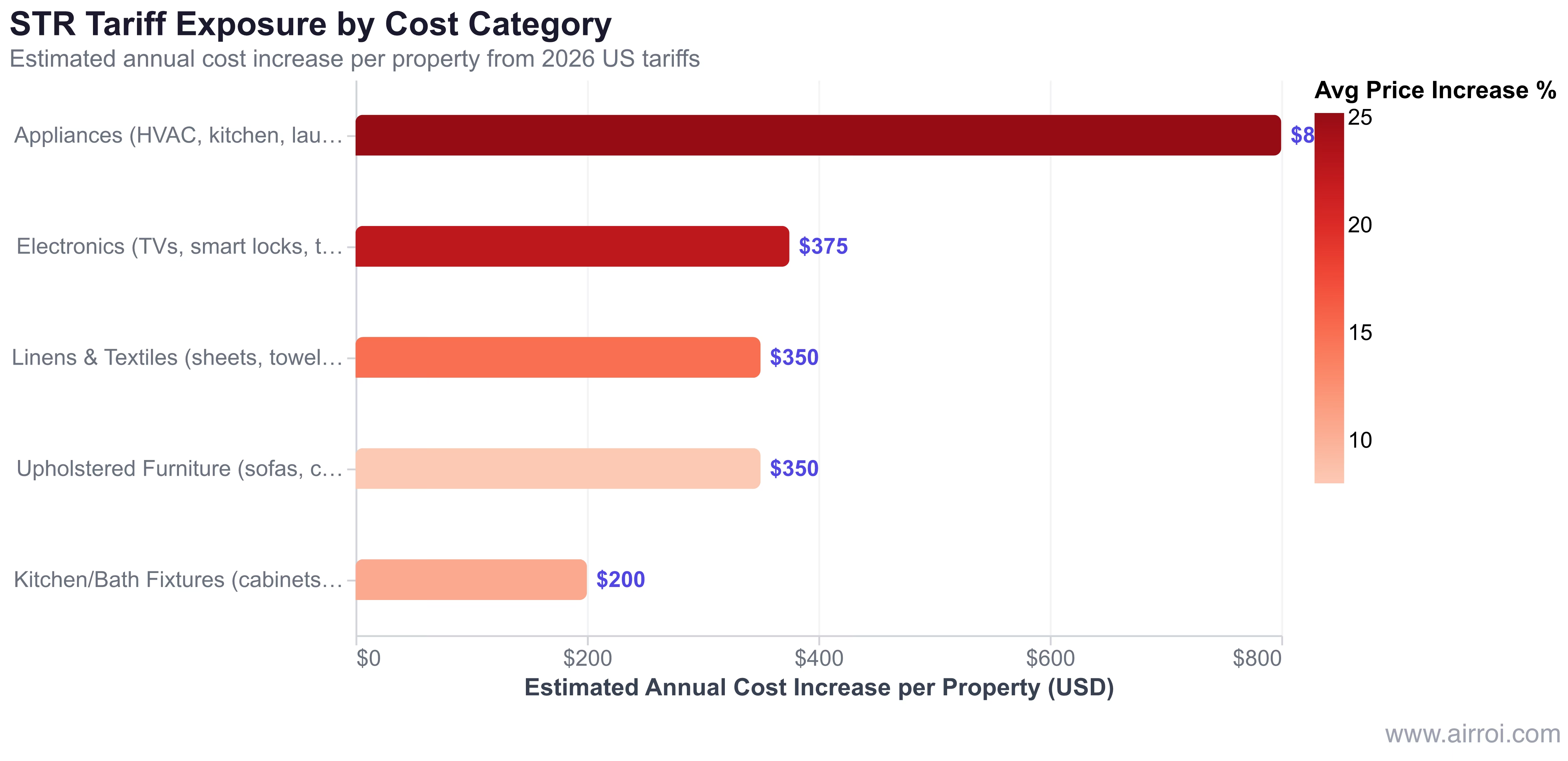
The breakdown by category reveals where tariff exposure concentrates:
| Cost Category | Tariff Rate | Est. Price Increase | Annual Impact per Property |
|---|---|---|---|
| Appliances (HVAC, kitchen, laundry) | 25% + steel tariffs | 19-31% | $400-$1,200 |
| Electronics (TVs, smart locks, thermostats) | 25-145% | 15-30% | $150-$600 |
| Linens & textiles (sheets, towels, curtains) | 25% | 10-20% | $200-$500 |
| Upholstered furniture (sofas, chairs) | 25% | 6.4-9.5% | $200-$500 |
| Kitchen/bath fixtures (cabinets, vanities) | 25% | 6-15% | $100-$300 |
| Total estimated annual tariff premium | $1,050-$3,100 |
Appliances drive the largest cost increase because steel tariffs compound on top of import duties. A host replacing an HVAC unit, washer/dryer, or kitchen appliance suite in 2026 pays 19-31% more than the identical equipment cost in 2023.
12-Market Margin Resilience Scorecard: Who Absorbs the Hit
The critical question is not how much tariffs add to costs -- it is whether your market generates enough revenue to absorb them. AirROI analyzed trailing-twelve-month performance data across 12 US markets to build a margin resilience scorecard.
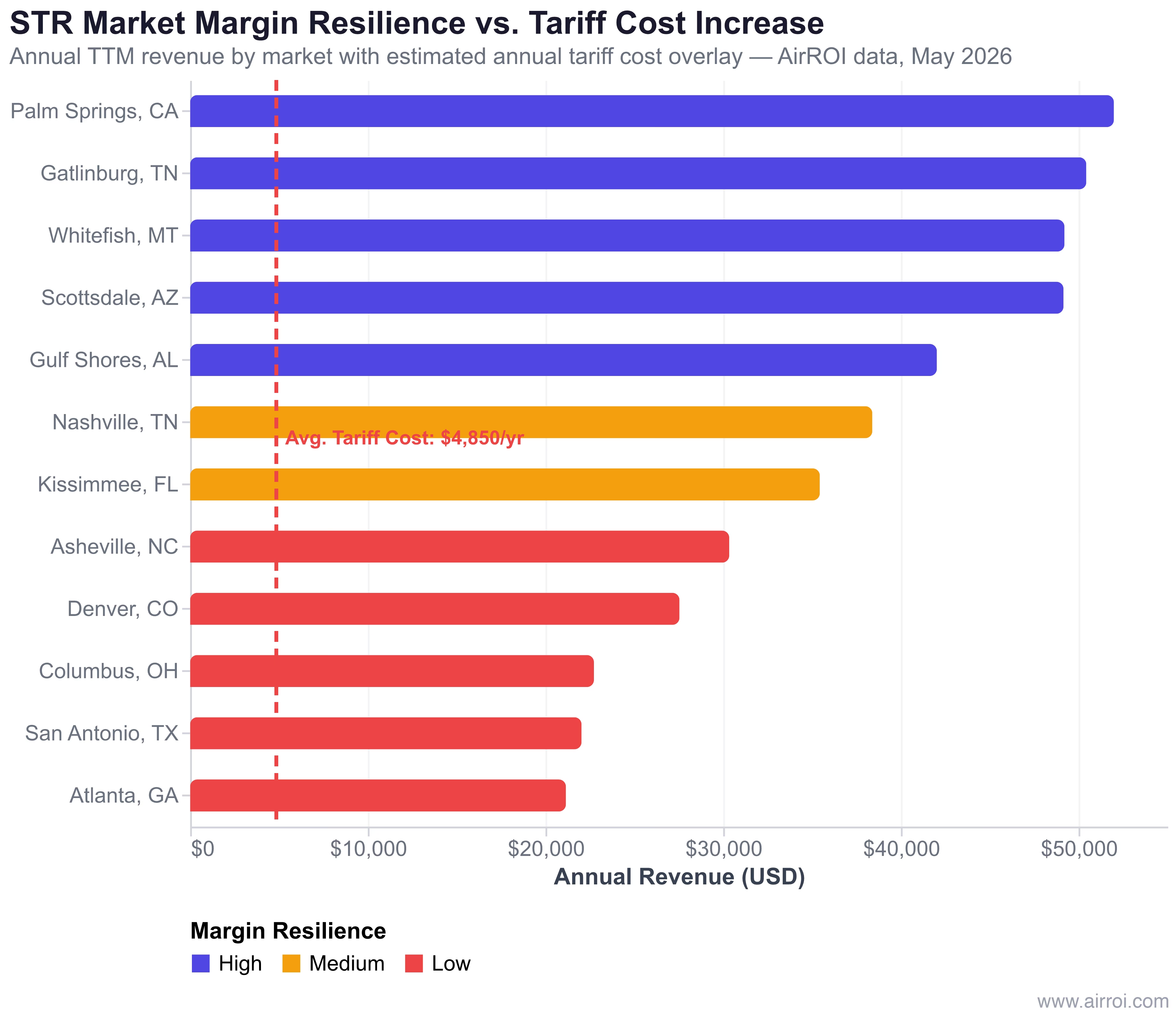
| Market | TTM Revenue | ADR | Occupancy | RevPAR | Tariff as % of Revenue | Resilience |
|---|---|---|---|---|---|---|
| Palm Springs, CA | $51,989 | $548 | 40% | $226 | 6.6-12.0% | High |
| Gatlinburg, TN | $50,438 | $377 | 47% | $178 | 6.8-12.4% | High |
| Scottsdale, AZ | $49,153 | $421 | 49% | $210 | 7.0-12.7% | High |
| Whitefish, MT | $49,207 | $504 | 42% | $217 | 7.0-12.7% | High |
| Gulf Shores, AL | $42,026 | $420 | 42% | $185 | 8.2-14.9% | High |
| Nashville, TN | $38,394 | $369 | 45% | $163 | 9.0-16.3% | Medium |
| Kissimmee, FL | $35,438 | $283 | 50% | $141 | 9.7-17.6% | Medium |
| Asheville, NC | $30,341 | $258 | 45% | $114 | 11.4-20.6% | Low |
| Denver, CO | $27,540 | $222 | 54% | $120 | 12.5-22.7% | Low |
| Columbus, OH | $22,726 | $200 | 46% | $92 | 15.2-27.5% | Low |
| San Antonio, TX | $22,028 | $212 | 43% | $93 | 15.7-28.4% | Low |
| Atlanta, GA | $21,149 | $233 | 41% | $96 | 16.3-29.6% | Low |
Source: AirROI market data, May 2026. Tariff cost range: $3,450-$6,250 annually per property.
The pattern is clear. Markets above $175 RevPAR -- Palm Springs, Whitefish, Scottsdale, Gatlinburg, and Gulf Shores -- generate enough revenue that tariff-inflated costs consume under 13% of gross income. A Gatlinburg cabin owner earning $50,438 annually can absorb a $4,850 tariff cost increase by raising ADR just $5 per night across 172 booked nights, generating $860 in offsetting revenue.
Markets below $120 RevPAR -- Atlanta, Columbus, San Antonio, and Denver -- face a fundamentally different equation. An Atlanta host earning $21,149 annually with 41% occupancy has almost no pricing power. The $3,450-$6,250 tariff cost increase represents 16-30% of gross revenue and, after accounting for Airbnb's 15.5% service fee and other operating expenses, can push a marginal property into negative cash flow.
The 100% Bonus Depreciation Offset
The tariff cost increase arrives alongside the most powerful tax offset in STR history. The One Big Beautiful Bill Act (OBBBA), signed July 4, 2025, permanently restored 100% bonus depreciation for qualified property placed in service after January 19, 2025. There is no phase-out schedule.
For STR operators, this means every dollar spent on tariff-inflated furniture, appliances, electronics, and building components with MACRS recovery periods of 20 years or less qualifies for full first-year deduction.
Here is the math on a mid-range 2-bedroom refurnishing:
| Item | 2026 Cost (With Tariffs) | Year 1 Deduction | Tax Savings (24% rate) | Tax Savings (32% rate) |
|---|---|---|---|---|
| Full furnishing package | $21,300-$23,100 | $21,300-$23,100 | $5,112-$5,544 | $6,816-$7,392 |
| Tariff premium portion | $2,800-$4,600 | $2,800-$4,600 | $672-$1,104 | $896-$1,472 |
At a 32% marginal tax rate, the tax savings from deducting the full tariff-inflated furnishing cost ($6,816-$7,392) exceed the tariff premium itself ($2,800-$4,600) by $2,200-$4,600. The government effectively subsidizes the tariff cost increase through accelerated depreciation.
A cost segregation study amplifies this further. According to R.E. Cost Seg, a properly conducted study identifies 25-30% of a property's purchase price as eligible for immediate write-off under bonus depreciation. For a $300,000 STR property, that represents $75,000-$90,000 in first-year deductions beyond furnishing -- generating $18,000-$28,800 in tax savings.
Disclaimer: Tax situations vary. Consult a qualified CPA or tax advisor before implementing cost segregation or bonus depreciation strategies.
5 Strategies to Cut Your Tariff Exposure
1. Source Domestically
Domestically manufactured furniture avoids import tariffs entirely. Amish-made furniture from workshops in Ohio, Pennsylvania, and Indiana offers solid hardwood construction with no import duty exposure. As one industry guide noted, "Amish furniture is produced entirely in the U.S., so it is completely tariff-free."
Beyond Amish makers, the Section 232 tariffs exempt solid wood furniture without upholstery. Dining tables, bed frames, bookshelves, coffee tables, and desks sourced domestically carry zero tariff premium. Redirect your upholstered furniture budget to domestic manufacturers and your solid wood purchases to tariff-exempt categories.
2. Buy Commercial-Grade
Industry data shows that spending 20% more upfront on commercial-grade, hospitality-rated furniture extends replacement cycles from 2-3 years to 5-7 years, reducing total furnishing spend by up to 50% over three years. In a tariff environment, longer replacement cycles compound the savings because each avoided replacement dodges the tariff premium.
3. Time Major Purchases Before 2027
The current 25% tariff on upholstered furniture is scheduled to rise to 30% on January 1, 2027. Kitchen cabinet and vanity tariffs are set to double from 25% to 50%. Hosts planning refurbishment in the next 18 months should consider purchasing in Q3-Q4 2026 to lock in the lower rate -- a 5-25% savings on affected categories.
4. Negotiate Bulk Pricing
Multi-property operators and host cooperatives can negotiate direct-from-manufacturer pricing that bypasses retail tariff markups. Purchasing 10+ units of mattresses, linens, or appliances at commercial volume typically yields 15-30% savings versus retail, partially or fully offsetting the tariff premium. If you manage fewer than 10 properties, consider joining a local host group or STR association that pools purchasing power.
5. Maximize Your Depreciation
Frequently Asked Questions
Tariffs have increased STR furnishing costs by 15-25% compared to 2023 baselines. A mid-range 2-bedroom property that cost $18,500 to furnish pre-tariff now costs $21,300-$23,100, adding $2,800-$4,600 to startup costs. Annual replacement budgets of $3,000-$5,000 face the same inflation, increasing ongoing costs by $450-$1,250 per year.
Appliances face the steepest increases at 19-31% due to layered steel and import tariffs. Electronics including TVs and smart devices carry 25-145% tariffs depending on origin. Upholstered furniture has a flat 25% Section 232 tariff. Linens and textiles average 25%. Solid wood furniture like bed frames and dining tables is largely exempt from the Section 232 furniture tariff.
It depends on the market. AirROI data shows high-ADR resort markets like Palm Springs ($548 ADR) and Whitefish ($504 ADR) have pricing power to absorb a $5-$10 nightly rate increase. Low-ADR urban markets like Atlanta ($233 ADR, 41% occupancy) and San Antonio ($212 ADR, 43% occupancy) lack the demand headroom to raise rates without losing bookings.
Yes, substantially. The One Big Beautiful Bill Act permanently restored 100% bonus depreciation for property placed in service after January 19, 2025. A $25,000 furnishing spend generates a $25,000 deduction in Year 1, producing $6,000-$8,000 in tax savings at a 24-32% marginal rate. That more than covers the $2,800-$4,600 tariff premium on the same furnishing package.
Yes. Solid wood furniture including dining tables, bed frames, bookshelves, and desks is generally exempt from the 25% Section 232 furniture tariff. Domestically manufactured furniture, including Amish-made pieces from Ohio, Pennsylvania, and Indiana, avoids import duties entirely. Commercial-grade furniture with 5-7 year replacement cycles also reduces long-term tariff exposure versus budget items replaced every 2-3 years.