
Break-Even Occupancy

Key Takeaways
- Break-even occupancy is the minimum occupancy percentage needed to cover all fixed and variable costs
- Lower break-even occupancy means greater resilience against seasonal slowdowns and market downturns
- A healthy break-even point for STRs is typically 35% to 50% occupancy
- AirROI trailing-12-month data shows most major markets operating at 42%–55% occupancy — well above a 40% break-even benchmark, but the cushion varies sharply by market
- Reducing costs or increasing average nightly rate (ADR) are the two primary levers to improve your break-even point
How to Calculate Break-Even Occupancy
The most precise formula separates fixed from variable costs:
Break-Even Nights = Total Annual Fixed Costs ÷ (Average Nightly Rate − Variable Cost Per Night)
Break-Even Occupancy = Break-Even Nights ÷ 365 × 100
A simplified version works for quick screening:
Break-Even Occupancy = Total Annual Costs ÷ (Average Nightly Rate × 365) × 100
Example Calculation:
| Fixed Costs (Annual) | Amount |
|---|---|
| Mortgage payments | $30,000 |
| Property taxes | $5,000 |
| Insurance | $2,400 |
| Base utilities | $2,400 |
| HOA fees | $3,600 |
| Total fixed costs | $43,400 |
| Variable Costs (Per Night Booked) | Amount |
|---|---|
| Cleaning cost per turnover | $45 |
| Supplies per guest | $12 |
| Platform fees (3% of $200 avg rate) | $6 |
| Total variable cost per night | $63 |
| Revenue | Amount |
|---|---|
| Average nightly rate (ADR) | $200 |
| Net revenue per night (ADR − variable costs) | $137 |
Break-Even Nights = $43,400 ÷ $137 = 317 nights
Break-Even Occupancy = 317 ÷ 365 × 100 = 86.8%
This is a dangerously high break-even point. The property would need to be booked 87% of the year just to avoid a loss — a level no major US STR market sustains on a median basis. It signals that costs are too high relative to the nightly rate, not that the market is the problem.
Market Occupancy vs. Your Break-Even Threshold
Break-even occupancy only has meaning when compared against what real markets actually produce. In AirROI's analysis of more than 47,000 active listings across seven US markets, trailing-12-month occupancy ranged from 42% in Las Vegas to 55% in San Francisco.
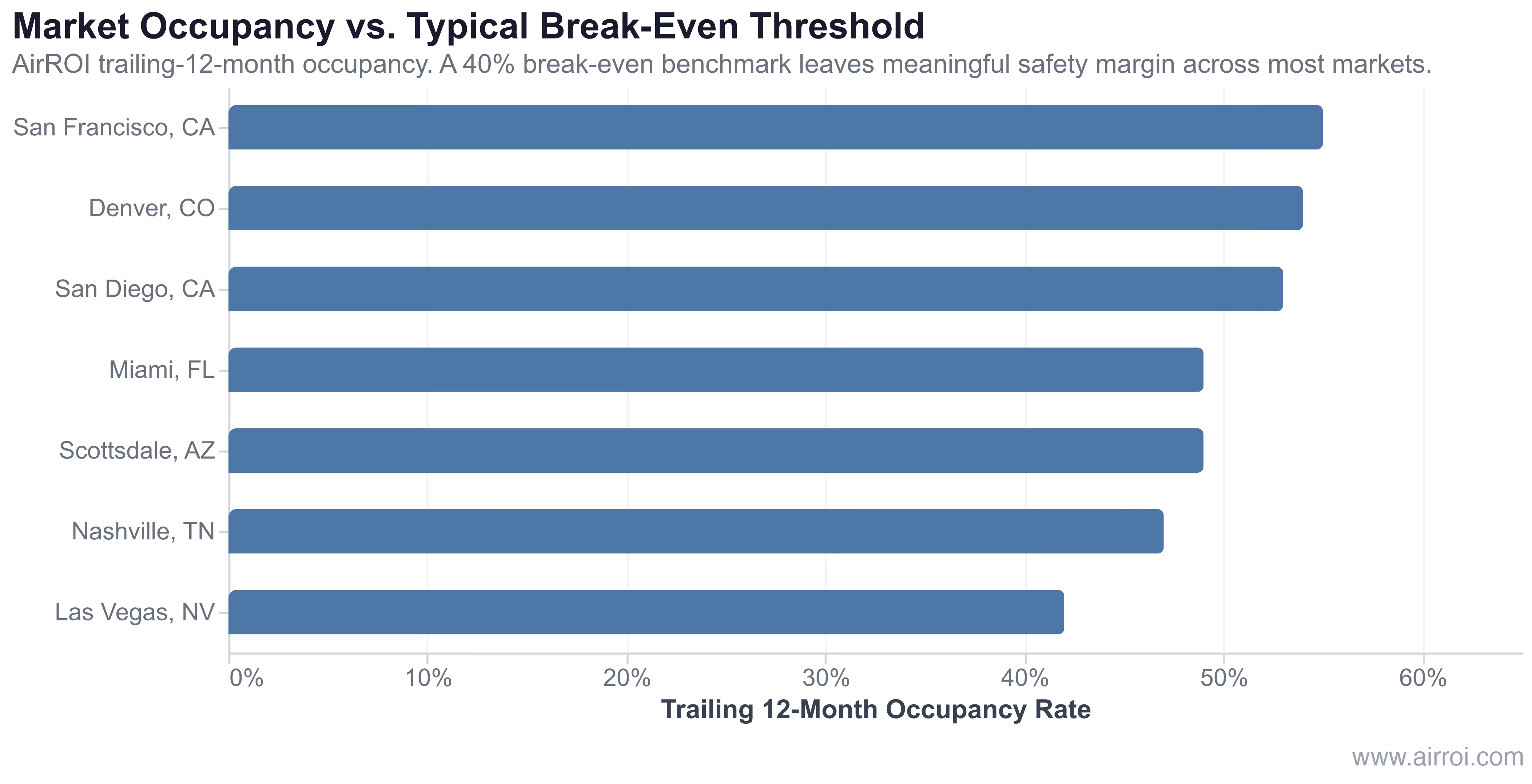
In AirROI's analysis of 47,310 active listings across San Francisco, Denver, San Diego, Miami, Scottsdale, Nashville, and Las Vegas, median occupancy ranged from 42% to 55%, putting most well-priced properties comfortably above a 40% break-even threshold — but leaving little margin in the weakest markets.
The gap between your break-even occupancy and the market's median occupancy is your safety cushion. A property breaking even at 35% in a market running at 54% has a 19-point cushion. A property breaking even at 50% in a market running at 47% is already underwater at median performance.
The break-even occupancy rate is not a goal — it is the floor you must stay above. The real question is how far above it your market naturally keeps you.
Break-Even Occupancy Benchmarks
| Break-Even Range | Risk Level | Assessment |
|---|---|---|
| Below 30% | Very low risk | Excellent safety margin; highly profitable |
| 30% – 45% | Low risk | Strong investment with good cushion |
| 45% – 55% | Moderate risk | Acceptable for stable markets |
| 55% – 65% | Elevated risk | Vulnerable to seasonal dips |
| Above 65% | High risk | Marginal investment; little room for error |
Why Break-Even Occupancy Matters
Risk assessment. A low break-even occupancy means the property can survive slow seasons, regulation shifts, or unexpected vacancies without bleeding cash. A Nashville listing running 47% occupancy on AirROI's trailing-12-month data has room to absorb an off-season dip; a listing that breaks even at 60% does not.
Investment screening. Before purchasing, calculate break-even occupancy using your projected ADR and costs, then compare it against actual market occupancy data. If your break-even is already near or above what the market delivers at the median, the deal requires near-perfect execution to avoid losses.
Seasonal floor pricing. Knowing your break-even helps set the absolute minimum nightly rate during shoulder season. If your break-even requires $137 net per night and you drop ADR below $200 while variable costs remain at $63, every booked night at that rate still doesn't cover fixed costs.
Strategies to Lower Break-Even Occupancy
Reduce Fixed Costs
- Refinance your mortgage. Lowering your rate by even 0.5% on a $400,000 loan reduces annual fixed costs by $2,000, directly reducing break-even nights.
- Appeal property tax assessments. STR properties are frequently assessed on residential comparable sales that don't reflect income potential; a successful appeal can cut taxes 10–20%.
- Shop insurance annually. STR insurance rates vary widely across carriers — competitive bidding routinely surfaces 10–20% savings.
- Install smart energy controls. Smart thermostats and energy-efficient appliances lower baseline utility costs, the one fixed-cost category that recurs whether guests are present or not.
Increase Average Nightly Rate
Reduce Variable Costs Per Night
- Negotiate bulk cleaning contracts. A co-host or in-house cleaning team typically charges 20–30% less per turnover than on-demand marketplace cleaners.
- Increase minimum stay length. Shifting from a 2-night to a 3-night minimum cuts turnovers by 33%, reducing cleaning costs and per-guest supplies proportionally.
- Buy consumables wholesale. Starter kits, toiletries, and paper goods bought in bulk cost 30–50% less per guest than retail pricing.
Frequently Asked Questions
A good break-even occupancy rate for an Airbnb is typically 35% to 50%. Properties breaking even below 40% occupancy have a strong safety margin, while those requiring above 60% are more vulnerable to seasonal slowdowns or market shifts. The lower your break-even occupancy, the more resilient your investment is to revenue fluctuations and economic downturns.
Divide your total annual fixed costs (mortgage, taxes, insurance, HOA, base utilities) plus estimated variable costs at break-even by your average nightly rate. The formula is: Break-Even Occupancy = Total Annual Costs / (Average Nightly Rate x 365) x 100. Include both fixed costs that occur regardless of occupancy and variable costs like cleaning and supplies that scale with bookings.
Lower break-even occupancy by either reducing costs or increasing your average nightly rate. Refinance to lower mortgage payments, negotiate better insurance rates, reduce utility costs with smart devices, and eliminate unnecessary subscriptions. On the revenue side, improve your listing quality to command higher nightly rates, add premium amenities, and optimize your pricing strategy to maximize rate without sacrificing too much occupancy.