
Operating Expenses

Key Takeaways
- Operating expenses exclude mortgage payments, capital expenditures, and income taxes — a distinction that matters for calculating NOI
- The typical STR expense ratio is 40–60% of gross revenue; self-managed properties cluster at 35–45%, professionally managed at 50–65%
- Property management fees (15–25% of revenue) and cleaning are the two largest controllable expense categories
- Every dollar saved in operating expenses flows directly to NOI, improving your cap rate and net rental yield
- Higher operating expenses raise your break-even occupancy — the minimum occupancy required to cover all costs
Complete Operating Expense Breakdown
| Expense Category | Typical Monthly Cost | % of Revenue | Notes |
|---|---|---|---|
| Property management | $600 – $1,500 | 15% – 25% | Highest single line for managed STRs |
| Cleaning | $500 – $1,200 | 8% – 15% | Scales with turnover frequency |
| Platform/booking fees | $150 – $400 | 3% – 5% | Airbnb host fee or channel manager |
| Property taxes | $300 – $1,000 | 5% – 12% | Varies significantly by location |
| Insurance | $125 – $350 | 2% – 4% | STR-specific policy required |
| Utilities | $200 – $500 | 3% – 7% | Electric, gas, water, sewer, trash |
| Maintenance and repairs | $300 – $800 | 5% – 10% | Ongoing plus reserves |
| Supplies and consumables | $100 – $250 | 2% – 4% | Toiletries, linens, kitchen items |
| WiFi and streaming | $80 – $150 | 1% – 2% | High-speed internet is non-optional |
| Landscaping | $100 – $300 | 1% – 3% | Seasonal in northern markets |
| Marketing/photography | $50 – $200 | 1% – 2% | Listing refresh, professional photos |
| Licenses and permits | $50 – $200 | < 1% | STR permits, business license |
| Accounting/bookkeeping | $50 – $150 | < 1% | Tax preparation, bookkeeping |
| HOA fees | $0 – $500+ | Varies | Condos and planned communities |
What Operating Expenses Exclude
This is where most first-time investors miscalculate. Three major cost categories sit outside operating expenses:
- Mortgage principal and interest — classified as debt service; excluded from NOI calculations so that cap rate and NOI reflect unleveraged performance
- Capital expenditures (CapEx) — major purchases that extend asset life (new HVAC, roof, appliances); capitalized and depreciated rather than expensed
- Income taxes — not an operating cost of the property itself, though all legitimate operating expenses are deductible against rental income
Estimated Annual Operating Expenses by Market
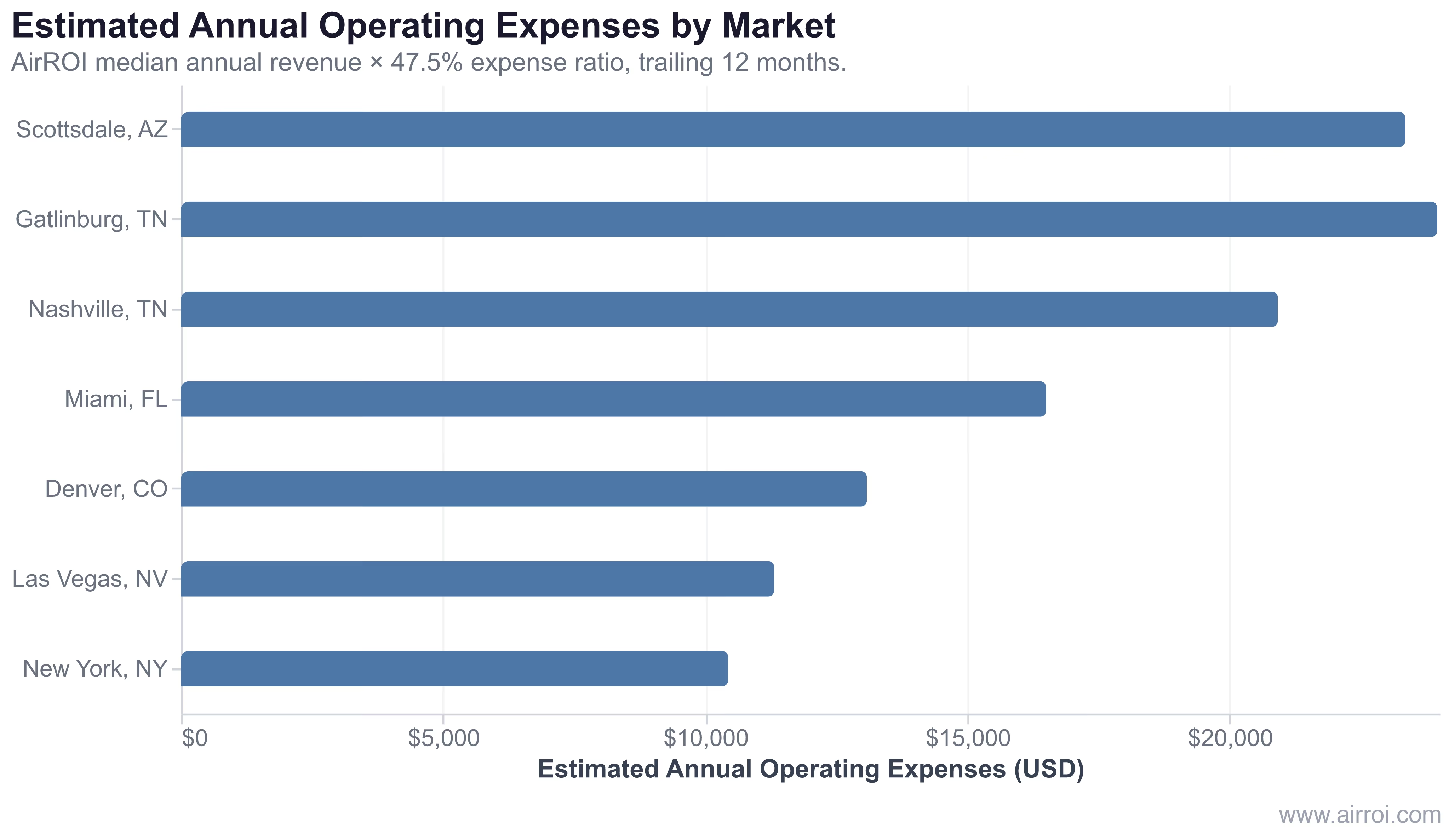
In AirROI's analysis of more than 55,000 active listings across seven US markets, applying a 47.5% midpoint expense ratio to median annual revenue shows how starkly the absolute dollar burden differs by market — even though the ratio is consistent.
| Market | Median Annual Revenue | Est. Annual Operating Expenses (47.5%) |
|---|---|---|
| Gatlinburg, TN | $50,438 | ~$23,958 |
| Scottsdale, AZ | $49,153 | ~$23,348 |
| Nashville, TN | $44,039 | ~$20,919 |
| Miami, FL | $34,738 | ~$16,501 |
| Denver, CO | $27,540 | ~$13,082 |
| Las Vegas, NV | $23,819 | ~$11,314 |
| New York, NY | $21,970 | ~$10,436 |
A Gatlinburg host managing $50,438 in annual revenue carries roughly $24,000 in operating costs — more than double the dollar load of a New York host. Yet the New York host's ratio may be comparable or higher because of elevated property taxes, insurance, and regulatory compliance costs in a heavy-regulation market. The lesson: budget in dollars, not just percentages.
The expense ratio is consistent across markets; the dollar amount is not. A $50,000-revenue Gatlinburg cabin and a $22,000-revenue New York apartment both burn ~45–50% on operations — but the cabin owner needs to generate $24,000 just to break even on expenses, while the New York host needs $10,000. Revenue scale determines the stakes.
Expense Ratios by Management Style
| Management Style | Expense Ratio | Monthly Expense (on $3,500/mo revenue) | Monthly NOI |
|---|---|---|---|
| Self-managed | 35% – 45% | $1,225 – $1,575 | $1,925 – $2,275 |
| Hybrid (co-host) | 42% – 52% | $1,470 – $1,820 | $1,680 – $2,030 |
| Full professional management | 50% – 65% | $1,750 – $2,275 | $1,225 – $1,750 |
Why Operating Expenses Matter for STR Investors
- NOI and cap rate — Every dollar of operating expense reduces NOI dollar-for-dollar, compressing your cap rate and gross rental yield
- Break-even occupancy — Higher expenses raise the occupancy floor at which the property turns profitable; the break-even occupancy calculation requires accurate expense figures
- Tax deductions — All legitimate operating expenses are deductible against rental income, reducing taxable income (consult a qualified tax professional for your specific situation)
- Lender underwriting — DSCR lenders and conventional lenders use NOI (revenue minus operating expenses) to assess debt coverage; understating expenses leads to a false sense of qualifying income
Practical Cost-Control Priorities
- Audit the top three categories quarterly — management, cleaning, and property taxes account for 30–50% of total expenses. A 10% reduction in any one of them meaningfully improves NOI without affecting guest experience.
- Negotiate per-turnover cleaning rates — fixed per-turnover pricing aligns cleaner incentives with yours; hourly billing inflates costs on complex turnovers.
- Cut utility waste with smart devices — smart thermostats, LED bulbs, and low-flow fixtures typically reduce utility costs 15–25% with no guest impact.
- Build a maintenance reserve — 5–10% of revenue set aside monthly prevents large repair bills from destroying cash flow in a single month.
- Shop STR insurance annually — the market has grown and rates are increasingly competitive; policies from conventional landlord carriers consistently underinsure STR activity.
- Track expenses by category monthly — you cannot optimize what you don't measure; software like Stessa or QuickBooks Self-Employed makes categorization straightforward.
Frequently Asked Questions
Typical Airbnb operating expenses include property management (15–25% of revenue), cleaning ($75–$200 per turnover), platform booking fees (3–5%), property taxes, insurance ($1,500–$4,000/year), utilities ($200–$500/month), maintenance and repairs (5–10% of revenue), supplies and consumables, WiFi, and landscaping. In aggregate, operating expenses consume 40–60% of gross STR revenue, with the precise ratio driven mainly by whether the property is self-managed or professionally managed.
Operating expenses typically consume 40–60% of gross Airbnb revenue. Self-managed properties run 35–45% by eliminating the management fee. Professionally managed properties reach 50–65% once the 15–25% management fee is included. In AirROI's basket of markets, median annual revenue ranges from roughly $22,000 (New York) to $50,000 (Gatlinburg), implying annual operating cost loads of $8,800–$23,750 at the 40% floor.
No, mortgage payments (principal and interest) are not operating expenses. They are classified as debt service or financing costs. Operating expenses cover only the recurring costs of running and maintaining the property: management, cleaning, taxes, insurance, utilities, maintenance, and supplies. This distinction matters because net operating income (NOI) excludes mortgage payments, while cash flow includes them.
Property management fees are typically the single largest operating expense for professionally managed STRs, consuming 15–25% of gross revenue on their own. For self-managed properties, cleaning and property taxes collectively become the dominant costs. Across both management styles, the top three categories — management, cleaning, and property taxes — account for 25–45% of gross revenue, making them the highest-leverage targets for cost control.