Private Room

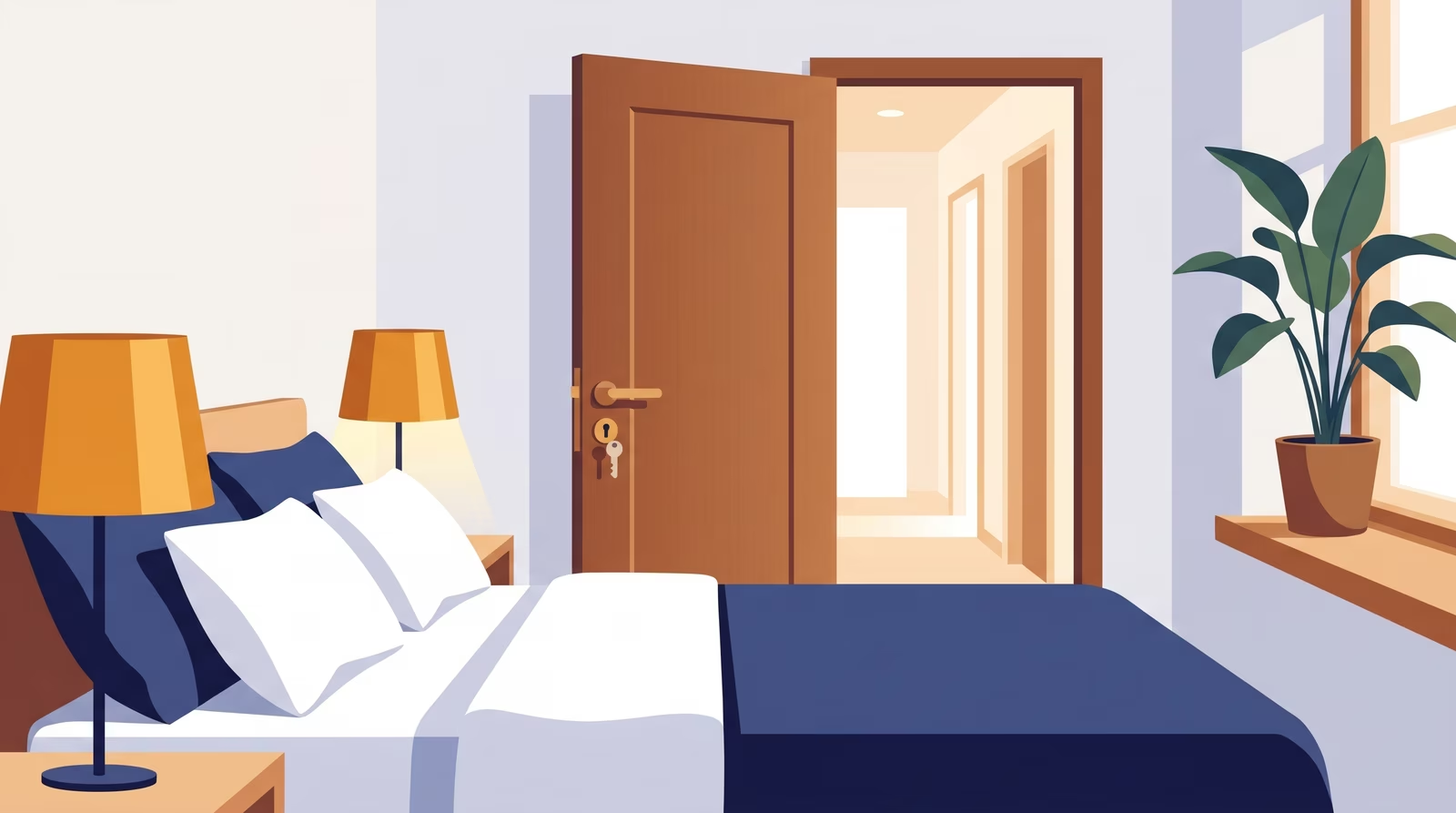
A private room is a short-term rental listing type where the guest receives their own dedicated bedroom with a lockable door while sharing common areas — kitchen, bathroom, and living room — with the host or other occupants. It is the lowest-barrier entry point into Airbnb hosting: no second property, no large capital outlay, just a spare bedroom and a platform account.
Key Takeaways
- A private room gives guests exclusive use of a lockable bedroom; all other spaces are shared with the host or fellow guests
- It is the most accessible hosting model — monetize an existing spare room with minimal upfront investment, far below what an entire-home listing requires
- In heavily regulated cities such as New York, private rooms (hosted stays) are often the only legal short-stay option under ordinances that ban unhosted rentals
- Private rooms attract solo travelers, digital nomads, and budget-conscious couples who want their own sleeping space without entire-home prices
- Hosts who live on-site have a built-in advantage: faster issue resolution, stronger reviews, and a more personal homestay-style guest experience
How Private Room Listings Work
When a host selects "Private room" as the listing type, they grant guests exclusive use of one bedroom within a larger property. That room should have a door that closes and — best practice — a lock. Everything outside the bedroom is shared: kitchen, bathroom, hallway, and any living areas.
Because guests share space with the host or other residents, accurate disclosure is essential. Airbnb's listing flow requires hosts to describe exactly which areas are shared and with whom. Misrepresenting a listing as more private than it is reliably produces one-star reviews and potential platform penalties.
Private Room vs Other Listing Types
| Feature | Private Room | Entire Home | Shared Room |
|---|---|---|---|
| Guest space | Dedicated lockable bedroom | Full property | Shared sleeping area |
| Common areas | Shared with host or guests | Exclusive | Shared |
| Typical nightly rate | Mid-range | Highest | Lowest |
| Host presence | Usually on-site | Not present | Usually on-site |
| Startup cost | Minimal — existing bedroom | High | Minimal |
| Best for guests | Solo travelers, budget couples | Families, groups | Backpackers |
| Regulatory risk | Lower — often exempt from bans | Higher | Lower |
Regulatory Advantage of Hosted Stays
The regulatory distinction between private rooms and entire homes is the most practically important difference for hosts evaluating where to operate.
Most short-term rental ordinances target unhosted stays — entire-home rentals where the owner is absent. Primary-residence requirements, owner-occupancy rules, and night caps are all typically aimed at this category. Private rooms, where the host is present on-site, fall into the "hosted stay" exemption in many jurisdictions.
New York City illustrates the extremes. Local Law 18, enforced from September 2023, requires hosts to register and be present during guest stays, effectively eliminating unhosted entire-home short-stays under 30 nights. AirROI data shows active listings fell roughly 60% after enforcement, from around 26,775 to approximately 10,500. The listings that survived were predominantly hosted private rooms — the one listing type the law permits for sub-30-night stays.
In the most regulated markets, private rooms aren't just a cheaper option — they're often the only legal one. Hosts who understand this distinction can operate where competitors cannot.
Why Private Rooms Attract Specific Guest Segments
Pricing below entire homes is the obvious draw, but three structural factors sustain private-room demand beyond price alone.
Solo and business travelers. A solo traveler booking a two-bedroom entire home at $300/night is overpaying for space they won't use. A private room at $80–120/night in the same neighborhood delivers the same sleep quality and local neighborhood experience at a third of the cost. Business travelers on fixed per-diem budgets and digital nomads planning extended stays are the most repeat-heavy segment in private room bookings.
Urban proximity at budget rates. Private rooms tend to cluster in the same dense urban neighborhoods where entire-home inventory is scarce and expensive. Guests who want to stay in central Paris, Manhattan, or San Francisco rather than in a suburban Airbnb often find private rooms are their only affordable in-city option.
Tips for Running a Successful Private Room Listing
Invest in the bedroom itself, not just the building. A quality mattress, blackout curtains, bedside reading lamp, luggage rack, and a few hangers transform a spare bedroom into a guest suite. The room is the product; spend accordingly.
Add soundproofing where possible. Noise bleed between the guest room and the rest of the home is the most common complaint in private-room reviews. Weatherstripping on the bedroom door, a white-noise machine, and an area rug all reduce sound transfer significantly.
Set clear house rules upfront. Define quiet hours, kitchen access windows, bathroom scheduling (if shared), and any restrictions on guests or visitors. Post the rules in the listing description and print a laminated copy inside the room. Ambiguity is the source of most friction.
Offer a private or en-suite bathroom if feasible. Listings with dedicated guest bathrooms command meaningfully higher rates and earn better review scores than those with a shared bathroom. Even a half-bath that functions as the guest's own reads as a private bathroom in the listing and in reviews.
Frequently Asked Questions
A private room on Airbnb is a listing where the guest gets their own dedicated bedroom with a door that locks, while sharing common areas like the kitchen, bathroom, and living room with the host or other guests. It offers more privacy than a shared room but costs less than booking an entire home.
Private rooms typically earn 40–60% less per night than entire-home listings in the same market. They offset lower ADR with reduced startup costs, no second-property purchase required, and — in dense urban markets — occupancy rates that can exceed those of pricier entire homes.
You are not required to be present at all times, but most private room hosts do live in the property. Airbnb requires accurate disclosure of any shared spaces. Many hosts use self check-in to offer flexibility while still maintaining on-site presence for the majority of stays.
In many cities, yes. Hosted stays where the owner is present are often exempt from the strictest short-term rental ordinances. New York City's Local Law 18, for example, effectively bans unhosted entire-home stays under 30 nights but permits hosted private-room rentals with proper registration, making private rooms the only viable short-stay option in that market.
Entire homes and shared rooms are the two direct competitors on platforms like Airbnb. Entire homes capture guests who want full privacy and space; shared rooms target the most price-sensitive travelers. Private rooms sit between both, appealing to solo travelers, digital nomads, and budget couples who want their own sleeping space without paying entire-home rates.