Local Airbnb rules2026 18 sources cited
Is Airbnb Legal in Cape Town? 2026 Rules, Permits & Taxes
Airbnb is legal in Cape Town with no permit or night cap, but a home available over 50% of its annual room nights pays commercial rates (2.41 times residential), and a City registration number is planned.1,5
From 15 official sources and 2 Airbnb help pages. Not legal advice.
The short answer
Cape Town Airbnb Rules in Brief
- No City permit, licence or night cap applies today; the City says it does not intend to restrict short-term letting.
- A primary residence available for short-term letting for more than 50% of its annual room nights (bedrooms multiplied by 365) is rated as commercial accommodation, at 2.41 times the residential rate.
- A property that is not a primary residence and is used for commercial short-term letting is also commercial accommodation, whatever its availability.
- A City-issued registration number on every listing is proposed; Council adoption is planned for early 2027 and rating changes from 1 July 2027.
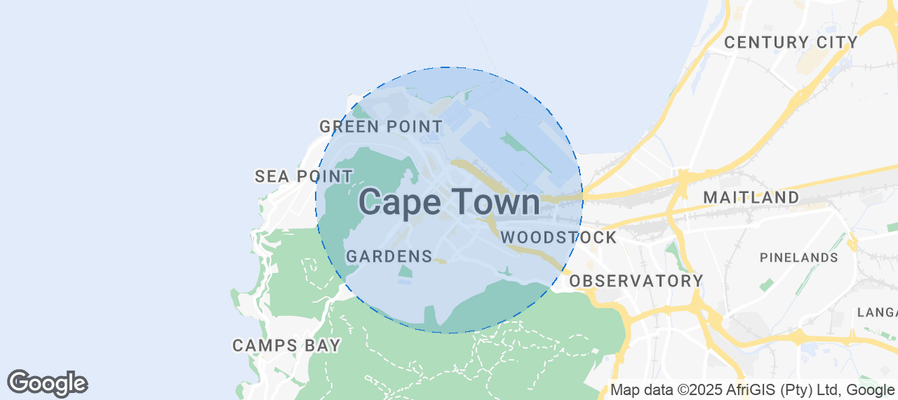 Browse the live Cape Town Airbnb market See Every Cape Town Listing
Revenue, occupancy and nightly rates are in the Cape Town Airbnb market report .
At a glance
Cape Town Airbnb Rules at a Glance
- Permit
- Not required
- Taxes on a stay
- None
- Active Airbnb listings
- 16,100
- Next rule change
- Jul 1, 2027
The rules in brief
The rules a Cape Town host meets first, each linked to the ordinance, statute or official page it comes from. Details and exceptions follow below.
| Topic | Rule |
|---|---|
| Permit | No City permit or registration yet5 |
| Who can host | Bed and breakfast: the host lives on the property2 |
| Where | Zoning allows short-term letting5 |
| Building rules | Body corporate and estate rules5 |
| Night cap | No night cap5 |
| Minimum stay | Transient stays: up to 30 consecutive days2,18 |
| Guests | Bed and breakfast: up to 3 rooms and 6 guests2,8 |
| Listing display | Proposed: registration number on every listing1,5 |
| Platforms | Proposed: platforms must remove unregistered listings5 |
| Safety | Escape route plan in sleeping rooms3 |
| Neighbours | Bed and breakfast: no events, one small sign, on-site parking2 |
Your home
Can You Host an Airbnb in Cape Town? It Depends on the Home
Whether you can host in Cape Town turns on whose home it is and whether you live there.
Your own home, rented whole while you're away
Allowed with conditionsAllowed with no permit. The home stays on residential rates while it is available for short-term letting for 50% of its annual room nights or less, measured on listed availability over any 365 days. Above 50% it is rated as commercial accommodation, with changes foreseen from 1 July 2027.5,6
A room or granny flat in the home you live in
Allowed with conditionsUsually the simplest case. As a bed and breakfast the host lives on the property and uses no more than 3 rooms for no more than 6 paying guests. One bedroom listed all year in a three-bedroom house is 33% and stays residential, while three of four bedrooms listed all year is 75% and is rated commercial.2,5
A second home or investment flat let most of the year
Allowed with conditionsAllowed, with no night cap, but a property that is not a primary residence and is used for commercial short-term letting is commercial accommodation whatever its availability. Expect commercial rates at 2.41 times the residential rate and, once the by-law is adopted, a City registration number.5,6
A sectional-title flat or home in an estate
Allowed with conditionsThe body corporate or homeowners' association can set its own rules for short-term letting, and the City does not regulate them. Check the rules and the title deed before listing.5
Permit
Do You Need a Permit for Airbnb in Cape Town?
No. No host needs a City permit or licence to list in Cape Town today. Once the draft by-law is adopted, every property advertised on a booking platform would need a City-issued registration number, including houses, apartments, guesthouses, bed and breakfasts and hotels. A guest house with more than six guests needs the City's consent use approval.1,5
- Issued by
- None today. The City of Cape Town would issue the registration number if its draft Short-Term Letting By-law is adopted.
- Valid for
- Not applicable until the by-law is adopted. Under the draft, a registration number stays valid until the owner de-registers the property or the City cancels it, for example on a transfer of ownership or because the data was false.
- On listings
- No number needed on listings
- Platform checks
- No platform checks a City number today. Under the draft by-law, booking platforms would have to collect the registration data, show the City-issued number on every listing and remove listings without a valid number, and a listing using a cancelled number would have to come down within 10 working days.
Who qualifies
- Zoning: the City states that the Municipal Planning By-law allows short-term letting, so no zoning change or land use approval is needed to list a home.
- Bed and breakfast in Conventional Housing zoning: the host lives on the property, with no more than 3 rooms and 6 paying guests.
- Guest house (more than six guests): a consent use approved by the City.
- Sectional-title buildings and estates: the body corporate or homeowners' association rules apply on top of City rules.
- Proposed registration: covers all properties listed on a booking platform, and the property must be identified by address, erf number and municipal account number.
How to apply
- The City has not opened a registration system, so there is nothing to apply for yet.
- Under the draft by-law, the owner or operator supplies the property's address, erf number, municipal account number and any supporting evidence, through the booking platform or a City system.
- The City checks the data against its records and issues one registration number per property to both the owner and the platform, and the number must appear on every listing.
- Meanwhile, check your property's rates category: the City asks hosts who let a home mostly for short stays to approach it now.
Permit rules
- No City permit or registration yet
- The registration system is a draft. The Short-Term Letting By-law was open for public comment from 5 August to 5 October 2026, and the City plans to table the updated by-law for Council adoption early in 2027, so no City permit or registration number is required today.5
- Proposed: registration number on every listing
- The draft by-law would require the owner or operator to register the property before listing it and to show the City-issued number on every listing. The City would issue one unique number per property after checking the registration data. It is not yet in force.1,5
- Proposed: platforms must remove unregistered listings
- Under the draft by-law, booking platforms would have to remove listings that do not show a valid registration number and share availability and occupancy data on registered properties with the City. Hotels, guesthouses and bed and breakfasts must register but need no data sharing.5
- Airbnb reports to SARS on request
- Airbnb is legally required to give the South African Revenue Service a limited amount of transaction data when SARS asks for it.18
Who can host
Who Can Host an Airbnb in Cape Town, and Where
Western Cape state law applies on top of Cape Town's own rules: the Western Cape short-term rental regulations page covers the state licence and what cities and counties can and can't regulate.
- Zoning allows short-term letting
- The City says its Municipal Planning By-law allows short-term letting, so listing a home needs no zoning change.5
- Bed and breakfast: the host lives on the property
- In Conventional Housing (R1) zoning a bed and breakfast is an additional use right exercised by the occupant. The proprietor must live on the property and the dominant use must stay a dwelling house.2 In force since October 1, 2025
- Guest house: consent use
- A guest house, which is a lodging establishment above bed-and-breakfast size, is a consent use in Conventional Housing zoning. It needs the City's approval before opening, and the City's guidance puts the line at more than six guests.2,8
- Body corporate and estate rules
- Body corporates and homeowners' associations may set their own rules for short-term letting inside their buildings. The City does not regulate this, so a flat or estate home can be barred even where the City allows letting.5
Operating rules
Operating Rules for Cape Town Short-Term Rentals
- No night cap
- The City sets no limit on the nights a home can be let. It says its aim is fair treatment on property rates, not to restrict short-term letting.5
- Transient stays: up to 30 consecutive days
- The City's planning scheme defines a transient guest as someone staying on a land unit that is not their permanent home for no more than 30 consecutive days at a time. Airbnb's help page for South Africa describes the same 30-day limit for Cape Town.2,18
- Bed and breakfast: up to 3 rooms and 6 guests
- A bed and breakfast, or a home letting rooms to lodgers, may use no more than 3 rooms per land unit and host no more than 6 paying guests at any time. Guest rooms may not become separate self-catering dwelling units.2,8
- Bed and breakfast: no events, one small sign, on-site parking
- Weddings, receptions, conferences and training are not permitted from a bed and breakfast. Only one small un-illuminated sign is allowed, on-site parking must be provided, and the City can require more parking if it finds the provision insufficient.2 In force since October 1, 2025
- Commercial rates above 50% availability
- Under the 2026/27 Rates Policy, approved on 29 June 2026, a primary residence used or available for short-term letting for more than 50% of its annual room nights is commercial accommodation and pays commercial rates. At 50% or less it stays residential.5,6 In force since June 29, 2026
- A second home let commercially is commercial accommodation
- The 50% test applies to a primary residence. A property that is not used as a primary place of residence and is used for commercial short-term letting is commercial accommodation whatever its availability, as are guest houses, bed and breakfasts and self-catering lets.5,6 In force since June 29, 2026
- How the 50% is measured
- Total annual room nights are the number of bedrooms multiplied by 365. The City counts the nights each bedroom is listed as available on a booking platform over any 365-day period, past and future, not the nights actually booked.5,6 In force since June 29, 2026
- Commercial rate: 2.41 times the residential rate
- The Rates Policy sets the business and commercial rate at 1:2.41 against the residential rate-in-the-rand, so a property reclassified from residential to commercial pays 2.41 times the rate on its municipal valuation.6 In force since June 29, 2026
- Over 50% availability loses the residential reduction
- The Rates Policy gives owners of primary residences valued below R8,000,001 a reduction of R605,000 on the value that is rated. A property used or available for short-term letting for more than 50% of its annual room nights does not qualify for it.6 In force since June 29, 2026
- When a rates category changes
- The City assesses property use on a rolling 365-day period. A property found listed more than 50% of the time is reclassified at the next supplementary valuation, effective from the date the threshold was exceeded. The City says category changes are foreseen only from 1 July 2027.5 Takes effect July 1, 2027
- Proposed: grace period after adoption
- The draft by-law gives owners, operators and booking platforms a grace period to comply with the registration and listing duties after it is promulgated. The City Manager would declare the length and the start of platform data sharing by public notice.1
- Escape route plan in sleeping rooms
- Under the City's Community Fire Safety By-law, a guest house or similar occupancy used by transient persons must display an escape route plan in every room designed for sleeping, whatever its size.3
- Business licence and food certificate if you serve meals
- A host who supplies meals, such as breakfast, needs a City business licence, and preparing or selling food needs a Certificate of Acceptability from the City's Environmental Health service. Self-catering lets without meals do not trigger either.9,10
- VAT base changes after 28 days
- For a registered VAT vendor, VAT applies to the whole all-inclusive charge on a stay of 28 days or less. On a stay longer than 28 days only 60% of the all-inclusive charge is subject to VAT.13
- National code is guidance only
- The national Draft Code of Good Practice for Short-Term Rentals is non-binding guidance issued while the Tourism Act is reviewed. It asks hosts for smoke detectors, liability insurance and a contact person for neighbours, but it is not law and sets no licence.14,15 In force since March 2026
Taxes
How Much Are Airbnb Taxes in Cape Town?
No tax applies to every stay. VAT of 15% applies when the host is a VAT vendor, the 1% tourism levy is charged only by businesses that collect it, and Cape Town property rates rise to 2.41 times the residential rate when a property is commercial accommodation.
| Tax | Rate | Collected by |
|---|---|---|
| Value-added tax (VAT) 15% of the accommodation charge when the host is a VAT vendor; registration is compulsory above R2.3 million of taxable supplies in 12 months (from 1 April 2026) | 15%11,12,16 | Host |
| Tourism levy (TOMSA) 1% charged to guests by businesses that have signed up to collect it; the system is voluntary for businesses | 1%17 | Host |
| Commercial property rates (City of Cape Town) Business and commercial rate-in-the-rand at 2.41 times the residential rate, charged instead of the residential rate on a primary residence available for short-term letting over 50% of its annual room nights and on any property let commercially that is not a primary residence | —5,6 | Host |
What the host still handles
- VAT with SARS once taxable supplies pass R2.3 million in any 12 months
- The correct property-rates category with the City: hosts who let a home mostly for short stays are asked to approach the City now
- A City business licence if you supply meals, and a Certificate of Acceptability to prepare or sell food
- A City short-term letting registration number once the draft by-law is adopted6,7,11,12,16,17
Fines
How to Avoid Airbnb Fines in Cape Town
Fines in Cape Town fall on hosting outside the rules above. With the rules followed, none of the fines below apply.
- Using land in a manner other than the Development Management Scheme permits is an offence under the Municipal Planning By-law, punishable by a fine or imprisonment of up to 20 years, or both. The by-law sets no fixed rand amount.2
- Administrative penalty: a person who rectifies an unlawful land use can be charged a penalty of up to 100% of the municipal valuation of the area used unlawfully, set by the Municipal Planning Tribunal or proposed as a standard penalty by the City Manager.2
- A person convicted who carries on the same conduct commits a continuing offence: a fine or imprisonment of up to three months, or both, for each day.2
- Draft Short-Term Letting By-law (not in force): advertising or listing a property contrary to the by-law, or failing to show a valid City registration number, would be an offence punishable by a fine or imprisonment of up to six months, or both.1
Changes
What's Changed in Cape Town's Airbnb Rules, and What's Next
One change is scheduled after October 20, 2026; the most recent rules are listed first.
- July 1, 2027 Upcoming
- August 5, 2026 Not in forceDraft Short-Term Letting By-law opened for public comment
Public comment on the draft by-law ran from 5 August to 5 October 2026. The City plans to update the draft and table it for Council adoption early in 2027, with a grace period for owners to adapt.5
- June 29, 20262026/27 Rates Policy approved with the 50% availability test
The Special Council approved the 2026/27 Rates Policy, which classes a primary residence used or available for short-term letting for more than 50% of its annual room nights as commercial accommodation, using a 365-day window of past and future listed availability.6
- February 9, 2026City announces a draft Short-Term Letting By-law
The City said a draft by-law would go to public participation to improve compliance with its Rates Policy, and called it a compliance measure rather than a new tax. It encouraged short-term letters to approach the City now about the correct rates category.7
- October 1, 2025Municipal Planning Amendment By-law, 2025 takes effect
The amendment lets the Council prescribe standard administrative penalties for planning contraventions and updated the bed and breakfast conditions, including on-site parking and the rule that the proprietor lives on the property.2
Earnings
What Could a Cape Town Short-Term Rental Earn?
For a specific address, the Airbnb income calculator estimates revenue, occupancy and nightly rate from comparable listings, so you can test the numbers before applying.
FAQ
Cape Town Airbnb Rules: Frequently Asked Questions
Is Airbnb legal in Cape Town?
Do I need a permit or licence for Airbnb in Cape Town?
Not today. The City has no Airbnb permit, and its draft Short-Term Letting By-law would add a City registration number on every listing once Council adopts it, which is planned for early 2027. A guest house with more than six guests needs consent use approval, and serving meals needs a business licence.1,5,8,9
Does Cape Town require Airbnb registration?
How much does the Cape Town registration cost?
Will my property rates go up if I list on Airbnb?
Only if the property is commercial accommodation: a primary residence available for short-term letting for more than 50% of its annual room nights, or a property that is not a primary residence and is let commercially. The commercial rate is 2.41 times the residential rate, and the City foresees category changes from 1 July 2027.5,6
How does Cape Town calculate the 50% threshold?
Is there a maximum number of nights I can host in Cape Town?
No. The City sets no night cap, and its 50% test only decides whether the property pays residential or commercial rates.5
Can I rent a home I don't live in?
Does Airbnb collect hotel or tourist tax in Cape Town?
Do I have to charge VAT on Airbnb bookings in Cape Town?
What is the fine for breaking Cape Town's short-term letting rules?
Can my body corporate or homeowners' association stop me?
Yes, through its own rules. Body corporates and homeowners' associations may set rules for short-term letting inside their buildings, and the City does not regulate this.5
How much does an Airbnb make in Cape Town?
The average Cape Town listing earned US$20,300 in the 12 months to September 2026, according to AirROI, averaged across every active listing including those booked for only part of the year. The Cape Town Airbnb market report breaks it down by month, property size and neighborhood.
Method
How These Rules Were Checked
Each rule on this page was checked in October 2026 against the official source cited beside it: the ordinance or statute, the permit office's own pages and the tax authority. Airbnb's help pages are cited on their own only for what Airbnb itself does, such as the taxes it collects and the permit checks it runs, and otherwise only beside an official source; news reports only for when a change was announced. Rules that could not be confirmed on an official page are left out. The draft Short-Term Letting By-law and the Cape Town FAQ were read from Internet Archive copies of the City's PDFs dated August 2026; the City's public participation pages could not be read by script and were not relied on.
Rules change with council votes, court rulings and new state laws, so the page is rechecked every three months and whenever a scheduled change takes effect. It summarizes the rules for information and is not legal advice; the local authority has the final word on any application.
Listing figures come from AirROI's tracking of 16,100 active Cape Town Airbnb listings over the 12 months to September 2026.
Sources
Sources
Each rule above links to the source it comes from. Official ordinances, statutes and government pages come first, then Airbnb's own help pages.
- 1. Short-Term Letting By-law, 2026 (draft for public comment) · City of Cape Town
- 2. City of Cape Town Municipal Planning By-law, 2015 (consolidated, with the Development Management Scheme) · City of Cape Town
- 3. Community Fire Safety By-law, 2002 (as amended) · City of Cape Town
- 4. Western Cape Land Use Planning Act 3 of 2014 (as at 23 June 2021) · Province of the Western Cape (copy hosted by LawLibrary)
- 5. Short-term Letting in the City of Cape Town: Frequently Asked Questions (updated August 2026) · City of Cape Town
- 6. Annexure 5: Rates Policy 2026/2027 (approved by Special Council 29 June 2026) · City of Cape Town
- 7. Proposed Short-Term Letting By-law aims to improve Rates Policy compliance for commercial-scale short-term letting · City of Cape Town Media Office
- 8. Home based business · City of Cape Town
- 9. Apply for a business licence · City of Cape Town
- 10. Apply for a certificate of acceptability · City of Cape Town
- 11. Value-Added Tax · South African Revenue Service
- 12. What is the new Threshold for VAT Registration? · South African Revenue Service
- 13. VAT 411 Guide for Entertainment, Accommodation and Catering · South African Revenue Service
- 14. Minister Patricia de Lille invites public comment on draft code of good practice for short-term rentals · South African Government (Department of Tourism)
- 15. Code of Good Practice for Short-Term Rentals (draft) · National Department of Tourism
- 16. Tax considerations on short-term rentals in South Africa (2026 tax guide) · Airbnb
- 17. Levy FAQ · Tourism Marketing South Africa (TOMSA)
- 18. Responsible hosting in South Africa · Airbnb Help Center