Local Airbnb rules2026 22 sources cited
Is Airbnb Legal in Seoul? 2026 Rules, Permits & Taxes
Seoul allows Airbnb-style hosting only as a registered urban homestay: you live there, the home is under 230 m², guests are foreign, KRW 20,000 plus licence tax; unlicensed lodging risks 2 years or KRW 20 million.2,4,7,8,9,13,18,19
From 18 official sources and 4 Airbnb help pages. Not legal advice.
The short answer
Seoul Airbnb Rules in Brief
- Register with your district office: KRW 20,000, about 14 days, plus a KRW 67,500 licence tax (등록면허세) paid before the certificate is issued.
- You must live in the home (registered address, individual name), under 230 m², foreign tourists only; officetels and studio flats are excluded.
- Apartments: districts such as Jung-gu require consent from at least half of the residents, and a single objection stops the application.
- VAT of 10% applies and Airbnb does not collect it; unlicensed lodging risks up to 2 years or KRW 20 million, and Airbnb removes listings Seoul reports.
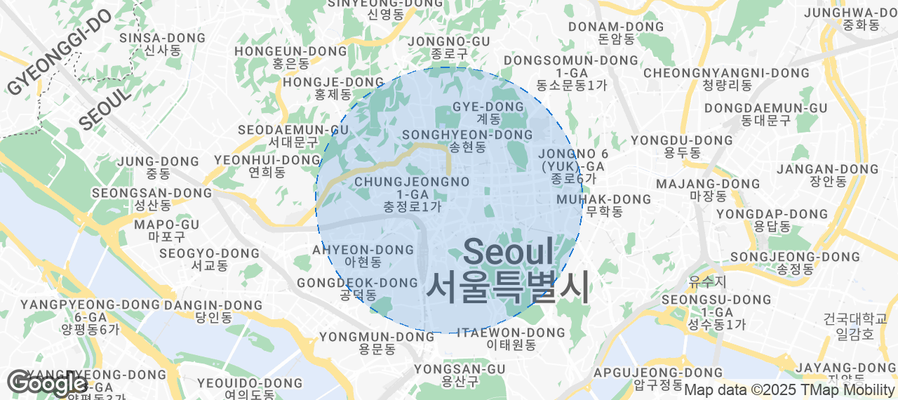 Browse the live Seoul Airbnb market See Every Seoul Listing
Revenue, occupancy and nightly rates are in the Seoul Airbnb market report .
At a glance
Seoul Airbnb Rules at a Glance
- Registration required
- Yes
- Taxes on a stay
- 10%
- Fine for hosting without a permit
- Up to ₩20,000,000
- Listings showing a permit number
- 91%
- Next rule change
- Nov 12, 2026
Listing figures: AirROI, 12 months to September 2026. A number on a listing doesn't prove the permit or licence is valid, and a missing one doesn't prove there is none.
The rules in brief
The rules a Seoul host meets first, each linked to the ordinance, statute or official page it comes from. Details and exceptions follow below.
| Topic | Rule |
|---|---|
| Permit | Police check and site inspection8,9 |
| Who can host | The host must live in the home7,8 |
| Where | Officetels, studio flats and commercial units are excluded7,10 |
| Building rules | Apartments need residents' consent8,10 |
| Night cap | No annual night cap or minimum stay in the standards3,7 |
| Guests | Floor area under 230 m²3,7 |
| Listing display | Post a price list and charge it3,8,16 |
| Platforms | Airbnb requires licence details19,22 |
| Safety | Extinguisher and alarms3,7 |
| Neighbours | Neighbours can report illegal lodging12 |
Your home
Can You Host an Airbnb in Seoul? It Depends on the Home
Whether you can host in Seoul turns on whose home it is and whether you live there.
Your own house or apartment in Seoul, rented to foreign tourists while you live there
Allowed with conditionsRegister as a foreign tourist urban homestay with your district office: KRW 20,000 plus the KRW 67,500 licence tax, a home under 230 m² where you are a registered resident, safety alarms and an extinguisher, a posted price list and a site visit.7,8,9,13
An apartment in a complex with management rules
Allowed with conditionsThe application needs the consent the building's rules require. Jung-gu asks for consent from at least half of the residents, the management office's confirmation and a three-week notice, and one objection stops the application.8,10
A rented home (tenant or subtenant)
Allowed with conditionsThe lease must state use as a foreign tourist urban homestay or come with the landlord's consent form; a subtenant also needs the lessor's consent.8
A second home or investment flat you do not live in
Not allowedIt cannot be registered as an urban homestay because the host must live there. The only other route is a general lodging notification, which Seoul says homes cannot obtain, and running it unregistered risks up to 2 years in prison or KRW 20 million.5,7,10
Permit
Do You Need a Permit for Airbnb in Seoul?
Yes. Short-term rental hosts in Seoul need the Foreign tourist urban homestay registration from head of the district (구청장) where the home is located, through the district tourism office, under the Tourism Promotion Act. It costs ₩87,500 in the first year (About KRW 87,500 in the first year (KRW 20,000 fee plus KRW 67,500 licence tax) and KRW 67,500 a year after that. Safety devices and the business registration with the tax office are separate.) and ₩67,500 a year to renew.2,4,7,8,9,13,18,19
- Who needs it
- A Seoul resident who lives in a house or apartment and rents rooms to foreign tourists. The registration is held by an individual registered as a resident at the address; companies cannot apply.2,4,7,8,9,13,18,19
- Issued by
- The head of the district (구청장) where the home is located, through the district tourism office, under the Tourism Promotion Act
- Valid for
- The registration has no fixed term and no renewal fee; the licence tax is billed each January while it stays in force, and changes to registered details are filed as a change registration.
- Processing
- 14 days in total; districts may differ
- On listings
- The number must appear on every listing
- Platform checks
- Airbnb requires licence details for every Korean listing: new listings since October 2024 and existing listings by 16 October 2025, after which listings without them cannot take bookings. Seoul's civil judicial police can have a reported listing removed by notifying Airbnb Korea.
Fees
| Fee | Amount |
|---|---|
| Registration feeKRW 20,000 to register a foreign tourist urban homestay at the district office. | ₩20,000 |
| Change of registered detailsKRW 15,000 to file a change registration. | ₩15,000 |
| Registration licence tax (등록면허세), class 1KRW 67,500 paid to the district before the registration certificate is issued, and again in the regular January billing for licences without a fixed term. | ₩67,500 |
Who qualifies
- The host lives in the home and is registered there as a resident, applying in their own name.
- The home is a detached house, multi-family house, apartment, row house or multi-household house; officetels, studio flats (원룸) and neighbourhood commercial units are excluded.
- Total floor area is under 230 m², and the home is not recorded as a building-code violation (위반건축물) or an illegally divided unit.
- At least one fire extinguisher, a unit-type smoke alarm in every guest room and a carbon monoxide alarm where heating is individual.
- The host can guide foreign guests in foreign languages (translation apps count since October 2025).
- A price list is posted at the home and on any online listing, and the posted prices are charged (national standard since 4 August 2026).
- In an apartment, the building's management rules and residents' consent are met; tenants need the landlord's consent.
How to apply
- Check that the home qualifies: a house or apartment in Seoul under 230 m² where you are registered as a resident, not recorded as a violation in the building register and not an officetel, studio flat or neighbourhood commercial unit.
- Prepare the documents: the tourism business registration form (관광사업 등록신청서), a business plan, your resident registration extract, a floor plan and layout, proof of ownership or a lease that states the use and carries the landlord's consent, consent papers for apartments, and a criminal-record consent form.
- Submit them to the tourism office of your district. The office checks the disqualification grounds with the police, inspects the home and registers it; the fee is KRW 20,000 and Jung-gu and Gwangjin-gu quote 14 days.
- Pay the registration licence tax (등록면허세) to the district before the registration certificate is handed over.
- Register the business with the tax office within 20 days of starting, then add the licence details to your Airbnb listing.
Applications go through the official application page .
Permit rules
- Post a price list and charge it
- From 4 August 2026 a registered urban homestay must post a price list at the home and on any online listing and charge the posted prices; a first breach brings a 5-day suspension. Jung-gu inspectors check for the list at the front door.3,8,16 Applies to: urban homestay hosts · In force since August 4, 2026
- Police check and site inspection
- After the application the district checks the disqualification grounds in article 7 of the Tourism Promotion Act with the police and inspects the home before it registers it. Jung-gu also asks for a criminal-record consent form.8,9 Applies to: urban homestay hosts
- Business registration after the homestay registration
- Once registered, the host must obtain a business registration certificate (사업자등록증) from the tax office. A registered homestay needs no separate lodging notification.7,15 Applies to: urban homestay hosts
- Registration licence tax of KRW 67,500
- The district charges a registration licence tax (등록면허세, 면허分) on the certificate. Tourism facility businesses are class 1, KRW 67,500 in Seoul, paid before the licence is issued and again each January for licences without a fixed term.1,7,13,14 Applies to: urban homestay hosts
- Everything else needs a lodging notification
- A home that does not fit the homestay route can only be run as a general lodging business (숙박업), notified to the district head. Seoul's investigators say officetels, goshiwons and ordinary homes cannot be notified under the Building Act.5,10 Applies to: second homes and other lodging
- Airbnb requires licence details
- New Airbnb listings have needed accommodation licence details since October 2024. Listings created earlier had to submit them by 16 October 2025, and Airbnb's Korean newsroom says those without them cannot take bookings for stays from 1 January 2026.19,22 In force since October 16, 2025
- Seoul can have listings removed
- In November 2024 Seoul's civil judicial police and Airbnb Korea agreed that Airbnb deletes a listing when Seoul notifies it of an illegal lodging found in an investigation.10 In force since November 7, 2024
- Platforms must check lodging certificates from 12 November 2026
- From 12 November 2026 online platforms may not broker a general lodging (숙박업) booking unless they have checked the host's lodging notification certificate.5 Applies to: general lodging hosts · Takes effect November 12, 2026
Who can host
Who Can Host an Airbnb in Seoul, and Where
- The host must live in the home
- The urban homestay is for a Seoul resident renting out the home they live in. Seoul Stay says the test is residence, not work, so the application is made in the name of an individual registered as a resident at the address.7,8
- Foreign tourists only
- A registered urban homestay may host foreign tourists. Seoul's investigators describe the registration as the route that allows lodging for foreigners, so Korean guests fall outside it.2,10 Applies to: urban homestay hosts
- Foreign applicants need a reported domestic residence
- In Jung-gu, a foreign applicant who has not reported a domestic residence (국내거소) cannot apply for the registration.8 Applies to: foreign residents
- Eligible house types
- Detached houses, multi-family houses, apartments, row houses and multi-household houses qualify under the Building Act.7 Applies to: urban homestay hosts
- Officetels, studio flats and commercial units are excluded
- Officetels, studio flats (원룸) and neighbourhood commercial units cannot be registered. Seoul's investigators say lodging in such buildings is the main source of illegal listings.7,10
- Building-code violations cannot register
- A home recorded as a violation (위반건축물) or as an illegally divided unit in the building register cannot be registered, and Seoul counts extensions past 230 m² and unapproved rooftop or basement space as illegal building.7,8,9 Applies to: urban homestay hosts
- Apartments need residents' consent
- In an apartment complex, Jung-gu requires consent from at least half of the residents under the building's management rules, confirmation from the management office and residents' council, and a notice on the notice board for three weeks; a single objection blocks the application. Other districts publish their own checklists.8,10 Applies to: apartment and multi-household hosts
- Tenants need the landlord's consent
- A tenant must show a lease that states use as a foreign tourist urban homestay, or attach the landlord's consent form. A subtenant also needs the lessor's consent to the sublease.8 Applies to: tenants
- Buildings over 30 years old need a safety check
- Jung-gu asks for a small old-building inspection report for buildings more than 30 years past approval. Since October 2025 the national guidance lets such homes register if they meet the Building Act's safety rules.8,17 Applies to: urban homestay hosts · In force since October 10, 2025
Operating rules
Operating Rules for Seoul Short-Term Rentals
- Floor area under 230 m²
- The total floor area of the home must be under 230 m². The cap applies to the whole home the host lives in, not just the rooms let.3,7 Applies to: urban homestay hosts
- No annual night cap or minimum stay in the standards
- Seoul Stay lists three registration standards: floor area, safety devices and foreign-language service. None sets an annual night cap, minimum stay or guest limit; the national standards added a posted price list on 4 August 2026.3,7 Applies to: urban homestay hosts
- Extinguisher and alarms
- Hosts need at least one fire extinguisher, a unit-type smoke alarm in every guest room and, where heating is individual, a carbon monoxide alarm.3,7 Applies to: urban homestay hosts
- Jung-gu asks for more safety equipment
- Jung-gu also lists a torch and an English evacuation map in each room, an extinguisher on every floor and an escape descender (완강기) from the third floor up. Other districts may ask for different equipment.8 Applies to: urban homestay hosts
- Foreign-language guidance, eased in 2025
- Hosts must be able to guide guests in foreign languages. Since October 2025 a host who uses translation apps or similar aids to give guests real guidance can meet this test.17 Applies to: urban homestay hosts · In force since October 10, 2025
- Keep a guest stay register
- Jung-gu lists a guest stay register (숙박일지) among the application documents, to be kept at the home.8 Applies to: urban homestay hosts
- Neighbours can report illegal lodging
- Anyone can report suspected illegal lodging through Seoul's complaints portal (응답소). Seoul pays a reward of up to KRW 200 million after review to a reporter who attaches decisive evidence.12
Taxes
How Much Are Airbnb Taxes in Seoul?
10% VAT on the accommodation fee for hosts who are VAT taxpayers; Airbnb does not collect it. The KRW 67,500 licence tax is a yearly fixed charge, not a percentage.
- Median nightly rate, booked nights
- US$78
- Taxes on that night (10%)
- US$8
- Guest pays, before Airbnb and cleaning fees
- US$86
| Tax | Rate | Collected by |
|---|---|---|
| Value-added tax (부가가치세) 10% of the amount paid for the stay | 10%15,21 | Host |
| Registration licence tax (등록면허세, 면허分) KRW 67,500 for a class 1 licence, on issue and each January | ₩67,500 a night1,13 | Host |
At Seoul's median booked rate of US$78 a night, the taxes collected on a booking come to about US$8 a night.
What the host still handles
- Business registration (사업자등록) with the tax office within 20 days of starting, using the tourism business registration certificate; the industry code for shared lodging is 551007
- VAT returns: general taxpayers file in January and July (by the 25th), simplified taxpayers once a year in January; a simplified taxpayer (prior-year supply under KRW 104 million) owes VAT on a 25% value-added ratio and pays nothing below KRW 48 million a year
- Cash receipts (현금영수증) for cash payments of KRW 100,000 or more, with a 20% penalty on the amount not issued
- Business hosts on Airbnb show their business name, address and registration numbers on every listing13,15,20,21
Fines
How to Avoid Airbnb Fines in Seoul
Fines in Seoul fall on hosting without the approvals described above, or outside the rules. With them in hand and the rules followed, none of the fines below apply.
- Running lodging without the required registration or notification: up to 2 years in prison or a fine of up to KRW 20 million under the Public Health Control Act, the figures Seoul Stay gives to applicants.5,7,10
- Seoul's civil judicial police booked 146 operators in 2024 for using buildings that are not lodging premises as illegal lodging, against 17 in 2022 and 100 in 2023.10
- Price list not posted or posted prices not charged: a 5-day suspension for a first breach of the urban homestay rules, rising to 15 days, 1 month and then cancellation of the registration.16
- Seoul said it would pass its findings on unlicensed lodging operators without a business registration to the National Tax Service.10
- Airbnb listings without licence details cannot take bookings, and Airbnb deletes listings that Seoul's investigators report.10,19
- Cash payments of KRW 100,000 or more without a cash receipt: a penalty of 20% of the amount not issued.15
Changes
What's Changed in Seoul's Airbnb Rules, and What's Next
2 changes are scheduled after October 20, 2026; the most recent rules are listed first.
- February 1, 2027 UpcomingUrban homestays move into the Tourism Promotion Act with new duties
Registered urban homestay and hanok experience hosts must take safety and hygiene training and may not install hidden cameras, and a conviction for specified sex or prostitution offences bars a person from operating one.6
- November 12, 2026 UpcomingPlatforms must check lodging notification certificates
Under a new article 4-2 of the Public Health Control Act, online platforms may not broker a general lodging booking without checking the host's lodging notification certificate.5
- August 4, 2026
- February 20, 2026Seoul targets large-scale illegal shared lodging in 2026
Seoul's civil judicial police named corporate-scale illegal shared lodging as a 2026 priority, with platform monitoring and field checks.11
- October 16, 2025
- October 10, 2025Older homes and translation aids accepted for urban homestays
The Ministry revised its urban homestay guidance so that homes over 30 years old can register if they are safe, and hosts using translation apps can meet the foreign-language test.17
- November 7, 2024Seoul and Airbnb Korea agree on listing removals
After a meeting on 7 November 2024, Seoul announced that Airbnb would delete listings that its civil judicial police report as illegal lodging.10
- October 2, 2024Airbnb requires licence details for new Korean listings
From 2 October 2024 spaces listed on Airbnb for the first time in Korea must submit accommodation licence information to start hosting.19
Listing data
What Seoul's Listings Show
AirROI, a short-term-rental data firm, counted 14,800 active Airbnb listings in Seoul over the 12 months to September 2026. 91% of them displayed a permit, licence or registration number.
Minimum stay set on Seoul listings
Share of active listings by the shortest stay they accept
Minimum stay in numbers
| Shortest stay accepted | Share of listings |
|---|---|
| 1 night | 46% |
| 2 nights | 25% |
| 3 nights | 15% |
| 4–6 nights | 9% |
| 7–29 nights | 4% |
| 30+ nights | <1% |
What officials report
- 146
- Illegal lodging operators booked by Seoul's civil judicial police · as of 2024Operators booked (입건) in 2024 for using buildings that are not lodging premises as illegal lodging, through Airbnb and similar platforms; 100 in 2023 and 17 in 2022.10
- 100
- Illegal lodging operators booked in 2023 · as of 2023Operators booked in 2023 under the same Seoul investigation.10
- 17
- Illegal lodging operators booked in 2022 · as of 2022Operators booked in 2022, the base year for Seoul's comparison with 2024.10
Earnings
What Could a Seoul Short-Term Rental Earn?
The rules shape the numbers: a registration that costs ₩87,500 in the first year and taxes of 10% that hosts collect from guests. For a specific address, the short-term rental calculator estimates revenue, occupancy and nightly rate from comparable listings, so you can test the numbers before applying.
FAQ
Seoul Airbnb Rules: Frequently Asked Questions
Is Airbnb legal in Seoul?
Do I need a permit for Airbnb in Seoul?
How much is the license in Seoul?
How long does registration take?
Can I rent a home I don't live in?
Can Korean guests stay in a registered homestay?
Can I list an officetel or studio flat in Seoul?
Do I need neighbours' or building consent in an apartment?
Does Airbnb collect hotel or VAT tax in Seoul?
What is the fine for hosting without registration?
Is there a limit on how many nights I can host?
What changes are coming for Seoul hosts?
How many Seoul Airbnbs are registered?
In AirROI's listing data, 91% of the 14,800 Seoul Airbnb listings active in the 12 months to September 2026 displayed a permit, licence or registration number. A number on a listing shows the host entered one; it doesn't confirm the permit is valid.
How much does an Airbnb make in Seoul?
The average Seoul listing earned US$16,500 in the 12 months to September 2026, according to AirROI, averaged across every active listing including those booked for only part of the year. The Seoul Airbnb market report breaks it down by month, property size and neighborhood.
Method
How These Rules Were Checked
Each rule on this page was checked in October 2026 against the official source cited beside it: the ordinance or statute, the permit office's own pages and the tax authority. Airbnb's help pages are cited on their own only for what Airbnb itself does, such as the taxes it collects and the permit checks it runs, and otherwise only beside an official source; news reports only for when a change was announced. Rules that could not be confirmed on an official page are left out.
Rules change with council votes, court rulings and new state laws, so the page is rechecked every three months and whenever a scheduled change takes effect. It summarizes the rules for information and is not legal advice; the local authority has the final word on any application.
Listing figures come from AirROI's tracking of 14,800 active Seoul Airbnb listings over the 12 months to September 2026.
Sources
Sources
Each rule above links to the source it comes from. Official ordinances, statutes and government pages come first, then Airbnb's own help pages.
- 1. Local Tax Act Enforcement Decree, Annex 1: licences subject to the registration licence tax and their classes (amended 2025-08-26) · National Law Information Center, Ministry of Government Legislation
- 2. Enforcement Decree of the Tourism Promotion Act (관광진흥법 시행령), effective 4 August 2026 · National Law Information Center, Ministry of Government Legislation
- 3. Tourism Promotion Act Enforcement Decree, Annex 1: registration standards for tourism businesses (amended 4 August 2026) · National Law Information Center, Ministry of Government Legislation
- 4. Tourism Promotion Act Enforcement Rule, Annex 23: fees (수수료) · National Law Information Center, Ministry of Government Legislation
- 5. Public Health Control Act (공중위생관리법), with article 4-2 effective 12 November 2026 · National Law Information Center, Ministry of Government Legislation
- 6. Tourism Promotion Act (관광진흥법), effective 12 May 2026 with scheduled provisions · National Law Information Center, Ministry of Government Legislation
- 7. Foreign tourist urban homestay (외국인관광 도시민박업): system guide, standards, procedure, fee and processing time · Seoul Stay, Seoul Metropolitan Government and Seoul Tourism Organization
- 8. Tourism business (foreign tourist urban homestay) registration: civil service handbook entry (updated 2026-08-11) · Jung-gu Office, Seoul
- 9. Notice on new registration and closure of foreign tourist urban homestays (posted 2026-09-14) · Gwangjin-gu Office, Seoul
- 10. Seoul books 146 illegal lodging operators and strengthens cooperation with Airbnb (2024-12-20) · Seoul Metropolitan Government, Civil Judicial Police Bureau
- 11. Civil Judicial Police Bureau 2026 annual investigation plan (2026-02-20) · Seoul Metropolitan Government
- 12. Seoul inspection of lodging before the Gwanghwamun concert: 18 businesses caught (2026-03-13) · Seoul Metropolitan Government, Civil Judicial Police Bureau
- 13. Tax guide by tax type: registration licence tax (등록면허세) · Seoul Metropolitan Government
- 14. 2026 Excellent Seoul Stay call for applicants (notes the 2016 reclassification of the urban homestay) · Seoul Metropolitan Government
- 15. Tax guide for shared-lodging operators (공유숙박 사업자) · National Tax Service
- 16. Press release: urban homestays and hanok stays face a 5-day suspension for a first price-list breach (28 July 2026) · Ministry of Culture, Sports and Tourism
- 17. Homes over 30 years old can register as urban homestays (policy news, 10 October 2025) · Korea Policy Briefing (korea.kr), Ministry of Culture, Sports and Tourism
- 18. Tourism business registration (관광사업 등록), service guide · Government24 (gov.kr), Ministry of the Interior and Safety
- 19. Responsible hosting in Korea · Airbnb Help Center
- 20. Requirements and obligations on business hosts in Korea · Airbnb Help Center
- 21. Republic of Korea: tax considerations for accommodation service (November 2023) · Airbnb, prepared by an independent third-party firm
- 22. Airbnb enforces mandatory business notification from 16 October (Korean newsroom) · Airbnb Newsroom Korea