Local Airbnb rules2026 13 sources cited
Is Airbnb Legal in San Jose? 2026 Rules, Permits & Taxes
Short-term rentals are legal in San Jose with no special permit: up to 180 days a year when the host is away and 365 when home, no accessory dwelling units, and a 12% hotel tax that Airbnb collects.1,6,7,12
From 11 official sources and 2 Airbnb help pages. Not legal advice.
The short answer
San Jose Airbnb Rules in Brief
- No short-term rental permit or registry; hosts still register for a city business tax certificate and the hotel tax.
- Up to 180 days a year when the host is not home overnight and 365 days when the host is present from 10 p.m. to 6 a.m.
- Guest limits: up to 3 in a one-family home with the host present, and up to 10 when the host is away (2 in a studio, 3 in a one-bedroom, 2 per extra bedroom).
- Hotel tax is 12% since October 1, 2026 (10% before), collected by Airbnb; accessory dwelling units are excluded.
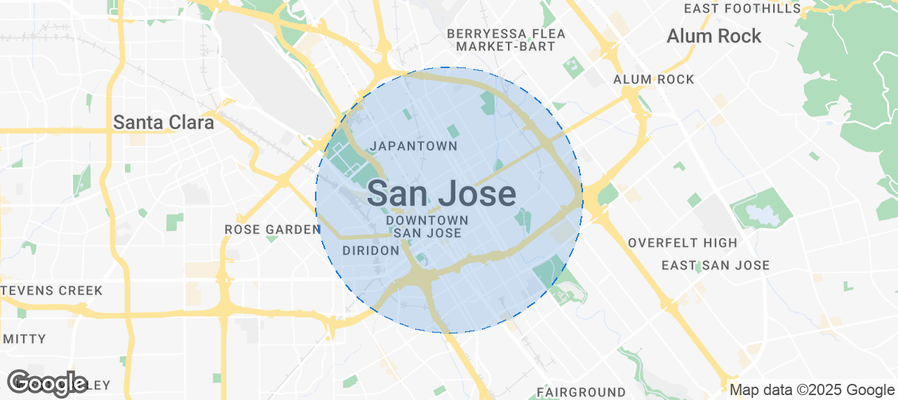 Browse the live San Jose Airbnb market See Every San Jose Listing
Revenue, occupancy and nightly rates are in the San Jose Airbnb market report .
At a glance
San Jose Airbnb Rules at a Glance
- Permit
- Not required
- Taxes on a stay
- 12%
- Yearly night cap
- 180 nights
- Fine for breaking the rules
- $500,000
- Active Airbnb listings
- 2,230
- Next rule change
- Nov 30, 2026
The rules in brief
The rules a San Jose host meets first, each linked to the ordinance, statute or official page it comes from. Details and exceptions follow below.
| Topic | Rule |
|---|---|
| Permit | No special permit or public registry12 |
| Who can host | Owners and tenants with a written lease can host1 |
| Where | Allowed in most home types1 |
| Night cap | 180 nights when away, 365 when present1 |
| Guests | Host away: 2 in a studio, 3 in a one-bedroom, 10 at most1 |
| Listing display | Advertised price must include mandatory fees10,11 |
| Platforms | Platforms can pay the hotel tax for hosts1 |
| Safety | Housing code compliance1 |
| Neighbors | 24-hour local contact who responds within 60 minutes1 |
Your home
Can You Host an Airbnb in San Jose? It Depends on the Home
Whether you can host in San Jose turns on whose home it is and whether you live there.
Your own home, rented whole while you're away
Allowed with conditionsAllowed for up to 180 days a year with no permit, with a 24-hour local contact, written notice of that contact to guests and neighbors, and no more than 2 people in a studio, 3 in a one-bedroom or 10 in total. In a rent-stabilized building you must first have lived in the unit 60 consecutive days.1
A room in your home with you present
AllowedAllowed for up to 365 days a year while you are home from 10 p.m. to 6 a.m., with up to 3 guests in a one-family home or 2 per unit in a two-family or multiple-family building, and the parking the code requires for the home.1
A second home or investment property you don't live in
Allowed with conditionsAllowed as a host-away rental up to 180 days a year, because the criteria set no primary-residence requirement outside rent-stabilized buildings. The owner of record can host, with the same guest limits and 24-hour local contact; check HOA rules and any lease separately.1
A rented apartment (tenant hosting)
Allowed with conditionsA tenant with a written lease counts as a host under the code, which does not mention landlord approval; the lease can still bar subletting. In a rent-stabilized apartment the tenant must have lived there at least 60 consecutive days as a primary residence.1
An accessory dwelling unit (granny flat)
Not allowedShort stays are not allowed in an accessory dwelling unit, whether or not the host lives in the main house.1
Permit
Do You Need a Permit for Airbnb in San Jose?
No. No permit or registration number is required to host. Anyone conducting business in San Jose, including a short-term rental host, registers for a business tax certificate, and hosts register for the city hotel tax.1,6,7,12
- Issued by
- City of San José Finance Department (business tax and hotel tax); Planning, Building and Code Enforcement (zoning)
- Valid for
- No permit is issued. The business tax certificate is renewed each year, and the hotel tax is reported monthly, or quarterly for operators with under $100,000 a year in tax.
- On listings
- No number needed on listings
- Platform checks
- San Jose issues no permit number, so platforms have none to check. The zoning code lets a hosting platform pay the hotel tax on a host's behalf under an agreement with the city, and Airbnb collects and remits it in San Jose.
Fees
| Fee | Amount |
|---|---|
| Business tax certificate, base rate for 1-2 rental unitsThe city's published base business tax for one or two residential rental units from July 1, 2026 (it was $219.60 in the year to June 2026); the Finance Department registers the business and issues the certificate once the tax is paid. | $222.89 |
| State fee on the business tax (SB 1186)Added to the business tax each year for businesses that do not qualify for an exemption. | $4 |
Who qualifies
- The home is a one-family dwelling, two-family dwelling, multiple-family dwelling, mobilehome, live/work unit or guest house; an accessory dwelling unit is not eligible
- The host is the owner of record or a tenant with a written lease
- The stay is 30 consecutive calendar days or less; longer stays fall outside the rule
- In a rent-stabilized building (Chapter 17.23 of the code), the host has lived in the unit at least 60 consecutive days with the intent to make it a primary residence
- The rental meets every performance criterion in Table 20-165 (night, guest, contact, parking, housing-code and record rules)
How to apply
- Check that the home is an eligible dwelling type (not an accessory dwelling unit) and, in a rent-stabilized building, that you have lived in the unit at least 60 consecutive days.
- Register for a Business Tax Certificate with the Finance Department; payment is due within 90 days of starting business.
- Register for the hotel (transient occupancy) tax with the Finance Department, which Airbnb then collects and pays on bookings it takes.
- Name a local contact person who can respond within 60 minutes, give the contact's name and number in writing to guests and to occupants of adjacent properties when you are away, and keep your records for 3 years.
Applications go through the official application page .
Permit rules
- No special permit or public registry
- San Jose does not issue a short-term rental permit or keep a registry of hosts; the rental is allowed as long as it meets the zoning criteria.12
- Platforms can pay the hotel tax for hosts
- The hotel tax is the host's responsibility, but a hosting platform that has an agreement with the city may pay it on the host's behalf.1
- Business tax certificate within 90 days
- Every person conducting business in San Jose registers for a Business Tax Certificate, and payment is due within 90 days of starting. The certificate is a receipt for the tax, not approval for zoning or other permits.6
- Advertised price must include mandatory fees
- Since July 1, 2024, California's Honest Pricing Law bars advertising a short-term rental price that leaves out mandatory fees such as a cleaning fee; government taxes may be listed separately. A federal rule has applied to short-term lodging since May 12, 2025.10,11 In force since July 1, 2024
Who can host
Who Can Host an Airbnb in San Jose, and Where
California state law applies on top of San Jose's own rules: the California short-term rental regulations page covers the state license and what cities and counties can and can't regulate.
- Allowed in most home types
- Short stays that meet the code's criteria are an allowed use in one-family, two-family and multiple-family dwellings, mobilehomes, live/work units and guest houses.1
- No accessory dwelling units
- An accessory dwelling unit (granny flat or in-law unit) cannot be used for short stays, even if the host lives in the main house.1
- Owners and tenants with a written lease can host
- A host is the owner of record of the home or a tenant under a written lease. The code's criteria set no primary-residence requirement except for rent-stabilized buildings.1
- Rent-stabilized buildings: live there 60 days first
- In a dwelling covered by the city's rent stabilization ordinance (Chapter 17.23), short stays are allowed only if the host has occupied the unit for at least 60 consecutive days with the intent to make it their primary residence.1 Applies to: Rent-stabilized dwellings
Operating rules
Operating Rules for San Jose Short-Term Rentals
- 180 nights when away, 365 when present
- A home may be rented for short stays up to 180 days a calendar year when the host is not present and up to 365 days a calendar year when the host is present.1
- "Host present" means home overnight
- The host counts as present only if on the premises at all times between 10 p.m. and 6 a.m. during the guests' stay.1
- Host present: 3 guests in a house, 2 per unit in a building
- With the host present, a one-family home or mobilehome may have up to 3 guests, and each unit in a two-family or multiple-family building up to 2.1 Applies to: Host present
- Host away: 2 in a studio, 3 in a one-bedroom, 10 at most
- When the host is not present, occupancy is limited to 2 people in a studio, 3 in a one-bedroom and 2 for each bedroom beyond the first, never more than 10 people in total.1 Applies to: Host not present
- 24-hour local contact who responds within 60 minutes
- A local contact person designated by the host must be reachable around the clock during every stay, respond to complaints within 60 minutes and take action to resolve them.1 Applies to: Host not present
- Written notice of the contact to guests and neighbors
- When the host is away, the host gives the contact person's name and telephone number in writing to every guest and to the occupants of all adjacent properties, including across the street, above and below.1 Applies to: Host not present
- Required parking when the host is present
- With the host present, the home must have the number of parking spaces the zoning code requires for its dwelling type.1 Applies to: Host present
- Housing code compliance
- Any building or part of a building used for short stays must meet the city's housing code (Chapter 17.20).1
- Keep records for 3 years
- Hosts keep records showing compliance with the criteria, including hotel tax paid by a platform on their behalf, for 3 years after each stay, and give copies to the city manager, city attorney or city auditor on request.1
- The rules cover stays of 30 days or less
- The short-stay criteria apply to guests who occupy a home for 30 consecutive calendar days or less, counting part days as full days.1
- The council can change or end the rules
- The city council may end short stays as a permitted use or change the criteria at any time.1
- Hotel tax registration and returns
- An operator of a rental to transients registers with the Finance Department within 30 days of starting and files hotel tax returns each month, or each quarter if the annual tax is under $100,000.2
Taxes
How Much Are Airbnb Taxes in San Jose?
12% on the nightly price and cleaning fee for stays of 30 nights or fewer, since October 1, 2026.
- Median nightly rate, booked nights
- $130
- Taxes on that night (12%)
- $16
- Guest pays, before Airbnb and cleaning fees
- $146
| Tax | Rate | Collected by |
|---|---|---|
| San José Transient Occupancy Tax (hotel tax) 12% of the room price including the cleaning fee on stays of 30 nights or fewer, since October 1, 2026 (10% before): 6% under Municipal Code Chapter 4.72 and 6% under Chapter 4.74 | 12%2,4,12,13 | Airbnb |
At San Jose's median booked rate of $130 a night, the taxes collected on a booking come to about $16 a night.
What the host still handles
- A Business Tax Certificate with the Finance Department, with payment due within 90 days of starting business (base rate $222.89 a year for 1-2 rental units from July 1, 2026, plus a $4 state fee)
- Hotel (transient occupancy) tax registration with the Finance Department within 30 days of starting, with monthly returns, or quarterly returns if the annual tax is under $100,000, for any bookings Airbnb does not collect
- Records of hotel tax paid by a platform on the host's behalf, kept for 3 years1,2,4,6,7,12,13
Fines
How to Avoid Airbnb Fines in San Jose
Fines in San Jose fall on hosting outside the rules above. With the rules followed, none of the fines below apply.
- Zoning and code violations: standard fines run $250 to $1,000 per violation, and severe, repeated or persistent cases can go to the Appeals Hearing Board, where fines can reach $500,000.8,9
- Enforcement steps: Code Enforcement issues a notice with a deadline, then, if the violation is not corrected, citations, per-day fines, abatement or receivership.8
- Late hotel tax: a 10% penalty on the delinquent tax, a further 10% if still unpaid 30 days after the due date, 25% more for intentional misrepresentation or fraud, plus interest.2
- Violating the hotel tax chapter, including failing to register or file a return, is a misdemeanor punishable by a fine of up to $500, up to six months in county jail, or both.2
Changes
What's Changed in San Jose's Airbnb Rules, and What's Next
One change is scheduled after October 20, 2026; the most recent rules are listed first.
- November 30, 2026 UpcomingFirst hotel tax return at 12% falls due
The city will update its hotel tax forms on November 1, 2026, and the October 2026 tax return and payment are due November 30, 2026.4
- October 1, 2026
- August 11, 2026
- July 1, 2026Business tax base rate rises to $222.89
The city's base business tax for one or two residential rental units rose from $219.60 to $222.89 for the year starting July 1, 2026, with a $4 state fee on top.7
Earnings
What Could a San Jose Short-Term Rental Earn?
The rules shape the numbers: a cap of 180 nights a year and taxes of 12% that Airbnb adds to guests' bills. For a specific address, the short-term rental calculator estimates revenue, occupancy and nightly rate from comparable listings, so you can test the numbers before applying.
FAQ
San Jose Airbnb Rules: Frequently Asked Questions
Is Airbnb legal in San Jose?
Yes. Short stays of 30 days or less are an allowed use in one-family, two-family and multiple-family homes, mobilehomes, live/work units and guest houses if the rental meets the zoning criteria, and Airbnb says San Jose hosting is permitted in all legal homes and apartments with some restrictions. Accessory dwelling units are excluded.1,12
Do I need a permit for Airbnb in San Jose?
How much does it cost to host legally in San Jose?
How many nights can I rent my home in San Jose?
Up to 180 days a calendar year when you are not on the premises overnight, and up to 365 days when you are present between 10 p.m. and 6 a.m.1
Can I rent a home I don't live in?
Yes, as a host-away rental of up to 180 days a year. The code lets an owner of record or a tenant with a written lease host and sets no primary-residence rule, except in rent-stabilized buildings, where the host must have lived in the unit 60 consecutive days.1
How many guests are allowed?
With the host present, up to 3 guests in a one-family home or mobilehome and 2 per unit in a two-family or multiple-family building. When the host is away, 2 people in a studio, 3 in a one-bedroom and 2 per extra bedroom, with at most 10 in total.1
Does Airbnb collect hotel tax in San Jose?
What is the hotel tax in San Jose?
Do I need a business license to host in San Jose?
Anyone conducting business in San Jose registers for a Business Tax Certificate, which the city calls its business license or permit. Payment is due within 90 days of starting, and the certificate does not approve zoning or other permits.6
Can I list an accessory dwelling unit on Airbnb in San Jose?
No. The zoning code says short stays shall not be allowed in an accessory dwelling unit.1
Do I need a local contact person?
Yes when you are away. You designate a contact who is reachable 24 hours a day, responds to complaints within 60 minutes, and whose name and number you give in writing to guests and to occupants of adjacent properties.1
What is the fine for breaking the rules?
How much does an Airbnb make in San Jose?
The average San Jose listing earned $23,400 in the 12 months to September 2026, according to AirROI, averaged across every active listing including those booked for only part of the year. The San Jose Airbnb market report breaks it down by month, property size and neighborhood.
Method
How These Rules Were Checked
Each rule on this page was checked in October 2026 against the official source cited beside it: the ordinance or statute, the permit office's own pages and the tax authority. Airbnb's help pages are cited on their own only for what Airbnb itself does, such as the taxes it collects and the permit checks it runs, and otherwise only beside an official source; news reports only for when a change was announced. Rules that could not be confirmed on an official page are left out. The San José Municipal Code (Municode), the Finance, Code Enforcement and City Clerk pages on sanjoseca.gov and the Revenue and Taxation Code were read in Chrome because those sites block scripts; facts marked readVia browser come from those reads.
Rules change with council votes, court rulings and new state laws, so the page is rechecked every three months and whenever a scheduled change takes effect. It summarizes the rules for information and is not legal advice; the local authority has the final word on any application.
Listing figures come from AirROI's tracking of 2,230 active San Jose Airbnb listings over the 12 months to September 2026.
Sources
Sources
Each rule above links to the source it comes from. Official ordinances, statutes and government pages come first, then Airbnb's own help pages.
- 1. San Jose Municipal Code, Chapter 20.80 Specific Use Regulations (Part 2.5 Transient Occupancy as an Incidental Use to a Residence) · City of San Jose
- 2. San Jose Municipal Code, Chapter 4.72 Transient Occupancy Tax · City of San Jose
- 3. California Revenue and Taxation Code section 7280 - Occupancy taxes · California Legislative Information
- 4. Hotel Taxes · City of San José Finance Department
- 5. 2026 Measure A · City of San José Office of the City Clerk
- 6. Business Tax & Registration · City of San José Finance Department
- 7. Business Tax Rates · City of San José Finance Department
- 8. Code Enforcement Process · City of San José Planning, Building and Code Enforcement
- 9. Code Enforcement · City of San José Planning, Building and Code Enforcement
- 10. SB 478 - Hidden Fees (Honest Pricing Law) · California Attorney General
- 11. The Rule on Unfair or Deceptive Fees: Frequently Asked Questions · Federal Trade Commission
- 12. San Jose, CA (Rules for hosts) · Airbnb Help Center
- 13. Occupancy tax collection and remittance by Airbnb in California · Airbnb Help Center