Local Airbnb rules2026 16 sources cited
Is Airbnb Legal in Boston? 2026 Rules, Permits & Taxes
Airbnb is legal in Boston only for owners who live in the home: register yearly with Inspectional Services ($25 for a room, $200 for a whole home), with no night cap; fines run $100 to $300 a day and taxes about 14.95%.1,2,3,7,10,14,15
From 13 official sources and 3 Airbnb help pages. Not legal advice.
The short answer
Boston Airbnb Rules in Brief
- Only owners who live in the home at least nine months a year can register; investors and tenants cannot.
- Register every year with Inspectional Services: $25 for a room, $200 for a whole home, plus a $65 City Clerk business certificate every four years.
- No cap on nights, one whole unit at a time; stays of 28 days or longer are outside the rules.
- Taxes about 14.95% (5.7% state, 6.5% city, 2.75% convention center), collected by Airbnb; fines $100 to $300 a day.
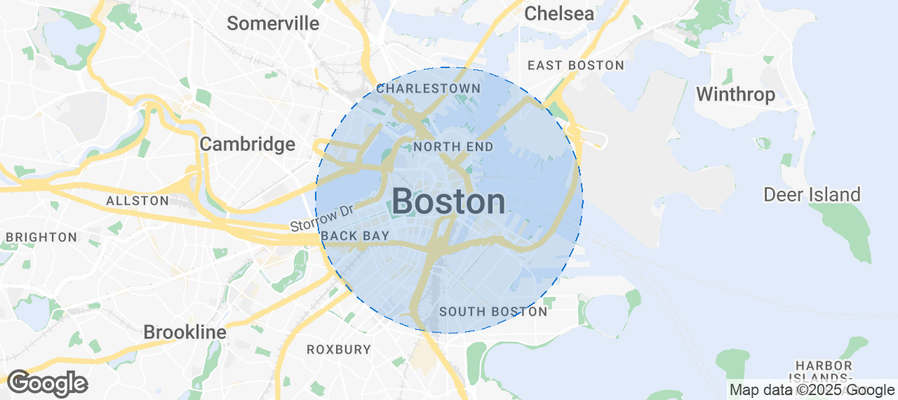 Browse the live Boston Airbnb market See Every Boston Listing
Revenue, occupancy and nightly rates are in the Boston Airbnb market report .
At a glance
Boston Airbnb Rules at a Glance
- Registration required
- Yes
- Taxes on a stay
- 14.95%
- Yearly night cap
- 365 nights
- Fine for hosting without a permit
- $300
- Active Airbnb listings
- 2,780
- Latest rule change
- Sep 10, 2025
The rules in brief
The rules a Boston host meets first, each linked to the ordinance, statute or official page it comes from. Details and exceptions follow below.
| Topic | Rule |
|---|---|
| Permit | Register with Inspectional Services every year2,7 |
| Who can host | Owner-occupied homes only1,7 |
| Building rules | Condominium and association rules must allow it1,2 |
| Night cap | No cap on nights2,7 |
| Minimum stay | Stays of 28 days or more are outside the rules1,7 |
| Guests | Limited share: a room while you are home, up to six guests1,7 |
| Listing display | City registration number on every listing2,7,15 |
| Platforms | Platforms must delist ineligible listings1,2 |
| Safety | Post fire-safety information inside the unit2,7 |
| Insurance | $1,000,000 liability insurance4 |
| Neighbors | Local contact within two hours2,7 |
Your home
Can You Host an Airbnb in Boston? It Depends on the Home
Whether you can host in Boston turns on whose home it is and whether you live there.
Permit
Do You Need a Permit for Airbnb in Boston?
Yes. Short-term rental hosts in Boston need the short-term rental registration from the City of Boston Inspectional Services Department (ISD), with the City Clerk and the Massachusetts Department of Revenue. It costs $265 in the first year (A home share or owner-adjacent host pays $200 a year to Inspectional Services plus a $65 business certificate in the first year, $265 in all, then $200 a year with the $65 repeated every four years. A limited share host pays $25 a year plus the $65 certificate. State registration is free.) and $200 a year to renew.1,2,3,7,10,14,15
- Who needs it
- Every owner who rents a unit for fewer than 28 consecutive days, as a limited share, home share or owner-adjacent unit.1,2,3,7,10,14,15
- Issued by
- City of Boston Inspectional Services Department (ISD), with the City Clerk and the Massachusetts Department of Revenue
- Valid for
- One year: the registration runs January 1 to December 31 unless the Commissioner sets another 12-month period, must be renewed every year and does not transfer on a sale. The business certificate lasts four years.
- On listings
- The number must appear on every listing
- Platform checks
- The ordinance requires booking platforms to agree with the city to remove ineligible listings and to refuse listings without a valid city registration number, and to send the city a monthly listing report. Airbnb also blocks listings without a Department of Revenue certificate number.
Fees
| Fee | Amount |
|---|---|
| Limited share unit registrationRegistration with Inspectional Services for a private bedroom in the host's home, renewed each year. | $25 |
| Home share unit registrationRegistration with Inspectional Services for the host's whole home, renewed each year. | $200 |
| Owner-adjacent unit registrationRegistration with Inspectional Services for one other unit in the host's two- or three-family building, renewed each year. | $200 |
| City Clerk business certificateFiling fee for the business certificate; the same $65 applies at each four-year renewal. | $65 |
| State registration (Department of Revenue)Free; register each property on MassTaxConnect. | $0 |
Who qualifies
- The host owns the unit and lives in it at least nine months out of 12 (limited share and home share)
- An owner-adjacent unit sits in the same owner-occupied two- or three-family building as the host's home, and the host owns every unit
- The building is an owner-occupied condominium or a single-, two- or three-family home in residential use
- The unit is not income-restricted, under an affordability covenant or on rental assistance
- No open code violations, fewer than three violations in six months, and no Problem Property designation
- No lease, condominium document or law bars short-term rental
How to apply
- Check the unit in the city's Short-Term Rental Eligibility tool on Analyze Boston and confirm that the condominium documents, lease or association rules allow short stays.
- Choose the unit type: limited share (a room while you are home), home share (your whole home) or owner-adjacent (another unit in your two- or three-family building).
- Register with Inspectional Services online, by mail or in person, with two proofs of primary residence and the name of a local contact who can respond in person within two hours, and pay $25 or $200.
- File a business certificate with the City Clerk ($65, notarized signature, renewed every four years).
- Register the property with the Department of Revenue on MassTaxConnect (free) and carry $1,000,000 in liability insurance.
- Put the city registration number and the state certificate number on every listing, post the fire-safety sign inside the unit and notify abutters within 300 feet within 30 days.
- Renew the city registration every year.
Applications go through the official application page .
Permit rules
- Register with Inspectional Services every year
- Each unit registers every year with the Inspectional Services Department: $25 for a limited share unit and $200 for a home share or owner-adjacent unit. The registration does not transfer when the unit is sold.2,7 In force since January 1, 2019
- City Clerk business certificate
- After the city registration is issued, the host files a business certificate with the City Clerk for $65, renewed every four years. The Clerk's Office notarizes signatures for free.7,10
- Two documents prove a primary residence
- The first application includes at least two of: proof of a residential tax exemption, a utility bill, a voter registration certificate, a motor vehicle registration, the deed, or a driver's license or state identification.7,14
- State registration with the Department of Revenue
- Every host also registers each property with the Massachusetts Department of Revenue on MassTaxConnect, free of charge, and adds the certificate number to the listing. Airbnb blocks listings that are not registered.3,15 In force since July 1, 2019
- City registration number on every listing
- The registration number issued by Inspectional Services must appear on any listing that offers a unit as a short-term rental, next to the state certificate number Airbnb asks for.2,7,15 In force since January 1, 2019
- Platforms must delist ineligible listings
- The ordinance requires booking platforms to agree with the city to remove ineligible listings and to refuse listings without a valid city registration number. A platform that refuses can be barred from doing business in Boston.1,2 In force since January 1, 2019
Who can host
Who Can Host an Airbnb in Boston, and Where
Massachusetts state law applies on top of Boston's own rules: the Massachusetts short-term rental regulations page covers the state license and what cities and counties can and can't regulate.
- Owner-occupied homes only
- Boston allows stays of fewer than 28 days only in owner-occupied condominiums and in single-, two- and three-family buildings. In a two- or three-family building the owner-occupant must own every unit.1,7 In force since January 1, 2019
- Primary residence: nine months a year
- A limited share or home share unit must be the owner's primary residence, meaning the owner lives there at least nine months out of a 12-month period, now or in the coming 12 months.1,7
- Investors and tenants cannot register
- Only the owner of the unit can register as the operator, so investor-owned homes, second homes and rented apartments cannot be listed for stays under 28 days.2,13 In force since January 1, 2019
- One extra unit in a two- or three-family home
- An owner who lives in a two- or three-family building may register the home they live in and one other whole unit in the same building as an owner-adjacent unit, which costs $200 a year.1,7
Operating rules
Operating Rules for Boston Short-Term Rentals
- No cap on nights
- Boston sets no annual night cap: limited share, home share and owner-adjacent units may each be offered up to 365 days a year.2,7 In force since January 1, 2019
- Stays of 28 days or more are outside the rules
- The city's short-term rental rules cover stays of fewer than 28 consecutive calendar days; a stay of 28 days or longer is not a short-term rental under the ordinance.1,7
- Limited share: a room while you are home, up to six guests
- A limited share unit is a private bedroom in the owner's primary residence rented while the owner is present. It costs $25 a year and is limited to three guest bedrooms or six guests, whichever is fewer.1,7
- Home share: the whole home, up to 10 guests
- A home share unit is the whole of the owner's primary residence. It costs $200 a year and is limited to five bedrooms or 10 guests, whichever is fewer.1,7
- One whole unit at a time
- An operator may offer only one whole unit at a time, so a host with both a home share and an owner-adjacent unit cannot be away and rent both at once.1,7
- Local contact within two hours
- The registration names a local contact with a telephone number active 24 hours a day who can respond in person within two hours when the owner is not present.2,7
- Notify neighbors within 300 feet
- Within 30 days of the registration being issued, the host notifies abutters, meaning any residential dwelling within 300 feet of the unit.2,7
- Post fire-safety information inside the unit
- Each unit carries a posted sign showing where the fire extinguishers, fire exits and pull fire alarms are.2,7
- No open code violations
- A unit cannot have open building, sanitary, zoning or fire code violations, three or more violations of the short-term rental, noise, trash or disorderly-conduct rules within six months, or a Problem Property designation. Registration is suspended while a violation lasts.1,7
- Working smoke and carbon monoxide alarms
- Massachusetts requires working smoke alarms and carbon monoxide alarms in every short-term rental.16
- $1,000,000 liability insurance
- Each operator must carry at least $1,000,000 of liability insurance for each short-term rental, unless the booking platform provides equal or greater coverage.4 In force since July 1, 2019
- Hospital, corporate and lodging-house exemptions
- Units under a contract with a hospital, health-care facility, government entity or nonprofit for patient stays, and furnished business or institutional stays of at least 10 days under a corporate housing contract, are not treated as short-term rentals. Lodging houses and bed and breakfasts register without a fee.2,7
Taxes
How Much Are Airbnb Taxes in Boston?
About 14.95% of the nightly price and cleaning fee (5.7% state, 6.5% city, 2.75% convention center); a further 3% community impact fee applies to rentals in an owner-occupied two- or three-family home, for up to 17.95%.
- Median nightly rate, booked nights
- $235
- Taxes on that night (14.95%)
- $35
- Guest pays, before Airbnb and cleaning fees
- $270
| Tax | Rate | Collected by |
|---|---|---|
| State room occupancy excise 5.7% of the rent, including cleaning fees and guest fees | 5.7%8,15 | Airbnb |
| Boston local room occupancy excise 6.5% of the rent, the city's rate since July 1, 2019 | 6.5%8,9,14 | Airbnb |
| Convention center financing fee 2.75% of the rent, charged in Boston and five other cities | 2.75%6,8,15 | Airbnb |
| Community impact fee 3% of the rent on a rental in an owner-occupied two- or three-family home and on a host's second and further rentals in the city; not charged on a single condominium or single-family home that is the host's residence | 3%5,8,9,15 | Airbnb |
At Boston's median booked rate of $235 a night, the taxes collected on a booking come to about $35 a night.
What the host still handles
- A Massachusetts Department of Revenue operator account on MassTaxConnect for every property, free of charge, even if no tax is owed
- A City of Boston business certificate from the City Clerk ($65, renewed every four years)
- Monthly room occupancy returns, due by the 30th day after the month, for any rental booked outside Airbnb
- The 14-day exemption claim by January 15 each year, for a property rented 14 days or fewer5,6,8,9,14,15
Fines
How to Avoid Airbnb Fines in Boston
Fines in Boston fall on hosting without the short-term rental registration, or outside the rules above. With it in hand and the rules followed, none of the fines below apply.
- Offering a unit that is not eligible, such as an investor-owned or rented home, is fined $300 per violation per day, and a booking platform that accepts a fee for such a unit is fined the same. Each day of ignoring a notice of violation counts as a separate violation.1,2
- Offering an eligible unit without registering with Inspectional Services, or while the registration is suspended, is fined $100 per violation per day.1,2
- The Commissioner may also ask a court for an injunction that bars the unit from being offered as a short-term rental.1,2
- Inspectional Services suspends a registration while an open building, sanitary, zoning or fire code violation remains, and renting while suspended draws the $100 daily fine.1,2
- The city can enforce through noncriminal tickets, court injunctions or the Green Ticket law (M.G.L. Chapter 40U).1,2
- A booking platform that does not agree to delist ineligible listings can be prohibited from conducting business in Boston.1,2
- Statewide, Airbnb blocks listings that are not registered with the Department of Revenue.15
Changes
What's Changed in Boston's Airbnb Rules
No change was scheduled when the rules were checked on October 17, 2026; the most recent are listed first.
- September 10, 2025City Council orders a hearing on oversight of short-term rentals
On September 10, 2025 the City Council referred Docket #1634, an order for a hearing on ongoing challenges with the city's oversight of short-term rentals, to its Housing and Community Development committee. The code of ordinances current through 2026 Supplement 2 still lists the 2018 ordinance as the source of section 9-14, with no amendment adopted.2,12
- July 1, 2019State registration, platform tax collection and Boston's impact fee begin
From July 1, 2019, intermediaries such as Airbnb file returns and pay the room occupancy excise to the Department of Revenue, and the Department of Revenue rate table gives July 1, 2019 as the effective date of Boston's current 6.5% local rate and 3% community impact fee.8,9
- January 1, 2019
- June 2018City Council passes the short-term rental ordinance
In June 2018 the Boston City Council voted 11 to 2 to pass the amended ordinance proposed by Mayor Walsh, which bars investors and tenants from renting by the night and lets owner-occupants of two- and three-family homes continue.13
Listing data
What Boston's Listings Show
AirROI, a short-term-rental data firm, counted 2,780 active Airbnb listings in Boston over the 12 months to September 2026. 86% of them displayed a permit, license or registration number.
Minimum stay set on Boston listings
Share of active listings by the shortest stay they accept
Minimum stay in numbers
| Shortest stay accepted | Share of listings |
|---|---|
| 1 night | 23% |
| 2 nights | 28% |
| 3 nights | 9% |
| 4–6 nights | 8% |
| 7–29 nights | 23% |
| 30+ nights | 9% |
What officials report
- 963
- Units flagged with an issued short-term rental registration · as of October 17, 2026The city's Short-Term Rental Eligibility dataset, refreshed nightly, flags 963 of its 399,489 residential address-unit records as holding an issued registration.11
- 49,495
- Units marked eligible for a home share or limited share registration · as of October 17, 2026The same dataset marks 49,495 of 399,489 residential units as eligible for a home share or limited share registration, about 12%.11
- 23,826
- Units marked eligible for an owner-adjacent registration · as of October 17, 2026The dataset marks 23,826 units as eligible for an owner-adjacent registration in an owner-occupied two- or three-family building.11
Earnings
What Could a Boston Short-Term Rental Earn?
The rules shape the numbers: a registration that costs $265 in the first year, a cap of 365 nights a year and taxes of 14.95% that Airbnb adds to guests' bills. For a specific address, the short-term rental calculator estimates revenue, occupancy and nightly rate from comparable listings, so you can test the numbers before applying.
FAQ
Boston Airbnb Rules: Frequently Asked Questions
Is Airbnb legal in Boston?
Do I need a permit or license for Airbnb in Boston?
How much does the Boston short-term rental license cost?
Can I rent a home I don't live in on Airbnb in Boston?
Can I Airbnb a condo, or an apartment I rent?
Is there a limit on how many nights I can rent in Boston?
No annual cap: each unit type may be offered up to 365 days a year. A host can offer only one whole unit at a time, and stays of 28 consecutive days or longer fall outside the short-term rental rules.7
How many guests can I have in a Boston short-term rental?
Does Airbnb collect hotel or occupancy tax in Boston?
What is the total lodging tax on a Boston Airbnb stay?
What is the fine for an illegal Airbnb in Boston?
Do I have to tell my neighbors or name a local contact?
Do I need insurance and a state registration to host in Boston?
How many Boston Airbnbs are registered?
Units flagged with an issued short-term rental registration: 963 as of October 17, 202611. In AirROI's listing data, 86% of the 2,780 Boston Airbnb listings active in the 12 months to September 2026 displayed a permit, license or registration number. A number on a listing shows the host entered one; it doesn't confirm the permit is valid.
How much does an Airbnb make in Boston?
The average Boston listing earned $41,800 in the 12 months to September 2026, according to AirROI, averaged across every active listing including those booked for only part of the year. The Boston Airbnb market report breaks it down by month, property size and neighborhood.
Method
How These Rules Were Checked
Each rule on this page was checked in October 2026 against the official source cited beside it: the ordinance or statute, the permit office's own pages and the tax authority. Airbnb's help pages are cited on their own only for what Airbnb itself does, such as the taxes it collects and the permit checks it runs, and otherwise only beside an official source; news reports only for when a change was announced. Rules that could not be confirmed on an official page are left out. The Boston Municipal Code on American Legal Publishing was read in a browser; the quotes cited from it also appear in the City of Boston's ordinance PDF.
Rules change with council votes, court rulings and new state laws, so the page is rechecked every three months and whenever a scheduled change takes effect. It summarizes the rules for information and is not legal advice; the local authority has the final word on any application.
Listing figures come from AirROI's tracking of 2,780 active Boston Airbnb listings over the 12 months to September 2026.
Sources
Sources
Each rule above links to the source it comes from. Official ordinances, statutes and government pages come first, then Airbnb's own help pages.
- 1. An Ordinance Allowing Short-Term Residential Rentals in the City of Boston (section 9-14, as filed June 13, 2018) · City of Boston
- 2. Boston Municipal Code 9-14: Short-Term Residential Rentals (2026 Supplement 2) · City of Boston (American Legal Publishing)
- 3. M.G.L. c. 64G, section 6 (certificate of registration) · Massachusetts Legislature
- 4. M.G.L. c. 175, section 4F (liability insurance for short-term rentals) · Massachusetts Legislature
- 5. M.G.L. c. 64G, section 3D (community impact fees) · Massachusetts Legislature
- 6. M.G.L. c. 64G, section 3B (convention center financing fee) · Massachusetts Legislature
- 7. Short-Term Rentals · City of Boston Inspectional Services Department
- 8. Room Occupancy Excise Tax · Massachusetts Department of Revenue
- 9. Room Tax and Impact Fee Effective Dates and Rates · Massachusetts Department of Revenue, Division of Local Services
- 10. How to apply for a Business Certificate · City of Boston City Clerk
- 11. Short-Term Rental Eligibility (dataset, refreshed nightly) · Analyze Boston, City of Boston Department of Innovation and Technology
- 12. City Council Committee on Housing and Community Development Hearing on Docket #1634 · Boston City Council
- 13. Councilors vote to pass amended short-term rental ordinance · City of Boston
- 14. Boston, MA · Airbnb Help Center
- 15. Occupancy tax collection and remittance by Airbnb in Massachusetts · Airbnb Help Center
- 16. Massachusetts · Airbnb Help Center