Airbnb Max Guests and Sofa Beds: A Second Bed Earns 11% More

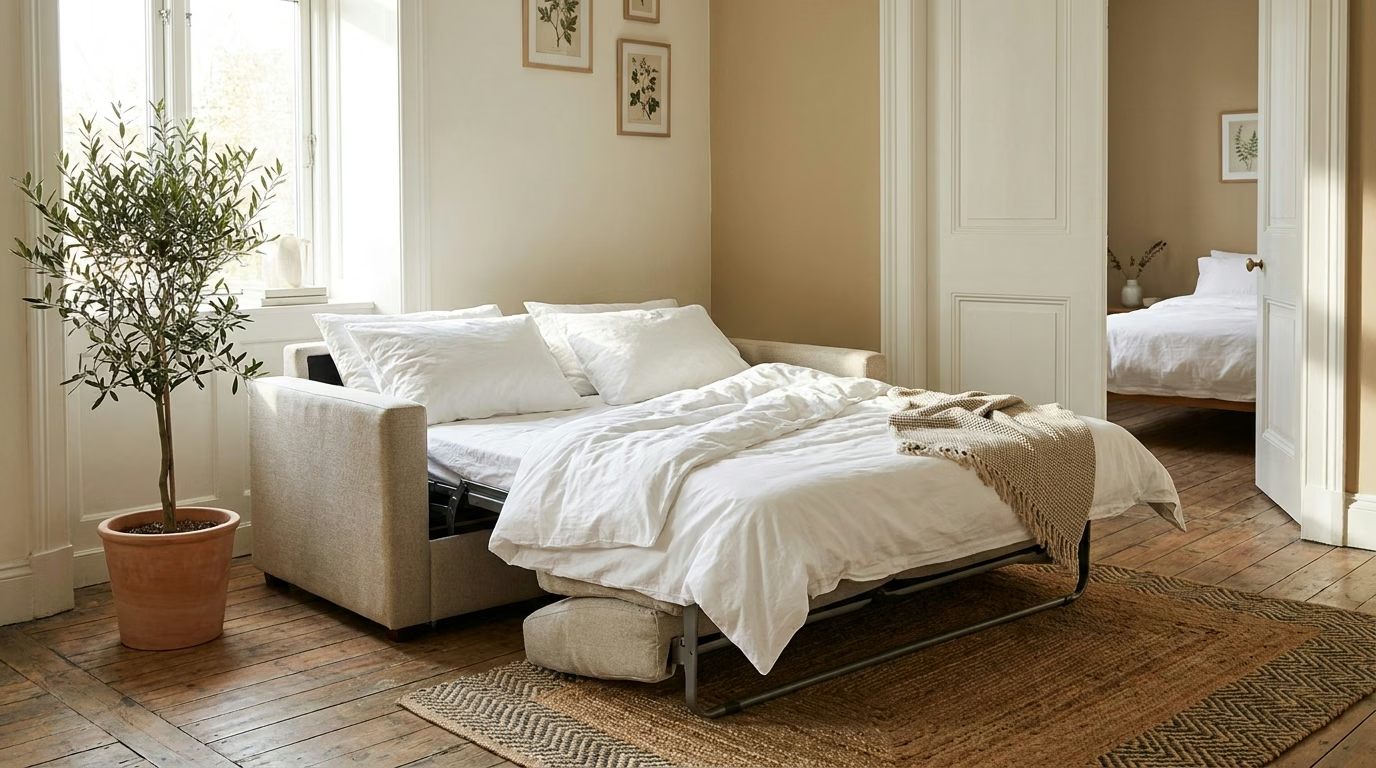
Set a one-bedroom to four guests only if a second bed, usually a sofa bed, backs it; otherwise stay at two. Count the sofa bed as a bed and say it's a sofa bed. That is the answer to how many guests to allow on Airbnb for most one-bedroom hosts: in the same city, the unit that adds a second bed and sets four guests earns 10.8% more than a one-bed, two-guest unit. The one that raises its Airbnb max guests number to four without adding a bed, which we call padding, earns about the same, with 10.5% lower occupancy.
Two Extra Guests Earn 4.8% to 12.6% More With a Bed and 3.4% at Most Without One
In AirROI's data on 969,397 active US entire homes over the 12 months to August 2026, adding a bed along with two guest slots earned 10.8%, 4.8% and 12.6% more at one, two and three bedrooms. Adding the two guest slots with no new bed earned −2.5%, −1.6% and +3.4%, which is about the same as not adding them; on the February 2026 snapshot, the one-bedroom padding result was +0.8%. Every comparison here is "same city": each listing is measured against listings with the same bedroom count in its own city, so a Gatlinburg cabin is never scored against a Manhattan studio. Listings that add beds and guests also differ in ways we can't see, such as square footage, layout and the quality of the sleeper, so these gaps are associations within the same city and bedroom count, not proof that buying a sofa bed adds 10.8%.
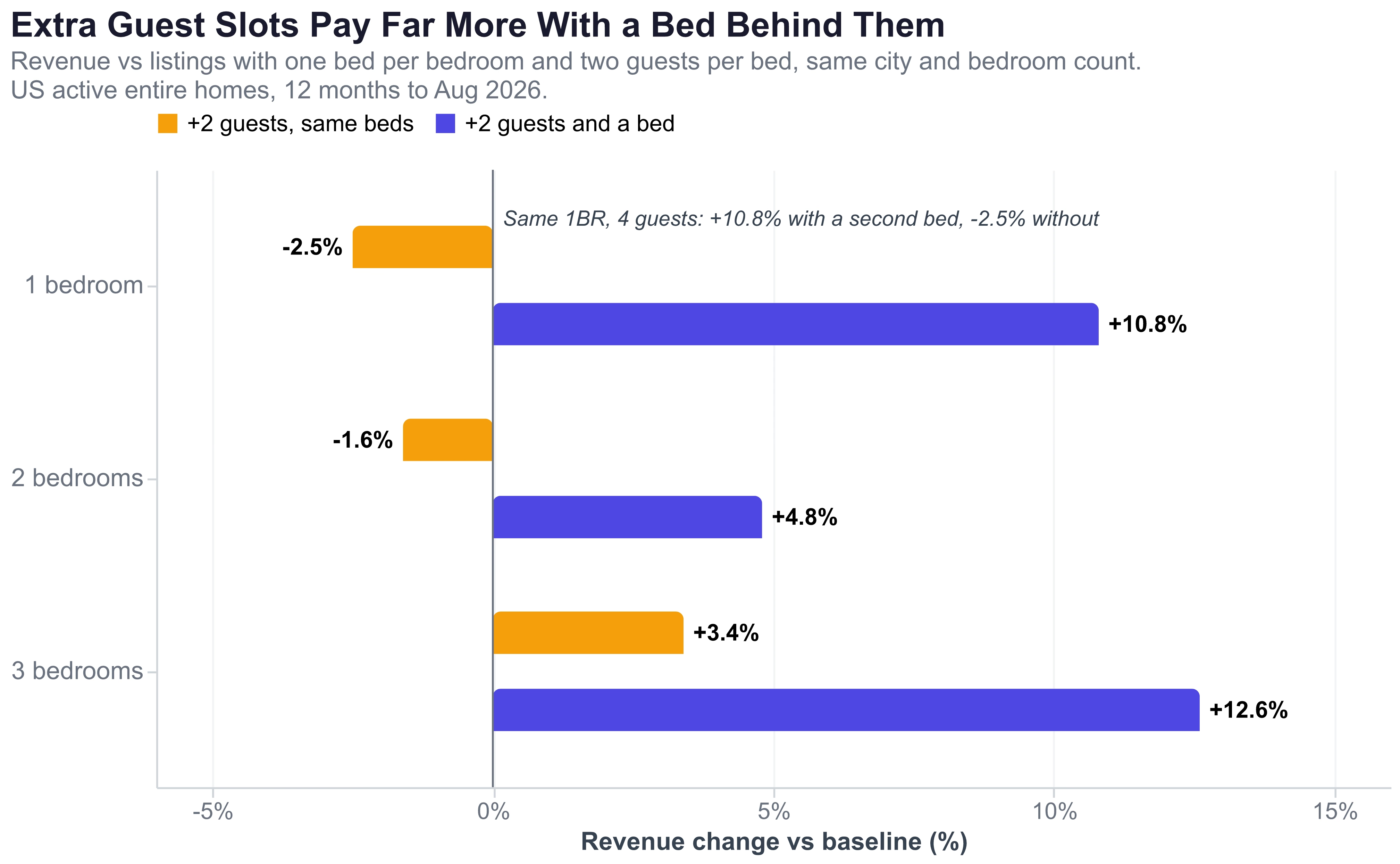
In dollars, on the national median one-bedroom baseline of $19,987 a year, 10.8% is roughly $2,200. The pattern is not a quirk of a few cities: in 18 of 22 large US markets, the two-bed, four-guest one-bedroom out-earned the one-bed, two-guest version. The one-bed, four-guest version beat it in 10 of 20, a coin flip.
The one-bedroom scorecard below shows the full range of setups. The dollar, rate and nights columns are national medians that mix Manhattan with Gatlinburg; the same-city column is the fair comparison. Compare the "1 bed, 4 guests" row with "2 beds, 4 guests": same cap, same size, and the only difference is whether a bed backs the number.
| One-bedroom setup | Listings | Median revenue | Median nightly rate | Median nights booked | Revenue vs same-city 1BR median | Rated 4.9+ |
|---|---|---|---|---|---|---|
| 1 bed, 2 guests | 61,952 | $19,987 | $151 | 124 | −3.9% | 52.7% |
| 1 bed, 3 guests | 10,537 | $18,176 | $152 | 112 | −4.6% | 43.1% |
| 1 bed, 4 guests | 11,756 | $19,508 | $184 | 98 | −6.3% | 39.8% |
| 2 beds, 2 guests | 6,664 | $19,851 | $157 | 118 | −7.6% | 56.0% |
| 2 beds, 3 guests | 11,887 | $22,411 | $163 | 130 | +2.2% | 47.0% |
| 2 beds, 4 guests | 50,881 | $24,665 | $206 | 110 | +6.5% | 42.8% |
| 2 beds, 6 guests | 1,251 | $23,194 | $217 | 92 | +8.0% | 29.9% |
Padded Listings Win on Rate and Lose on Nights
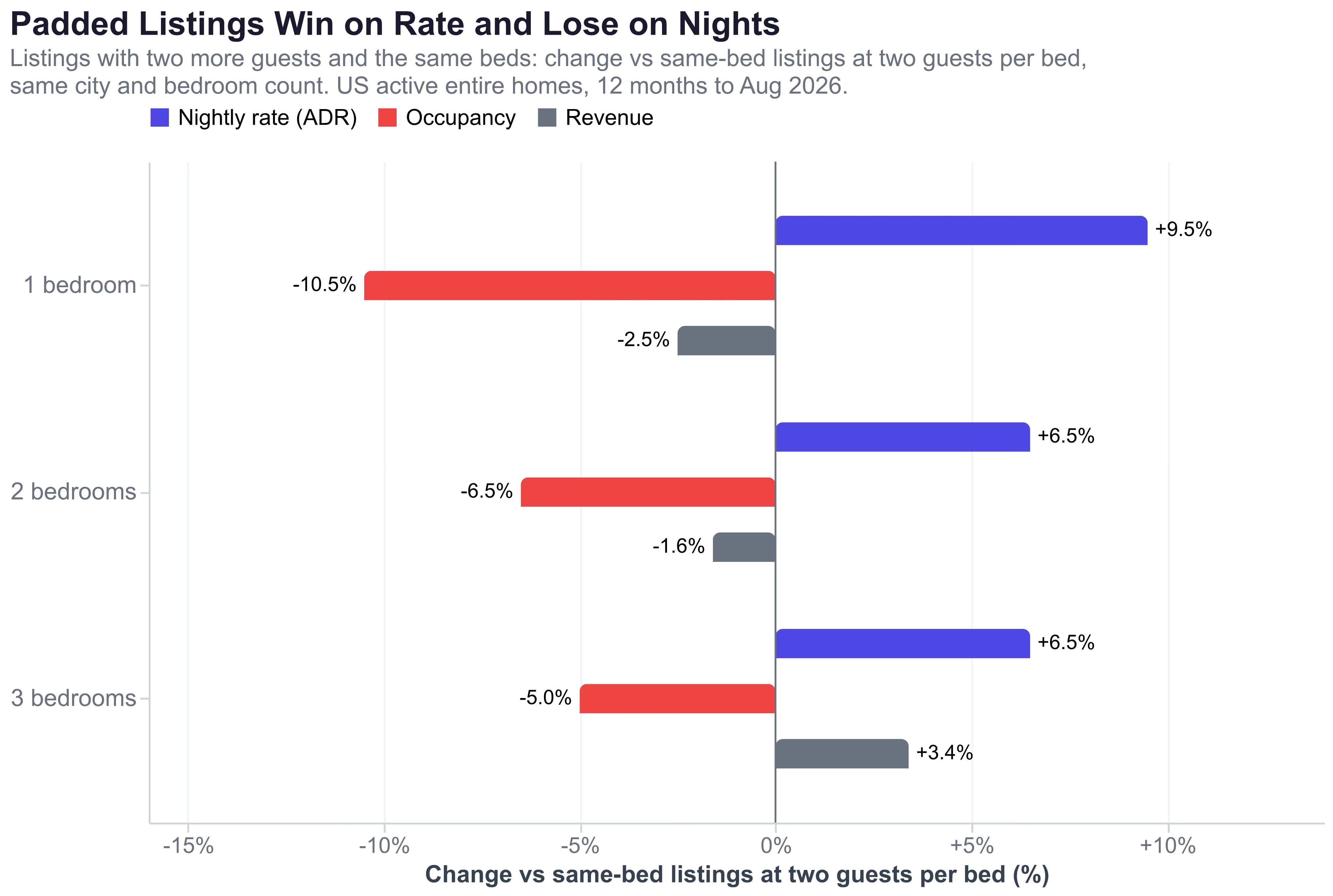
A padded listing charges more per night and books fewer nights, and the two roughly cancel out. One-bedrooms padded to four guests charge a 9.5% higher nightly rate (ADR, the average rate on booked nights) than same-city one-bed, two-guest units, and their occupancy is 10.5% lower. Across one- to three-bedroom homes, padding raised the rate 6.5% to 9.5% and lowered occupancy 5.0% to 10.5%.
"If the summary says 5 beds, I shouldn’t have to read the description like a hawk to find out that it’s 4 beds in 3 bedrooms and a sofa that pulls out into an uncomfortable sofa mattress."
— u/logaruski73, guest, r/AirBnB, 16 upvotes
A four-person group that sees one bed is the likeliest source of the lost nights. Add the second bed and the one-bedroom keeps its occupancy (down only 0.8%) while its rate still rises 11.0%, so revenue rises with it. Heavier padding does lose money. Among one-bedrooms with the same bed count, those set three or more guests beyond two per bed (a one-bed unit listing five, for example) charge 21.5% more per night, yet have about 30% lower occupancy and earn 9.8% less than those set at exactly two per bed.
Four-Guest One-Bedrooms Hit 4.9 Stars Far Less Often, Bed or No Bed
Ratings fall as the guest cap rises, and a second bed does little to stop it. Among one-bedrooms with 10 or more reviews, 52.7% of one-bed, two-guest units are rated 4.9 or higher. At four guests that share drops to 42.8% with a second bed and 39.8% without one, and to 29.9% for two-bed units taking six. The share rated below 4.7 rises from 12.4% at two guests to about 19% at four.
Larger homes show the same slope. Two-bedrooms fall from 54.1% rated 4.9+ at four guests to 44.2% with a third bed and six guests, and three-bedrooms from 56.8% to 51.0% with a fourth bed and eight. More people means more use of each bathroom, towel and turnover.
"No one over the age of 30 wants to sleep on a couch even if it transforms into a ‘bed’."
— u/merkthejerk, guest who travels "270+ days per year", r/AirBnB, on a post with 386 upvotes
Three-Bedrooms With One Bath Gain Nothing From Extra Guests
A three-bedroom with one bathroom gains nothing from a bigger guest cap. In the same city, one-bath three-bedrooms listed at 10 guests earn 0.4% less than those at six, and the eight-guest version earns the same as the six. With 1.5 to 2 baths, going from six to 10 guests earns 19.0% more. With 2.5 or more baths, 20.6% more.
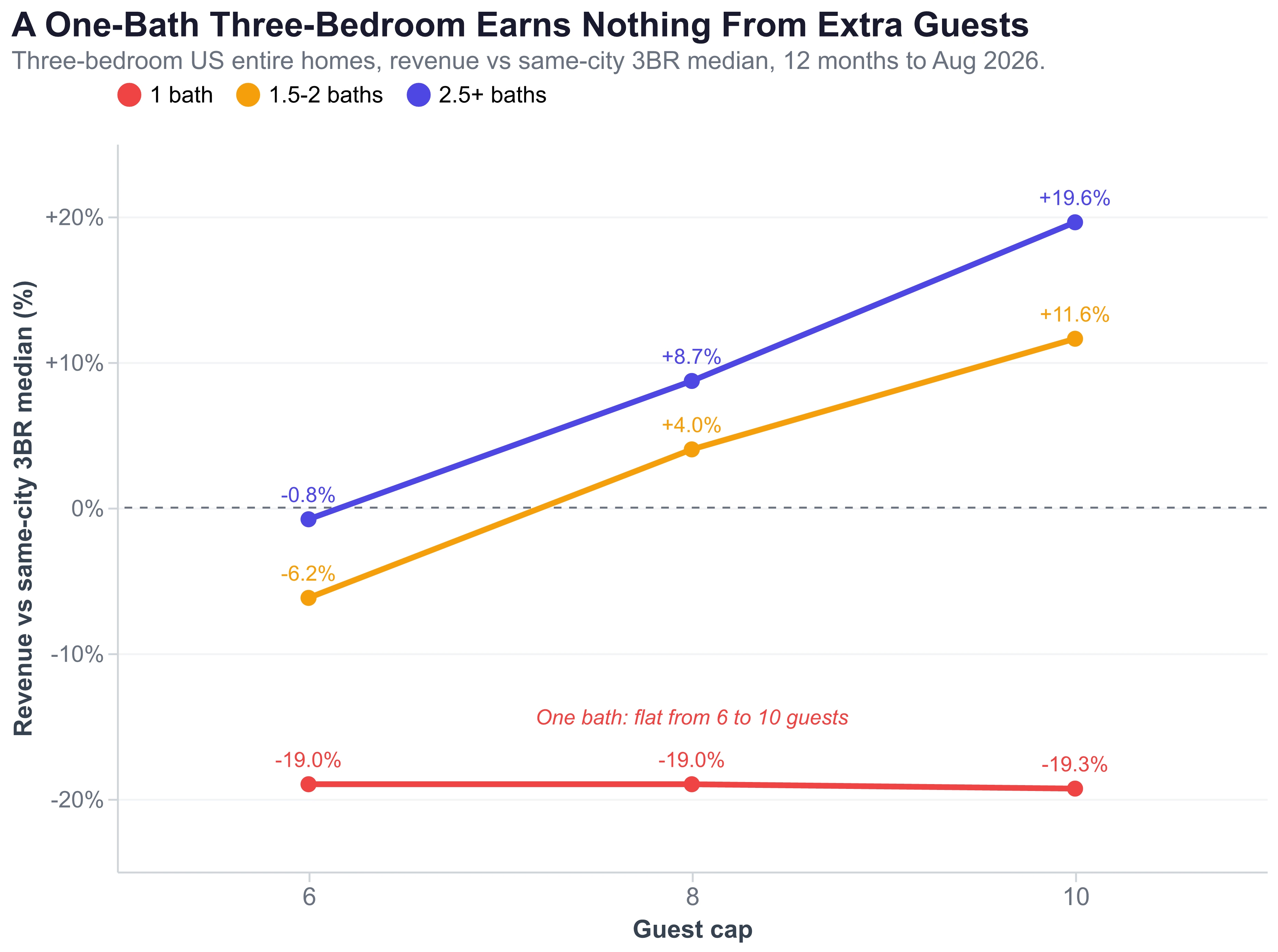
Two-bedrooms with one bath show where the ceiling sits: raising the cap from four to six earns 6.1% more, but from six to eight earns 6.7% less. This cut holds the city and bedroom count constant but not beds, so the higher caps here usually come with more beds.
Hosts who have watched guests move through a small home describe the same limit.
"Many less than honorable host try to maximize income by bed count. Where thet fail is bathrooms, and seating."
— u/Start_Mindless, host, r/AirBnB, 5 upvotes
The Second-Bed Premium Is Mostly a City Effect; Padding Costs Most in Leisure Markets
Split by market type (35 large cities against 52 beach, mountain and lake markets), with bed count held constant, the second-bed premium sits mostly in cities. An urban one-bedroom that adds a bed and two guests earns 25.7% more than its one-bed, two-guest peers; in beach, mountain and lake markets the same move earns 0.6% less. Padding is close to flat in cities and costly in leisure markets, where a padded one-bedroom earns 11.5% less. In the table, read each row across: the urban bed column is large at every size, and the leisure padding column is negative at every size.
| Size | Urban: add a bed + 2 guests | Urban: +2 guests, same beds | Leisure: add a bed + 2 guests | Leisure: +2 guests, same beds |
|---|---|---|---|---|
| 1 bedroom | +25.7% | +1.0% | −0.6% | −11.5% |
| 2 bedrooms | +22.0% | +2.6% | +3.1% | −9.7% |
| 3 bedrooms | +14.3% | −0.9% | +8.7% | −3.8% |
The leisure one-bedroom is a different product. Among leisure one-bedrooms listed at either two or four guests, three in four already list four. The two-guest unit is the couples' getaway, and it fills more nights. Padded leisure listings pay for the mismatch in occupancy, down 16.0% for one-bedrooms and 12.2% for two-bedrooms.
One reply to a Calgary host weighing a sleeper sofa for a basement one-bedroom captures the leisure-market view.
"A 1 bedroom with a pullout couch isn’t competitive in the groups market. I’d focus on couples or small families."
— u/Chris_StayStrategy, r/airbnb_hosts, 2 upvotes
That holds for beach, mountain and lake towns. In large cities, one-bedrooms with a second bed and a four-guest cap are the ones out-earning their neighbors.
The Guest Number Chooses the Party You Must House
The max-guests number most likely decides which searches a listing appears in, and the beds, bathrooms and market decide whether the party those searches send will book. Padding puts a one-bedroom in front of four-person groups who pay more per night, and the lost nights most likely come from those groups seeing one bed. A second bed kept behind a two-guest cap likely never reaches them at all.
Read that way, the cap is a statement about who the unit is for. In beach, mountain and lake towns, the two-guest one-bedroom is the couples' getaway and fills more nights, so padding it to four costs occupancy. In a large city, a one-bedroom with a sofa bed, listed as a sofa bed and capped at four, is built for the four-person search it will show up in.
Frequently Asked Questions
Allow four if a second listed bed, usually a sofa bed, backs the number, and two if it doesn't. In the same city, a one-bedroom with two beds and a four-guest cap earns 10.8% more than a one-bed, two-guest unit, while raising the cap to four without a bed earns about the same with 10.5% lower occupancy. Beach, mountain and lake markets are the exception: there the two-guest one-bedroom earns as much as the four-guest one with a sofa bed.
Yes, count it and say plainly what it is. Airbnb's Resource Center asks hosts to mention couches, futons and air mattresses in the description and photo captions when they are part of the bed count. The one-bedroom that lists a second bed alongside a four-guest cap is the version that earns 10.8% more.
Only when a bed comes with the extra guests. With the same beds, two more guest slots changed revenue by −2.5% to +3.4% across one- to three-bedroom homes, because the nightly rate rose 6.5% to 9.5% while occupancy fell 5.0% to 10.5%. With a bed added, the same two slots earned 4.8% to 12.6% more.
Yes, whether or not you add a bed. Among one-bedrooms with 10 or more reviews, 52.7% of one-bed, two-guest listings are rated 4.9 or higher, against 42.8% with two beds and four guests and 39.8% with one bed and four guests. A second bed brings the revenue gain, but the rating share stays lower.
Some local codes set one, so check your city or county before raising a cap. Hood River, Oregon limits overnight occupancy to two persons per bedroom plus two. Bonner County, Idaho uses the same formula with a ceiling of 20 persons.