Two Years After Helene, Asheville's Vacation Rentals Still Trail the Country

Lake Lure has its lake back, and downtown Asheville's streets show few scars. Two years after Tropical Storm Helene, the vacation rentals around them still haven't caught up with the rest of the country.
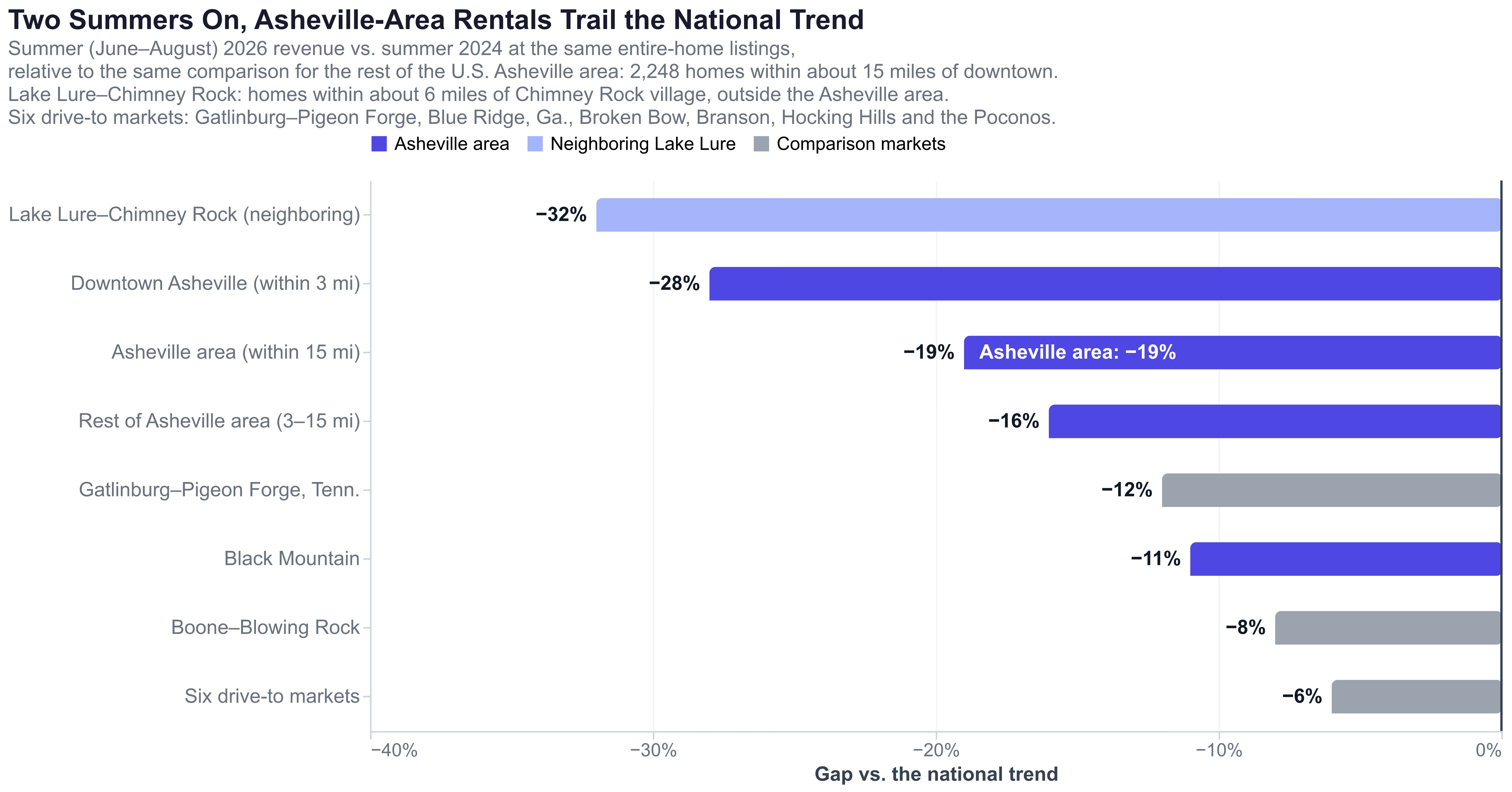
Measured from their own summer of 2024, the last before the storm, Asheville-area homes still renting two years on took in 19% less revenue from June through August than they would have had they kept pace with rentals elsewhere in the U.S., according to AirROI, a short-term-rental data firm. It compared 2,248 entire-home listings within about 15 miles of downtown that were booked in both summers.
In the summer before Helene, homes in the area had kept pace with six drive-to vacation markets beyond the storm's worst damage, from Tennessee's Smokies to Pennsylvania's Poconos, and outgrown the national trend. About 6 points of today's gap is shared with those markets, which trail the rest of the country by that much. The rest, about 14% measured against them, is Asheville's own, and its timing coincides with the storm.
Occupancy measures how full the available rentals are, and there are fewer of them: Isley told Spectrum News 1 last September that listings available through June 2025 were "down about 20%."
Visitors spent $2.6 billion in Buncombe County last year, down from a record $2.97 billion in 2023, Visit NC figures show.
Vacation renters pay the county's lodging tax alongside hotel guests, and the tax funds the county tourism authority. It expects $34.5 million from the tax in the fiscal year that began in July, about what it collected in the last full year before Helene.
Where the gap is widest
The gap is widest in neighboring Lake Lure. Homes around the lake and Chimney Rock village, outside the 15-mile ring, that were booked in both summers trail the U.S. pace by about a third. The lake itself, closed for 20 months, reopened in May, and the town says its lodges and restaurants are open for business.
"Today is more than the reopening of a lake — it is the restoration of a place that brings our community together," Mayor Carol Pritchett said in the town's May news summary.
Fae Nectar, a tavern on the town's Memorial Highway, is closing. "Unfortunately, this summer did not bring the recovery we needed to continue," the restaurant said in an announcement carried by Fox Carolina this week.
Kim Sayles, a co-owner of the town's Grafton Lodge, told WLOS in August that its owners were "hanging on for dear life and making sure we can keep paying bills and staying here."
"When you drive into downtown Asheville, you didn’t realize anything had happened," Kit Kramer, president of the Asheville Area Chamber of Commerce, told CBS 17 on Thursday.
The streets may look whole, but rentals within 3 miles of the city center trail the U.S. pace by more than a quarter. Among them are homes in the River Arts District, where Kimberly Self Hundertmark, executive director of the RADA Foundation, told 828 News NOW this week she has "a lot of artists who will not go back into the floodplain."
Condos and apartments, most of them downtown, trail condos elsewhere by about a third. Farther out, condos fare about as well as houses, and every bedroom count trails by double digits.
Some towns Helene hit are closer to whole. In Black Mountain, east of the city, rentals trail by about a tenth, against nearly a quarter in neighboring Swannanoa. Boone and Blowing Rock were also hit, yet Visit NC figures show Watauga County, home to Boone, finished last year with visitor spending above its 2023 level. Rentals there trail by less than a tenth.
Against rentals elsewhere, the homes' calendars filled less and their nightly rates lagged, rates a little more.
Fewer rivals have not closed the gap. The drop Isley described ran through June 2025. In the year to August, the count of live entire-home listings around downtown barely moved.
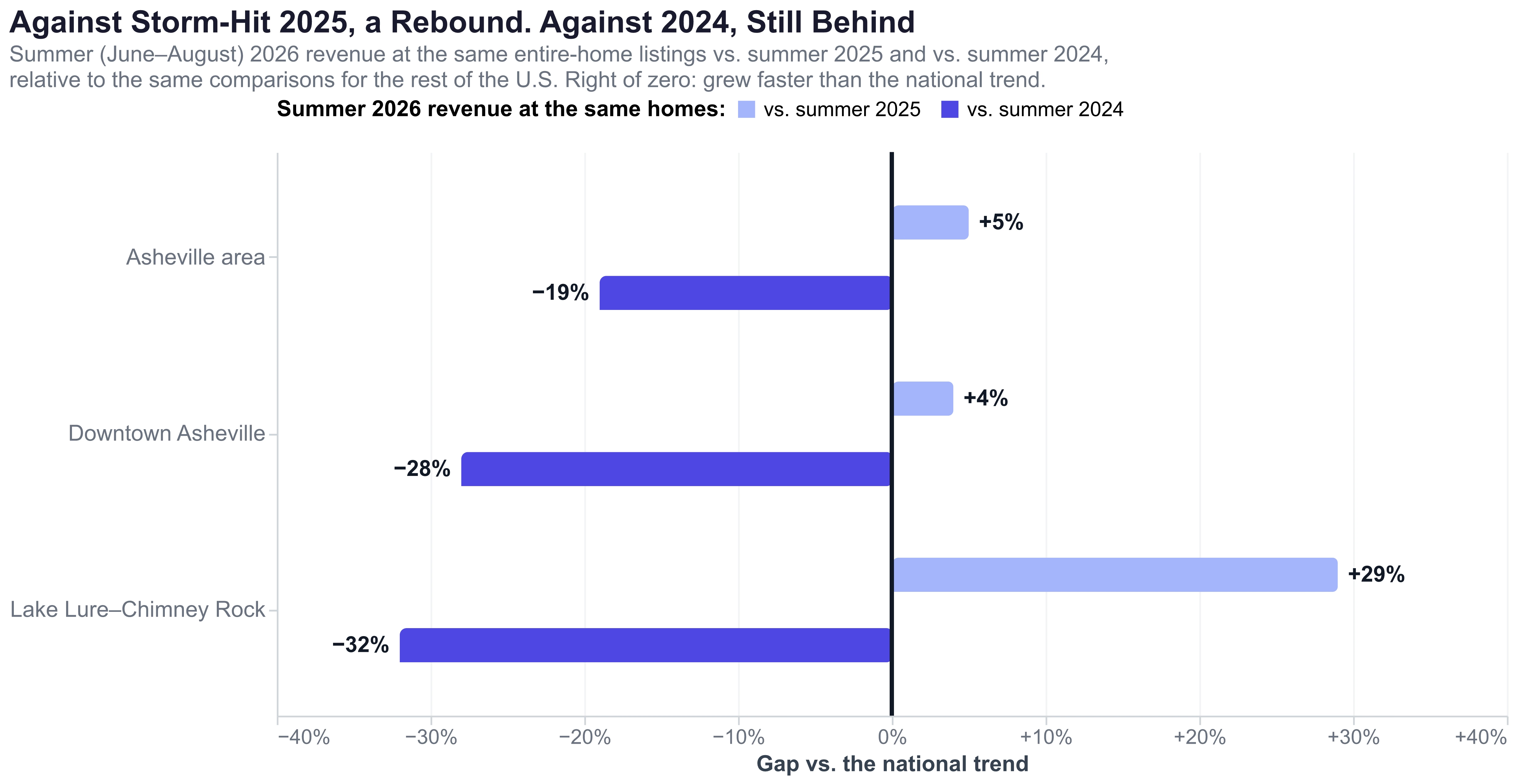
The gap is narrowing, slowly. A year ago, the same comparison left Asheville-area rentals about 23% behind the U.S. pace; this summer's 19% closes about a sixth of that gap. Measured from their own storm-hit 2025 season, the area's homes grew about 5% faster than rentals elsewhere. Homes around Lake Lure outgrew the rest of the country by 29%, yet still trail by about a third measured from 2024.
Chip Craig, whose GreyBeard Realty and Rentals manages around 200 short-term rentals, told WLOS in April that his company's reservations had fallen about 30% last year. "Things are improving, which is great. We're not quite back to where we were, but it's definitely positive and going in the right direction," he said.
What the tourism office counts
Late last year, Isley went further. "A little over a year after the storm, much of the Asheville area is open, and many businesses are back on par with the 2023 fall travel season," she told Travel + Leisure.
She spoke of many businesses, not rentals. Measured from fall 2023, Asheville-area vacation rentals trailed the national trend by about a tenth last fall.
On the office's own count, hotels are further off. From January through July, hotel occupancy was 62%, nine points below 2019, while vacation rentals ran a point above it.
HP Patel, the authority's board chair and a hotel executive, said at the Aug. 26 board meeting that luxury travelers are still spending, while transient business is where the economy is hitting lodging numbers.
October is the next test
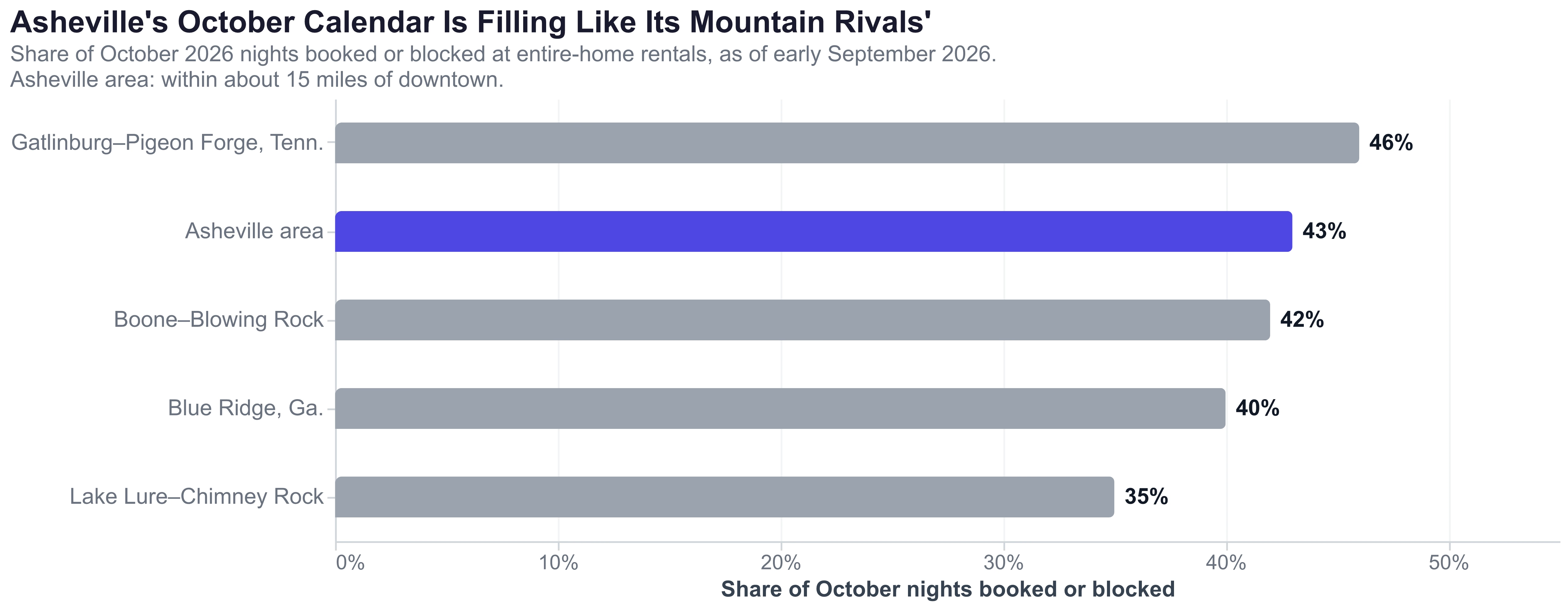
Peak color at mid elevations should arrive "somewhere between the 10th and the 20th," Howard Neufeld, a former Appalachian State University biology professor who runs the Fall Color Guy website, told 828 News NOW earlier this month.
"We were hopeful for a strong summer," Isley said at the authority's Aug. 26 board meeting, "and we’re really all in for a strong fall and winter to right the ship." The board is scheduled to meet next on Sept. 30.
About the data: AirROI compared each entire-home listing's revenue in a month with the same month of an earlier year, among homes booked in both and open to stays under 28 nights, then set the change against the same comparison elsewhere in the U.S.
Frequently Asked Questions
Much of it is. Asheville lifted its systemwide boil-water notice on Nov. 18, 2024, though NCDOT expects to restore all four lanes of Interstate 40 through the Pigeon River Gorge by late 2029. Tourism has not fully returned: Buncombe County visitor spending, $2.6 billion in 2025, was still below its 2023 record, Visit NC figures show.
It slipped again last year: Buncombe County visitor spending fell to $2.6 billion in 2025, a second straight annual decline from the 2023 record, Visit NC figures show. Hotels are softer still, with occupancy of 62% from January through July 2026, Explore Asheville says. The same state figures show Henderson, Jackson, Yancey and Watauga counties finished 2025 with visitor spending above their 2023 levels.
Ahead of rentals elsewhere compared with a year ago, but not back to their pre-storm pace. AirROI found that Asheville-area homes this summer trailed rentals elsewhere in the U.S. by 19% measured from summer 2024, down from about 23% a year earlier. Explore Asheville, which reports occupancy (the share of available nights filled), put July 2026 vacation-rental occupancy above its 2019 level.
Yes. The town says its businesses welcomed visitors even while the lake was closed; the lake itself reopened in May 2026 after 20 months, and Chimney Rock State Park reopened on June 27, 2025. Rentals near Chimney Rock village still trail rentals elsewhere in the U.S. by about a third, measured from summer 2024.
Howard Neufeld, the former Appalachian State University biology professor behind the Fall Color Guy website, told 828 News NOW that mid-elevation color should peak between Oct. 10 and Oct. 20, in line with the historical average. Nearly 30 miles of the Blue Ridge Parkway remain closed in several stretches between U.S. 221 near Linville Falls and Mount Mitchell State Park. The National Park Service expects its road repairs to be finished by the end of 2026.