Local Airbnb rules2026 13 sources cited
Is Airbnb Legal in Long Beach? 2026 Rules, Permits & Taxes
Airbnb is legal in Long Beach with a city registration: $545 a year, 90 unhosted nights a year in a primary home, second homes capped at 800 citywide, 13% hotel tax collected by Airbnb, and $1,000 fines per violation.3,5,11,12
From 12 official sources and 1 Airbnb help page. Not legal advice.
The short answer
Long Beach Airbnb Rules in Brief
- Every rental of 1 to 30 nights needs a city registration; the review fee is $545 a year, and accessory dwelling units (ADUs) cannot be registered.
- Primary residence (lived in at least 275 days a year): unhosted stays up to 90 days a year, hosted stays unlimited.
- Second homes: no night cap, but only 800 non-primary registrations citywide (350 in the coastal zone); 686 were registered on July 3, 2026.
- Hotel tax is 13% and Airbnb collects it; fines are $1,000 for each violation, and three citations in 18 months can cost the registration.
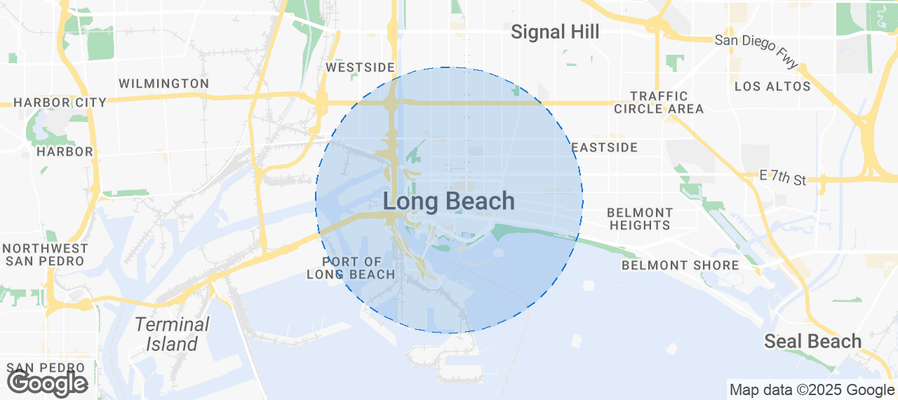 Browse the live Long Beach Airbnb market See Every Long Beach Listing
Revenue, occupancy and nightly rates are in the Long Beach Airbnb market report .
At a glance
Long Beach Airbnb Rules at a Glance
- Registration required
- Yes
- Taxes on a stay
- 13%
- Fine for hosting without a permit
- $1,000
- Listings showing a permit number
- 82%
- Latest rule change
- Oct 1, 2026
Listing figures: AirROI, 12 months to September 2026. A number on a listing doesn't prove the permit or license is valid, and a missing one doesn't prove there is none.
The rules in brief
The rules a Long Beach host meets first, each linked to the ordinance, statute or official page it comes from. Details and exceptions follow below.
| Topic | Rule |
|---|---|
| Permit | Registration before advertising or renting3 |
| Who can host | Primary and non-primary registrations3,5 |
| Where | 800 non-primary registrations citywide3,5 |
| Building rules | Landlords and HOAs can bar short-term rentals3,5 |
| Night cap | 90 unhosted nights a year in a primary residence3,5 |
| Minimum stay | No minimum stay5 |
| Guests | Two guests per bedroom plus two, up to eight3,5 |
| Listing display | Registration number and expiration date on every listing3,5 |
| Platforms | Platforms may not book unregistered rentals3 |
| Safety | City inspection before approval3,5 |
| Insurance | $1,000,000 liability insurance3 |
| Neighbors | Neighborhoods can vote to ban unhosted rentals3,10 |
Your home
Can You Host an Airbnb in Long Beach? It Depends on the Home
Whether you can host in Long Beach turns on whose home it is and whether you live there.
A second home or investment property you don't live in
Allowed with conditionsAllowed with a Non-Primary Residence registration and no night cap, while registrations last: 800 citywide and 350 in the coastal zone, with each person limited to one. Applicants go on a waiting list once the cap is reached.3,5,8
Permit
Do You Need a Permit for Airbnb in Long Beach?
Yes. Short-term rental hosts in Long Beach need the short-term rental registration: Primary Residence or Non-Primary Residence from the City of Long Beach Community Development Department (Code Enforcement Bureau). It costs $545 in the first year (A one-home host pays the $545 review fee on the first application and again at each yearly renewal, on top of the 13% hotel tax on guest payments and the cost of $1,000,000 of liability insurance.) and $545 a year to renew.3,5,11,12
- Who needs it
- Every host renting a home or part of a home for 1 to 30 consecutive nights, including through Airbnb. An individual may hold one primary-residence registration and one non-primary registration.3,5,11,12
- Issued by
- City of Long Beach Community Development Department (Code Enforcement Bureau)
- Valid for
- One year from the date of approval; not transferable and does not run with the property. Renewal applications are due 30 days before expiry, and unfinished applications lapse 45 days after the city's review.
- Processing
- Applications wait in a review queue, and the timing depends on staff workload and on how complete the documents are; after review the applicant has 45 days to finish any corrections.
- On listings
- The number must appear on every listing
- Platform checks
- Hosting platforms must list the registration number and expiration date, must not complete a booking for a listing the city says has no valid registration, must remove listings when the city asks, and must send the city a monthly report of registration numbers, addresses, nights booked and prices.
Fees
| Fee | Amount |
|---|---|
| Registration application review feeNon-refundable once the application has been reviewed; there is no separate charge for the registration itself. | $500 |
| Registration application review feeRaised from $500 in the fiscal year 2027 fee schedule; paid before the city reviews a new or renewal application and not refundable after review. | $545 |
Who qualifies
- The unit must be a legally permitted dwelling; accessory dwelling units (ADUs), junior ADUs, garages, pool houses, casitas, rumpus rooms and live-work spaces do not qualify
- Primary Residence registration: the unit must be on the same parcel as the applicant's primary residence, the place they live at least 275 days a year, shown by two documents such as a driver's license, voter registration or utility bill
- Non-Primary Residence registration: any owner of residential property in Long Beach, subject to the 800-unit citywide cap (350 in the coastal zone)
- A tenant needs a signed and notarized Property Owner Authorization; an LLC applicant needs a notarized authority agreement
- No pending code enforcement actions or unpaid code citation fees on the property
- The building must not be on the city's Prohibited Buildings List, and units per building are limited (1 unit in a 2 to 10 unit building, 10% of 11 to 50 units, 12% of 51 to 100, 15% of 101 or more)
- The city inspects every area guests will use before approving the registration
How to apply
- Choose the registration type: Primary Residence (a unit on the same parcel as your home) or Non-Primary Residence (a second home).
- Check that the unit is a qualified dwelling, not an ADU, and that the building is not on the Prohibited Buildings List; gather two proofs of primary residence, a notarized owner authorization if you rent, and your county assessor identification number.
- Primary Residence: apply through the city's online registration portal and pay the $545 review fee. Non-Primary Residence: submit an Application of Interest, which brings either a reservation to register or a place on the waiting list if the 800 cap has been reached.
- Pass the city inspection of every area guests will use and fix any hazards; finish any corrections within 45 days of the city's review or the application lapses and the fee is forfeited.
- Post the registration number and expiration date on every listing, and file the monthly hotel tax report using the same registration number.
Applications go through the official application page .
Permit rules
- Registration before advertising or renting
- No one may advertise, rent or operate a short-term rental in Long Beach without a city registration, and the operator answers for every requirement of Chapter 5.77.3
- Registration number and expiration date on every listing
- All advertising, including each listing on a hosting platform, must clearly show the city-issued registration number and its expiration date.3,5
- Platforms may not book unregistered rentals
- Hosting platforms may not complete a booking for a listing the city says lacks a valid registration, must remove listings when notified, and must report each listing's registration number, address, nights booked and price to the city every month.3 Applies to: Hosting platforms
- Yearly renewal; three citations block it
- A registration lasts one year and is renewed with another $545 review fee and a year of tax records. It cannot be renewed if the owner or operator has three or more citations in any 18-month period.3,5
- Advertised price must include mandatory fees
- Since July 1, 2024, California's Honest Pricing Law (SB 478) bars a host or platform from advertising a short-term rental price that leaves out mandatory fees; government taxes and fees may be listed separately.4 In force since July 1, 2024
Who can host
Who Can Host an Airbnb in Long Beach, and Where
California state law applies on top of Long Beach's own rules: the California short-term rental regulations page covers the state license and what cities and counties can and can't regulate.
- Primary and non-primary registrations
- A host may hold one Primary Residence registration and one Non-Primary Residence registration at the same time.3,5
- Primary residence means 275 days a year
- A primary residence is a person's permanent residence or usual place of return for at least 275 days of the calendar year, and the rental unit must be on the same parcel as that home.5 Applies to: Primary Residence registrations
- Second homes have no night cap
- Anyone who owns residential property in Long Beach that is not their primary residence can register it as a non-primary rental, with hosted and unhosted rental allowed for an unlimited number of days.5 Applies to: Non-Primary Residence registrations
- 800 non-primary registrations citywide
- At most 800 non-primary registrations can operate at one time, with a waiting list once the limit is reached; the City Council reviews the number every year.3,5 Applies to: Non-Primary Residence registrations
- 350 non-primary registrations in the coastal zone
- The coastal zone has its own limit of 350 non-primary registrations, set at the California Coastal Commission's request, and the citywide cap does not block new coastal registrations until those 350 are used.7,8 Applies to: Coastal zone · In force since September 6, 2022
- Limits on units per building
- In a multi-unit property or development, one unit may be a short-term rental in a building of 2 to 10 units; larger developments are limited to 10% of units (11 to 50), 12% (51 to 100) or 15% (101 or more).3,5 Applies to: Multi-unit buildings
- Accessory dwelling units are excluded
- Accessory dwelling units and junior accessory dwelling units cannot be registered as short-term rentals, and neither can garages, pool houses, casitas, rumpus rooms, storage rooms or live-work spaces.3,5
- Tenants need the owner's notarized approval
- A renter or lessee can register only with a signed and notarized Property Owner Authorization. The city also states that tenants may not be evicted in order to re-list a unit as a short-term rental.3,5 Applies to: Tenants
- Landlords and HOAs can bar short-term rentals
- Apartment building owners and homeowners' associations can have their property placed on the city's Prohibited Buildings List, after which no one can register a short-term rental there; in the coastal zone this applies only to rules recorded before 1977.3,5 Applies to: Apartment buildings and HOAs
Operating rules
Operating Rules for Long Beach Short-Term Rentals
- Stays of 1 to 30 nights are short-term rentals
- Any rental to paying guests of one to thirty consecutive nights counts as a short-term rental, and the city sets no minimum number of nights.5
- No minimum stay
- Long Beach does not require a minimum number of nights for booked stays.5
- 90 unhosted nights a year in a primary residence
- A primary-residence rental may be booked for at most 90 days per registration year when the host is not on site; hosted stays have no limit.3,5 Applies to: Primary Residence registrations
- Neighborhoods can vote to ban unhosted rentals
- Owners in a census tract block group can petition the city to prohibit unhosted rentals there; a majority of owners must sign, and a restriction lasts at least three years. The city's list of petitions shows two block groups that passed.3,10 Applies to: Census tract block groups
- City inspection before approval
- The city inspects every area guests will use and documents it; hazards must be fixed before the registration is issued, and a listing may not offer any area that was not inspected.3,5
- Fire extinguishers, smoke and carbon monoxide detectors
- Hosts must keep working fire extinguishers, smoke detectors and carbon monoxide detectors, and post an evacuation plan showing exits and extinguisher locations in the unit.3,5
- $1,000,000 liability insurance
- Hosts must carry liability insurance of at least $1,000,000 in the aggregate for the short-term rental use, or book every stay through a platform that provides equal or greater coverage.3
- Two guests per bedroom plus two, up to eight
- No more than two people per bedroom plus two more may be on the property at once, counting the host and children, with an absolute maximum of eight; a studio counts as zero bedrooms and sleeps two.3,5
- Events need an occasional event permit
- Parties, weddings and other events above the occupancy limit are prohibited unless the host first obtains an Occasional Event Permit from the Special Events office, up to four per registration year.3,5
Taxes
How Much Are Airbnb Taxes in Long Beach?
13% on the nightly price and cleaning fee; no other tax or flat nightly charge applies to short-term rentals on the city's pages.
- Median nightly rate, booked nights
- $200
- Taxes on that night (13%)
- $26
- Guest pays, before Airbnb and cleaning fees
- $226
| Tax | Rate | Collected by |
|---|---|---|
| Long Beach transient occupancy tax (hotel tax) 13% of the room rent for stays of 30 nights or fewer; Airbnb adds it to the guest's price, including the cleaning fee | 13%5,6,13 | Airbnb |
At Long Beach's median booked rate of $200 a night, the taxes collected on a booking come to about $26 a night.
What the host still handles
- A city short-term rental registration number, which is also the login for the city's online hotel tax portal
- A monthly hotel tax report to the city, due on the 10th of the following month, including bookings Airbnb already collected and months with $0.00 in rentals
- For bookings on any platform other than Airbnb, collecting the 13% from guests and paying it to the city yourself5,6,13
Fines
How to Avoid Airbnb Fines in Long Beach
Fines in Long Beach fall on hosting without the approvals described above, or outside the rules. With them in hand and the rules followed, none of the fines below apply.
- Fines are $1,000 for each violation, and one event or several continuing days can bring several citations; unregistered rentals in the coastal zone have been subject to the $1,000 fine since September 6, 2022.3,7
- Three citations against a property within 18 months can lead the city to revoke, suspend or disallow the registration or add conditions; after a revocation, no unit on that parcel can be registered for at least 12 months.3
- A violation that involves violence at the rental counts double toward the three citations, and the city can cancel or suspend a registration if the host does not remedy such an incident.3
- A host or platform found in violation in a civil or administrative action must repay the city's investigative and enforcement costs and unpaid hotel tax, and hand over rental revenue obtained illegally.3
- A late hotel tax report or payment draws a penalty of 25% of the tax due, followed by a further 50% if it stays unpaid.5
Changes
What's Changed in Long Beach's Airbnb Rules
No change was scheduled when the rules were checked on October 17, 2026; the most recent are listed first.
- October 1, 2026
- October 2026City reviewing the ordinance for updates
As of October 2026 the city's short-term rental page states that Long Beach is reviewing its ordinance for possible updates.5
- October 13, 2025State law lets cities require platform address reports
SB 346, approved October 13, 2025, authorizes a city to require booking platforms to report the address of each short-term rental and to show the local license number on listings.2
- February 11, 2025City Council rewrites the short-term rental chapter
Ordinance ORD-25-0001, adopted February 11, 2025, replaced Chapter 5.77 of the municipal code in its entirety, carrying forward the 800-unit cap, the 90-day unhosted limit, the $1,000 fine and platform duties.3
- September 6, 2022Registration required in the coastal zone
After the Coastal Commission approved the ordinance on May 13, 2022, Long Beach began enforcing the registration rules in the coastal zone on September 6, 2022, with a $1,000 fine for unregistered rentals.7
Listing data
What Long Beach's Listings Show
AirROI, a short-term-rental data firm, counted 1,280 active Airbnb listings in Long Beach over the 12 months to September 2026. 82% of them displayed a permit, license or registration number.
Minimum stay set on Long Beach listings
Share of active listings by the shortest stay they accept
Minimum stay in numbers
| Shortest stay accepted | Share of listings |
|---|---|
| 1 night | 21% |
| 2 nights | 33% |
| 3 nights | 14% |
| 4–6 nights | 6% |
| 7–29 nights | 5% |
| 30+ nights | 21% |
What officials report
- 686
- Non-primary short-term rentals registered · as of July 2026The city's registered-address dashboard showed 686 non-primary units registered when it was last updated on July 3, 2026, against the 800-unit citywide cap.5,9
- 247
- Primary-residence short-term rentals registered · as of July 2026The same dashboard showed 247 primary-residence units registered as of July 3, 2026.9
- 2
- Neighborhood petitions that banned unhosted rentals · as of 2024Of the 13 census tract block group petitions the city lists for fiscal years 2021 to 2024, two reached a majority of owners (574500-2 and 577605-3).10
Earnings
What Could a Long Beach Short-Term Rental Earn?
The rules shape the numbers: a registration that costs $545 in the first year and taxes of 13% that Airbnb adds to guests' bills. For a specific address, the Airbnb income calculator estimates revenue, occupancy and nightly rate from comparable listings, so you can test the numbers before applying.
FAQ
Long Beach Airbnb Rules: Frequently Asked Questions
Is Airbnb legal in Long Beach?
Do I need a permit for Airbnb in Long Beach?
How much is the Long Beach short-term rental registration?
Can I rent a home I don't live in on Airbnb in Long Beach?
Is there a limit on how many nights I can host in Long Beach?
Does Airbnb collect hotel tax in Long Beach?
What is the hotel tax on an Airbnb in Long Beach?
What is the fine for an illegal Airbnb in Long Beach?
Can I list a garage, casita or accessory dwelling unit on Airbnb in Long Beach?
How many guests can stay at a Long Beach short-term rental?
Do I need insurance and safety equipment for an Airbnb in Long Beach?
Yes. Hosts must carry at least $1,000,000 of liability insurance, or book every stay through a platform with equal coverage, and keep working fire extinguishers, smoke detectors and carbon monoxide detectors.3
Do I need to show my registration number on my Airbnb listing in Long Beach?
How many Long Beach Airbnbs are registered?
In AirROI's listing data, 82% of the 1,280 Long Beach Airbnb listings active in the 12 months to September 2026 displayed a permit, license or registration number. A number on a listing shows the host entered one; it doesn't confirm the permit is valid.
How much does an Airbnb make in Long Beach?
The average Long Beach listing earned $39,600 in the 12 months to September 2026, according to AirROI, averaged across every active listing including those booked for only part of the year. The Long Beach Airbnb market report breaks it down by month, property size and neighborhood.
Method
How These Rules Were Checked
Each rule on this page was checked in October 2026 against the official source cited beside it: the ordinance or statute, the permit office's own pages and the tax authority. Airbnb's help pages are cited on their own only for what Airbnb itself does, such as the taxes it collects and the permit checks it runs, and otherwise only beside an official source; news reports only for when a change was announced. Rules that could not be confirmed on an official page are left out. The Long Beach Municipal Code chapter on Municode and the city's registered-address Power BI dashboard were read in a browser.
Rules change with council votes, court rulings and new state laws, so the page is rechecked every three months and whenever a scheduled change takes effect. It summarizes the rules for information and is not legal advice; the City of Long Beach Community Development Department has the final word on any application.
Listing figures come from AirROI's tracking of 1,280 active Long Beach Airbnb listings over the 12 months to September 2026.
Sources
Sources
Each rule above links to the source it comes from. Official ordinances, statutes and government pages come first, then Airbnb's own help pages.
- 1. California Revenue and Taxation Code section 7280 - Occupancy taxes · California Legislative Information
- 2. SB 346 Local agencies: transient occupancy taxes: short-term rental facilitator · California Legislative Information
- 3. Long Beach Municipal Code, Chapter 5.77 - Short-Term Rentals · City of Long Beach (Municode)
- 4. SB 478 - Hidden Fees (Honest Pricing Law) · California Attorney General
- 5. Short-Term Rentals (STRs) · City of Long Beach Community Development Department
- 6. Transient Occupancy Tax · City of Long Beach Financial Management
- 7. City of Long Beach to Begin Enforcement of Registered Short-Term Rentals in Coastal Zone (press release, August 10, 2022) · City of Long Beach
- 8. Notice of approval with suggested modifications, Local Coastal Program Amendment No. LCP-5-LOB-20-0058-3 (Short-Term Rentals) · California Coastal Commission
- 9. Short-Term Rental Registered Addresses (Power BI dashboard) · City of Long Beach Community Development Department
- 10. Petitions Conducted (Census Tract Block Group Map) · City of Long Beach Community Development Department
- 11. Proposed Adjustments to City Fees and Charges, Fiscal Year 2027 · City of Long Beach
- 12. Community Development Fee Schedules · City of Long Beach Community Development Department
- 13. Occupancy tax collection and remittance by Airbnb in California · Airbnb Help Center