Local Airbnb rules2026 32 sources cited
Is Airbnb Legal in Los Angeles? 2026 Rules, Permits & Taxes
Yes, but only in your primary residence with a City of Los Angeles Home-Sharing registration, capped at 120 nights a year unless you also hold an Extended registration; no second homes or investment properties.1,2,5,6,7,31
From 30 official sources and 2 Airbnb help pages. Not legal advice.
The short answer
Los Angeles Airbnb Rules in Brief
- Only your primary residence (where you live more than six months a year) can be registered; one registration per person, not transferable. Second homes, investment properties and rent-stabilized or income-restricted homes are not eligible.
- A registered host can rent up to 120 days a calendar year; an Extended Home-Sharing registration (after six months registered or 60 days hosted, with at most one citation in three years) lifts the cap.
- Every listing must show the City registration number, and booking platforms may not complete a booking without a valid one.
- Airbnb collects the 14% hotel tax and a per-night fee (listed at $3.30), but you still register with the Office of Finance and file monthly; fines reach $2,000 a day beyond the cap.
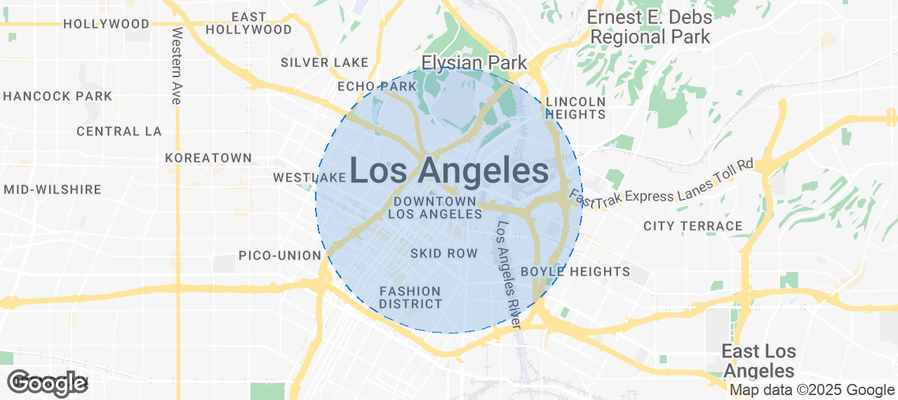 Browse the live Los Angeles Airbnb market See Every Los Angeles Listing
Revenue, occupancy and nightly rates are in the Los Angeles Airbnb market report .
At a glance
Los Angeles Airbnb Rules at a Glance
- Registration required
- Yes
- Taxes on a stay
- 14% + $3.30
- Yearly night cap
- 120 nights
- Fine for hosting without a permit
- $2,000
- Active Airbnb listings
- 9,940
- Latest rule change
- Sep 28, 2026
The rules in brief
The rules a Los Angeles host meets first, each linked to the ordinance, statute or official page it comes from. Details and exceptions follow below.
| Topic | Rule |
|---|---|
| Permit | Two citations suspend; three revoke1 |
| Who can host | Only your primary residence can be registered1,6 |
| Where | Newer accessory dwelling units cannot be rented short term unless they are your home1,6 |
| Building rules | Tenants need the landlord's written approval1,5,6 |
| Night cap | 120 nights a calendar year without an Extended registration1,6 |
| Guests | One group of guests at a time1 |
| Listing display | The City registration number goes in every advertisement1,5,6 |
| Platforms | Advertise only on the platforms you listed1,6 |
| Safety | Fire extinguishers, smoke and CO detectors, exit information1,6 |
| Neighbors | No amplified sound after 10 p.m.; no evening outdoor groups over eight1,6 |
Your home
Can You Host an Airbnb in Los Angeles? It Depends on the Home
Whether you can host in Los Angeles turns on whose home it is and whether you live there.
Your primary residence, rented whole while you are away
Allowed with conditionsAllowed with a City Home-Sharing registration for up to 120 nights a calendar year. You can go beyond that only with an Extended Home-Sharing registration, and you still need the tax registration, safety equipment and listing number.1,6
A room in your primary residence, with you present
Allowed with conditionsAlso covered by the registration: the program applies to rentals of all or part of the home, and the code sets no separate allowance for hosted stays, so the 120-night cap applies to them too. The same registration number, tax and safety rules apply.1,6
An accessory dwelling unit (ADU) or guest house
Allowed with conditionsAn ADU whose building-permit application was filed on or after January 1, 2017 can be registered only if it is your primary residence. Airbnb's Los Angeles page words the rule differently (ADUs with an ADU certificate of occupancy issued before 2017), so confirm with Planning first.1,6
A home in Santa Monica, Beverly Hills, West Hollywood or another LA-area city
Allowed with conditionsThose cities set their own rules and the City of Los Angeles registration does not apply there. Santa Monica bans whole-home vacation rentals and allows only host-present home-sharing with a permit; Beverly Hills prohibits short-term rentals outright; West Hollywood applies an initial one-year lease term to most housing; Long Beach and Pasadena register hosts under their own limits; and unincorporated County areas need a $914 County registration.16,17,20,22,24,25,26
Permit
Do You Need a Permit for Airbnb in Los Angeles?
Yes. Short-term rental hosts in Los Angeles need the Home-Sharing Registration from the City of Los Angeles Department of City Planning (Home-Sharing Unit). It costs $441.1,2,5,6,7,31
- Who needs it
- Any host who rents all or part of their home for 30 consecutive days or less in the City of Los Angeles. Stays of 30 nights or more, and units in City-approved hotels, motels and bed and breakfasts, are outside the program. Addresses in neighborhoods such as Venice, Hollywood or Encino are inside the City; check a property's parcel on the City's map because some LA-area addresses belong to separate cities.1,2,5,6,7,31
- Issued by
- City of Los Angeles Department of City Planning (Home-Sharing Unit)
- Valid for
- One year from the date of issue, valid only at the host's primary residence and not transferable. Renewal applications are accepted 60 days before expiry; a renewal needs the fee, a year of compliance and the past year's home-sharing records.
- Processing
- Airbnb's Los Angeles page says issuing a number can take several weeks depending on the volume of applications; the Zoning Code gives an applicant 45 days from first submission to supply the required material.
- On listings
- The number must appear on every listing
- Platform checks
- Platforms may not process a booking for anyone without a valid City registration number, or for a listing past its 120-night limit, and must send Planning at least monthly each listing's number, responsible person, address and nights booked. A platform that completes a booking without a valid number faces a $1,000 fine per day.
Fees
| Fee | Amount |
|---|---|
| Regular Home-Sharing application or renewal (base fee)The Zoning Code lists a $441 base fee, set by Ordinance 188,796 (effective February 23, 2026), non-refundable and paid with the online application. Planning adjusts its fees for inflation each July 1 (3.4% on July 1, 2025), so the amount charged after an adjustment can be higher than the base fee. City Planning has proposed a $404 application fee and a $454 renewal fee, which the Council has not adopted. | $441 |
| Extended Home-Sharing clearance or renewal (base fee)$883 base fee for the ministerial (staff) approval of Extended Home-Sharing and again for its annual renewal, also adjusted for inflation each year. A new Extended registration also pays a one-time fee for the City's vendor to mail a notice to adjacent owners and occupants. | $883 |
| Extended Home-Sharing discretionary review (base fee)$12,798 base fee when a host who qualifies for Extended Home-Sharing has two citations in the prior three years and needs a discretionary review; the Director may set a public hearing. | $12,798 |
Who qualifies
- The rental must be the host's primary residence: the sole residence where the host lives more than six months of the calendar year, with a Certificate of Occupancy for residential use
- The host must be a natural individual, and one person can hold only one registration or operate only one home-sharing unit at a time
- Not eligible: homes under affordable-housing covenants, the Rent Stabilization Ordinance (or income restrictions), buildings converted from rent-stabilized units to single-unit dwellings in the last five years, and homes with a pending citation
- Accessory dwelling units whose building-permit application was filed on or after January 1, 2017 are eligible only if the ADU is the applicant's primary residence
- Tenants need the landlord's written approval, filed as a notarized Landlord Affidavit, and a landlord can bar home-sharing across all their properties by notifying the City
- Two primary-residence documents (for example a property tax bill with homeowner's exemption, a recent LADWP electric bill, a vehicle registration or a voter registration card) plus a California driver license or ID card
How to apply
- Apply online through the City's Home-Sharing Application and Registration Portal (HARP), which is also where hosts renew and pay per-night fees
- Upload a California driver license or ID card and two primary-residence documents, identify an emergency contact who can reach the property at any hour and list every hosting platform you will use (tenants also upload the notarized landlord authorization)
- E-sign the declarations under penalty of perjury (primary residence, safety equipment, occupancy limit, guest code of conduct) and pay the non-refundable filing fee
- Once the City issues your registration number, register with the Office of Finance for the Transient Occupancy Tax (the Guidelines require a tax registration certificate before you operate as a host)
- Put the registration number in every listing, give guests the City's Guest Code of Conduct and, if you are in a Very High Fire Hazard Severity Zone, add the no-smoking notice
Applications go through the City of Los Angeles Department of City Planning (Home-Sharing Unit) application portal .
Permit rules
- The City registration number goes in every advertisement
- No one may advertise a rental unit for short-term rental or home-sharing unless every ad clearly shows the City-issued registration number. If the number becomes invalid, all listings must come down immediately, and advertising must stop when a registration expires.1,5,6 In force since July 1, 2019
- Advertise only on the platforms you listed
- A host may advertise only on hosting platforms named on the home-sharing application, unless City Planning approves another in writing. The Guidelines require the listing URL to be reported within 24 hours of listing, and hosts must let each platform share listing, rental-activity and contact information with the City.1,6 In force since July 1, 2019
- Platforms cannot book without a valid registration number
- A hosting platform may not process a booking for anyone without a valid City registration number, or for a listing that has passed 120 nights without Extended approval, and must report registrations, addresses and nights booked to Planning at least monthly. Platforms that instead comply with the Guidelines' Appendix A or sign a City Platform Agreement are excepted from these duties.1,6 Applies to: booking platforms · In force since July 1, 2019
- Two citations suspend; three revoke
- Two citations suspend the registration for 30 days or for as long as a citation stays open, whichever is longer, effective 15 days after the City mails notice. Three sustained citations in a registration year revoke it and bar the host from home-sharing for one year. Hosts can appeal a citation to the department that issued it.1 Applies to: registered hosts · In force since July 1, 2019
Who can host
Who Can Host an Airbnb in Los Angeles, and Where
California state law applies on top of Los Angeles's own rules: the California short-term rental regulations page covers the state license and what cities and counties can and can't regulate.
- Only your primary residence can be registered
- Home-sharing is limited to the host's primary residence: the sole residence from which the host conducts home-sharing and where the host lives for more than six months of the calendar year. The City asks for two proof-of-residence documents and an e-signed declaration, and requires a Certificate of Occupancy for residential use.1,6 In force since July 1, 2019
- The host must be an individual, and can hold only one registration
- A host is a natural individual registered with the Department of City Planning, so a company cannot register. No person may apply for or hold more than one registration or run more than one home-sharing unit at a time in the City.1,6 In force since July 1, 2019
- Rent-stabilized, affordable and income-restricted homes are excluded
- A primary residence under affordable-housing covenants, the Rent Stabilization Ordinance or income restrictions under city, state or federal law is not eligible. A building converted from rent-stabilized units to single-unit dwellings cannot be used for home-sharing until five years after the conversion.1,31 In force since July 1, 2019
- Tenants need the landlord's written approval
- A renter or lessee may not home-share without the landlord's prior written approval and must file it with the application, on the City's notarized Landlord Affidavit form. A landlord can also bar home-sharing by tenants at any or all of their properties by notifying City Planning, and can revoke an earlier authorization.1,5,6 Applies to: tenants · In force since July 1, 2019
- Newer accessory dwelling units cannot be rented short term unless they are your home
- An accessory dwelling unit for which a complete building-permit application was filed on or after January 1, 2017 may be used for home-sharing only if it is the applicant's primary residence. The unit must also be in a zone that allows residential use by right; residential uses are generally barred in manufacturing, open-space and public-facility zones.1,6 Applies to: ADUs · In force since July 1, 2019
- A home with a pending citation cannot be registered
- No primary residence with a pending citation may be registered. Under the 2026 Guidelines a host or property may not have an open or pending citation from any City enforcement agency, not only the agencies named in the code.1,6 Applies to: applicants · In force since September 28, 2026
Operating rules
Operating Rules for Los Angeles Short-Term Rentals
- 120 nights a calendar year without an Extended registration
- A registered host may not home-share more than 120 days in a calendar year unless the City has issued an Extended Home-Sharing registration. Platforms may not complete bookings for a listing once it reaches 120 days without that approval.1,6 In force since July 1, 2019
- Extended Home-Sharing lifts the 120-night cap
- Staff can approve Extended Home-Sharing for a host with a current registration who has held one for at least six months or hosted at least 60 days, has had no more than one citation in the prior three years and has mailed notice to abutting owners and occupants. A host with two citations in three years needs discretionary review, and the approval lasts one year and is revoked after two citations in a registration year (then a two-year bar).1,2 Applies to: registered hosts · In force since July 1, 2019
- One group of guests at a time
- A host may not rent all or part of the primary residence to more than one group of guests or under more than one booking at any given time, and a home listed on several platforms may have only one listing booked at any given time.1 In force since July 1, 2019
- Two overnight guests per habitable room
- No more than two overnight guests, not counting children, are allowed per habitable room (kitchens excluded, though an open kitchen that is part of another room counts as a habitable room). The application requires a declaration that no booking will exceed this maximum sleeping capacity.1,6 In force since July 1, 2019
- No amplified sound after 10 p.m.; no evening outdoor groups over eight
- Sound-amplifying equipment may not be used after 10 p.m., and there may be no evening outdoor congregations of more than eight people (children excluded) during home-sharing. The City's general noise rules also apply, and a host, or the owner if the host rents, can be held responsible for nuisance violations and charged an inspection fee for each site visit.1,6 Applies to: hosts and guests · In force since July 1, 2019
- No fee-charging events or other business use during a stay
- Except for an allowable household business, non-residential uses such as selling or exchanging products, events that charge a fee, or promoting, displaying or servicing any product are not permitted during home-sharing. Home-sharing is also banned in non-residential structures such as a parked vehicle, storage shed, trailer, tent or other temporary structure.1 In force since July 1, 2019
- Fire extinguishers, smoke and CO detectors, exit information
- Every host must provide and maintain working fire extinguishers, smoke detectors and carbon monoxide detectors in line with fire, life and safety codes, plus information on emergency exit routes and contact details. Hosts in a Very High Fire Hazard Severity Zone must state in every listing, and post on any patio or deck, that smoking is not permitted outside.1,6 In force since July 1, 2019
- A 24-hour emergency contact and a guest code of conduct
- The application names a local emergency contact who can access the property at any hour of any day (the host can be that person). Every host must also give guests the City's Home-Sharing Guest Code of Conduct, which covers the relevant rules and behavior, safety and security.1,6 In force since July 1, 2019
- Keep stay records for three years
- Hosts must keep records of every home-sharing stay, including length and price, for at least three years, and consent to City inspection of those records. Under the 2026 Guidelines the host completes the City's Home-Sharing Records Worksheet for each listing, and renewals require the past year's records.1,6 In force since July 1, 2019
- A per-night fee on top of the registration fee and hotel tax
- Every night of home-sharing is subject to a per-night fee that funds enforcement, in addition to the registration fee and the Transient Occupancy Tax. Platforms with a City Platform Agreement collect and remit it; hosts on other platforms report nights and pay it monthly through HARP, even in months with zero nights.1,6
- Comply with the Transient Occupancy Tax rules
- Hosts must fully comply with LAMC Article 1.7, including collecting and remitting the tax monthly and holding a tax registration certificate from the Office of Finance. Where a platform has signed a tax agreement with Finance and the host has assigned it the duty, the platform and host have the same duties and liabilities.1,6,8 In force since July 1, 2019
- Lodging price increases are capped during a declared emergency
- During a declared emergency and for 30 days after it ends, a Hotel operator (as LAMC 21.7.2 defines it) may not raise rates more than 10% above the rates in effect just before the declaration. Airbnb's Los Angeles page points hosts to this rule and says hosts are responsible for their own pricing.3,31 Applies to: lodging operators · In force since February 26, 2025
Taxes
How Much Are Airbnb Taxes in Los Angeles?
14% of the nightly price plus cleaning fee, plus a $3.30 per-night fee, on Airbnb stays of 30 nights or less.
- Median nightly rate, booked nights
- $175
- Taxes on that night (14% + $3.30)
- $28
- Guest pays, before Airbnb and cleaning fees
- $203
| Tax | Rate | Collected by |
|---|---|---|
| City of Los Angeles Transient Occupancy Tax 14% of the room price including cleaning fees, for stays of 30 nights or less | 14%8,31,32 | Airbnb |
| Per-night home-sharing fee A per-night administrative fee that funds Home-Sharing enforcement; Airbnb lists it at $3.30 per night for stays of 30 nights or less, the same current level City Planning gives in its May 2026 report to Council, which proposes raising it to no more than $5.48 | 0%6,29,32 | Airbnb |
At Los Angeles's median booked rate of $175 a night, the taxes collected on a booking come to about $28 a night.
What the host still handles
- A Home-Sharing Registration from City Planning (through HARP) before you list, with the number in every listing
- A Transient Occupancy Tax registration certificate from the Office of Finance within 30 days of commencing business; the code waives the pre-application requirement for hosts who list only on platforms with a City agreement (Finance names Airbnb as an example)
- A monthly TOT statement to Finance, due by the 25th of the following month; Airbnb's Los Angeles page says hosts still file monthly returns and deduct what Airbnb collected and remitted, and hosts on other platforms owe the tax themselves
- Monthly per-night fee reporting in HARP for stays booked on platforms without a City Platform Agreement, including months with zero nights
- No separate business tax for short-term rentals unless you rent four or more properties, but the tax registration is still needed to remit TOT4,8,9,10,14,16,31,32
Fines
How to Avoid Airbnb Fines in Los Angeles
Fines in Los Angeles fall on hosting without the Home-Sharing Registration, or outside the rules above. With it in hand and the rules followed, none of the fines below apply.
- A host or owner who home-shares beyond the 120-night cap without an Extended registration faces a fine of $2,000 or twice the nightly rate, whichever is greater, for each day of activity over the limit (amounts adjust annually for inflation).1,2
- Advertising without a valid City registration number: a fine of $500 or twice the nightly rate charged, whichever is greater, for each day the ad runs; other violations are fined under LAMC 11.2.04(a)(2) using the indoor space guests can access.1,2
- Booking platforms that complete a booking without a valid registration number, for a suspended or revoked host, for a listing over 120 nights without Extended approval, or where a host's address does not match the listing face a $1,000 fine per day.1,2
- Three sustained citations in a registration year revoke the registration and bar the host for one year; Extended Home-Sharing is revoked after two citations, with a two-year bar on hosting or until any open citation is resolved, whichever is later. Two citations suspend a registration for at least 30 days.1
- Late Transient Occupancy Tax filings: a 5% penalty on the tax due for every month of delinquency up to the fourth month, an extra 20% in the fifth month, and a maximum penalty of 40%, plus interest.10
Changes
What's Changed in Los Angeles's Airbnb Rules
No change was scheduled when the rules were checked on October 18, 2026; the most recent are listed first.
- September 28, 2026Revised Guidelines and the HARP portal take effect
The revised Guidelines apply to applications filed on or after September 28, 2026: renewal applications are accepted 60 days before expiry, a host or property may not have an open or pending citation from any City agency, and applications, renewals and per-night fee payments run through the new Home-Sharing Application and Registration Portal (HARP).5,6
- July 14, 2026
- June 2, 2026Voters back TOT collection on online travel companies; a rate increase fails
On the County's unofficial results, Measure TC (online travel companies must collect Transient Occupancy Tax on the total amount charged) passed with about 58% and Measure TT (raise the rate to 16% through 2028, then 15%) failed with about 47%. The 14% rate for stays inside the City is unchanged.4,14
- May 26, 2026 Not in forceCity Planning proposes new Home-Sharing fees and a higher per-night fee
In a May 26, 2026 report to Council, City Planning recommended a Regular Home-Sharing application fee of $404 and renewal fee of $454, $858 for Extended administrative clearance or renewal and $11,706 for Extended discretionary review, and raising the per-night fee from the current $3.30 to no more than $5.48, with annual inflation adjustments after it. The application fees need an ordinance and the per-night fee a Council resolution. The Council had not adopted either when the City Clerk's file was last checked on October 18, 2026, so the current amounts above still apply.29,30
- May 7, 2026 Not in forceCity Attorney drafts a private right of action for neighbors
The City Attorney's report to Council includes a draft ordinance letting tenants or owners within 1,000 feet of a violating home sue after notice to the City and the host, if neither cures or acts. It is a draft and has not been adopted.13
- February 23, 2026Planning fee update sets the Home-Sharing fees
Ordinance 188,796 took effect on February 23, 2026 and updated City Planning's fee schedules. For Home-Sharing it set $441 to apply or renew, $883 for Extended Home-Sharing clearance or renewal and $12,798 for Extended discretionary review. The same ordinance amended the Zoning Code's home-sharing fines section (Sec. 15.8.3), which refers to the fines in Sec. 5C.3.2.2,29
- March 18, 2025City Council directs Planning to tighten Home-Sharing enforcement
Council adopted a Housing Committee report that instructs City Planning to draft amendments requiring platforms to verify listings electronically before booking and requiring inspections before permits, asks the City Attorney to draft a private right of action, and orders a fee study updating registration and per-night fees to full cost recovery.11,12
- February 26, 2025Price-gouging rules extend to hotels and rentals in emergencies
Ordinance 188,507 rewrote LAMC 47.12 to cap price increases at 10% for housing and lodging during a declared emergency and for 30 days afterward; it took effect on February 26, 2025.3
- January 27, 2025Home-Sharing rules appear in the new Zoning Code Chapter 1A
The program appears in Zoning Code Chapter 1A as Sec. 5C.3.2, established by Ordinance 188,418 (effective January 20, 2025, operative January 27, 2025). The original program text is still cited in LAMC Sec. 12.22 A.32 in Chapter 1, and the City's Guidelines implement both.1
- January 21, 2025County eases short-term rental limits for wildfire evacuees (unincorporated areas)
After the January 2025 wildfires the County Board of Supervisors approved a resolution easing short-term rental restrictions in unincorporated areas for people displaced by the fires, including multiple listings, ADUs and vacation rentals and removing the 90-night cap on unhosted stays. It applies to the County, not the City of Los Angeles.19
- July 1, 2019
Listing data
What Los Angeles's Listings Show
AirROI, a short-term-rental data firm, counted 9,940 active Airbnb listings in Los Angeles over the 12 months to September 2026. 56% of them displayed a permit, license or registration number.
Minimum stay set on Los Angeles listings
Share of active listings by the shortest stay they accept
Minimum stay in numbers
| Shortest stay accepted | Share of listings |
|---|---|
| 1 night | 11% |
| 2 nights | 17% |
| 3 nights | 8% |
| 4–6 nights | 7% |
| 7–29 nights | 10% |
| 30+ nights | 46% |
What officials report
- 4,057
- Active Home-Sharing registrations (regular and extended) · as of February 26, 2024City Planning counted 4,057 active registrations on February 26, 2024: 2,764 regular and 1,293 extended. About 0.3% of the City's 1,549,889 dwelling units had an active registration, and 16,122 registrations had been issued since July 1, 2019.15
Earnings
What Could a Los Angeles Short-Term Rental Earn?
The rules shape the numbers: a registration that costs $441 a year, a cap of 120 nights a year and taxes of 14% plus $3.30 a night that Airbnb adds to guests' bills. For a specific address, the Airbnb income calculator estimates revenue, occupancy and nightly rate from comparable listings, so you can test the numbers before applying.
FAQ
Los Angeles Airbnb Rules: Frequently Asked Questions
Is Airbnb legal in Los Angeles?
Do I need a permit to Airbnb in Los Angeles?
How many nights a year can I rent my home in Los Angeles?
Can I list a second home or investment property on Airbnb in Los Angeles?
How much does a Los Angeles home-sharing registration cost?
The Zoning Code's base fee is $441 for a regular application or renewal and $883 for Extended Home-Sharing (or its renewal), with $12,798 for discretionary review of an Extended application. Planning adjusts these for inflation each July 1, so the amount charged is higher than the base fee; the filing fee is non-refundable.2,6,7
Does Airbnb collect hotel tax in Los Angeles?
Can I Airbnb my rented apartment in Los Angeles?
Can I rent my ADU or guest house on Airbnb in Los Angeles?
An accessory dwelling unit whose building-permit application was filed on or after January 1, 2017 can be used for home-sharing only if it is your primary residence.1
What are the guest and noise limits for a Los Angeles Airbnb?
No more than two overnight guests (children excluded) per habitable room, no amplified sound after 10 p.m., no evening outdoor gatherings of more than eight people, and no fee-charging events. Hosts also provide fire extinguishers, smoke and carbon monoxide detectors and the City's guest code of conduct.1,6
What are the fines for illegal short-term rentals in Los Angeles?
Do the same rules apply in Santa Monica, Beverly Hills, West Hollywood or Long Beach?
No. Each city sets its own rules and the City of Los Angeles registration does not apply there. Santa Monica bans whole-home vacation rentals, Beverly Hills prohibits short-term rentals, Long Beach and Pasadena register hosts with different limits, and unincorporated County areas use a separate County registration.16,20,22,24,25
Do I pay income tax on Airbnb income in the United States?
How do I check whether a Los Angeles rental is registered, or report a problem?
Use City Planning's Home-Sharing Records Portal to see whether a property is registered and whether it has a citation. To reach the host of a registered rental about disruptive activity, call the 24/7 Home-Sharing Line at (213) 267-7788; other complaints go to the City department for that issue through MyLA311.6
How many Los Angeles Airbnbs are registered?
Active Home-Sharing registrations (regular and extended): 4,057 as of February 26, 202415. In AirROI's listing data, 56% of the 9,940 Los Angeles Airbnb listings active in the 12 months to September 2026 displayed a permit, license or registration number. A number on a listing shows the host entered one; it doesn't confirm the permit is valid.
How much does an Airbnb make in Los Angeles?
The average Los Angeles listing earned $34,500 in the 12 months to September 2026, according to AirROI, averaged across every active listing including those booked for only part of the year. The Los Angeles Airbnb market report breaks it down by month, property size and neighborhood.
Method
How These Rules Were Checked
Each rule on this page was checked in October 2026 against the official source cited beside it: the ordinance or statute, the permit office's own pages and the tax authority. Airbnb's help pages are cited on their own only for what Airbnb itself does, such as the taxes it collects and the permit checks it runs, and otherwise only beside an official source; news reports only for when a change was announced. Rules that could not be confirmed on an official page are left out.
Rules change with council votes, court rulings and new state laws, so the page is rechecked every three months and whenever a scheduled change takes effect. It summarizes the rules for information and is not legal advice; the City of Los Angeles Department of City Planning has the final word on any application.
Listing figures come from AirROI's tracking of 9,940 active Los Angeles Airbnb listings over the 12 months to September 2026.
Sources
Sources
Each rule above links to the source it comes from. Official ordinances, statutes and government pages come first, then Airbnb's own help pages.
- 1. Zoning Code Chapter 1A, Article 5, Sec. 5C.3.2 Home-Sharing Program · City of Los Angeles
- 2. Zoning Code Chapter 1A, Article 15 (Sec. 15.5.1 Home-Sharing Fees; Sec. 15.8.3 Home-Sharing Fines) · City of Los Angeles
- 3. Ordinance No. 188507, amending LAMC Sec. 47.12 (price gouging, housing and lodging) · Los Angeles City Clerk
- 4. Ordinance No. 188868 calling the June 2, 2026 election on applying TOT to online travel companies · Los Angeles City Clerk
- 5. Home-Sharing Program overview (HARP launch and Sept. 28, 2026 Guidelines) · Los Angeles Department of City Planning
- 6. Home-Sharing Administrative Guidelines, Second Edition (revised September 28, 2026) · Los Angeles Department of City Planning
- 7. Planning Liaison Updates, June 2025 (CPI fee adjustment effective July 1, 2025) · Los Angeles Department of City Planning
- 8. Transient Occupancy Tax Requirements · Los Angeles Office of Finance
- 9. Sharing Economy (home-sharing and Transient Occupancy Tax) · Los Angeles Office of Finance
- 10. Transient Occupancy Tax Compliance Guide (Rev. 8.26.24) · Los Angeles Office of Finance
- 11. Housing and Homelessness Committee report, Council File 14-1635-S10 (December 4, 2024) · Los Angeles City Council
- 12. Official Action of the City Council, Council File 14-1635-S10 (March 18, 2025) · Los Angeles City Clerk
- 13. City Attorney Report R26-0267, Home-Sharing Enforcement and Private Right of Action (May 7, 2026) · Los Angeles City Attorney
- 14. June 2, 2026 election results, Measures TC and TT (results as of 06/26/2026) · Los Angeles County Registrar-Recorder/County Clerk
- 15. City Planning report to City Council, CF 22-1506 (March 29, 2024) · Los Angeles Department of City Planning
- 16. Short-Term Rentals · Los Angeles County Treasurer and Tax Collector
- 17. Short-Term Rentals Key Requirements (registration cover sheet) · Los Angeles County Treasurer and Tax Collector
- 18. Proposed Short-Term Rental Ordinance, Frequently Asked Questions · Los Angeles County Treasurer and Tax Collector
- 19. Board Approves Rental and Short-Term Rental Protections Following Wildfires (January 21, 2025) · Los Angeles County Board of Supervisors, Third District
- 20. Short-Term Rental / Home-Share Ordinance · City of Santa Monica
- 21. Transient Occupancy Tax · City of Santa Monica
- 22. Short-Term Rentals · City of Beverly Hills
- 23. Short-Term Rentals FAQ · City of Beverly Hills
- 24. Short-Term Rentals (STRs) · City of Long Beach
- 25. Short-Term Rental Regulations · City of Pasadena
- 26. Zoning Text Amendment: Initial minimum lease terms · City of West Hollywood
- 27. Topic no. 414, Rental income and expenses · Internal Revenue Service
- 28. Topic no. 415, Renting residential and vacation property · Internal Revenue Service
- 29. City Planning report to Council, Home-Sharing updated fees and per-night fee, CF 14-1635-S7 (May 26, 2026) · Los Angeles Department of City Planning
- 30. Council File 14-1635-S7, Home-Sharing Ordinance budget request (file activity) · Los Angeles City Clerk
- 31. Los Angeles, CA (Responsible Hosting) · Airbnb Help Center
- 32. Occupancy tax collection and remittance by Airbnb in California · Airbnb Help Center