Local Airbnb rules2026 24 sources cited
Is Airbnb Legal in Kansas City? 2026 Rules, Permits & Taxes
Airbnb is legal in Kansas City, MO with a $200 yearly city registration. Non-resident rentals are limited to commercial zones. Hosts pay the city's 7.5% tax and $3 a night themselves; fines run $200 to $1,000 per violation.4,13,14,15,16,23
From 21 official sources and 3 Airbnb help pages. Not legal advice.
The short answer
Kansas City Airbnb Rules in Brief
- Registration costs $200 a year per rental, and the number must appear on every listing.
- Live in the home at least 270 days a year to register in any zone; rentals the host does not live in are limited to commercially zoned areas, with spacing and building limits.
- Airbnb collects state and local sales tax (8.975% in the Jackson County part of the city); the host remits the city's 7.5% tax and $3 per occupied room per night each quarter.
- Operating without a registration risks a fine of $200 to $1,000 per violation, with each day counted separately.
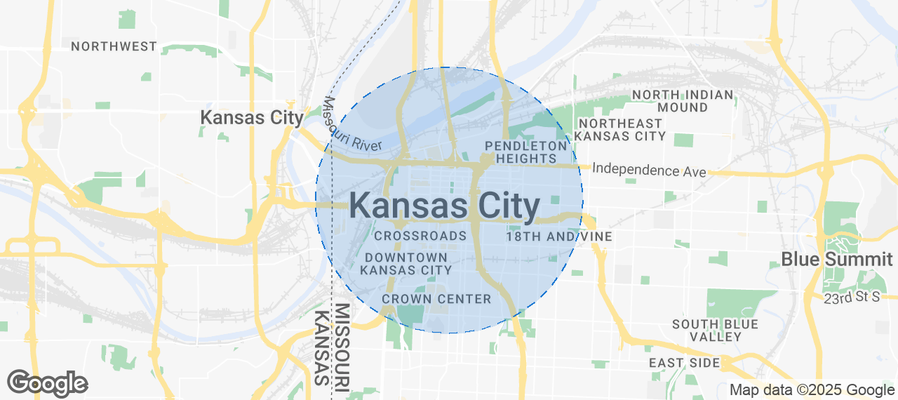 Browse the live Kansas City Airbnb market See Every Kansas City Listing
Revenue, occupancy and nightly rates are in the Kansas City Airbnb market report .
At a glance
Kansas City Airbnb Rules at a Glance
- Registration required
- Yes
- Taxes on a stay
- 16.475%
- Fine for hosting without a permit
- $1,000
- Listings showing a permit number
- 62%
- Latest rule change
- May 3, 2026
Listing figures: AirROI, 12 months to September 2026. A number on a listing doesn't prove the permit or license is valid, and a missing one doesn't prove there is none.
The rules in brief
The rules a Kansas City host meets first, each linked to the ordinance, statute or official page it comes from. Details and exceptions follow below.
| Topic | Rule |
|---|---|
| Permit | Registration required for stays under 30 nights14,15,23 |
| Who can host | Resident rentals: live in the home 270 days a year4,15 |
| Where | Non-resident rentals: commercial zones only13,15,23 |
| Building rules | Tenants need the owner's notarized consent13,16 |
| Minimum stay | 30-night threshold13 |
| Guests | Two guests per bedroom plus one, eight at most4,5 |
| Listing display | Registration number on every listing4,15,23 |
| Platforms | Platforms may not take payment for unregistered rentals4,5 |
| Safety | Detectors, fire extinguisher and emergency light4,5 |
| Neighbors | No party or event rentals4,5 |
Your home
Can You Host an Airbnb in Kansas City? It Depends on the Home
Whether you can host in Kansas City turns on whose home it is and whether you live there.
Your own home, where you live at least 270 days a year
AllowedRegister as a resident short-term rental for $200 a year. A resident rental is allowed in residential zones and is not subject to the zoning or 1,000-foot density limits; it still needs the tax account, an inspection and the registration number on the listing.13,14,15
A second home or investment property you don't live in, in a commercial zone
Allowed with conditionsAllowed as a non-resident rental if the zoning allows it, no other non-resident rental is within 1,000 feet (buildings of one or two units), the property receives no city incentive, and a named manager and business license or tax account are in place.13,15,16
A second home or investment property you don't live in, in a residential zone
Not allowedNot allowed for new registrations: non-resident rentals are prohibited in residentially zoned areas. A rental the city approved before June 15, 2023 can keep operating and renew its registration each year.13,15,23
Permit
Do You Need a Permit for Airbnb in Kansas City?
Yes. Short-term rental hosts in Kansas City need the short-term rental registration from the City of Kansas City, Neighborhood Services Department (applications through CompassKC). It costs $200 in the first year ($200 a year per rental for the registration. The city's 7.5% tax and $3-a-night fee are taxes on guest stays, not registration fees.) and $200 a year to renew.4,13,14,15,16,23
- Who needs it
- Every resident and non-resident owner or tenant renting a dwelling unit for fewer than 30 consecutive days, before the unit is advertised. Hotels and bed and breakfasts are exempt, as are stays of 30 nights or more.4,13,14,15,16,23
- Issued by
- City of Kansas City, Neighborhood Services Department (applications through CompassKC)
- Valid for
- One year from issue. Renewal applications are accepted from 30 days before expiry, and the registration cannot be transferred to a new owner.
- Processing
- The city reaches out within 7 to 10 business days of submission to schedule the inspection; approval follows the inspection and payment of the fee.
- On listings
- The number must appear on every listing
- Platform checks
- Airbnb asks hosts to add the registration number to the listing and confirm it on the listing's Regulations tab. City law bars booking platforms from taking payment for an unregistered rental, and the city publishes a list of registered rentals.
Fees
| Fee | Amount |
|---|---|
| Annual registrationCharged per dwelling unit once the application is reviewed and ready for approval; the same $200 applies to resident and non-resident rentals. | $200 |
Who qualifies
- Proof of possession of the property: a warranty deed, deed of trust, lease or other verification of the right to possess it; a registrant who does not own the home also needs the owner's notarized consent
- Resident rental: the registrant lives in the home as their primary residence at least 270 days a year and shows two proofs of residence (for example vehicle registration, tax return, voter registration or a utility bill)
- Non-resident rental: the home must be in a zoning district that allows it (commercial zones), at least 1,000 feet from another non-resident rental in buildings of one or two units, and under 12.5% of units registered in buildings of three or more
- Non-resident rental: no city incentive such as a tax abatement on the property, unless it was an approved non-owner-occupied rental before June 15, 2023, and a named person responsible for management
- One short-term rental on a parcel with only one principal dwelling unit; a separate application for each unit
- A Kansas City tax account for the rental and a tax clearance letter dated within 30 days of the application
How to apply
- Check the property's zoning, density and incentive status in the city's Parcel Viewer (needed for non-resident rentals).
- Open a short-term rental tax account for each rental address with the Revenue Division (Form RD-100, online at kcmo.gov/quicktax or at City Hall) and request a tax clearance letter.
- Gather the documents: proof of possession, proof of primary residence (resident) or the management control affidavit (non-resident), and the notarized registrant certification and owner affidavits.
- Apply through CompassKC under Permits, choosing the resident or non-resident short-term rental registration, and submit the documents.
- Wait for the city to contact you to schedule an inspection, then pay the $200 fee once the application is ready for approval.
- Add the registration number to every listing.
Applications go through the official application page .
Permit rules
- Registration required for stays under 30 nights
- Resident and non-resident owners must register a rental offered for fewer than 30 consecutive days with the city before listing it on Airbnb or Vrbo.14,15,23 In force since June 15, 2023
- Registration number on every listing
- Advertising a rental that is unregistered, or that does not show the city's registration number on the listing, is a violation. Airbnb asks hosts to add the number to the listing and confirm it on the Regulations tab.4,15,23
- Platforms may not take payment for unregistered rentals
- It is a violation for a booking platform to receive payment for a Kansas City short-term rental that is not registered. The city keeps a public list of registered rentals, and platforms must keep booking records for five years.4,5
- One-year term, renewal from 30 days before expiry
- A registration expires after one year. Renewal is a new application, accepted from 30 days before the end of the registration period, with a new inspection and fresh affidavits and tax clearance dated within 30 days.13,15
Who can host
Who Can Host an Airbnb in Kansas City, and Where
Missouri state law applies on top of Kansas City's own rules: the Missouri short-term rental regulations page covers the state license and what cities and counties can and can't regulate.
- Resident rentals: live in the home 270 days a year
- A resident short-term rental is one where the applicant lives in the home as their primary residence at least 270 days a year. It is allowed in residential zones and is not subject to the zoning or density limits.4,15 Applies to: resident rentals · In force since June 15, 2023
- Non-resident rentals: commercial zones only
- A rental the host does not live in is prohibited in residentially zoned areas and can operate only in commercially zoned areas. Rentals the city approved before June 15, 2023 are exempt and can continue.13,15,23 Applies to: non-resident rentals · In force since June 15, 2023
- 1,000-foot spacing and 12.5% building cap
- A non-resident rental in a building of one or two units cannot be within 1,000 feet of another registered non-resident rental. In a building of three or more units, fewer than 12.5% of the units may be used as short-term rentals.4,13 Applies to: non-resident rentals · In force since June 15, 2023
- No city incentives on non-resident rentals
- A property that receives city incentives, such as tax abatements, cannot qualify as a non-resident short-term rental while the incentive lasts.4,13 Applies to: non-resident rentals · In force since June 15, 2023
- Rentals approved before June 15, 2023 are exempt
- Properties that held a city approval before the June 15, 2023 ordinances are exempt from the zoning, density and incentive limits, but they must still register each year and register again if the property changes hands.13,14 Applies to: non-resident rentals · In force since June 15, 2023
- One rental per parcel with a single principal dwelling
- A parcel with only one principal dwelling unit can hold only one short-term rental, and each unit in a multi-unit building needs its own application.4,13,14
- Non-resident rentals need a named manager
- A non-resident registrant files a notarized affidavit naming a specific individual, with direct phone and email, who is responsible for managing the property, and must hold a Kansas City business license or active tax account for the rental.4,16 Applies to: non-resident rentals
Operating rules
Operating Rules for Kansas City Short-Term Rentals
- 30-night threshold
- The city defines a short-term rental as a rental of fewer than 30 consecutive days, unless it counts as lodging or a bed and breakfast. Stays of 30 nights or more fall outside the registration.13
- Non-resident manager inspects monthly
- The person with management control of a non-resident rental certifies that they will personally inspect the inside and outside of the home at least once a month during the registration period.4,5 Applies to: non-resident rentals
- Two guests per bedroom plus one, eight at most
- No more than two guests per rented bedroom plus one more per dwelling unit may stay at a time, up to a maximum of eight guests per dwelling unit.4,5
- Detectors, fire extinguisher and emergency light
- Registrants certify that the unit has smoke and carbon monoxide detectors, a working fire extinguisher and a battery-powered flashlight or other emergency light, and that contact and local emergency information is posted inside; units in multi-unit buildings also post an evacuation map at each exit door.4,5
- City inspection before approval
- The city inspects the unit before it approves a registration, and registrants agree to further inspections for fire, public safety, health and code compliance on reasonable notice. Registration approval and the fee follow the inspection.4,15
- No party or event rentals
- A short-term rental may not be rented or offered as a reception, party or meeting space for events open to non-resident guests.4,5
- Tax account and clearance letter first
- Each rental needs its own short-term rental tax account with the city's Revenue Division, and the registrant then obtains a tax clearance letter, dated within 30 days of the application, to submit with the registration.13,15,17
- Deregistration for one or three years
- The city can remove a rental from its list and bar it from registering again for one year after violations that impair public health, safety or welfare, and for three years after three or more violations that pose a present and pervasive threat.4,5
- Appeals go to the Property Maintenance Appeals Board
- A decision not to register, not to renew or to deregister a rental can be appealed to the city's Property Maintenance Appeals Board. The board takes appeals filed within 10 calendar days of the notice, with a $50 non-refundable filing fee.13,15
- Major event registration, up to 90 days for $50
- The city can designate a major event period of up to 90 days during which hosts may register for a $50 major event registration instead of the annual $200. The first one, for the 2026 World Cup, ran May 3 to July 31, 2026 and has ended; the standard eligibility rules still applied.4,18 In force since November 13, 2025
- Nightly rentals and cleaning fees are subject to sales tax
- Missouri's Department of Revenue treats nightly rentals of homes offered to the public, along with cleaning and service fees, as taxable sales; stays of 31 or more days are exempt.9
Taxes
How Much Are Airbnb Taxes in Kansas City?
About 16.5% of the price of a stay in the Jackson County part of the city (8.975% sales tax plus the 7.5% city tax), plus $3 per occupied room per night. Sales tax is 8.725% in the Clay and Platte County parts and higher in some special districts.
- Median nightly rate, booked nights
- $165
- Taxes on that night (16.475%)
- $27
- Guest pays, before Airbnb and cleaning fees
- $192
| Tax | Rate | Collected by |
|---|---|---|
| Missouri state sales tax 4.225% of the listing price, including cleaning fees, on stays of 29 nights or fewer | 4.225%8,9,24 | Airbnb |
| City, county and district sales taxes Local sales tax brings the combined sales tax to 8.975% in the Jackson County part of Kansas City, 8.725% in the Clay and Platte County parts and 9.1% in the Cass County part; special districts add more | —19,24 | Airbnb |
| Kansas City Transient Boarding and Accommodation Tax 7.5% of the full price paid by the guest; platforms do not withhold it, so the host collects and remits it quarterly | 7.5%6,17,18,21 | Host |
| Kansas City short-term rental occupancy fee $3.00 per occupied room per night, filed on the same quarterly Form RD-306 as the 7.5% tax | $3 a night7,17,18,21 | Host |
At Kansas City's median booked rate of $165 a night, the taxes collected on a booking come to about $27 a night.
What the host still handles
- A Kansas City short-term rental tax account for each rental address with the Revenue Division (Form RD-100, online at kcmo.gov/quicktax or at City Hall, 414 E. 12th St., 1st Floor), which also produces the tax clearance letter the registration requires
- Quarterly Form RD-306 returns for the 7.5% tax and the $3 occupancy fee, due April 30, July 31, October 31 and January 31 and filed online, even in a quarter when no payment is due
- A Missouri sales tax account with the Department of Revenue (MyTax Missouri or Form 2643), because the Department treats the host as the seller of the room on third-party booking sites6,7,8,10,11,17,18,19,21,24
Fines
How to Avoid Airbnb Fines in Kansas City
Fines in Kansas City fall on hosting without the short-term rental registration, or outside the rules above. With it in hand and the rules followed, none of the fines below apply.
- Operating without a registration: a fine of $200 to $1,000 per violation, with each day counted as a separate violation. The code also allows up to 180 days in jail, or both a fine and jail.4,13
- Deregistration: after violations that impair public health, safety or welfare, a rental can be removed from the city's list and barred from registering for one year, or for three years after three or more violations that pose a present and pervasive threat.4
- Booking platforms: it is a violation for a platform to receive payment for a Kansas City short-term rental that is not registered, which is the city's lever for delisting unregistered rentals.4
- Late city tax return: 5% of the tax for the first month, plus 5% for each further month, up to 25%; late payment adds 5% of the deficiency, and willful failure to collect or remit carries a penalty equal to the tax.6
- Late $3 occupancy fee: a 10% penalty for the first month and 2% for each month after, capped at 30% of the fee, plus interest.7
Changes
What's Changed in Kansas City's Airbnb Rules
No change was scheduled when the rules were checked on October 17, 2026; the most recent are listed first.
- May 3, 2026
- November 13, 2025
- August 1, 2023
- June 15, 2023Registration moves to Neighborhood Services; resident and non-resident rentals
Ordinances 230267 and 230268 took effect: registration moved to the Neighborhood Services Department, rentals were split into resident and non-resident, and non-resident rentals were barred from residential zones, with spacing and incentive limits.5,13
- April 2023
Listing data
What Kansas City's Listings Show
AirROI, a short-term-rental data firm, counted 1,340 active Airbnb listings in Kansas City over the 12 months to September 2026. 62% of them displayed a permit, license or registration number.
Minimum stay set on Kansas City listings
Share of active listings by the shortest stay they accept
Minimum stay in numbers
| Shortest stay accepted | Share of listings |
|---|---|
| 1 night | 25% |
| 2 nights | 31% |
| 3 nights | 5% |
| 4–6 nights | 3% |
| 7–29 nights | 10% |
| 30+ nights | 27% |
What officials report
- 245
- Short-term rental reports to Kansas City 311, 2025 · as of December 2025The city's 311 system logged 245 short-term rental cases opened in 2025, down from 678 in 2024 and 436 in 2023.20
- 238
- Short-term rental reports to Kansas City 311, 2026 to date · as of October 10, 2026The city's 311 system had logged 238 short-term rental cases opened in 2026 as of October 10, 2026.20
Earnings
What Could a Kansas City Short-Term Rental Earn?
The rules shape the numbers: a registration that costs $200 in the first year and taxes of 16.475% added to guests' bills. For a specific address, the short-term rental calculator estimates revenue, occupancy and nightly rate from comparable listings, so you can test the numbers before applying.
FAQ
Kansas City Airbnb Rules: Frequently Asked Questions
Is Airbnb legal in Kansas City?
Do I need a permit for Airbnb in Kansas City?
How much is the Kansas City short-term rental registration?
Can I rent a home I don't live in?
Only in a commercially zoned area, with no other non-resident rental within 1,000 feet (buildings of one or two units) or fewer than 12.5% of units registered (three or more units), and no city incentives on the property. Rentals the city approved before June 15, 2023 are exempt from these limits.4,13,15
Does Airbnb collect hotel tax in Kansas City?
What is the total tax on an Airbnb stay in Kansas City?
What is the fine for operating without a registration?
Is there a limit on how many nights I can host?
The registration article sets no annual cap on rental nights. The limits are who can host (resident or non-resident), zoning and density for non-resident rentals, and a maximum of eight guests.4
How many guests can I have?
Two guests per rented bedroom plus one more per dwelling unit, up to eight guests at a time.4
Do I need to show my registration number on my Airbnb listing?
How long does registration take, and what do I need first?
Can I transfer my registration if I sell the property?
How many Kansas City Airbnbs are registered?
In AirROI's listing data, 62% of the 1,340 Kansas City Airbnb listings active in the 12 months to September 2026 displayed a permit, license or registration number. A number on a listing shows the host entered one; it doesn't confirm the permit is valid.
How much does an Airbnb make in Kansas City?
The average Kansas City listing earned $31,100 in the 12 months to September 2026, according to AirROI, averaged across every active listing including those booked for only part of the year. The Kansas City Airbnb market report breaks it down by month, property size and neighborhood.
Method
How These Rules Were Checked
Each rule on this page was checked in October 2026 against the official source cited beside it: the ordinance or statute, the permit office's own pages and the tax authority. Airbnb's help pages are cited on their own only for what Airbnb itself does, such as the taxes it collects and the permit checks it runs, and otherwise only beside an official source; news reports only for when a change was announced. Rules that could not be confirmed on an official page are left out. Several kcmo.gov pages (the program page, the tax FAQ and the news item) were read from Internet Archive copies dated April to September 2026, and the tax guide from a copy dated December 2025; the codified article on Municode was read in a browser and compared with the City Clerk's ordinance text.
Rules change with council votes, court rulings and new state laws, so the page is rechecked every three months and whenever a scheduled change takes effect. It summarizes the rules for information and is not legal advice; the local authority has the final word on any application.
Listing figures come from AirROI's tracking of 1,340 active Kansas City Airbnb listings over the 12 months to September 2026.
Sources
Sources
Each rule above links to the source it comes from. Official ordinances, statutes and government pages come first, then Airbnb's own help pages.
- 1. RSMo Section 315.005 - Definitions (lodging establishments) · Missouri Revisor of Statutes
- 2. RSMo Section 315.011 - License required · Missouri Revisor of Statutes
- 3. 16 CFR Part 464 - Rule on Unfair or Deceptive Fees · Electronic Code of Federal Regulations
- 4. Ordinance 250965 - Short-term rental registration, Chapter 56, Article VIII (full text) · Kansas City City Clerk
- 5. Code of Ordinances, Chapter 56, Article VIII - Short-Term Rental Registration · Kansas City, MO (Municode)
- 6. Ordinance 230364 - Transient Boarding and Accommodation Tax · Kansas City City Clerk
- 7. Ordinance 230363 - Occupancy fee for short-term rental units (Sec. 40-168) · Kansas City City Clerk
- 8. Sales/Use Tax · Missouri Department of Revenue
- 9. Vacation Home Rentals Tax Matrix (industry guidance) · Missouri Department of Revenue
- 10. Hotels: courtesy letter on room-rental sales tax (December 17, 2024) · Missouri Department of Revenue
- 11. Business Tax Registration · Missouri Department of Revenue
- 12. The Rule on Unfair or Deceptive Fees: Frequently Asked Questions · Federal Trade Commission
- 13. Short-Term Rental (STR) · City of Kansas City
- 14. Obtain A Short Term Rental Registration · KC BizCare (City of Kansas City)
- 15. Short-Term Rentals · KC BizCare (City of Kansas City)
- 16. Short Term Rental Checklist · KC BizCare (City of Kansas City)
- 17. Short-Term Rental (STR) Tax FAQ · City of Kansas City Finance Department
- 18. KC Opens Applications for Major Event Short-Term Rentals · City of Kansas City, City News
- 19. Sales and Use Tax Rate Tables, October-December 2026 · Missouri Department of Revenue
- 20. STR Reported Issues (311 short-term rental cases) · Open Data KC (City of Kansas City)
- 21. Tax Guide for Short-Term Rentals · City of Kansas City Finance Department
- 22. Responsible hosting in the United States · Airbnb Help Center
- 23. Kansas City, MO · Airbnb Help Center
- 24. Occupancy tax collection and remittance by Airbnb in Missouri · Airbnb Help Center