Local Airbnb rules2026 16 sources cited
Is Airbnb Legal in Cleveland? 2026 Rules, Permits & Taxes
Yes. Cleveland requires a $150 annual short-term rental license from November 28, 2026, with a 10% per-block cap and a $5,000 fine for operating without one; until then residence districts allow only a primary residence to host, under 91 days a year.4,6,11,15
From 15 official sources and 1 Airbnb help page. Not legal advice.
The short answer
Cleveland Airbnb Rules in Brief
- From November 28, 2026: $150 a year license and $500,000 of liability insurance for every rental.
- Density limit: one home or 10% of the units on a block or in a multi-unit building, whichever is greater.
- Until then: only in a primary residence in a residence district, fewer than 91 days a year, and no guest over 30 consecutive days.
- Fines start at $5,000 for operating without a license; Airbnb collects 9.5% lodging tax (3% city plus 6.5% county).
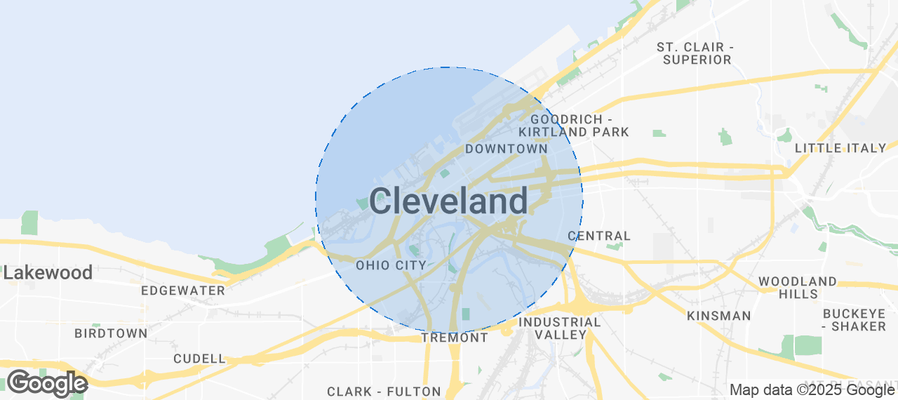 Browse the live Cleveland Airbnb market See Every Cleveland Listing
Revenue, occupancy and nightly rates are in the Cleveland Airbnb market report .
At a glance
Cleveland Airbnb Rules at a Glance
- License required
- Yes
- Taxes on a stay
- 9.5%
- Yearly night cap
- 91 nights
- Fine for hosting without a permit
- $5,000
- Active Airbnb listings
- 1,840
- Next rule change
- Nov 28, 2026
The rules in brief
The rules a Cleveland host meets first, each linked to the ordinance, statute or official page it comes from. Details and exceptions follow below.
| Topic | Rule |
|---|---|
| Permit | License required from Nov 28, 20264,6,15 |
| Who can host | Until Nov 28, 2026: primary residences only3 |
| Where | 10% of homes per block or building4,6,15 |
| Building rules | Tenants need a lease that allows subleasing6,15 |
| Night cap | Until Nov 28, 2026: fewer than 91 days a year3,4,15 |
| Guests | Two guests per bedroom plus two4 |
| Listing display | License posted at the main entrance4,6,15 |
| Platforms | Booking platforms must register with the city4,6,15 |
| Safety | Smoke alarms, CO detector and fire extinguisher6,15 |
| Insurance | $500,000 liability insurance4,6,15 |
| Neighbors | Local contact within one hour4 |
Your home
Can You Host an Airbnb in Cleveland? It Depends on the Home
Whether you can host in Cleveland turns on whose home it is and whether you live there.
Your own home, rented whole while you're away
Allowed with conditionsUntil November 28, 2026 a home in a residence district that is your primary residence (you live there more than 51% of the year) can host fewer than 91 days a year. From that date it needs the $150 license, $500,000 of insurance and a local contact, and it must fit the density limit for its block.3,4
A second home or investment property you don't live in
Allowed with conditionsNot before November 28, 2026 in a residence district: today's limited-lodging rule allows rentals only in the host's primary residence. From that date the new chapter does not require the owner to live in the home: the owner or a designated local responsible party can hold the license, and the home needs a place under the 10% block limit.3,4,6,15
A home already rented lawfully under the 91-day rule
Allowed with conditionsA home operated for at least one year before November 28, 2026 in full compliance, with no recorded complaints, is exempt from the density limit but must still apply for the license.4
Permit
Do You Need a Permit for Airbnb in Cleveland?
Yes. Short-term rental hosts in Cleveland need the short-term rental license from the City of Cleveland, Commissioner of Assessments and Licenses (Department of Finance). It costs $150 in the first year (Up to $150 for the first license (prorated from the month of issuance to November 30) and $150 for each yearly renewal, plus the cost of $500,000 of liability insurance.) and $150 a year to renew.4,6,11,15
- Who needs it
- Every owner or operator who rents a dwelling unit for stays of 30 consecutive days or fewer, from November 28, 2026. An owner, or a tenant with written authorization, may hold it.4,6,11,15
- Issued by
- City of Cleveland, Commissioner of Assessments and Licenses (Department of Finance)
- Valid for
- Each license runs from December 1 to November 30; renewal applications are filed between September 1 and November 1, and a license cannot be transferred to another person or home.
- Processing
- The ordinance sets no processing time; the application is verified by Building and Housing, City Planning, Public Health and Public Safety before the Commissioner issues the license.
- On listings
- No number needed on listings
- Platform checks
- Booking platforms must register with the city, may not complete a reservation for an unlicensed rental and must comply with the city's lodging tax chapter; the license itself is posted inside the home.
Fees
| Fee | Amount |
|---|---|
| ApplicationApplication fee for the first license; the first licensing year's fee is prorated from the month of issuance to November 30. | $150 |
| Annual renewalRenewal fee, filed between September 1 and November 1 of the year the license expires. | $150 |
Who qualifies
- Within the density limit: at least one home or 10% of the units on the block or in a multi-unit building, unless the Board of Zoning Appeals grants a variance
- Held by the owner, or by a tenant whose lease allows subleasing, or by a designated local responsible party
- The dwelling meets all health, fire, safety and building code standards and has a certificate of occupancy and lead-safe certification
- Real estate taxes and transient occupancy taxes are paid as of the application date
- Liability insurance of at least $500,000, a floor plan, a parking plan and a local contact reachable within one hour
How to apply
- Count the short-term rentals on the block or in the building to confirm the home fits the 10% density limit, or plan a Board of Zoning Appeals variance.
- Gather the floor plan, parking plan, proof of $500,000 liability insurance, certificate of occupancy, lead-safe certification, proof that taxes are paid and the local contact's details.
- Apply on the form the Commissioner of Assessments and Licenses supplies; the Division's licenses office is at (216) 664-2264 or dallicenses@clevelandohio.gov.
- After the license issues, post it inside the main entrance, give guests the local contact's name and number and notify neighboring properties in writing.
Applications go through the official application page .
Permit rules
- License required from Nov 28, 2026
- From November 28, 2026 every short-term rental in Cleveland must hold a city license issued by the Commissioner of Assessments and Licenses; renting a dwelling for stays of 30 consecutive days or fewer without one is a violation.4,6,15 Takes effect November 28, 2026
- New chapter starts November 28, 2026
- Ordinance 561-2026 passed on June 1, 2026, and its short-term rental chapter (Chapter 686B) takes effect 180 days after passage, on November 28, 2026.1,4,5 Takes effect November 28, 2026
- License year runs December 1 to November 30
- A license is valid for one year from December 1 to November 30, the fee for the first licensing year is prorated from the month of issuance, renewals are filed between September 1 and November 1, and a license cannot be transferred to another person or home.6,15 Takes effect November 28, 2026
- Application proofs: taxes, occupancy and lead safety
- An application includes proof that real estate taxes and transient occupancy taxes are paid, a certificate of occupancy for the home, proof the dwelling is certified lead safe, a floor plan and a parking plan.6,15 Takes effect November 28, 2026
- Four city departments review each application
- The Commissioner sends each application to Building and Housing, City Planning, Public Health and Public Safety and notifies the ward's council member; no license issues unless the home meets health, fire, safety and building code standards, and a denial can be appealed to the Board of Zoning Appeals within 10 days.4,6,15 Takes effect November 28, 2026
- License posted at the main entrance
- The license is displayed inside the main entrance of the rental, and no one may advertise, offer or complete a reservation for a rental without a license.4,6,15 Takes effect November 28, 2026
- Booking platforms must register with the city
- Booking agents, such as Airbnb, register with the Commissioner and name a person who accepts legal notices, handles lodging tax remittance and acts on violations; no booking agent may complete a reservation for an unlicensed rental.4,6,15 Takes effect November 28, 2026
Who can host
Who Can Host an Airbnb in Cleveland, and Where
Ohio state law applies on top of Cleveland's own rules: the Ohio short-term rental regulations page covers the state license and what cities and counties can and can't regulate.
- Until Nov 28, 2026: primary residences only
- Until the new chapter starts, limited lodging in a residence district must be accessory to the home's use as a primary residence: the host is the titled owner, or a tenant authorized by the owner, who lives in the home more than 51% of the year. A home nobody lives in does not qualify; while it remains the owner's primary residence it needs no rental registration certificate.3
- Owner, or tenant with written authorization
- An owner may operate a short-term rental, and so may a tenant who has written authorization through a lease; the license holder may be the owner or a designated local responsible party who manages the rental.4 Takes effect November 28, 2026
- Tenants need a lease that allows subleasing
- A tenant applying for a license shows a valid lease that allows subleasing, and a lease that prohibits subleasing is grounds for denial.6,15 Takes effect November 28, 2026
- Allowed in one-family districts, within a density limit
- Short-term rentals are allowed in one-family residential districts, subject to the density limitation.4 Takes effect November 28, 2026
- 10% of homes per block or building
- In a residential district, short-term rentals are limited to at least one home or 10% of the residential units on the block or in a multi-unit building (a building with three or more dwelling units), whichever is greater.4,6,15 Takes effect November 28, 2026
- Variance to exceed the cap
- A host who would exceed the density limit applies to the Board of Zoning Appeals for a variance, and the rental still needs a license; operating over the limit without a variance carries a $5,000 civil fine.4 Takes effect November 28, 2026
- Existing compliant rentals skip the density cap
- A home operated as limited lodging for at least one year before the effective date, always in full compliance with Section 337.251 (fewer than 91 days a year, no guest over 30 consecutive days and the section's standards, including use as a primary residence) and with no recorded complaints, is not subject to the density limit, but it must still be licensed.4,15 Takes effect November 28, 2026
Operating rules
Operating Rules for Cleveland Short-Term Rentals
- Stays of 30 nights or fewer count
- A short-term rental is the temporary rental of a dwelling unit, by the owner, an operator or through a booking agent, where no guest stays more than 30 consecutive days; a dwelling rented for longer is a long-term rental.4 Takes effect November 28, 2026
- Until Nov 28, 2026: fewer than 91 days a year
- Until the new chapter starts, limited lodging in a residence district (Code section 337.251) is allowed for fewer than 91 days a calendar year and no more than 30 consecutive days to any guest. Ordinance 561-2026 repeals that section on November 28, 2026.3,4,15
- $500,000 liability insurance
- The license application includes proof of liability insurance of at least $500,000, either for the rental itself or under a booking agent's policy that names the owner or operator.4,6,15 Takes effect November 28, 2026
- Local contact within one hour
- Every rental has a local contact who answers complaints, is reachable at all times while guests are staying and can be at the property within one hour; guests receive the contact's name and number.4 Takes effect November 28, 2026
- Written notice to neighbors
- After the license is issued and before the first guests arrive, the host gives adjacent residential properties written notice of the local contact's name and phone number.4 Takes effect November 28, 2026
- Two guests per bedroom plus two
- The maximum number of people allowed overnight is two per bedroom plus two more.4 Takes effect November 28, 2026
- Smoke alarms, CO detector and fire extinguisher
- Every short-term rental must have working smoke alarms by each sleeping area, a carbon monoxide detector and an A/B/C fire extinguisher in the kitchen, all maintained to code.6,15 Takes effect November 28, 2026
- Three nuisance events in 12 months revoke the license
- A license is revoked after three nuisance activities within 12 months or after one serious incident, including an offense of violence, without a conviction or arrest; the owner can re-apply for the same property one year after a sustained revocation.4 Takes effect November 28, 2026
- Rental registration and tax abatement
- A home operating as a short-term rental does not need the city's rental registration certificate (otherwise $70 per unit for non-owner-occupied homes) but is not eligible for tax abatement.4,10 Takes effect November 28, 2026
- Discrimination is prohibited
- Hosts may not decline a guest, set different terms or advertise a preference based on race, religion, color, sex, sexual orientation, gender identity, national origin, age, disability, ethnic group or veteran status.6,15 Takes effect November 28, 2026
Taxes
How Much Are Airbnb Taxes in Cleveland?
9.5% on the nightly price and cleaning fee: 3% Cleveland transient occupancy tax plus 6.5% Cuyahoga County bed tax, both collected by Airbnb on stays of 29 nights or fewer.
- Median nightly rate, booked nights
- $140
- Taxes on that night (9.5%)
- $13
- Guest pays, before Airbnb and cleaning fees
- $153
| Tax | Rate | Collected by |
|---|---|---|
| Cleveland transient occupancy tax 3% of the listing price including any cleaning fee, for stays of 29 nights and shorter | 3%7,16 | Airbnb |
| Cuyahoga County bed tax 6.5% of the listing price including cleaning fees, for stays of 29 nights and shorter | 6.5%8,16 | Airbnb |
| Ohio state sales tax on hotel lodging 5.75% of the room price, only at hotels (establishments with five or more guest rooms) | 5.75%2,9 | Host |
At Cleveland's median booked rate of $140 a night, the taxes collected on a booking come to about $13 a night.
What the host still handles
- Cleveland transient occupancy tax returns filed with the Division of Assessments and Licenses for bookings made outside Airbnb, due on or before the last day of the month after the stay
- Registration through Cuyahoga County's online lodging-tax portal before filing bed tax returns for bookings Airbnb does not collect
- The Cleveland short-term rental license from November 28, 2026
- State sales tax registration only if the property has five or more guest rooms and so counts as a hotel under the Ohio Revised Code2,7,8,9,16
Fines
How to Avoid Airbnb Fines in Cleveland
Fines in Cleveland fall on hosting without the short-term rental license, or outside the rules above. With it in hand and the rules followed, none of the fines below apply.
- From November 28, 2026, operating a short-term rental without a license carries a $5,000 civil fine; advertising without a license is $1,000 per violation, and each day of advertising counts separately.4,6,15
- Operating over the density limit without a variance carries a $5,000 civil fine.4
- Breaking the operating standards, such as the guest limit, costs $1,000 for a first offense and $3,000 for a second or later offense.4
- Failing to display the license inside the main entrance is $1,000 per violation, and each day is a separate violation.4,6,15
- A booking platform that fails to register with the city is fined $1,500 for each year of non-compliance.4
- Operating without a license or without a variance is also a first-degree misdemeanor, with a fine of up to $1,000, up to six months in jail, or both.4,6,15
- A license is revoked after three nuisance activities in 12 months, or after one occurrence of a listed disorderly, weapons or violent offense; the city may revoke the owner's other short-term rental licenses too.4
Changes
What's Changed in Cleveland's Airbnb Rules, and What's Next
2 changes are scheduled after October 20, 2026; the most recent rules are listed first.
- December 1, 2026 Upcoming
- November 28, 2026 Upcoming
- June 1, 2026
- April 27, 2026 Lapsed
- February 18, 2025 Not in force
- May 20, 2024 Not in forceFirst short-term rental ordinance proposed
Ordinance 588-2024, the first version of a short-term rental chapter for Cleveland, was read and referred to administrative review on May 20, 2024.12
Earnings
What Could a Cleveland Short-Term Rental Earn?
The rules shape the numbers: a license that costs $150 in the first year, a cap of 91 nights a year and taxes of 9.5% that Airbnb adds to guests' bills. For a specific address, the short-term rental calculator estimates revenue, occupancy and nightly rate from comparable listings, so you can test the numbers before applying.
FAQ
Cleveland Airbnb Rules: Frequently Asked Questions
Is Airbnb legal in Cleveland?
Do I need a permit for Airbnb in Cleveland?
How much is the Cleveland short-term rental license?
Can I rent a home I don't live in?
Not until November 28, 2026 in a residence district, where today's rule allows rentals only in the host's primary residence. From that date, yes: the owner or a designated local responsible party can hold the license, so the owner need not live there, but the home must fit within the 10% block limit and be licensed.3,4,6,15
Can a tenant run an Airbnb in Cleveland?
Does Airbnb collect hotel tax in Cleveland?
What is the total lodging tax on a Cleveland Airbnb stay?
What is the fine for operating without a license?
Is there a limit on how many nights I can host in Cleveland?
Until November 28, 2026, a residence-district home can host fewer than 91 days a year, only as the host's primary residence, and no guest more than 30 consecutive days. The new chapter drops the 91-day cap and the primary-residence condition but keeps the 30-day maximum stay and adds a density limit.3,4
How many Airbnbs can a Cleveland block have?
At least one, or 10% of the residential units on the block or in a multi-unit building, whichever is greater. A host above the limit needs a Board of Zoning Appeals variance, and homes rented lawfully for a year before November 28, 2026 are exempt from the limit.4
How many guests can stay in a Cleveland short-term rental?
Do I need to show a license number on my Airbnb listing?
How many Cleveland Airbnbs are registered?
In AirROI's listing data, 0% of the 1,840 Cleveland Airbnb listings active in the 12 months to September 2026 displayed a permit, license or registration number. A number on a listing shows the host entered one; it doesn't confirm the permit is valid.
How much does an Airbnb make in Cleveland?
The average Cleveland listing earned $20,400 in the 12 months to September 2026, according to AirROI, averaged across every active listing including those booked for only part of the year. The Cleveland Airbnb market report breaks it down by month, property size and neighborhood.
Method
How These Rules Were Checked
Each rule on this page was checked in October 2026 against the official source cited beside it: the ordinance or statute, the permit office's own pages and the tax authority. Airbnb's help pages are cited on their own only for what Airbnb itself does, such as the taxes it collects and the permit checks it runs, and otherwise only beside an official source; news reports only for when a change was announced. Rules that could not be confirmed on an official page are left out. The Cleveland Code of Ordinances pages on American Legal Publishing (Chapter 686B and Section 337.251) were read in a browser, and Ordinance 561-2026 was checked against its passed text in the City Record of June 12, 2026 as well as the as-amended desk copy.
Rules change with council votes, court rulings and new state laws, so the page is rechecked every three months and whenever a scheduled change takes effect. It summarizes the rules for information and is not legal advice; the local authority has the final word on any application.
Listing figures come from AirROI's tracking of 1,840 active Cleveland Airbnb listings over the 12 months to September 2026.
Sources
Sources
Each rule above links to the source it comes from. Official ordinances, statutes and government pages come first, then Airbnb's own help pages.
- 1. Chapter 686B - Short-Term Rentals · Cleveland Code of Ordinances (American Legal Publishing)
- 2. Ohio Revised Code Section 5739.01 - Definitions · Ohio Laws and Administrative Rules
- 3. Section 337.251 - Limited Lodging in Residence Districts · Cleveland Code of Ordinances (American Legal Publishing)
- 4. Ordinance 561-2026 Legislative Summary · Cleveland City Council
- 5. Ordinance 561-2026 - Short-Term Rentals (legislation details) · Cleveland City Council
- 6. Ordinance 561-2026 as amended (desk copy) · Cleveland City Council
- 7. Excise Tax Administration · City of Cleveland Division of Assessments and Licenses
- 8. Lodging Occupancy Tax · Cuyahoga County Fiscal Office
- 9. Sales and Use - General Information · Ohio Department of Taxation
- 10. Rental Registration · City of Cleveland Division of Records Administration
- 11. Licenses & Permits · City of Cleveland Division of Assessments and Licenses
- 12. Ordinance 588-2024 - Short-Term Rentals (legislation details) · Cleveland City Council
- 13. Senate Bill 104, 136th General Assembly · Ohio Legislature
- 14. House Bill 109, 136th General Assembly · Ohio Legislature
- 15. The City Record, June 12, 2026 (passed text of Ordinance 561-2026, pages 56 to 73) · Cleveland City Council
- 16. Occupancy tax collection and remittance by Airbnb in Ohio · Airbnb Help Center