Local Airbnb rules2026 31 sources cited
Is Airbnb Legal in Charleston? 2026 Rules, Permits & Taxes
Airbnb is legal in Charleston only in the host's own home: the owner must live there, hold a city permit and business license, and host up to four adults. Investor rentals are limited to a small commercial overlay. Taxes total 14%.1,8,9,11,12,14,21
From 30 official sources and 1 Airbnb help page. Not legal advice.
The short answer
Charleston Airbnb Rules in Brief
- The owner must live there: 183 days a year, a home taxed at the 4% rate, and overnight on site during stays.
- A city permit and business license are required: $345 zoning review plus $105.22 in fire fees, and a license from $64; both renew yearly.
- Up to four adults per stay, for 1 to 29 nights, with one extra off-street parking space.
- Investor-owned homes qualify only on commercially zoned lots in the Short Term Rental Overlay; guest taxes total 14%.
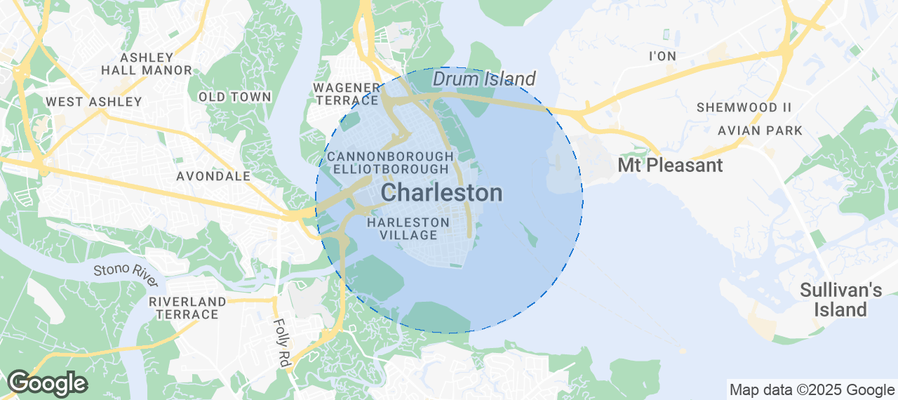 Browse the live Charleston Airbnb market See Every Charleston Listing
Revenue, occupancy and nightly rates are in the Charleston Airbnb market report .
At a glance
Charleston Airbnb Rules at a Glance
- Permit required
- Yes
- Taxes on a stay
- 14%
- Yearly night cap
- 72 nights
- Fine for hosting without a permit
- $2,000
- Active Airbnb listings
- 1,940
- Latest rule change
- Jan 1, 2024
The rules in brief
The rules a Charleston host meets first, each linked to the ordinance, statute or official page it comes from. Details and exceptions follow below.
| Topic | Rule |
|---|---|
| Permit | Permit and business license both required12,14 |
| Who can host | Owner must live on site1,11 |
| Where | Commercial rentals only in the Short Term Rental Overlay3,8 |
| Building rules | Recorded covenants must allow rentals11 |
| Night cap | No city night cap, but a 72-day property tax threshold20,21 |
| Minimum stay | Short-term means fewer than 30 nights2,13 |
| Guests | Up to four adults2,10 |
| Listing display | Permit number in every listing1,11,13 |
| Platforms | Airbnb collects state and local lodging taxes13,31 |
| Safety | Fire Marshal review and inspection11,28 |
| Insurance | $1,000,000 liability policy1,11 |
| Neighbors | Reachable by phone around the clock1,11 |
Your home
Can You Host an Airbnb in Charleston? It Depends on the Home
Whether you can host in Charleston turns on whose home it is and whether you live there.
Your own home, renting a room or part of it while you sleep there
Allowed with conditionsAllowed with a city permit and business license, if you are the record owner, live in the home at least 183 days a year with the 4% tax rate, and host no more than four adults; Categories 1 and 2 add historic-listing and building-age tests on the peninsula.1,8,10,11
A condo or HOA community
Allowed with conditionsAllowed only if no recorded covenant or association rule prohibits short-term rental; the application asks about covenants, and the owner-occupancy rules still apply.11
Permit
Do You Need a Permit for Airbnb in Charleston?
Yes. Short-term rental hosts in Charleston need the short-term rental Operational permit from the City of Charleston Department of Planning, Preservation & Sustainability (Zoning), with Fire Marshal inspection and Revenue Collections for the business license. It costs $514.22 in the first year (A one-home host pays $514.22 in fixed city fees in the first year ($345 zoning review, $105.22 in fire fees and the $64 business license base), plus $3.90 per $1,000 of expected rental income.).1,8,9,11,12,14,21
- Who needs it
- Every host renting a dwelling or room for fewer than 30 consecutive days, and only the record owner who lives in the home (or the owner of a commercially zoned lot in the Short Term Rental Overlay) can qualify.1,8,9,11,12,14,21
- Issued by
- City of Charleston Department of Planning, Preservation & Sustainability (Zoning), with Fire Marshal inspection and Revenue Collections for the business license
- Valid for
- The Certificate of Operation expires one year after it is issued and must be renewed before then; the city business license expires every April 30.
- Processing
- Posting for 15 calendar days, then a five-business-day appeal period, then Fire Marshal review and inspection before the permit is issued.
- On listings
- The number must appear on every listing
- Platform checks
- The city enforces the permit-number rule itself: advertising a unit without a permit, or without the permit number in the ad, is a code violation.
Fees
| Fee | Amount |
|---|---|
| Zoning and application reviewFee for applications submitted before January 1, 2024. | $200 |
| Zoning and application reviewCollected when the application is submitted; non-refundable. | $345 |
| Fire inspection applicationCollected when the permit is received. | $40 |
| Fire plan reviewCollected when the permit is received. | $32.61 |
| Fire inspectionCollected when the permit is received. | $32.61 |
| City business license, base feePlus $3.90 per additional $1,000 of expected income; collected when the permit is received. | $64 |
Who qualifies
- The applicant is the record owner and a resident: lives at the property at least 183 days a year, uses it as the voting and driver's license address, and has it assessed at the 4% owner-occupied rate
- The owner stays overnight at the property while guests are present
- One STR unit per property, with one extra off-street parking space
- Category 1 (Old and Historic District): a building individually listed on the National Register of Historic Places
- Category 2 (rest of the peninsula): a building constructed 50 or more years ago
- Category 3 (off the peninsula, including West Ashley, Johns Island, James Island and Daniel Island): no building-age test
- Commercial permit: a commercially zoned lot in the Short Term Rental Overlay, with no 4% or primary-residence test
- No recorded covenant prohibiting short-term rental, and no STR permit revoked in the previous 24 months
How to apply
- Confirm the home qualifies: you own it, live in it, it receives the 4% Legal Residence assessment, and it fits Category 1, 2 or 3 (or is a commercially zoned lot in the Short Term Rental Overlay).
- Get the 4% verification: in Charleston County, file the Assessor's Short Term Rental Certificate; in Berkeley County, obtain a letter of verification from the Assessor.
- Submit the notarized Residential STR Application with a site plan, floor plans, photographs, a copy of your driver's license and the fee, through the Customer Self Service portal or the Permit Center at 2 George Street; send the business license application to Revenue Collections separately.
- The property is posted for 15 calendar days, followed by a five-business-day appeal period.
- Complete the Fire Marshal self-survey, submit smoke alarm documentation and pass the Fire Safety inspection.
- Pay the remaining fees and collect the Certificate of Operation and business license, then list the home with the last five digits of the permit number in the description.
Applications go through the official application page .
Permit rules
- Permit and business license both required
- A short-term rental needs a City of Charleston Short Term Rental permit and a business license, and the home may not be advertised or operated until both are issued.12,14 In force since July 10, 2018
- Business license renews every April 30
- The business license costs $64 plus $3.90 per $1,000 of expected income and expires on April 30 each year; the fee is due May 1 and late payment adds 5% in the first month.9,15
- Permit expires after one year
- The Certificate of Operation lasts one year from issuance and needs a renewal application, which also issues a new permit number and an updated business license.11
- Permit number in every listing
- List the last five digits of the Operational Permit number in the property description of every listing, and post the business license number in the unit and in all advertisements.1,11,13
- No advertising until approved
- A home may not be advertised or operated until all approvals and inspections are complete, the fees are paid, and the Certificate of Operation and business license have been issued.1,12
Who can host
Who Can Host an Airbnb in Charleston, and Where
South Carolina state law applies on top of Charleston's own rules: the South Carolina short-term rental regulations page covers the state license and what cities and counties can and can't regulate.
- Owner must live on site
- The record owner must run the rental, live at the property at least 183 days a year, and sleep there overnight while guests are present.1,11 Applies to: Residential permits · In force since July 10, 2018
- Resident means the 4% owner-occupied rate
- The home must carry the 4% owner-occupied property tax rate and be the owner's voting and driver's license address; a single- or dual-member LLC can qualify if its members meet the same tests.2,10 Applies to: Residential permits
- Second homes and investment properties are excluded
- Investment properties are not eligible for a residential permit; the exception is commercially zoned property in the Short Term Rental Overlay.8,10
- Commercial rentals only in the Short Term Rental Overlay
- Whole-unit commercial rentals are allowed only in commercial zoning districts inside the Short Term Rental Overlay Zone, with no more than nine units on a lot; they carry no 4% or primary-residence test.3,8 Applies to: Short Term Rental Overlay · In force since July 10, 2018
- Category 1: Old and Historic District
- In the Old and Historic District the rental must be in a building individually listed on the National Register of Historic Places, and it may not displace a dwelling occupied in the previous year.8,11 Applies to: Old and Historic District
- Category 2: rest of the peninsula
- On the peninsula outside the Short Term Rental Overlay and the Old and Historic District, the rental must be in a building constructed 50 or more years ago.8 Applies to: Charleston peninsula
- Category 3: off the peninsula
- Everywhere else in the city, including West Ashley, Johns Island, James Island and Daniel Island, a residential permit needs no historic listing or building-age test, but the owner-occupancy rules still apply.8,10 Applies to: Off the peninsula
- Recorded covenants must allow rentals
- The application asks whether a recorded covenant, such as an HOA declaration, conflicts with or prohibits short-term rental use; a covenant that bans it blocks the permit.11
Operating rules
Operating Rules for Charleston Short-Term Rentals
- One rental unit per property
- Only one short-term rental unit is allowed per property, and a permit holder may market only one unit.1,11 Applies to: Residential permits
- One extra off-street parking space
- The property must provide one off-street parking space for the rental in addition to the spaces required for the home, and the space may be in tandem with them.8 Applies to: Residential permits
- Up to four adults
- No more than four adults, regardless of relationship, may stay overnight in a short-term rental.2,10
- Short-term means fewer than 30 nights
- A short-term rental is any rental for fewer than 30 consecutive days; the code allows stays from 1 to 29 nights and sets no minimum below that.2,13
- No city night cap, but a 72-day property tax threshold
- The city sets no annual night cap; under state law an owner who rents a residence out for more than 72 days in a calendar year is not eligible for the 4% owner-occupied ratio that the Charleston permit requires.20,21
- $1,000,000 liability policy
- The owner must keep a general liability policy of at least $1,000,000 per occurrence in force at all times the rental operates.1,11 Applies to: Residential permits
- Fire Marshal review and inspection
- Every new permit goes through a Fire Marshal review and a Fire Safety inspection, with a self-survey and smoke alarm records; evacuation plans must be posted inside each rental bedroom and each bedroom needs an emergency escape opening.11,28
- Reachable by phone around the clock
- The owner or a named emergency contact must be reachable by telephone 24 hours a day, 7 days a week, and the owner must keep a guest register of names, addresses and dates.1,11 Applies to: Residential permits
Taxes
How Much Are Airbnb Taxes in Charleston?
About 14% on the nightly price and cleaning fee for stays under 30 nights in the Charleston County part of the city (12% in the Berkeley County part, which has no county fee); stays of 30 to 89 nights pay about 10%.
14% in all
How the 14% on a Charleston stay splits between the taxes in the table below
- State sales tax 5%
- Local sales taxes collected by the state 3%
- State accommodations tax 2%
- Charleston County accommodations fee 2%
- City of Charleston accommodations tax 2%
- Median nightly rate, booked nights
- $300
- Taxes on that night (14%)
- $42
- Guest pays, before Airbnb and cleaning fees
- $342
| Tax | Rate | Collected by |
|---|---|---|
| State sales tax 5% of the room price, cleaning fee and guest fee on stays of 89 nights or fewer | 5%13,31 | Airbnb |
| State accommodations tax 2% of the room price, cleaning fee and guest fee on stays of 89 nights or fewer | 2%13,31 | Airbnb |
| Local sales taxes collected by the state 3% in total: 1% local option sales tax, 1% county transportation tax and 1% school district (education capital improvement) tax | 3%13,17,31 | Airbnb |
| Charleston County accommodations fee 2% of the room price on stays of fewer than 30 nights, in the part of the city that lies in Charleston County | 2%13,16,31 | Airbnb |
| City of Charleston accommodations tax 2% of the room price on stays of fewer than 30 nights, in the whole city, remitted through Charleston County Revenue Collections | 2%13,16,31 | Airbnb |
At Charleston's median booked rate of $300 a night, the taxes collected on a booking come to about $42 a night.
What the host still handles
- A City of Charleston business license, renewed by April 30 each year
- An accommodations fee account with Charleston County Revenue Collections for any stays Airbnb does not collect, filed monthly by about the 20th of the following month
- A South Carolina Department of Revenue retail license ($50 per rental location) and accommodations tax account for any booking taken outside Airbnb or a property manager6,13,16,17,18,19,31
Fines
How to Avoid Airbnb Fines in Charleston
Fines in Charleston fall on hosting without the short-term rental Operational permit, or outside the rules above. With it in hand and the rules followed, none of the fines below apply.
- Failing to collect and remit local accommodations tax: state law allows a civil penalty of $500 to $2,000 for each seven days the property was rented.5,10,13
- Operating or advertising without a permit, or breaking its terms: a misdemeanor punishable by a fine and/or jail, each day a separate offense, with municipal fines capped by state law at $500 or 30 days.1,4
- Revocation: three findings of guilt in Livability Court revoke the permit, and listing an additional unit or an ineligible property revokes it immediately; a revoked permit cannot be reestablished for 24 months.10
- Charleston County accommodations fees paid after their due date (generally the 20th of the following month) draw a 5% penalty per month, up to 100% of the fee.16
- Late business license: 5% of the unpaid fee in the first month, 25% in total in the second and 35% in total in the third; late penalties may not be waived.15
Changes
What's Changed in Charleston's Airbnb Rules, and What's Next
One change is scheduled after October 20, 2026; the most recent rules are listed first.
- October 21, 2026 ProposedRevised amendment returns to the Planning Commission
A draft dated October 16, 2026 would have the Fire Marshal set each unit's occupancy by bedroom size under the International Property Maintenance Code, capped at eight guests in place of the four-adult limit, suspend the permit and business license on a third violation within a year and revoke them for at least a year on three convictions, and limit newly converted commercial units to four bedrooms. It takes effect on ratification by City Council.22,23,25
- July 15, 2026 Not in forcePlanning Commission defers the amendment after a public hearing
After a hearing with written and spoken comments on the proposed eight-guest occupancy cap, the Planning Commission voted to defer the amendment on July 15, 2026.24
- May 5, 2026 Not in forceState bill H.3876 on lodging tax collection advances in the Senate
The Senate Finance Committee recommended H.3876 favorably with amendments on May 5, 2026; the bill would make accommodations intermediaries collect and remit state and local lodging taxes, and it remains in the Senate.6
- October 22, 2025 Not in force
- January 1, 2024Zoning and application review fee rises to $345
The zoning and application review fee for short-term rental permits became $345 for applications submitted from January 1, 2024; it was $200 before.9
- July 10, 2018Charleston's short-term rental ordinance takes effect
City Council adopted the ordinance on April 10, 2018 (Ordinance 2018-043); it took effect on July 10, 2018, legalizing owner-occupied short-term rentals in three residential categories and keeping commercial rentals to the Short Term Rental Overlay.1,10,13
Earnings
What Could a Charleston Short-Term Rental Earn?
The rules shape the numbers: a permit that costs $514.22 in the first year, a cap of 72 nights a year and taxes of 14% that Airbnb adds to guests' bills. For a specific address, the short-term rental calculator estimates revenue, occupancy and nightly rate from comparable listings, so you can test the numbers before applying.
FAQ
Charleston Airbnb Rules: Frequently Asked Questions
Is Airbnb legal in Charleston?
Do I need a permit for Airbnb in Charleston?
How much is the Charleston short-term rental permit?
A new permit costs a $345 zoning and application review fee, $105.22 in fire inspection and plan review fees, and a business license of $64 plus $3.90 per $1,000 of expected income, so at least $514.22 in fixed fees.9
Can I rent a home I don't live in?
How many guests can stay in a Charleston short-term rental?
Does Airbnb collect hotel tax in Charleston?
What is the hotel tax rate in Charleston?
Guests pay 14% on stays of under 30 nights in the Charleston County part of the city: 5% state sales tax, 2% state accommodations tax, 3% local sales taxes, 2% county fee and 2% city tax. The Berkeley County part has no county fee and totals 12%.13
What is the fine for an illegal Airbnb in Charleston?
Is there a limit on how many nights I can host?
Do I need to show my permit number on my Airbnb listing?
Do I have to register with the South Carolina Department of Revenue?
Is Charleston changing its short-term rental rules?
A proposed amendment to Sections 54-208 and 54-227 is on the Planning Commission agenda for October 21, 2026 after earlier deferrals. It would set occupancy by the Fire Marshal with an eight-guest cap and add automatic suspension after a third violation within a year, and it still needs City Council approval.22,23,24
How many Charleston Airbnbs are registered?
In AirROI's listing data, 0% of the 1,940 Charleston Airbnb listings active in the 12 months to September 2026 displayed a permit, license or registration number. A number on a listing shows the host entered one; it doesn't confirm the permit is valid.
How much does an Airbnb make in Charleston?
The average Charleston listing earned $69,900 in the 12 months to September 2026, according to AirROI, averaged across every active listing including those booked for only part of the year. The Charleston Airbnb market report breaks it down by month, property size and neighborhood.
Method
How These Rules Were Checked
Each rule on this page was checked in October 2026 against the official source cited beside it: the ordinance or statute, the permit office's own pages and the tax authority. Airbnb's help pages are cited on their own only for what Airbnb itself does, such as the taxes it collects and the permit checks it runs, and otherwise only beside an official source; news reports only for when a change was announced. Rules that could not be confirmed on an official page are left out. The Zoning Ordinance text on Municode Library was read in a browser; the other city pages were read as text.
Rules change with council votes, court rulings and new state laws, so the page is rechecked every three months and whenever a scheduled change takes effect. It summarizes the rules for information and is not legal advice; the local authority has the final word on any application.
Listing figures come from AirROI's tracking of 1,940 active Charleston Airbnb listings over the 12 months to September 2026.
Sources
Sources
Each rule above links to the source it comes from. Official ordinances, statutes and government pages come first, then Airbnb's own help pages.
- 1. Zoning Ordinance, Article 2, Part 4 - Accessory Uses (Sec. 54-208 to 54-208.3), version November 14, 2025 · City of Charleston, Municode Library
- 2. Zoning Ordinance, Article 1, Part 3 - Definitions (Resident; Short Term Rental) · City of Charleston, Municode Library
- 3. Zoning Ordinance, Article 2, Part 5 - Permitted Uses for Overlay Zones (Sec. 54-227, Short Term Rental ST Overlay Zone) · City of Charleston, Municode Library
- 4. South Carolina Code of Laws, Title 5, Chapter 7 (Section 5-7-30, powers of municipalities) · South Carolina Legislature
- 5. South Carolina Code of Laws, Title 6, Chapter 1 (Article 8, Fairness in Lodging Act) · South Carolina Legislature
- 6. H. 3876, Accommodations (2025-2026 session) · South Carolina Legislature
- 7. 16 CFR Part 464 - Rule on Unfair or Deceptive Fees · Electronic Code of Federal Regulations
- 8. Short Term Rental Categories · City of Charleston
- 9. Applicable Fees (Short Term Rentals) · City of Charleston
- 10. Short Term Rentals Frequently Asked Questions · City of Charleston
- 11. Residential Short Term Rental Application (12/2023) · City of Charleston Department of Planning, Preservation & Sustainability
- 12. Application Materials (Short Term Rentals) · City of Charleston
- 13. Accommodations Tax for Short Term Residential Rentals · City of Charleston Revenue Collections Division
- 14. Business License Information · City of Charleston
- 15. Business License Renewals · City of Charleston
- 16. Accommodations Fee Information · Charleston County Revenue Collections
- 17. ST-575 South Carolina Sales Tax Rate by Municipality (Rev. 2/5/26) · South Carolina Department of Revenue
- 18. Accommodations (Accommodations Tax) · South Carolina Department of Revenue
- 19. Licensing (Retail License) · South Carolina Department of Revenue
- 20. SC Revenue Ruling #15-4: Vacation rentals, 15-day sales tax exemption and 72-day property tax assessment ratio · South Carolina Department of Revenue
- 21. Short Term Rental Certificate: City of Charleston Ordinance · Charleston County Assessor
- 22. Planning Commission Agenda, October 21, 2026 · City of Charleston
- 23. DRAFT Short Term Rental Ordinance 10.16.2026 (Planning Commission, October 21, 2026) · City of Charleston
- 24. Planning Commission Minutes, July 15, 2026 · City of Charleston
- 25. Planning Commission Agenda, September 16, 2026 · City of Charleston
- 26. Planning Commission Agenda, October 22, 2025 · City of Charleston
- 27. Planning Commission Agenda, April 15, 2026 · City of Charleston
- 28. Self Survey Fire Inspection - Short-Term Rental (Information Bulletin IB-2018-07-05-01) · Charleston Fire Department, Fire Marshal Division
- 29. Limited Home Rental Short-Term Rental Property Zoning Permit Application Packet · Charleston County Zoning and Planning Department
- 30. The Rule on Unfair or Deceptive Fees: Frequently Asked Questions · Federal Trade Commission
- 31. Occupancy tax collection and remittance by Airbnb in South Carolina · Airbnb Help Center