Airbnb Calls Its Rentals a Sliver of U.S. Housing. In Some Towns, a Third.

Airbnb's chief executive says his company's busiest rentals are too few to blame for America's housing shortage. In some resort towns, they make up a fifth to nearly half of all homes.
Airbnb's housing figure counts only entire homes booked more than 90 nights a year. About 537,000 of those busy Airbnbs operated in the U.S. over the year through August, or one home in 270, according to AirROI, a short-term-rental data firm. That is close to the 0.3% Brian Chesky cited, Airbnb's own figure for 2025. All told, about 982,000 Airbnb listings were live in August, nine in ten of them entire homes.
The national figure blends places like New York, where busy Airbnbs equal 0.03% of homes, with the town of Gatlinburg, Tenn., where they equal nearly a third.
Those figures are Airbnb's case to city halls as it pays to build housing. On the day of the launch, Duluth's city council barred new vacation rentals in single-family homes. Eight days later, Maui's planning commission urged the county council to deny most exemptions from its condo phase-out. Councils vote on the local share.
Austin runs higher than advertised
Inside Austin's city limits, about 3,500 homes cleared Airbnb's bar in the past year, one for every 140 homes, against the one in 200 that Chesky's figure implies. Across the five-county metro area, the share is 0.56%, closer to his figure.
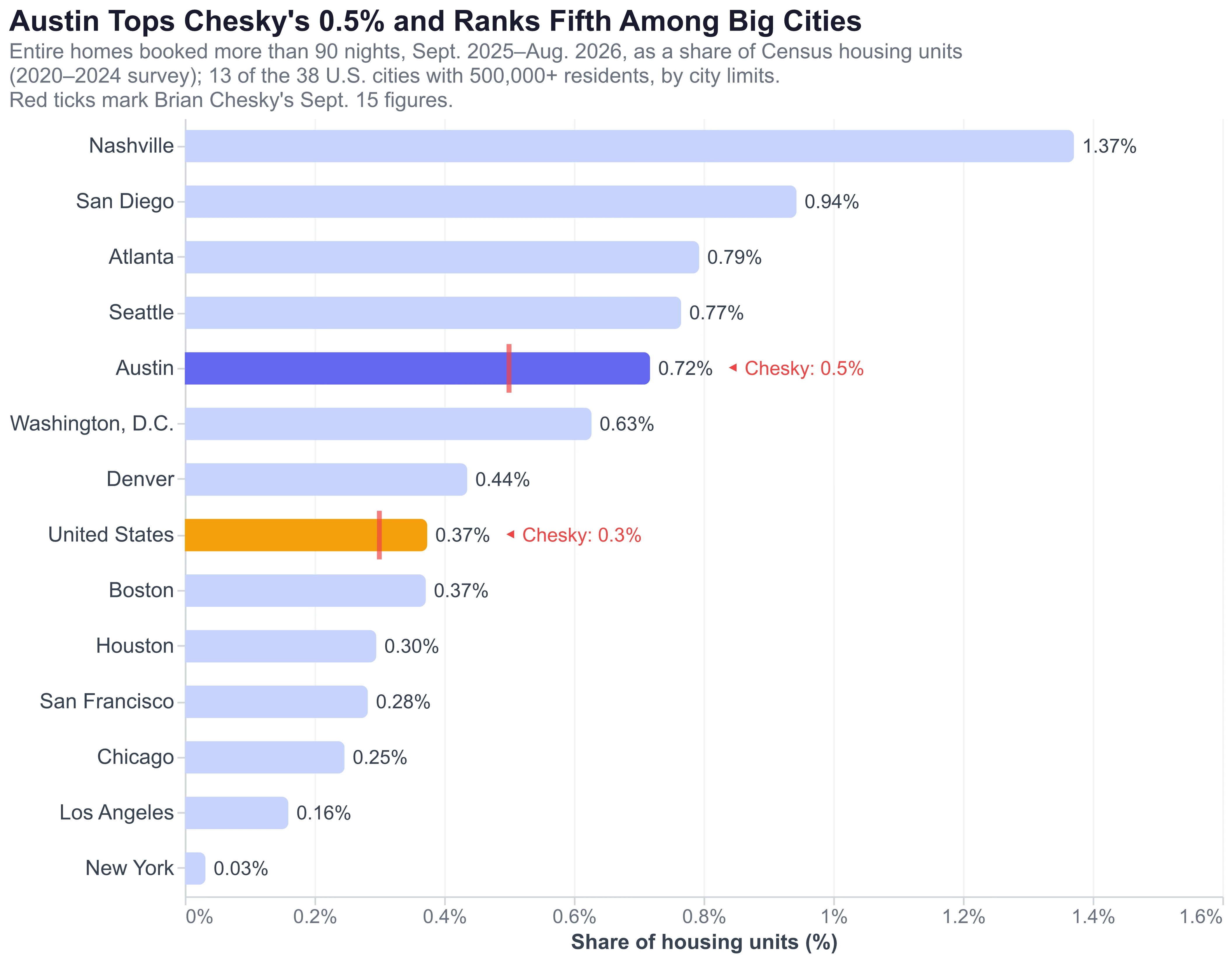
By count, San Diego has the most busy Airbnbs of any U.S. city, about 5,400.
Within Austin, the rentals cluster. In East Austin's 78702 ZIP code they equal 4.4% of homes, six times the citywide rate.
"People have taken homes off the market to put on Airbnb," Chesky told CBS Austin at the launch. "So, we've worked with cities to prevent that."
Austin licenses short-term rentals, and since July 1 platforms must pull unlicensed listings when the city asks.
Where the rentals pile up
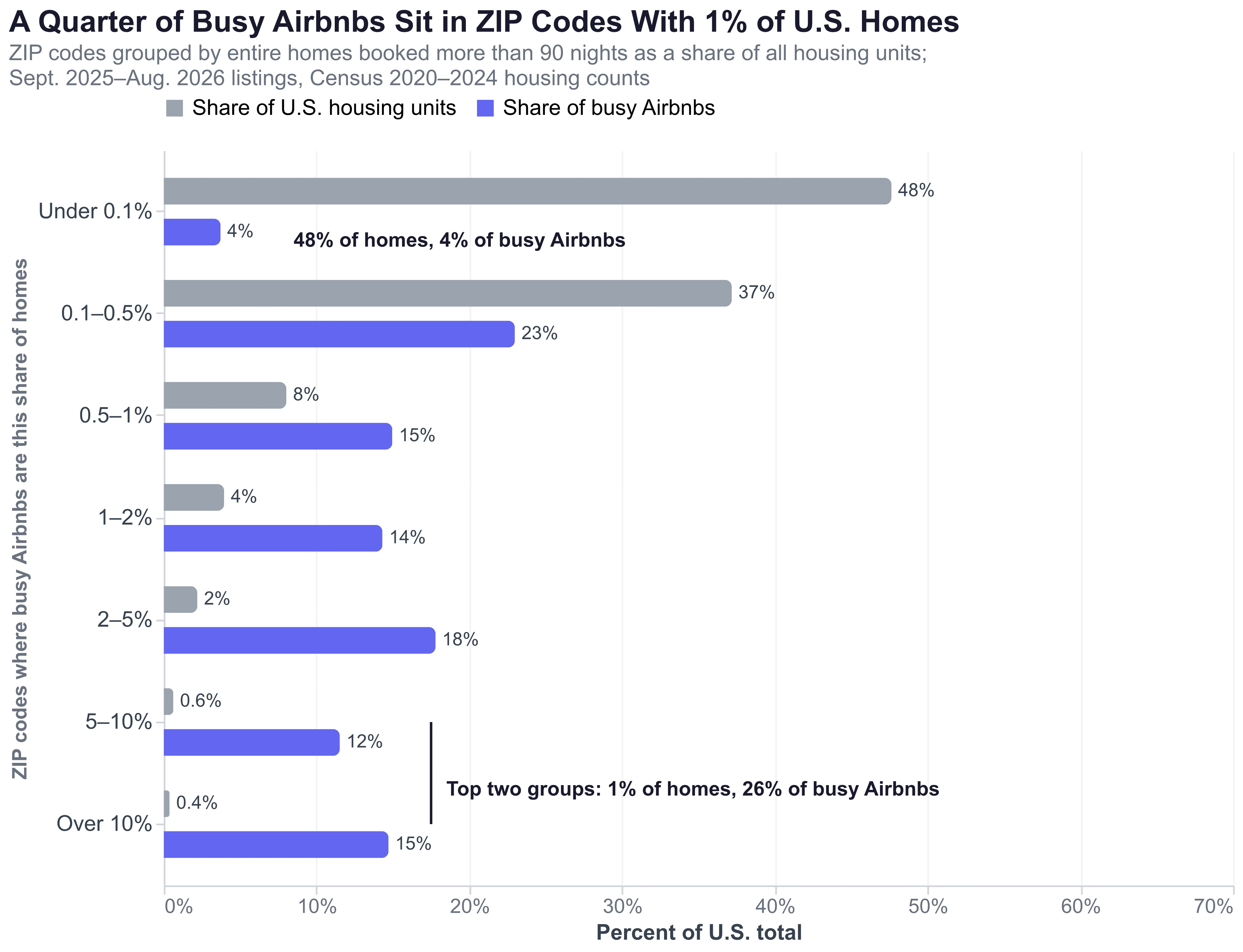
Nearly half of U.S. homes sit in ZIP codes where busy Airbnbs make up fewer than one home in 1,000.
ZIP codes where they top one home in 20 hold 1% of the nation's housing and more than a quarter of the rentals.
Among ZIP codes with at least 1,000 homes, the densest is Gatlinburg's 37738, where the rentals equal 37% of homes.
Among towns of that size, the top ten are all beach or mountain towns. In eight of them, the Census's share of seasonal or vacation homes is larger than the rentals' share. Pigeon Forge and Three Rivers are the exceptions.
| Place | Busy Airbnbs, share of homes | Census seasonal homes, share |
|---|---|---|
| Poipu, Hawaii | 48% | 62% |
| Princeville, Hawaii | 35% | 48% |
| Kaanapali, Hawaii | 31% | 49% |
| Gatlinburg, Tenn. | 31% | 34% |
| Navarre Beach, Fla. | 26% | 61% |
| Folly Beach, S.C. | 26% | 47% |
| Anna Maria, Fla. | 25% | 34% |
| Pigeon Forge, Tenn. | 24% | 18% |
| Tybee Island, Ga. | 23% | 43% |
| Three Rivers, Calif. | 22% | 13% |
Sevier County, Tenn., home to Gatlinburg and Pigeon Forge, stays dense even at county scale: more than one home in seven there is a busy Airbnb.
Airbnb's case, and the study it cites
Chesky's post blamed the shortage on too little construction. "If you step back and ask why housing has become so expensive, the biggest problem is pretty simple: we don't build enough of it," he wrote, putting the national shortfall at more than five million homes.
Airbnb's white paper rests its policy case partly on the share. "Experts agree that short-term rental restrictions are not a meaningful or effective way to solve the housing crisis," it says. "This is in part because units of housing shared on a short-term basis represent a small fraction of the housing stock."
It found that in a ZIP code with a median share of owner-occupied homes, a 1% rise in Airbnb listings raised rents 0.018% and house prices 0.026%, as homes shifted from long-term to short-term rental. The effect was stronger where fewer homes are owner-occupied.
Eliza Terziev, a housing policy analyst at the Reason Foundation, which favors lighter regulation, called short-term rentals' contribution to rising home prices comparatively small in a Sept. 21 commentary. She also wrote: "Larger effects are to be expected in markets with high tourism demand and more constrained housing supply."
For scale, the National Association of Home Builders estimated 6.2 million U.S. second homes in 2024, more than 11 times the national count of busy Airbnbs.
Outside resorts, the share falls below 0.3%
In ZIP codes where the Census classes at least a fifth of homes as seasonal, the rentals run about ten times the 0.27% rate elsewhere.
Franco Faraudo, co-founder and editor of the real-estate trade publication Propmodo, doubted the national figure would carry weight in city halls. "Chesky's own argument, that Airbnb units are a fraction of housing stock and that bans have not lowered home prices, is the kind of claim a city council has heard before and discounted," he wrote on Sept. 14.
In Duluth, the rentals equal 0.45% of homes citywide, a little above the national 0.37%. In the ZIP code that takes in Park Point, they equal 3.4%.
Maui's council decides next
On Maui, busy Airbnbs equal about 11% of homes in the Kihei ZIP code.
Bob Hansen, whose Indo Lotus Beach House in Kihei is among the Council's proposed exemptions, asked the commission to back them. "I appreciate and think you ought to follow through with what the Council is recommending," he said. He and Donna Hansen told commissioners they bought it as a rental property in 1985 and later raised their family on Maui.
The commission's advice now goes to the Maui County Council, and no date for its vote has been announced.
Jackie Keefe testified against the exemptions at the same hearing. "We still have hundreds of fire survivors living in state and FEMA housing, and that housing support ends in less than six months," she said.
About the data: Live Airbnb entire homes accepting stays shorter than 28 nights and booked more than 90 nights between September 2025 and August 2026, placed in Census ZIP codes, places and counties by map location; housing units from the 2020–2024 American Community Survey.
Frequently Asked Questions
Roughly 982,000 Airbnb listings were live across the U.S. in August 2026, and nine in ten were entire homes rather than private or shared rooms. A narrower group, entire homes booked for more than 90 nights over the prior year, numbered about 537,000. That subset is the measure Airbnb itself uses when it compares its rentals with the housing supply.
Entire homes booked more than 90 nights a year, the yardstick Airbnb itself uses, equaled about 0.37% of U.S. housing units in the year through August 2026, according to AirROI, close to the company's own figure for 2025. The share is far from even: it runs from a tiny fraction of homes in New York City to nearly half in Poipu, Hawaii.
A peer-reviewed U.S. study finds rents and home prices rise slightly as Airbnb listings grow, more so where fewer homes are owner-occupied. Its authors, economists Kyle Barron, Edward Kung and Davide Proserpio, traced the effect to homes shifting from long-term to short-term rental.
San Diego has more frequently booked Airbnbs than any other U.S. city: about 5,400 entire homes booked more than 90 nights a year. Measured against housing, Nashville leads U.S. cities of at least half a million residents, and in resort towns such as Poipu, Hawaii, these rentals approach half of all homes.
Airbnb says no and points to too little construction; Chesky puts the U.S. shortfall at more than five million homes. One peer-reviewed study found that Airbnb shifts some homes from long-term to short-term rental, with no measurable change in the total supply. The rentals cluster: ZIP codes where frequently booked Airbnbs top one home in 20 hold about 1% of U.S. homes but more than a quarter of those rentals.