
Early-Bird Discount

Key Takeaways
- Early-bird discounts apply when guests book 60–120+ days before check-in, rewarding advance planners with a reduced nightly rate
- The standard discount range is 5–15% off the base price, sized to motivate commitment without underpricing peak demand
- Markets with longer booking lead times — vacation destinations, ski resorts, event cities — see the greatest lift from early-bird offers
- AirROI data shows median lead times ranging from 35 days (Miami) to nearly 58 days (Gatlinburg, New Orleans), shaping where the strategy delivers real value
- Early-bird discounts should be excluded from peak-season dates, where demand fills the calendar at full rate without incentive
How Early-Bird Discounts Work
The discount activates automatically when a guest books beyond a defined lead-time threshold. Most platforms — including Airbnb, Vrbo, and direct-booking tools — allow hosts to configure this as a percentage reduction that applies conditionally based on days until check-in.
| Booking Window | Typical Discount | Example at $250/Night |
|---|---|---|
| 120+ days before check-in | 15% | $212/night |
| 90–119 days before check-in | 10% | $225/night |
| 60–89 days before check-in | 5% | $237/night |
| Under 60 days | No early-bird | $250/night (standard) |
Booking Lead Time by Market — Where Early-Bird Works Best
The effectiveness of early-bird discounts is directly tied to a market's median booking lead time. A discount designed for guests who book 90 days out has little impact in a market where the typical guest books 35 days out.
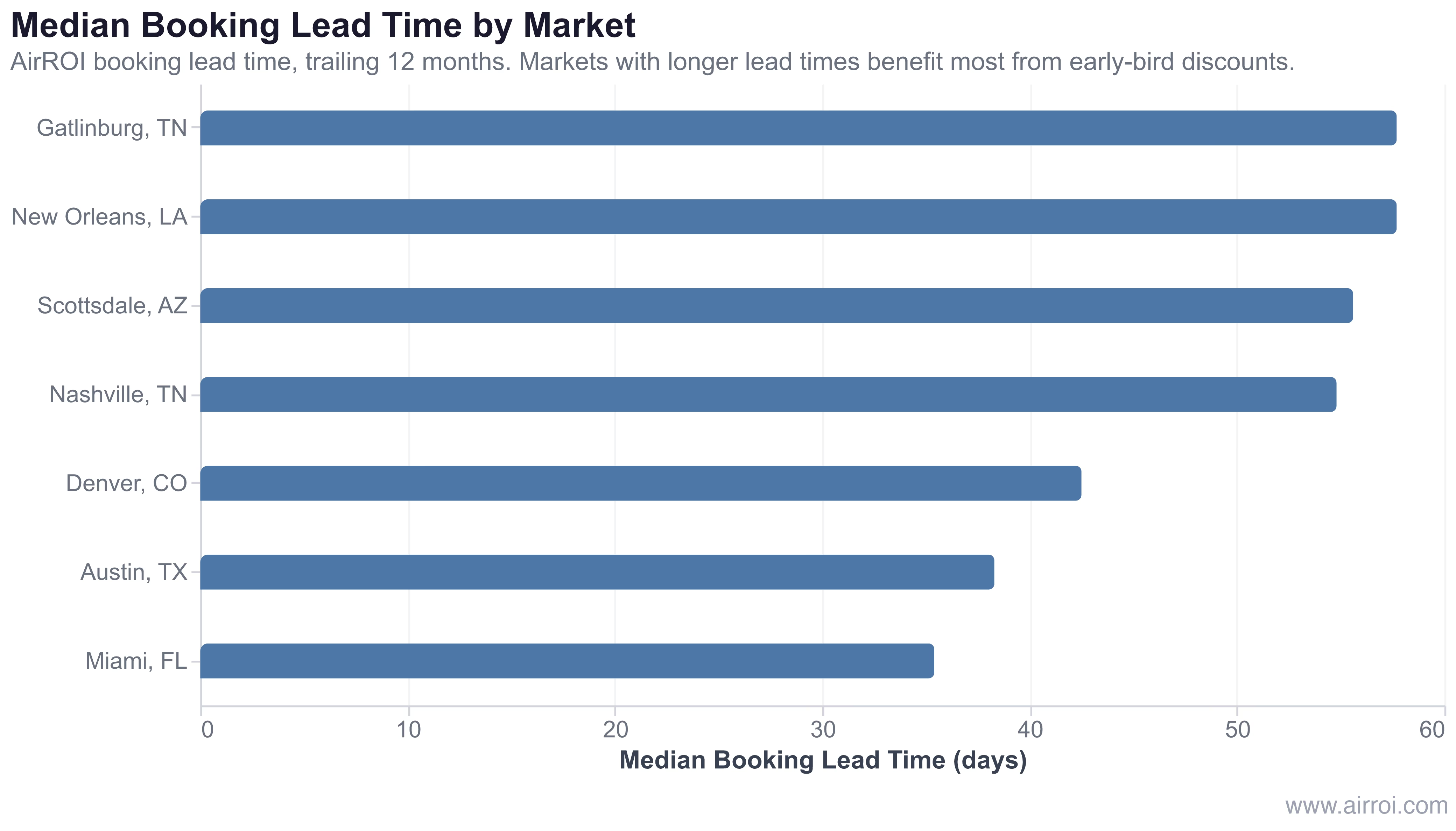
In AirROI's analysis of more than 40,000 active listings across seven US markets, median booking lead time ranges from 35.4 days in Miami to 57.7 days in both Gatlinburg, TN and New Orleans, LA — a 63% spread that directly determines how much runway early-bird pricing has to work.
| Market | Median Lead Time | Active Listings | Early-Bird Fit |
|---|---|---|---|
| Gatlinburg, TN | 57.7 days | 3,622 | High |
| New Orleans, LA | 57.7 days | 5,007 | High |
| Scottsdale, AZ | 55.6 days | 4,310 | High |
| Nashville, TN | 54.8 days | 6,165 | High |
| Denver, CO | 42.5 days | 3,739 | Moderate |
| Austin, TX | 38.3 days | 8,774 | Low–Moderate |
| Miami, FL | 35.4 days | 7,905 | Low |
The booking lead time in your market is the single most important input for calibrating your early-bird window. Set the threshold well above the median — if guests typically book 55 days out, a 60-day window captures only the marginal few; a 75–90-day window targets true advance planners.
Why Early-Bird Discounts Matter for STR Hosts
Cash flow certainty. Early bookings lock in revenue two to four months ahead of the stay. For hosts managing mortgages, cleaning crews, or seasonal maintenance, that confirmed income removes the uncertainty that forces last-minute capitulation.
Guest profile advantage. Guests who plan months ahead tend to be more communicative, more committed (lower cancellation risk), and more aligned with the listing's requirements — they have time to read the house rules before booking.
When Early-Bird Discounts Work Best
| Market or Scenario | Effectiveness | Reason |
|---|---|---|
| Beach vacation homes | High | Families lock in summer weeks months ahead |
| Ski chalets | High | Winter holiday travel booked in fall |
| Destination weddings/events | High | Group travel planned 6–12 months out |
| Event cities (Nashville, NOLA) | High | Concerts and festivals drive far-advance planning |
| Urban business travel | Low | Most bookings made 1–3 weeks out |
| Weekend getaway markets | Low | Short lead times limit early-bird impact |
Setting Early-Bird Discounts Effectively
Calibrate to your market's lead time. Pull your booking lead time data from your channel manager or AirROI's market analytics, then set the early-bird threshold 15–20 days above the median. If your market's median is 54 days (Nashville), a 70–75-day window captures genuine early planners.
Keep the discount meaningful but bounded. A 5–7% discount is often sufficient to shift behavior; 10–15% is appropriate for the 120+ day window. Going beyond 15% risks leaving money on dates that would have sold at full rate — or that dynamic pricing would have raised.
Exclude peak dates. Configure your discount to exempt confirmed high-demand periods: holiday weekends, local festivals, peak summer weeks. Those dates sell at full rate without incentive. Blending a 10% early-bird discount into peak pricing effectively transfers revenue from you to the guest with no behavioral benefit.
Review quarterly. If your calendar fills without the discount, remove it — you're subsidizing bookings that would have happened anyway. If shoulder-season dates regularly go empty, deepen the discount or extend the window.
Frequently Asked Questions
Most hosts set the early-bird window at 60–120 days before check-in. The right threshold depends on your market's typical booking lead time — if guests in your market book a median of 55 days out (as in Scottsdale and Nashville per AirROI data), an early-bird window starting at 75–90 days rewards genuinely early planners without giving away margin on typical bookings.
A 5–15% discount is the standard range for early-bird offers. The discount must be large enough to motivate commitment months before arrival but small enough that you are not underpricing dates that dynamic pricing algorithms would push higher as demand fills the calendar, particularly during peak season.
Yes, especially in vacation and destination markets where guests plan trips months ahead. AirROI data shows markets like Gatlinburg, TN and New Orleans, LA average 57.7 days of booking lead time — well above urban markets like Miami (35.4 days) or Austin (38.3 days). Early-bird discounts deliver the most lift where lead times are longest.
Generally no — peak dates fill at full rate without incentive. Reserve early-bird discounts for shoulder-season or low-demand periods where advance commitments genuinely add value. Excluding peak dates from the discount protects your highest-revenue nights.
They operate at opposite ends of the booking window. Early-bird discounts capture committed planners 60–120+ days out; last-minute discounts recover value from empty dates within 7–14 days of check-in. A well-designed pricing strategy uses both as bookends, with dynamic pricing filling the middle of the booking curve at market rates.