
What Is Peak Season in Short-Term Rentals

Key Takeaways
- Peak season is defined by the simultaneous peak of occupancy and nightly rates, producing the highest RevPAR of the year
- Timing varies sharply by market type — summer for beaches, winter for ski resorts, year-round event cycles for urban metros
- AirROI data shows trailing-12-month RevPAR ranging from $115 (Las Vegas) to $212 (San Diego) across major US markets, with peak months driving that average significantly higher
- Dynamic pricing tools apply elevated demand factors automatically during peak periods — but only if your maximum price cap is set high enough to capture them
- Underpricing peak nights is irreversible: no off-season discount can recover revenue that was left on the table when demand was at its strongest
Peak Season by Market Type
| Market Type | Typical Peak Season | Primary Demand Driver |
|---|---|---|
| Beach / coastal | June – August | Summer vacation travel |
| Ski / mountain | December – March | Winter sports, holidays |
| Tropical | December – April | Winter escape travelers |
| Urban / metro | Varies by events | Conferences, festivals, holidays |
| Lake / rural | June – September | Summer outdoor recreation |
| College town | September – November | Football season, homecoming |
| Wine country | August – October | Harvest season, fall foliage |
How RevPAR Reveals Peak Season Intensity
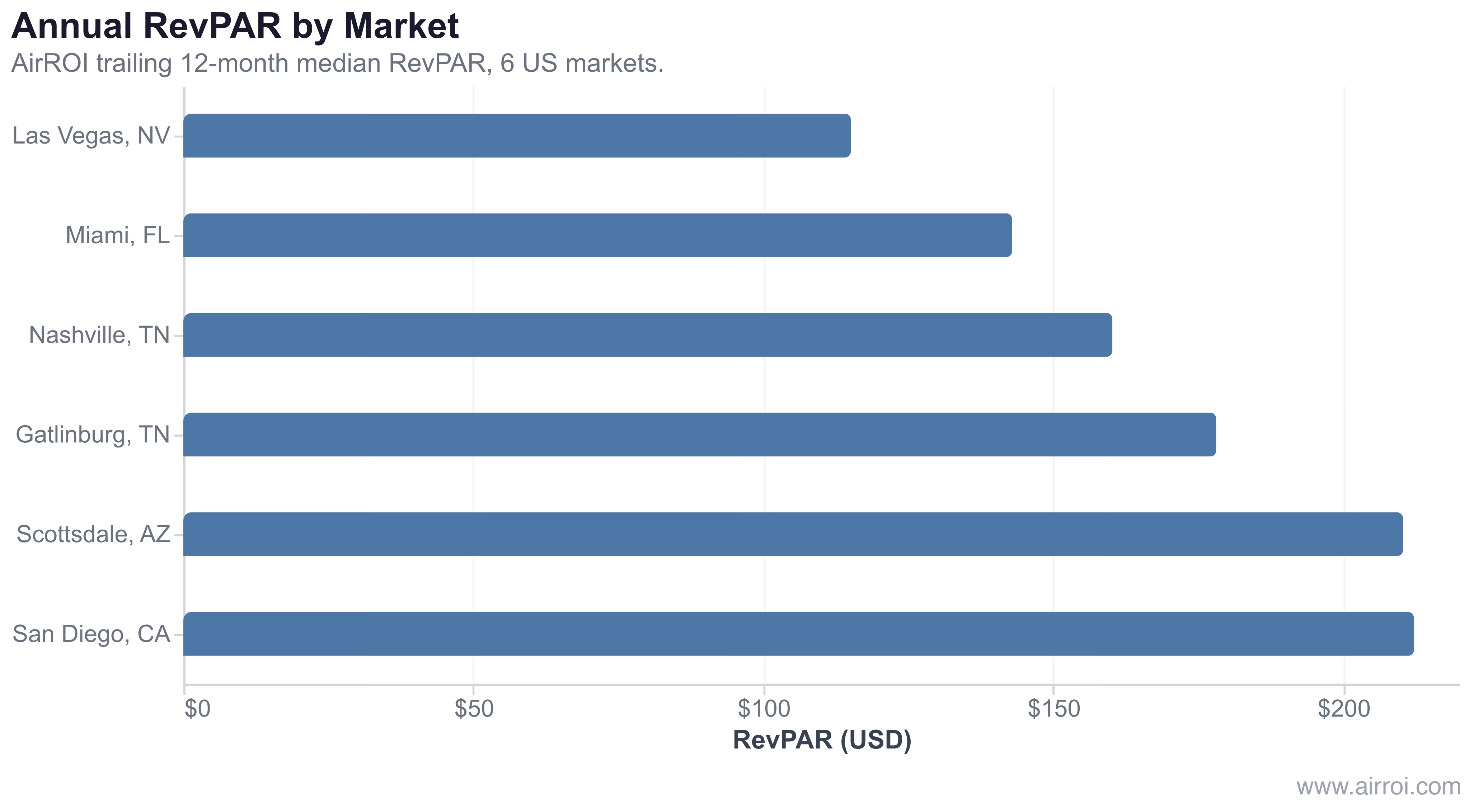
In AirROI's analysis of more than 39,000 active listings across these six US markets, San Diego ($212 RevPAR) and Scottsdale ($210 RevPAR) lead the group — both markets with well-defined peak seasons (summer coastal demand and winter sun-belt migration, respectively) that pull the annual average well above what off-season months alone would produce. Las Vegas ($115 RevPAR) shows the opposite pattern: year-round demand without a dominant peak compresses the annual figure downward.
The markets with the sharpest peak seasons also show the greatest RevPAR upside — and the greatest risk of leaving money on the table by pricing to the annual average rather than the seasonal ceiling.
Why Peak Season Matters for Airbnb Hosts
Revenue concentration. In strongly seasonal markets, the peak window is disproportionately valuable. A beach property earning $310/night at 88% occupancy for three summer months generates roughly $24,500 — close to 40% of annual revenue — before the rest of the year adds anything. Underpricing that window by even $40/night costs more than $2,000 annually.
Peak Season Revenue Example
The table below illustrates how a single property's economics can shift across seasons:
| Metric | Peak (3 months) | Off-Season (9 months) | Annual |
|---|---|---|---|
| Avg nightly rate | $310 | $155 | $194 |
| Occupancy | 88% | 55% | 65% |
| Revenue | ~$24,600 | ~$37,600 | ~$62,200 |
| Share of annual | 40% | 60% | 100% |
Three months at peak rates produces nearly as much revenue as the remaining nine combined — a ratio that holds across many beach, ski, and resort markets.
Strategies for Maximizing Peak Season Revenue
Set your maximum price high enough. Review the top 10% of comparable listings in your submarket during the equivalent peak period last year. Your cap should sit at or above that threshold — not at your comfortable daily average.
Configure pricing early. Because peak-season bookings arrive 60–90 days out in resort markets, your rates need to be dialed in by the start of that window — not after it. Hosts who set rates reactively miss the early-booking premium.
Avoid last-minute discounts. During peak season, vacancies fill. A last-minute discount that would be rational in the off-season is pure revenue destruction when demand is at its annual maximum. Disable automated last-minute discount rules during your peak window.
Frequently Asked Questions
Peak season depends entirely on market type. Beach and lake destinations peak June–August; ski and mountain resorts peak December–March; tropical escapes peak December–April; urban and event-driven markets peak around major conferences, festivals, and holidays. AirROI's occupancy and RevPAR data for your specific market identifies the exact months when rates and demand are highest.
Most markets support 50–150% higher nightly rates during peak season versus the annual average. AirROI data shows markets like San Diego and Scottsdale achieving RevPAR of $210+ per night on a trailing 12-month basis — figures driven upward significantly by peak months where ADR and occupancy both spike simultaneously.
Yes, in most cases. Raising the minimum stay to 3–5 nights during peak reduces turnover costs, eliminates short revenue gaps between bookings, and signals premium positioning to guests. Markets with strong weekend-trip demand — like Nashville (average LOS 3.7 nights per AirROI data) — may benefit from a 2-night minimum that still captures the full weekend premium.
Significantly further in advance than off-season stays. AirROI data shows lead times of 55–58 days in resort markets like Gatlinburg and Scottsdale. For peak-season dates in high-demand markets, bookings often arrive 60–90 days out, meaning your pricing and availability settings must be dialed in months before the season begins.
Underpricing during peak season is the single most costly revenue mistake an STR host can make. Because peak months can represent 40–60% of annual revenue, leaving $50 per night on the table across 60 peak nights costs $3,000 in annual income — money that can never be recovered in the off-season.