Maximum Price

Key Takeaways
- Maximum price is the upper bound in a dynamic pricing corridor, complementing minimum price and base price
- Without a ceiling, algorithms can push rates beyond what comparable listings successfully book at, producing zero-booking nights during your highest-demand periods
- The correct ceiling anchors to the 90th percentile ADR of your comparable listings — not your own base price multiplied by a rule-of-thumb factor
- Markets vary dramatically: AirROI data shows median ADRs from $221.50 in Denver to $421.10 in Scottsdale, so market-specific calibration is non-negotiable
- Review and adjust your maximum price before every known high-demand period; an annual-only review routinely leaves 10–20% of peak-night revenue uncaptured
How Maximum Price Works in a Dynamic Pricing System
| Scenario | Value |
|---|---|
| Base price | $200 |
| Demand multiplier during major festival | 2.5× |
| Calculated rate (uncapped) | $500 |
| Maximum price setting | $380 |
| Final rate shown to guests | $380 |
Without the cap, the listing surfaces at $500. If comparable properties are booking at $380–$420, the uncapped listing sees no conversions on those nights — the algorithm's theoretical optimum becomes a practical zero. The ceiling converts that night into a premium booking instead.
Market-Level ADR: Where Real Maximum Prices Are Anchored
Setting a maximum price without knowing your market's actual rate landscape is pricing in the dark. AirROI's trailing-12-month data across active listings shows the spread in median ADR — which defines the range within which credible ceilings should sit.
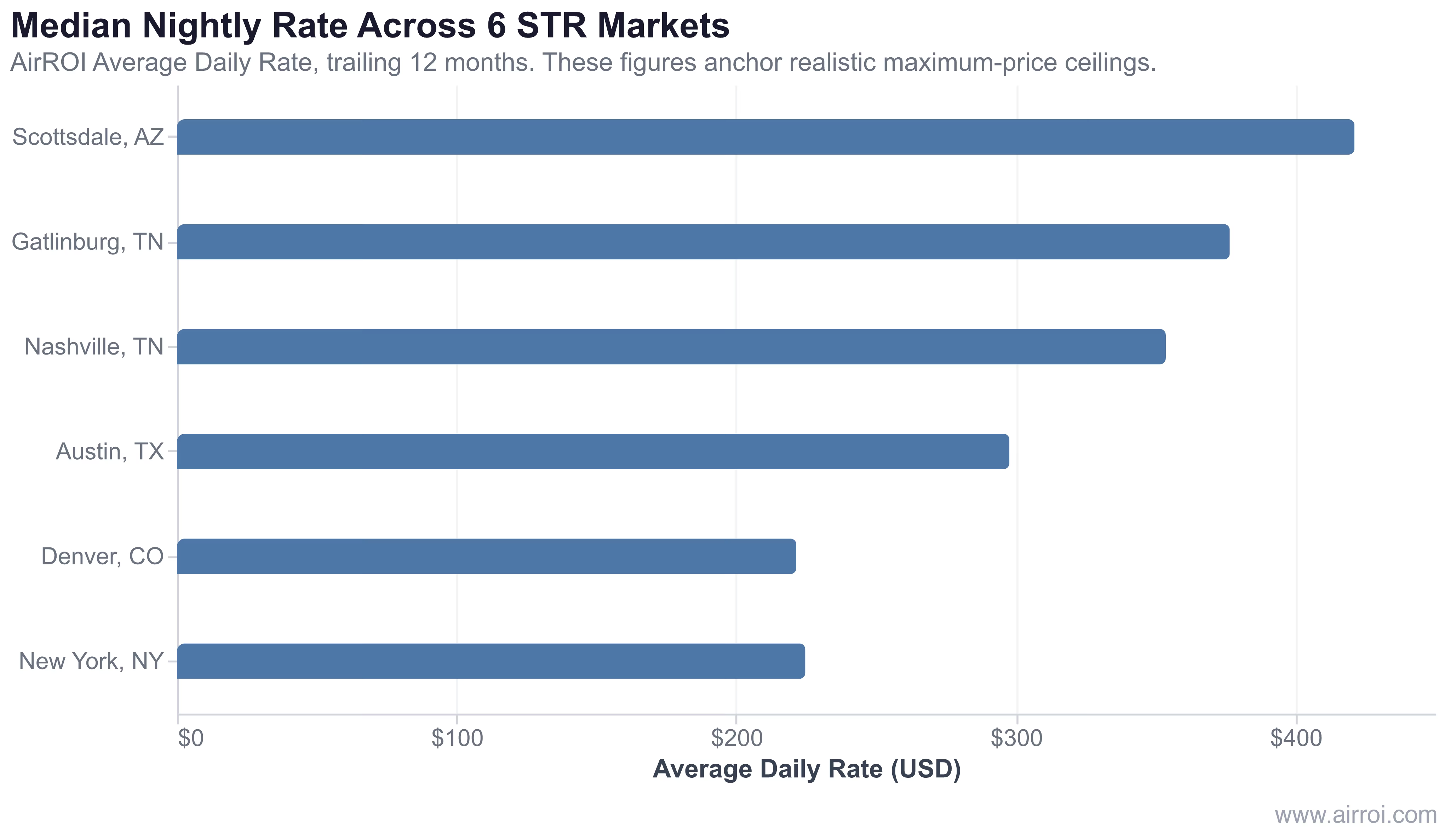
In AirROI's analysis of approximately 37,950 active listings across these six markets, ADR ranges from $221.50 (Denver) to $421.10 (Scottsdale). These are medians — the 90th percentile rates that top-performing comparables achieve on peak nights run 40–70% above the figures shown. A Scottsdale host's realistic maximum price for a high-demand weekend is not $421; it is $600–$700 for a well-reviewed property in the right sub-market.
| Market | Median ADR | Active Listings | Implied 90th-percentile ceiling zone |
|---|---|---|---|
| Scottsdale, AZ | $421.10 | 4,310 | $650–$750 |
| Gatlinburg, TN | $376.50 | 3,622 | $560–$640 |
| Nashville, TN | $353.60 | 6,165 | $520–$620 |
| Austin, TX | $297.70 | 8,774 | $440–$520 |
| New York, NY | $224.70 | 11,468 | $340–$420 |
| Denver, CO | $221.50 | 3,739 | $320–$400 |
The maximum price is not a guess at what guests might pay on the best night of the year — it is a data-anchored ceiling set at the upper boundary of what the top tier of comparable listings actually books at. Everything above that is chasing a conversion that does not exist.
Why Maximum Price Matters for Airbnb Hosts
Algorithm guardrail for extreme demand events. Dynamic pricing tools are calibrated on historical patterns. Truly anomalous demand — a once-a-decade event, a viral social media moment — can push algorithmic output to rates no guest will pay. A maximum price protects you from those outlier miscalculations without requiring manual intervention on every night.
Setting Your Maximum Price: A Systematic Approach
| Factor | How to Assess |
|---|---|
| Market ceiling | Pull the 90th percentile ADR for comparable listings in your area using AirROI rate analytics |
| Peak-event rates | Review booked rates (not listed rates) during past major events in your market |
| Property tier | Higher-end finishes, more bedrooms, and premium amenities support a higher ceiling — budget your tier honestly |
| Guest review score | Properties with 4.9+ ratings sustain ceilings 15–20% above otherwise comparable listings |
| Bedroom count | Group-travel properties serving 6+ guests command proportionally higher ceilings than studio comps |
| Competitive gap | If the top 5 comps are fully booked at $X during peak, your ceiling should be at or slightly above $X |
Frequently Asked Questions
Anchor your maximum price to the 90th percentile ADR for comparable listings in your market. AirROI data shows median ADRs ranging from $221.50 in Denver to $421.10 in Scottsdale — your ceiling should sit at or slightly above the top-performing comparable listings, not the market median. Event-driven nights can support 1.5–2x the normal ceiling for that tier of property.
Yes — always. Without a ceiling, an algorithm may price a night at 3x base during a demand spike, producing zero bookings instead of a premium booking. A well-set ceiling captures the highest rate guests will actually pay, which in most markets sits 40–80% above the median ADR for peak dates.
You forfeit revenue on your highest-demand nights. If your market's top comparable listings are booking at $420 during a major event and your cap sits at $280, you leave roughly $140 per night on the table — and your listing may appear undervalued relative to peers, which can perversely reduce perceived quality.
At minimum, review your maximum price quarterly and before any known high-demand period — festival season, major sporting events, holiday weekends. Markets shift: Scottsdale's median ADR of $421 today reflects a different supply and demand balance than it did two years ago. Annual-only reviews routinely leave 10–20% of peak-night revenue uncaptured.
Not directly — Airbnb's search algorithm ranks on relevance and conversion, not on the absolute ceiling rate. What matters is your booked price relative to market comps. A cap that is so high your listing never books on peak nights will hurt occupancy and ranking. Keep your maximum price realistic: above the market median but within range of your top comparable.