
Nightly Rate / Daily Rate

Key Takeaways
- Nightly rate is the per-night price displayed to guests; it changes day to day under dynamic pricing
- It differs from ADR, which is the revenue-weighted average of all booked nightly rates over a period
- AirROI data shows market-median ADR ranging from $221 (Denver) to $421 (Scottsdale) — your local benchmark matters more than national averages
- Cleaning fees, platform service fees, and taxes are separate from the nightly rate
- Your displayed nightly rate is derived from your base price multiplied by applicable demand factors, clamped between your floor and ceiling prices
How Nightly Rate Is Determined
Nightly Rate = Base Price × Demand Multiplier × Seasonal Factor × Day-of-Week Factor
The result is clamped between your minimum and maximum price settings. The table below shows how the same $175 base price produces a 3× spread across market conditions:
| Date | Base Price | Demand Multiplier | Seasonal | Day Factor | Final Nightly Rate |
|---|---|---|---|---|---|
| Friday (peak season) | $175 | 1.25 | 1.15 | 1.10 | $277 |
| Tuesday (shoulder season) | $175 | 0.90 | 1.00 | 0.90 | $142 |
| Wednesday (off-season) | $175 | 0.75 | 0.80 | 0.90 | $95 |
A flat nightly rate forfeits the $95–$277 spread entirely. Hosts who price statically leave meaningful revenue on the table during peak demand while overprice slow nights.
Average Nightly Rate by Market
Market context is the only reliable benchmark for setting a competitive nightly rate. The chart below shows median ADR across seven US short-term rental markets using AirROI's trailing-12-month data.
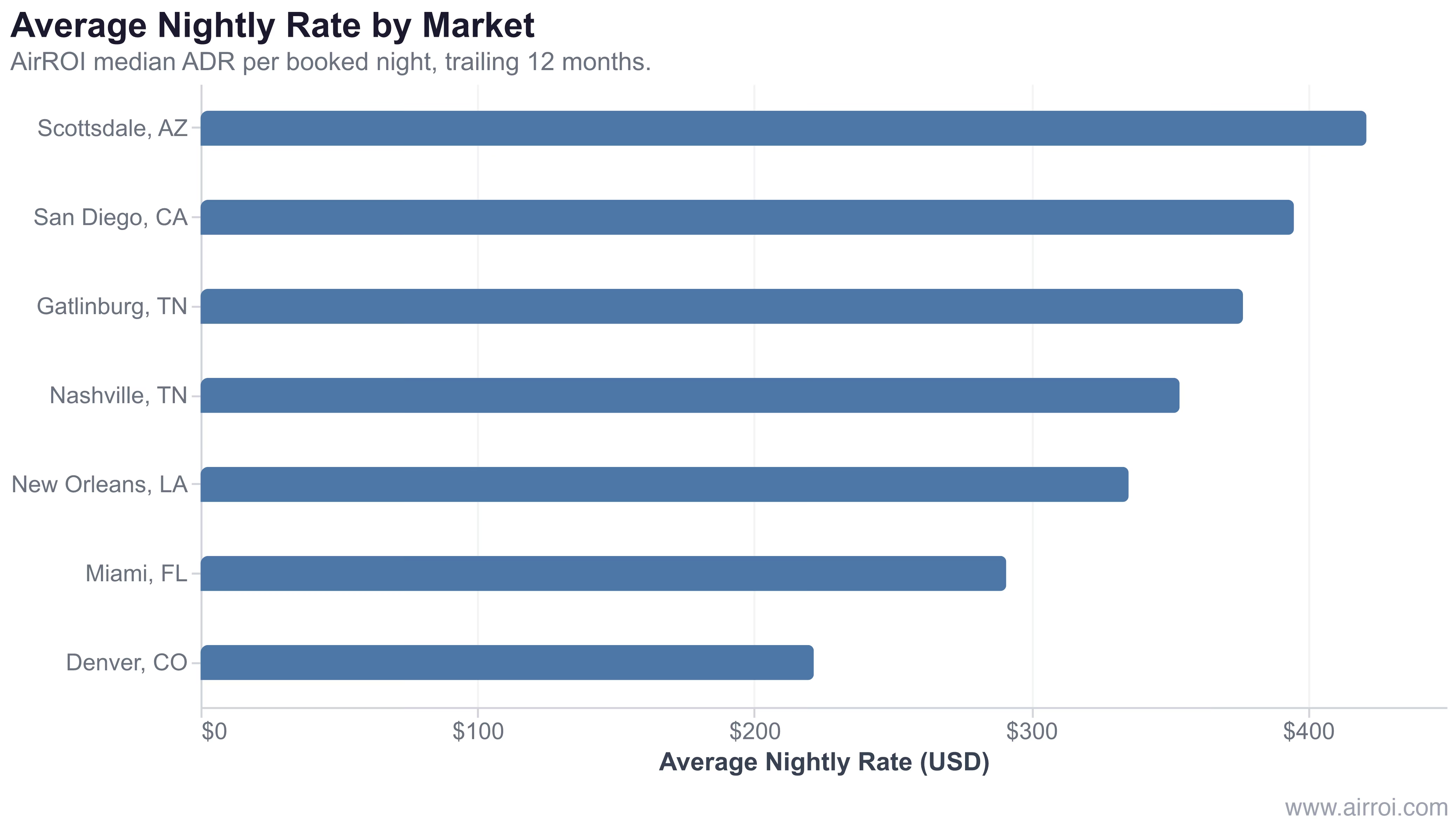
In AirROI's analysis of more than 44,000 active listings across these seven markets, median ADR ranges from $221.50 in Denver to $421.10 in Scottsdale — a 90% spread driven by property mix, market demand, and local supply constraints:
| Market | Median ADR | Active Listings |
|---|---|---|
| Scottsdale, AZ | $421.10 | 4,310 |
| Gatlinburg, TN | $376.50 | 3,622 |
| Nashville, TN | $353.60 | 6,165 |
| New Orleans, LA | $335.20 | 5,007 |
| Miami, FL | $291.00 | 7,905 |
| Denver, CO | $221.50 | 3,739 |
Scottsdale's high ADR reflects its desert-resort positioning and a seasonal spike from winter snowbirds. Gatlinburg — a Smoky Mountain gateway — achieves a strong $376.50 median on cabin-style properties that command premium rates despite modest market size. Denver's lower ADR is shaped by urban apartment supply and a more distributed demand pattern throughout the year.
The gap between the highest-ADR and lowest-ADR markets in this dataset is $200 per night. A host transplanting their pricing strategy from Denver to Scottsdale without recalibrating to local benchmarks would leave $73,000 in annual revenue on the table.
Nightly Rate vs. ADR: An Important Distinction
| Concept | Definition | When It Changes |
|---|---|---|
| Nightly Rate | The listed price for a specific calendar night | Every night, with pricing rules |
| ADR | Average of all booked nightly rates over a trailing period | As bookings accumulate |
| Base Price | The anchor price before demand multipliers are applied | When you update settings |
A host might list $300/night on a Saturday but $150/night on a Tuesday. If the Saturday books and the Tuesday stays vacant, their ADR is $300 — only booked nights count. This is why ADR tends to exceed the median listed nightly rate: unbooked (often off-peak) nights never enter the average.
Why Nightly Rate Matters for Airbnb Hosts
Search ranking — Airbnb's algorithm factors price competitiveness when ranking listings. Rates far above market norms suppress visibility; rates aligned with the market median preserve placement. According to Airbnb's own host documentation, price is among the top signals in search.
Booking conversion — Guests compare nightly rates across listings in the same search results page. A rate that matches perceived value drives higher conversion than one priced at a premium that the listing's photos and amenities cannot justify.
Revenue driver — Nightly rate is the largest single component of annual revenue. A $20 increase per booked night, sustained over 150 booked nights, generates $3,000 in incremental revenue with no additional cost.
Setting and Optimizing Your Nightly Rate
Benchmark against real comparable listings — Filter by your bedroom count, neighborhood, and amenity tier. The market-median ADR in the table above is a starting point, not a target; your specific submarket and property type may diverge substantially.
Monitor your booking pace — If dates book more than 60 days out at your current nightly rate, the rate is likely too low. Dates that remain unbooked two weeks before check-in suggest the rate is above what the market will clear at that moment. Adjust accordingly; occupancy left on the table is unrecoverable.
Account for total guest cost — Guests see the full booking price: nightly rate × nights + cleaning fee + service fee + taxes. A $150 nightly rate with a $120 cleaning fee is more expensive than a $170 nightly rate with a $40 cleaning fee for a two-night stay. Structure your nightly rate and cleaning fee together so the total remains competitive.
Frequently Asked Questions
A good nightly rate is one that matches or slightly undercuts comparable listings in your submarket at a given time. In AirROI's trailing-12-month data, median ADR ranges from $221 in Denver to $421 in Scottsdale — so 'good' is entirely market-specific. Use competitive analytics to benchmark your rate against active listings of similar bedroom count and amenities in your area.
Nightly rate is the price listed for a specific night, which changes day to day with dynamic pricing. ADR (Average Daily Rate) is the average of all your booked nightly rates over a period. If you charge $120 on weekdays and $180 on weekends, your ADR for a full week is about $137 — the revenue-weighted average across bookings, not the headline rate on any single night.
No. On Airbnb and most platforms, the nightly rate and cleaning fee are displayed separately. Guests see the nightly rate multiplied by the number of nights plus the cleaning fee in their total. Some hosts build cleaning costs into the nightly rate to appear more competitive in search results, which can improve conversion on short stays.
Airbnb's algorithm factors price competitiveness into search ranking. Listings priced significantly above comparable properties in the same market receive lower placement. Staying within roughly 20% of the market median for your bedroom count tends to preserve visibility, while dynamic pricing tools help maximize revenue without consistently exceeding that threshold.
Start by pulling the median ADR for your market and bedroom count from a tool like AirROI. Set your base price 10-15% below that median to generate early bookings and reviews. Once you have 10+ reviews and a strong rating, raise your base price toward or above the market median and layer in dynamic pricing to capture demand peaks.