
Minimum Price

Key Takeaways
- Minimum price is the absolute floor your dynamic pricing tool will never breach, regardless of demand
- It should be calculated from actual per-night costs plus a small profit margin — not guessed
- Set too high, it creates vacancy and orphan days during off-peak weeks; set too low, it enables unprofitable bookings
- Target a minimum price 30–50% below your market's average daily rate (ADR) to give the algorithm meaningful room to maneuver
- It works as a paired guardrail with maximum price, bracketing your base price on both sides
How to Calculate Your Minimum Price
The formula is straightforward:
Minimum Price = (Total Monthly Fixed Costs ÷ Available Nights) + Per-Night Variable Costs + Margin
Example calculation:
| Fixed Cost Component | Monthly Amount |
|---|---|
| Mortgage or rent | $1,800 |
| Utilities | $200 |
| Insurance | $150 |
| Maintenance reserve | $150 |
| Software and tools | $50 |
| Total fixed costs | $2,350 |
Fixed cost per night = $2,350 ÷ 30 = $78
| Variable Cost | Per Booking |
|---|---|
| Cleaning (host portion) | $15/night |
| Supplies and consumables | $5/night |
| Platform fee (~3%) | ~$3/night |
| Total variable | ~$23/night |
Minimum Price = $78 + $23 + $10 margin = ~$111 per night
This figure is your break-even floor. Any rate the algorithm sets above it contributes to margin; any rate below it destroys it.
Minimum Price vs. Market ADR
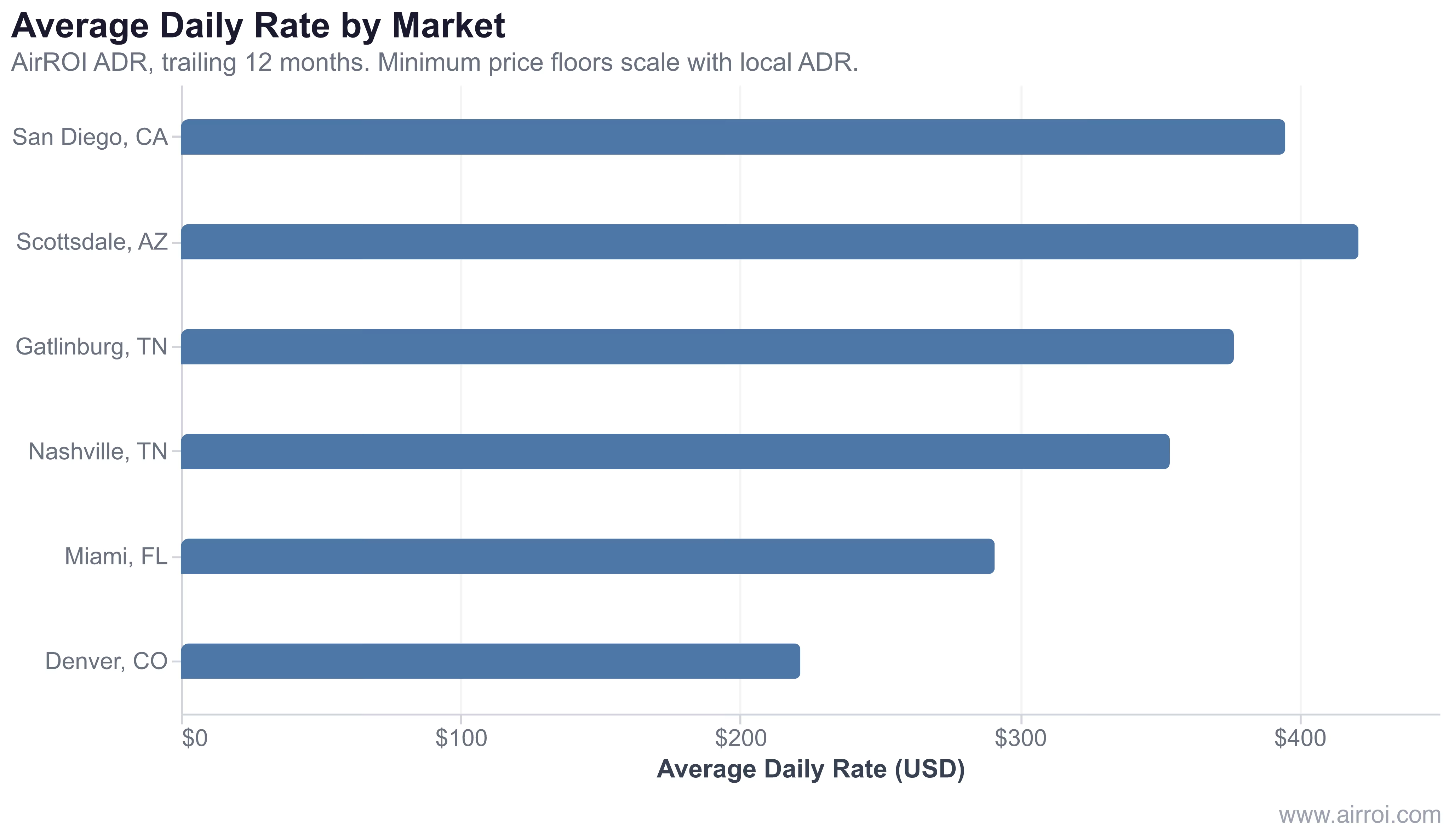
In AirROI's analysis of 35,301 active listings across these six markets, ADR ranges from $221.50 in Denver to $421.10 in Scottsdale. That spread means a minimum price that works in Denver would be far too restrictive in Scottsdale — or dangerously low in a high-cost urban market like San Diego at $394.90 ADR.
| Market | Median ADR | Suggested Minimum Range | Room for Algorithm |
|---|---|---|---|
| Scottsdale, AZ | $421.10 | $200–$295 | $126–$221 |
| San Diego, CA | $394.90 | $185–$275 | $120–$210 |
| Gatlinburg, TN | $376.50 | $175–$265 | $112–$202 |
| Nashville, TN | $353.60 | $165–$250 | $104–$189 |
| Miami, FL | $291.00 | $135–$205 | $86–$156 |
| Denver, CO | $221.50 | $100–$155 | $67–$122 |
A minimum price set above 70% of local ADR is functionally a fixed rate — the algorithm has no room to move. That rigidity costs more in vacancy than it saves in rate protection.
Why Minimum Price Matters for Airbnb Hosts
Guest quality and brand perception are secondary effects. Listings that dip to very low rates — $50–$75/night for a full property — disproportionately attract guests who cause damage or generate complaints. A defensible minimum price filters that segment without any manual effort.
Platform algorithm visibility is a lesser-known effect. Airbnb's search ranking factors in booking conversion rate. Listings with minimums so high they rarely convert on slow-demand days gradually lose ranking, compounding the vacancy problem. A calibrated floor protects both your margin and your discoverability.
Practical Tips for Setting Your Minimum Price
- Calculate from real costs, not intuition — include every line item: mortgage or rent, utilities, insurance, platform fee (~3% for Airbnb hosts), cleaning, supplies, and a 5–10% maintenance reserve.
- Exclude separately charged cleaning fees from the nightly minimum. If guests pay a cleaning fee directly, your per-night variable cleaning cost is already recovered — double-counting it inflates the floor unnecessarily.
- Benchmark against local ADR using the table above or AirROI's RevPAR data for your market. A floor at 35–45% of local ADR is a reliable starting calibration.
- Test during slow seasons: If your listing consistently books at its minimum price for weeks on end, the floor may still be too high for the market conditions. That signal means lowering it — not waiting for better demand.
- Recalculate when costs change — a mortgage refinance, new HOA fee, or utility rate increase should trigger an immediate update. Most hosts revisit pricing strategy only on large changes; minimum price deserves the same discipline as a rent-roll review. The data-driven dynamic pricing guide covers how to integrate minimum price into a full pricing stack.
- Coordinate with minimum-night settings: In markets like New York (25.8 median minimum nights) where regulation forces longer stays, the per-stay cost structure changes. Fewer turnovers mean lower cleaning costs per night, which may allow a lower minimum price than a comparable urban market with nightly turnover.
Frequently Asked Questions
Add up all your fixed and variable costs per night — including mortgage or rent, utilities, cleaning, supplies, platform fees, and maintenance reserves — then add a small profit margin. That total is your minimum price: the rate at which every booking remains profitable regardless of how low the algorithm goes.
Most hosts keep one minimum price year-round because it reflects a fixed cost floor. If your costs rise seasonally — higher heating bills in winter, for example — a slightly elevated winter minimum is appropriate, but avoid changing it so often that your dynamic pricing tool loses its guardrail.
A floor that is too high prevents the dynamic pricing algorithm from filling slow periods, leading to vacant orphan nights and lower annual revenue. In markets where the median ADR is $221–$291 (Denver and Miami), a minimum price above 70% of local ADR will block bookings during off-peak weeks.
Your minimum price should sit 30–50% below your market's average daily rate (ADR) to give the algorithm enough room to attract last-minute or slow-season bookings. In a market with a $354 ADR like Nashville, a minimum in the $175–$250 range is typically appropriate.
Yes. Tools like PriceLabs, Wheelhouse, and Airbnb's Smart Pricing all treat the minimum price as a hard floor. The algorithm will never set a rate below it, so an accurate minimum price is the single most important input you provide to any pricing tool.