
Management Fee

Key Takeaways
- Property management fees for short-term rentals typically range from 15% to 30% of gross booking revenue
- Full-service managers charge 20-30% but handle pricing, guest communication, cleaning, and maintenance — limited co-hosting services run 10-20%
- Management fees are separate from and in addition to platform fees like the Airbnb host service fee
- In high-revenue markets like San Diego, a 25% management fee consumes $13,368 of the $53,472 median annual revenue — the dollar impact scales directly with your market's earnings
- Management fees must be included in every cap rate and ROI calculation; omitting them overstates projected returns by 15-30%
How Management Fees Work
Property managers charge a percentage of gross booking revenue — the total amount the guest pays before platform fees and taxes. That fee is deducted from the payout before the owner receives their share.
Example — Monthly Revenue Breakdown:
| Item | Amount |
|---|---|
| Gross booking revenue | $5,000 |
| Airbnb host service fee (3%) | -$150 |
| Management fee (25%) | -$1,250 |
| Cleaning costs (if not included) | -$400 |
| Net owner revenue | $3,200 |
Some managers calculate their fee on net revenue (after platform fees are deducted), which lowers the absolute cost slightly. Always clarify the fee basis — gross vs. net — before signing a contract.
Management Fee Structures
| Structure | Typical Rate | Description |
|---|---|---|
| Revenue percentage | 15-30% | Most common; fee scales with bookings |
| Flat monthly fee | $500-$2,000/mo | Predictable cost; less common for STR |
| Hybrid (base + %) | $200/mo + 15% | Guaranteed minimum for the manager |
| Performance-based | 20% above target | Incentivizes the manager to maximize revenue |
| Per-booking fee | $50-$150/booking | Uncommon; used for limited channel services |
Revenue-percentage is the dominant model in STR management because it aligns the manager's incentive with the owner's — both parties benefit when occupancy and ADR rise. Performance-based structures go further, paying above a threshold only when the property exceeds a revenue target.
What the Fee Buys You by Tier
Not every management fee covers the same scope. Before comparing percentages, compare what is included:
| Service | Limited (10-18%) | Mid-tier (18-25%) | Full-service (25-30%) |
|---|---|---|---|
| Listing creation & optimization | ✓ | ✓ | ✓ |
| Guest communication | ✓ | ✓ | ✓ |
| Dynamic pricing | — | ✓ | ✓ |
| Cleaning coordination | — | ✓ | ✓ |
| Restocking & supply management | — | Partial | ✓ |
| Maintenance coordination | — | — | ✓ |
| Financial reporting | — | ✓ | ✓ |
| Review management | — | Partial | ✓ |
A 15% fee that excludes dynamic pricing can underperform a 25% fee that captures seasonal rate peaks. The net revenue after fees — not the fee percentage itself — is the number that matters.
Real Fee Cost by STR Market
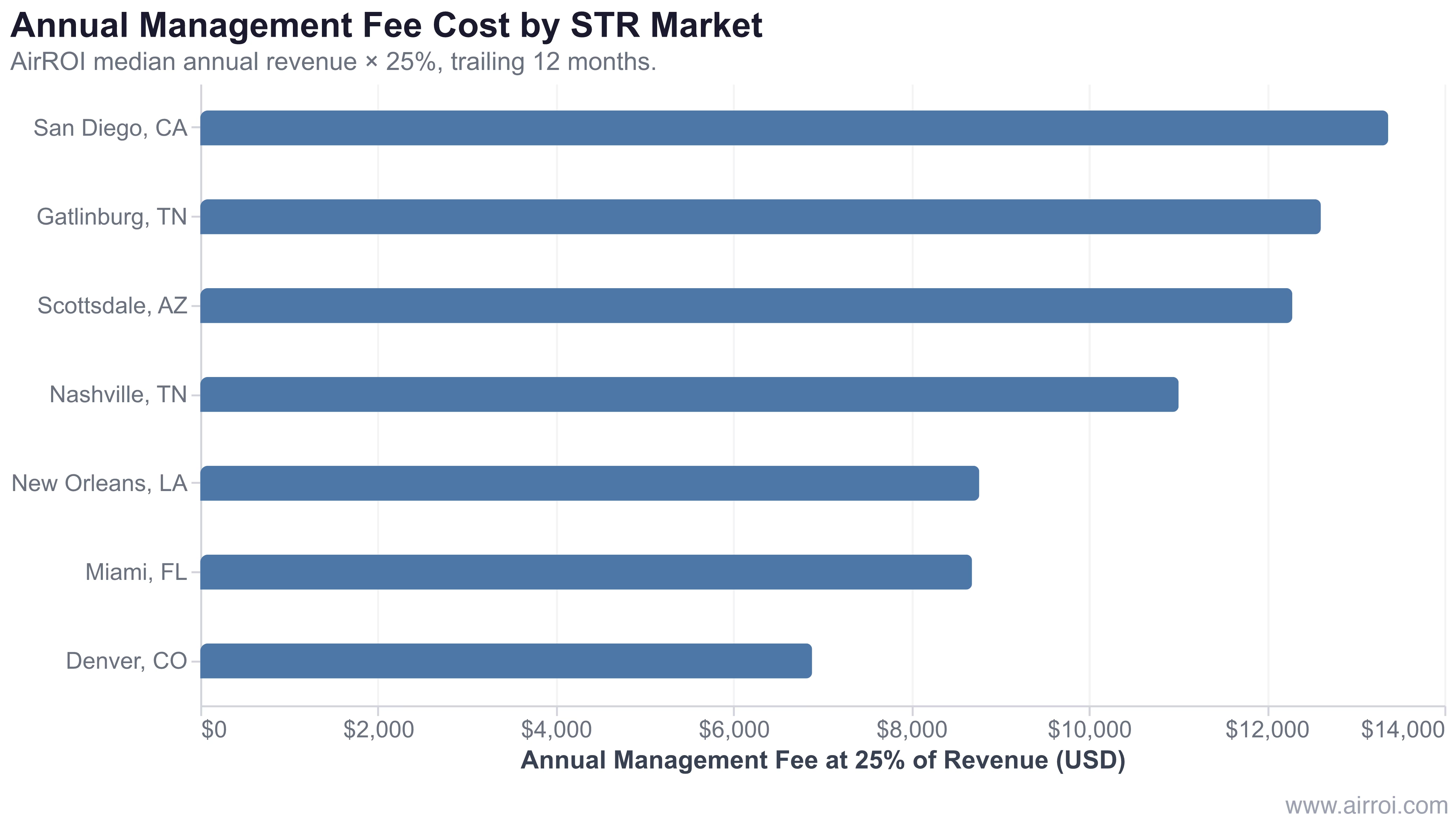
In AirROI's analysis of more than 40,000 active listings across seven US markets, the absolute cost of a 25% management fee ranges from $6,885 per year in Denver to $13,368 in San Diego — a $6,483 gap on an identical percentage. The variation reflects each market's underlying revenue, not any difference in service:
| Market | Median Annual Revenue | Management Fee (25%) |
|---|---|---|
| San Diego, CA | $53,472 | $13,368 |
| Gatlinburg, TN | $50,438 | $12,610 |
| Scottsdale, AZ | $49,153 | $12,288 |
| Nashville, TN | $44,039 | $11,010 |
| New Orleans, LA | $35,065 | $8,766 |
| Miami, FL | $34,738 | $8,685 |
| Denver, CO | $27,540 | $6,885 |
The management fee percentage is identical across every market; the revenue that percentage is applied to is not. Evaluating managers on rate alone, without anchoring to market revenue, leads investors to underestimate how much they are actually paying.
Why Management Fees Matter for Airbnb Hosts
Profitability impact: A management fee is the line item most likely to determine whether an STR investment generates meaningful cash flow. On a Nashville property earning the AirROI median of $44,039, the difference between a 20% and 30% management fee is $4,404 per year — enough to cover property taxes in many markets or shift a marginal deal from positive to negative.
Scalability: For investors who own multiple properties or live more than a short drive from their rental, professional management is not optional — it is the operating model. The fee is a cost of running a distributed portfolio.
What to Look For in a Property Manager
| Factor | Questions to Ask |
|---|---|
| Fee basis | Is the fee calculated on gross or net revenue? Are there additional charges (maintenance markup, supply fees, onboarding fees)? |
| Services included | Does the fee cover cleaning coordination, restocking, and maintenance? Or are those billed separately? |
| Pricing strategy | Do they use dynamic pricing tools? What is their rate optimization approach? |
| Performance track record | What occupancy rates and ADR do their comparable listings achieve? |
| Communication | How quickly do they respond to guest inquiries? Do they handle reviews? |
| Contract terms | What is the minimum commitment period? What are the exit and cancellation terms? |
Frequently Asked Questions
Most short-term rental property managers charge between 15% and 30% of gross booking revenue. Full-service managers handling everything from listing optimization to guest communication and cleaning typically charge 20-30%, while more limited co-hosting or channel management services charge 10-20%.
A typical management fee covers listing creation and optimization, dynamic pricing, guest communication, booking management, cleaning coordination, restocking supplies, maintenance coordination, and financial reporting. Some managers include cleaning costs in their fee, while others charge separately.
The dollar cost depends on your market revenue. At 25%, a property in San Diego earning AirROI's median $53,472 per year pays $13,368 in management fees annually. In Denver, the same 25% rate on $27,540 median revenue costs $6,885 per year. The fee percentage is the same — the revenue gap between markets drives the absolute dollar difference.
It depends on your situation. A good manager can increase your revenue through professional optimization and pricing while saving you significant time. If the manager increases your revenue by more than their fee percentage, the net result is positive. However, self-managing is more profitable if you have the time, skill, and local presence.
Management fees reduce net operating income directly and must be included as an operating expense in every cap rate or ROI calculation. Omitting them overstates projected returns. On a property generating $44,000 per year, the difference between a 20% and 30% management fee is $4,400 annually — enough to shift a marginal deal from positive to negative cash flow.