Local Airbnb rules2026 22 sources cited
Is Airbnb Legal in San Diego? 2026 Rules, Permits & Taxes
Short-term rentals are legal in San Diego with a city STRO license, which costs $226 (Tier 1), $317 (Tier 2) or $1,170 (Tier 3) for two years. Whole-home Tier 3 licenses are capped at 1% of housing units. Hotel tax is 11.75% to 13.75%.1,2,8,11,12,13,15,22
From 20 official sources and 2 Airbnb help pages. Not legal advice.
The short answer
San Diego Airbnb Rules in Brief
- A STRO license has been required since May 1, 2023: $226 for Tier 1 (20 days a year or less), $317 for Tier 2 (host lives there) and $1,170 for Tier 3 or 4 (whole home), each for two years.
- Tier 2 hosts must live in the home at least 275 days a year. Tier 3 whole-home licenses are capped at 1% of housing units, must be used at least 90 days a year and require a two-night minimum stay.
- Hotel tax is 11.75%, 12.75% or 13.75% by tax zone, collected by Airbnb; hosts still need a free city Transient Occupancy Tax certificate.
- Civil penalties can reach $10,000 per violation per day, and a third violation within 12 months can cost the license.
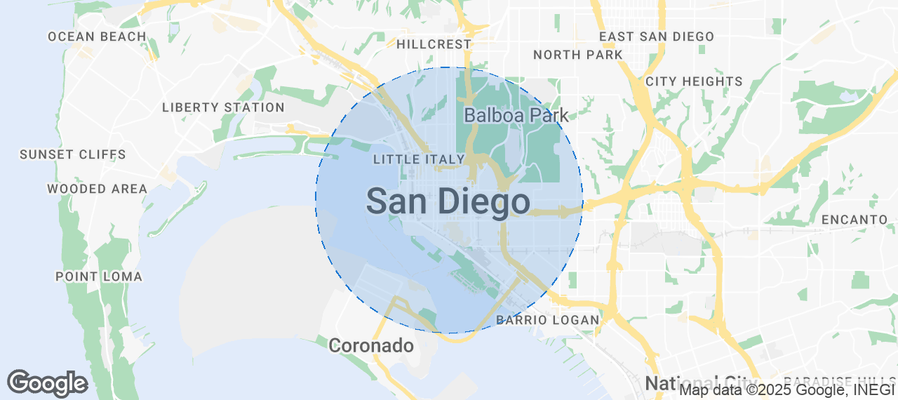 Browse the live San Diego Airbnb market See Every San Diego Listing
Revenue, occupancy and nightly rates are in the San Diego Airbnb market report .
At a glance
San Diego Airbnb Rules at a Glance
- License required
- Yes
- Taxes on a stay
- 12.75%
- Yearly night cap
- 20 nights
- Fine for hosting without a permit
- Up to $10,000
- Active Airbnb listings
- 9,530
- Next rule change
- Jan 1, 2030
The rules in brief
The rules a San Diego host meets first, each linked to the ordinance, statute or official page it comes from. Details and exceptions follow below.
| Topic | Rule |
|---|---|
| Permit | STRO license required for stays under a month1,8 |
| Who can host | Tier 2: live in the home 275 days a year1,8 |
| Where | Tier 3: whole-home licenses capped at 1% of housing units8,12 |
| Building rules | Tenants need the owner's authority8,11 |
| Night cap | Tier 1: 20 days a year or less1,8 |
| Minimum stay | Two-night minimum stay on whole-home licenses1,9 |
| Listing display | License and tax numbers on every advertisement1,9,22 |
| Platforms | Platforms may not book unlicensed homes2,8 |
| Safety | Fire Code compliance1 |
| Neighbors | Notice posted outside the home1,8 |
Your home
Can You Host an Airbnb in San Diego? It Depends on the Home
Whether you can host in San Diego turns on whose home it is and whether you live there.
A second home or investment property you don't live in
Allowed with conditionsPossible only on a Tier 3 license, which is capped at 1% of housing units (802 left on October 9, 2026), must be used at least 90 days a year and requires a two-night minimum stay. Renting 21 to 89 days a year is not allowed.1,8
A whole home in Mission Beach
Not allowedNew whole-home licenses are not available: all 1,099 Tier 4 licenses were issued as of October 9, 2026 and the waitlist application period closed on August 15, 2025. Tier 1 and Tier 2 licenses are still open.8
An accessory dwelling unit (granny flat)
Not allowedThe Municipal Code prohibits using accessory dwelling units for short-term rental; only companion units permitted before October 15, 2017 can be used.8
Permit
Do You Need a Permit for Airbnb in San Diego?
Yes. Short-term rental hosts in San Diego need the short-term Residential Occupancy license from the City of San Diego, Office of the City Treasurer. It costs $1,170 in the first year (A whole-home (Tier 3) host pays $1,170 up front for a two-year license ($41 application plus $1,129 license) and the same to renew; Tier 2 costs $317 and Tier 1 $226. The owner also pays about $55 a year in Rental Unit Business Tax.) and $1,170 a year to renew.1,2,8,11,12,13,15,22
- Who needs it
- Every host renting any home, room or part of a home in the City of San Diego for less than one month, whatever the zoning. One license per host and one dwelling unit per host.1,2,8,11,12,13,15,22
- Issued by
- City of San Diego, Office of the City Treasurer
- Valid for
- Two years from the date of issue for every tier, renewable; the City emails a renewal notice 60 days before the license expires. Licenses cannot be transferred to another host or home.
- Processing
- Tier 1 and Tier 2 licenses are issued once the application is complete and the fees are paid; Airbnb's San Diego page says a license number typically arrives within 1 business day. Tier 3 licenses go to a lottery and waitlist when applications exceed the cap, and the application period closes within 45 days of the cap being reached.
- On listings
- The number must appear on every listing
- Platform checks
- City law bars a hosting platform from processing a booking unless the listing has a valid license number on the City's registry, and platforms send the City monthly listing data. Airbnb requires San Diego hosts to add the STRO and Transient Occupancy Tax numbers to the listing.
Fees
| Fee | Amount |
|---|---|
| Tier 1 license (20 days a year or less)License fee, plus a $33 non-refundable application fee: $226 in all. Renewal costs the same. | $193 |
| Tier 2 license (home share)License fee, plus a $33 non-refundable application fee: $317 in all. Renewal costs the same. | $284 |
| Tier 3 license (whole home outside Mission Beach)License fee, plus a $41 non-refundable application fee: $1,170 in all. Renewal costs the same. | $1,129 |
| Tier 4 license (whole home in Mission Beach)License fee, plus a $41 non-refundable application fee: $1,170 in all. New applications are closed. | $1,129 |
| Transient Occupancy Tax certificateFree; required before applying for a STRO license and listed on every advertisement. | $0 |
| Rental Unit Business Tax$50 per parcel plus $5 per unit for a single-family home or condominium, owed by owners who rent for more than 6 days a year. | $55 |
| Business Tax Certificate (hosts who do not own the home)For a business with 12 employees or fewer. | $34 |
Who qualifies
- The host must be a natural person aged 18 or older with the legal right to occupy the home and allow stays under a month: the owner, or a tenant whose lease allows subletting for less than a month. An LLC cannot be the host.
- Tier 1: 20 rental days or less a year; the host does not need to live there, but a room rented under Tier 1 must be in the host's primary residence.
- Tier 2: rooms in the host's primary residence for more than 20 days a year, or the whole home for up to 90 days a year while the host is away; the host must live there at least 275 days a year.
- Tier 3: whole-home rentals for more than 20 days a year outside Mission Beach, capped at 1% of housing units; must be used at least 90 days a year, with a two-night minimum stay.
- Tier 4: the same for Mission Beach, capped at 30% of housing units there; all licenses are issued and applications are closed.
- An active Transient Occupancy Tax certificate, a paid Rental Unit Business Tax account, and, for hosts who do not own the home, a Business Tax Certificate and a right-to-occupy document.
- No pending City enforcement action on the home and no license revoked in the past 12 months.
- Accessory dwelling units, vehicles and temporary structures are not eligible.
How to apply
- Confirm the home is inside the City of San Diego (its nine council districts); homes outside city limits are not covered by the city ordinance.
- Choose a tier: Tier 1 for 20 days a year or less, Tier 2 for rooms or a home you live in at least 275 days a year, Tier 3 for a whole home outside Mission Beach.
- Get a free Transient Occupancy Tax certificate through the Transient Occupancy Registration System and confirm the parcel's Rental Unit Business Tax account is active and paid. A host who is not the owner also needs a Business Tax Certificate and a right-to-occupy document.
- Apply through the City's online STRO portal, list every platform where the home is advertised, upload the required documents and pay the application and license fees.
- Add the Transient Occupancy Tax and STRO license numbers to every listing, post the exterior notice and give guests the Good Neighbor Policy.
- Renew before the two-year term ends; a lapsed license means starting a new application.
Applications go through the City of San Diego, Office of the City Treasurer application portal .
Permit rules
- STRO license required for stays under a month
- Any rental of a home, or part of a home, for less than one month in the City of San Diego needs an STRO license. Operating without one has been unlawful since May 1, 2023.1,8 In force since May 1, 2023
- Tax certificate and no pending enforcement before applying
- An application needs a Transient Occupancy Tax certificate number, proof of the Rental Unit Business Tax where it applies, and cannot be processed for a home with a pending City enforcement action.1,8
- License and tax numbers on every advertisement
- Every advertisement must show the Transient Occupancy Tax certificate number and the STRO license number.1,9,22
- Platforms may not book unlicensed homes
- A hosting platform may not process a booking for a home without a valid license number on the City's registry, must collect and remit the hotel tax when it collects rent, and must send the City monthly listing data.2,8 Applies to: Hosting platforms
- Advertised price must include mandatory fees
- Since July 1, 2024, California's Honest Pricing Law (SB 478) applies to short-term rentals: the advertised price must include mandatory fees, and only government taxes and fees may be listed separately.18 In force since July 1, 2024
Who can host
Who Can Host an Airbnb in San Diego, and Where
California state law applies on top of San Diego's own rules: the California short-term rental regulations page covers the state license and what cities and counties can and can't regulate.
- Tier 2: live in the home 275 days a year
- A Tier 2 (home share) host must use the home as their primary residence at least 275 days of the year in which it is rented, and may rent rooms for more than 20 days a year.1,8
- Tier 3: whole-home licenses capped at 1% of housing units
- Tier 3 licenses for whole homes outside Mission Beach are limited to 1% of the city's housing units outside Mission Beach. On October 9, 2026, 4,859 had been issued and 802 remained; once the cap is reached, applications close within 45 days and a lottery sets the waitlist.8,12 Applies to: Whole homes outside Mission Beach
- Tier 4: Mission Beach whole homes closed
- Whole-home licenses in Mission Beach are capped at 30% of the housing units there. All 1,099 Tier 4 licenses were issued as of October 9, 2026, and the waitlist application period closed on August 15, 2025.1,8 Applies to: Mission Beach
- One license and one home per host
- A host may hold one license at a time and operate one dwelling unit; licenses cannot be transferred to another host or home, and a property manager cannot be the host of several homes.8
- Host must be an adult natural person
- The City Treasurer's July 2026 regulation requires the host to be at least 18 years old when applying; the ordinance defines a host as a natural person, so a company cannot hold the license.11
- Tenants need the owner's authority
- A host who is not the owner needs a Business Tax Certificate and a right-to-occupy document, such as a lease that allows stays under a month or the owner's signed authorization form.8,11 Applies to: Tenants and managers
- Applies in every zone
- The ordinance covers all dwelling units in the City regardless of base zoning, so there is no zone where a license is not needed.8
- No accessory dwelling units
- Accessory dwelling units (ADUs, or granny flats) cannot be used for short-term rental; only companion units permitted before the October 15, 2017 prohibition qualify.8 Applies to: ADUs · In force since October 15, 2017
- Coastal licensing requirement set to lapse on January 1, 2030
- The licensing and tier provisions that form part of the certified Local Coastal Program stay in force in the Coastal Overlay Zone until January 1, 2030 unless the City amends them or the Coastal Commission extends the date.1 Applies to: Coastal Overlay Zone · Takes effect January 1, 2030
Operating rules
Operating Rules for San Diego Short-Term Rentals
- Tier 1: 20 days a year or less
- A Tier 1 license covers home share or whole-home rentals totaling 20 days or less in a calendar year. A room rented under Tier 1 must be in the host's primary residence, and the host does not need to live in the home for whole-home days.1,8
- Tier 2: whole home up to 90 days while away
- A Tier 2 host may rent the whole home while away for up to 90 days a calendar year.8
- Whole-home licenses must be used 90 days a year
- A Tier 3 or Tier 4 host must use the license at least 90 days each year and file quarterly reports showing the days the home was rented.1,8 Applies to: Tier 3 and Tier 4
- No whole-home hosting for 21 to 89 days a year
- A host who is not living in the home cannot rent it for 21 to 89 days a year; the choices are 20 days or less, 90 days or more on a Tier 3 license, or a Tier 2 license for a primary residence.8 Applies to: Whole homes
- Two-night minimum stay on whole-home licenses
- Tier 3 and Tier 4 stays must be at least two consecutive nights by the same guest.1,9 Applies to: Tier 3 and Tier 4
- Notice posted outside the home
- A notice with the tax certificate and license numbers and a contact for the host or local contact must be visible from the sidewalk or street, on 8.5 by 11 inch paper in black, bold, 20-point capital letters.1,8
- Local contact answers within one hour
- The host or a designated local contact must respond to a complaint in person or by telephone within one hour and act to resolve it.1,8
- Good Neighbor Policy for every guest
- Hosts give guests a Good Neighbor Policy covering the number of guest rooms, the maximum number of occupants, parking, trash and noise limits; noise infractions can draw administrative citations of up to $1,000 for both the guest and the host.1,10
- Fire Code compliance
- The home must meet the current California Fire Code, which the City may confirm by inspection or a host affidavit.1
Taxes
How Much Are Airbnb Taxes in San Diego?
11.75% to 13.75% on the nightly price and any non-refundable cleaning fee, depending on tax zone; 12.75% in Zone 2, which covers the parts of the city outside downtown and the far north and south ends.
- Median nightly rate, booked nights
- $265
- Taxes on that night (12.75%)
- $34
- Guest pays, before Airbnb and cleaning fees
- $299
| Tax | Rate | Collected by |
|---|---|---|
| San Diego Transient Occupancy Tax (hotel tax) 11.75%, 12.75% or 13.75% of the rent, depending on tax zone (a 10.5% base tax plus 1.25%, 2.25% or 3.25% under Measure C), on stays of less than one month; non-refundable cleaning fees are taxable. | —3,13,14,21,22 | Airbnb |
At San Diego's median booked rate of $265 a night, the taxes collected on a booking come to about $34 a night.
What the host still handles
- A free Transient Occupancy Tax registration certificate from the Office of the City Treasurer, needed for the STRO application and shown on every listing even though Airbnb collects the tax
- Monthly Transient Occupancy Tax returns for direct bookings and platforms that do not collect the tax, due by the last day of the following month
- A Rental Unit Business Tax account for the parcel, owed by owners who rent for more than 6 days a year ($50 per parcel plus $5 per unit)
- A Business Tax Certificate for hosts who do not own the home ($34 a year for 12 employees or fewer)
- Quarterly utilization reports for Tier 3 and Tier 4 licenses3,13,14,15,21,22
Fines
How to Avoid Airbnb Fines in San Diego
Fines in San Diego fall on hosting without the short-term Residential Occupancy license, or outside the rules above. With it in hand and the rules followed, none of the fines below apply.
- Civil penalties for code violations, including STRO violations, are assessed at a daily rate of up to $10,000 per violation, capped at $500,000 per property per calendar year (amounts adjust yearly with inflation).4,6
- Administrative citations can be issued for each violation observed, in any amount up to $10,000 per day since July 15, 2026 (previously up to $1,000). The change does not apply in the Coastal Overlay Zone until the Coastal Commission certifies it.5,6
- Operating without a license can bring a Notice of Violation with penalties, and it jeopardizes the host's ability to get a license later.8
- A hearing officer may revoke a license on a third violation of the operating rules within 12 months, and the City does not process a new application from a host whose license was revoked in the previous 12 months.1
- Noise infractions can draw administrative citations of up to $1,000 for both the guest and the host.10
- Late hotel tax draws a penalty of 1% of the tax due for the first day, plus one-third of 1% for each further day, up to 25%.13
Changes
What's Changed in San Diego's Airbnb Rules, and What's Next
One change is scheduled after October 20, 2026; the most recent rules are listed first.
- January 1, 2030 UpcomingCoastal licensing requirement set to lapse
Under the sunset clause, the STRO licensing requirement stops applying in the Coastal Overlay Zone on January 1, 2030 unless the City amends it or the Coastal Commission extends the date for good cause.1
- July 31, 2026Treasurer clarifies who can be a host
A City Treasurer regulation dated July 31, 2026 requires hosts to be at least 18 and requires hosts who do not own the home to hold a Business Tax Certificate and provide a right-to-occupy document, including at renewal.11
- July 15, 2026Higher ceilings for administrative citations
Ordinance O-22109, passed June 15, 2026, raised the maximum administrative citation from $1,000 to $10,000 a day and the yearly cap on civil penalties from $400,000 to $500,000 per property. The amendment does not apply in the Coastal Overlay Zone until the Coastal Commission certifies it.4,5,6
- August 15, 2025Mission Beach waitlist applications close
The Tier 4 (Mission Beach whole home) waitlist application period closed on August 15, 2025 and the City created a waitlist by random lottery.8
- June 27, 2025Lottery rule for capped licenses
The City Treasurer issued a regulation setting how Tier 3 and Tier 4 licenses are lotteried and waitlisted once the caps are reached: applications close within 45 days of the cap, a stratified lottery by community planning area ranks the waitlist, and applications reopen when the Tier 3 waitlist reaches 75.12
- May 1, 2025
- March 1, 2025STRO fees increase
City Council approved higher STRO application and license fees from March 1, 2025: Tier 1 $33 plus $193, Tier 2 $33 plus $284, Tiers 3 and 4 $41 plus $1,129.8
- May 1, 2023STRO license required
Operating a short-term rental in the City of San Diego without a Short-Term Residential Occupancy license became unlawful on May 1, 2023.8
Listing data
What San Diego's Listings Show
AirROI, a short-term-rental data firm, counted 9,530 active Airbnb listings in San Diego over the 12 months to September 2026. 89% of them displayed a permit, license or registration number.
Minimum stay set on San Diego listings
Share of active listings by the shortest stay they accept
Minimum stay in numbers
| Shortest stay accepted | Share of listings |
|---|---|
| 1 night | 12% |
| 2 nights | 39% |
| 3 nights | 22% |
| 4–6 nights | 8% |
| 7–29 nights | 7% |
| 30+ nights | 12% |
What officials report
- 8,429
- STRO licenses issued (all tiers) · as of October 9, 2026The City had issued 8,429 STRO licenses as of October 9, 2026: 135 Tier 1, 2,336 Tier 2, 4,859 Tier 3 and 1,099 Tier 4.8
- 802
- Tier 3 whole-home licenses still available · as of October 9, 2026Of the capped Tier 3 whole-home licenses, 4,859 were issued and 802 remained available on October 9, 2026.8
- 2,336
- Tier 2 home-share licenses issued · as of October 9, 2026Tier 2 licenses are not capped; 2,336 had been issued as of October 9, 2026.8
- 0
- Tier 4 Mission Beach licenses remaining · as of October 9, 2026All 1,099 Tier 4 whole-home licenses for Mission Beach had been issued, with none remaining, as of October 9, 2026.8
Earnings
What Could a San Diego Short-Term Rental Earn?
The rules shape the numbers: a license that costs $1,170 in the first year, a cap of 20 nights a year and taxes of 12.75% that Airbnb adds to guests' bills. For a specific address, the Airbnb income calculator estimates revenue, occupancy and nightly rate from comparable listings, so you can test the numbers before applying.
FAQ
San Diego Airbnb Rules: Frequently Asked Questions
Is Airbnb legal in San Diego?
Do I need a permit for Airbnb in San Diego?
Yes. Any rental of a home or part of a home for less than one month in the City of San Diego needs a Short-Term Residential Occupancy (STRO) license, and operating without one has been unlawful since May 1, 2023.8
How much is the San Diego STRO license?
Tier 1 costs $226 ($33 application plus $193 license), Tier 2 $317 ($33 plus $284) and Tier 3 or 4 $1,170 ($41 plus $1,129), each valid for two years and renewed at the same price. The fees are not refundable.8
Can I rent a home I don't live in on Airbnb in San Diego?
How many nights can I rent my home in San Diego?
Does Airbnb collect hotel tax in San Diego?
What is the hotel tax in San Diego?
What is the fine for an illegal Airbnb in San Diego?
Can I rent my ADU or granny flat on Airbnb in San Diego?
No. The Municipal Code prohibits using accessory dwelling units for short-term rental; only companion units permitted before October 15, 2017 can qualify.8
Is there a minimum stay for Airbnb in San Diego?
Do I need to show my license number on my Airbnb listing in San Diego?
Has San Diego's short-term rental ordinance been challenged in court?
How many San Diego Airbnbs are registered?
STRO licenses issued (all tiers): 8,429 as of October 9, 20268. In AirROI's listing data, 89% of the 9,530 San Diego Airbnb listings active in the 12 months to September 2026 displayed a permit, license or registration number. A number on a listing shows the host entered one; it doesn't confirm the permit is valid.
How much does an Airbnb make in San Diego?
The average San Diego listing earned $59,100 in the 12 months to September 2026, according to AirROI, averaged across every active listing including those booked for only part of the year. The San Diego Airbnb market report breaks it down by month, property size and neighborhood.
Method
How These Rules Were Checked
Each rule on this page was checked in October 2026 against the official source cited beside it: the ordinance or statute, the permit office's own pages and the tax authority. Airbnb's help pages are cited on their own only for what Airbnb itself does, such as the taxes it collects and the permit checks it runs, and otherwise only beside an official source; news reports only for when a change was announced. Rules that could not be confirmed on an official page are left out. The Revenue and Taxation Code section was read from an Internet Archive copy.
Rules change with council votes, court rulings and new state laws, so the page is rechecked every three months and whenever a scheduled change takes effect. It summarizes the rules for information and is not legal advice; the local authority has the final word on any application.
Listing figures come from AirROI's tracking of 9,530 active San Diego Airbnb listings over the 12 months to September 2026.
Sources
Sources
Each rule above links to the source it comes from. Official ordinances, statutes and government pages come first, then Airbnb's own help pages.
- 1. San Diego Municipal Code, Chapter 5, Article 10, Division 1: Short-Term Residential Occupancy · City of San Diego
- 2. San Diego Municipal Code, Chapter 5, Article 10, Division 2: Hosting Platforms · City of San Diego
- 3. San Diego Municipal Code, Chapter 3, Article 5, Division 2: Additional, Voter-Approved Transient Occupancy Tax · City of San Diego
- 4. San Diego Municipal Code, Chapter 1, Article 2, Division 8: Administrative Civil Penalties · City of San Diego
- 5. San Diego Municipal Code, Chapter 1, Article 2, Division 9: Administrative Citations · City of San Diego
- 6. Ordinance O-22109, strikeout version (2026 Land Development Code update) · City of San Diego
- 7. California Revenue and Taxation Code section 7280 - Occupancy taxes · California Legislative Information
- 8. Short-Term Residential Occupancy (STRO) · City of San Diego Office of the City Treasurer
- 9. STRO Host Operating Requirements - Checklist (revised July 2025) · City of San Diego Office of the City Treasurer
- 10. STRO Good Neighbor Guidelines · City of San Diego Office of the City Treasurer
- 11. Regulation Clarifying STRO License Requirements (July 31, 2026) · City of San Diego Office of the City Treasurer
- 12. Regulation on STRO Lottery Administration (June 27, 2025) · City of San Diego Office of the City Treasurer
- 13. Transient Occupancy Tax (TOT)/Tourism Marketing District (TMD) · City of San Diego Office of the City Treasurer
- 14. City of San Diego 'Hotel Room Tax' to Increase Starting May 1 (news release, March 20, 2025) · City of San Diego
- 15. Rental Unit Business Tax Fees · City of San Diego Office of the City Treasurer
- 16. Application Deadline Nears for City of San Diego Whole Home, Short-Term Rental Licenses (news release, November 21, 2022) · City of San Diego
- 17. Short Term Rental Alliance of San Diego v. City of San Diego, No. 22cv1831 (S.D. Cal. June 12, 2023), order on motion to dismiss · U.S. District Court, Southern District of California
- 18. SB 478 - Hidden Fees (Honest Pricing Law) · California Attorney General
- 19. Short-Term/Vacation Rentals in the California Coastal Zone (letter to planning directors, December 6, 2016) · California Coastal Commission
- 20. Transient Occupancy Tax (TOT) Measure C FAQs · City of San Diego Office of the City Treasurer
- 21. Occupancy tax collection and remittance by Airbnb in California · Airbnb Help Center
- 22. San Diego, CA · Airbnb Help Center