Local Airbnb rules2026 17 sources cited
Is Airbnb Legal in San Francisco? 2026 Rules, Permits & Taxes
Short-term rentals are legal in San Francisco only in a host's permanent home, registered with the city for $925 (two years); entire-home stays while the host is away are capped at 90 nights a year, and hotel tax is 14%.4,6,8,11,12,13,16
From 14 official sources and 2 Airbnb help pages, checked October 17, 2026. Not legal advice.
The short answer
San Francisco Airbnb Rules in Brief
- Only a permanent resident can host: you must live and sleep in the unit at least 275 nights a calendar year, and may register only that one unit.
- Registration with the Office of Short-Term Rentals costs $925 and lasts two years; a city business registration certificate and $500,000 of liability insurance are required too.
- Unhosted (entire-home) stays are limited to 90 nights a calendar year; hosted stays are not limited.
- Hotel tax is 14% plus a 2% or 2.25% tourism assessment, which Airbnb collects. Penalties start at $484 a day per unit.
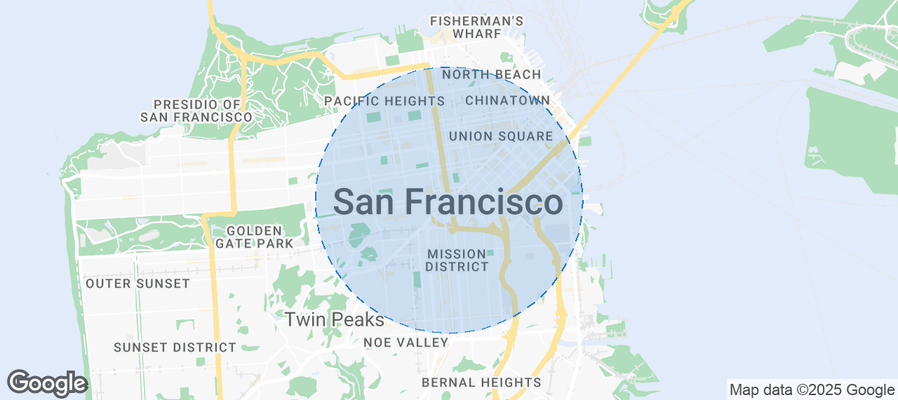 Browse the live San Francisco Airbnb market See Every San Francisco Listing
Revenue, occupancy and nightly rates are in the San Francisco Airbnb market report .
At a glance
San Francisco Airbnb Rules at a Glance
- Registration required
- Yes
- Taxes on a stay
- 16%
- Yearly night cap
- 90 nights
- Fine for hosting without a permit
- Up to $1,000
- Active Airbnb listings
- 4,260
- Latest rule change
- Aug 31, 2026
The rules in brief
The rules a San Francisco host meets first, each linked to the ordinance, statute or official page it comes from. Details and exceptions follow below.
| Topic | Rule |
|---|---|
| Permit | Two registrations before hosting6 |
| Who can host | Permanent residents only, 275 nights a year4 |
| Where | Unit types that cannot register4 |
| Building rules | Leases and HOA rules still apply4 |
| Night cap | 90 unhosted nights a year5 |
| Minimum stay | Stays of 30 nights or more are outside the short-term rules6 |
| Guests | At most five distinct renters at once4 |
| Listing display | Registration number on every listing4,6 |
| Platforms | Platforms must verify registration6 |
| Safety | Fire-safety sign and two years of records16 |
| Insurance | $500,000 liability insurance4,16 |
| Neighbors | Neighbor notice in RH-1(D) districts4 |
Your home
Can You Host an Airbnb in San Francisco? It Depends on the Home
Whether you can host in San Francisco turns on whose home it is and whether you live there.
A condo or tenancy-in-common (TIC) building
Allowed with conditionsAllowed for the resident owner. Co-owners are notified of the application, and HOA bylaws or CC&Rs, which the city does not enforce, may still prohibit it.4
Permit
Do You Need a Permit for Airbnb in San Francisco?
Yes. Short-term rental hosts in San Francisco need the short-term Residential rental registration and a San Francisco business registration certificate from the San Francisco Planning Department, Office of Short-Term Rentals; the business registration certificate comes from the Treasurer & Tax Collector. It costs $984 in the first year (A one-home host pays $925 for the registration (good for two years), plus $55 and a $4 state fee a year for the business registration certificate, which the First Year Free program may waive for a new business. The $925 applies again when the registration is renewed after two years.) and $59 a year to renew.4,6,8,11,12,13,16
- Who needs it
- Every host who rents all or part of a home for fewer than 30 nights, including a single private room while the host is home.4,6,8,11,12,13,16
- Issued by
- San Francisco Planning Department, Office of Short-Term Rentals; the business registration certificate comes from the Treasurer & Tax Collector
- Valid for
- The registration is good for two years from approval and is then renewed; the business registration certificate renews every year by the last day of February.
- Processing
- The city publishes no fixed review time; a host may list with the application record number while the review is pending.
- On listings
- The number must appear on every listing
- Platform checks
- Platforms must confirm that a home is registered before providing or charging a fee for booking services, and must send the city a monthly affidavit; Airbnb passes the registration number, expiration date and ZIP code to the city.
Fees
| Fee | Amount |
|---|---|
| Short-Term Residential Rental registry applicationNon-refundable application fee, valid for two years from approval; shown in the Planning Department fee schedule effective August 31, 2026. | $925 |
| Business registration certificate (up to $100,000 of San Francisco gross receipts)Treasurer & Tax Collector fee for the April 1, 2026 to March 31, 2027 registration year, plus a $4 state fee. New businesses with $5 million or less of gross receipts are enrolled automatically in First Year Free, which waives the initial registration fee. | $55 |
Who qualifies
- A natural person who is the owner or tenant of the unit and its permanent resident: living and sleeping in it at least 275 nights per calendar year, and for at least 60 days before applying
- Only that one unit may be offered; a host who lives in one unit of a multi-unit building cannot rent a different unit
- A valid San Francisco business registration certificate and liability insurance of at least $500,000 (or bookings only through a platform that provides equal or greater coverage)
- The unit cannot be an accessory dwelling unit (ADU), a below-market-rate or public housing unit, a single-room-occupancy unit, a dormitory, a commercial or industrial space, a vehicle or boat, or in The Presidio, Fort Mason or Treasure Island
- The unit and the whole property must be free of open building, housing and planning code enforcement cases
- Tenants may apply: the owner is notified, the lease still governs, and in a rent-controlled unit monthly rental income cannot exceed the monthly rent paid to the landlord
How to apply
- Check that you qualify: permanent resident of the unit for at least 60 days, 275 nights a year, one unit only, and an eligible building type.
- Register a business with the Treasurer & Tax Collector using the business type Accommodations, at the address of the unit, to get a Business Account Number.
- Apply online with the Office of Short-Term Rentals through the SF Public Planning Portal: business registration certificate (a pending-application receipt is enough), two proofs of residency, proof of $500,000 liability insurance unless your platform provides it, and the $925 fee.
- Put the application record number (for example 2023-123456STR) in the registration field of every listing; after approval, replace it with the certificate number (for example STR-0001234).
- Once approved, file a quarterly report of nights rented, renew the business registration each year, and file transient occupancy tax for stays booked outside Airbnb.
Applications go through the official application page .
Permit rules
- Two registrations before hosting
- A host needs a business registration certificate from the Treasurer & Tax Collector and a registration from the Office of Short-Term Rentals. A complete pending application is enough to list.6
- Registration lasts two years
- An approved registration is good for two years after the approval date. The certificate cannot be transferred to a new owner or a different unit.4,5
- Separate listings for hosted and unhosted stays
- A host who offers both whole-home stays and room stays must create a separate listing for each.6
- Registration number on every listing
- While an application is pending, every listing must carry the application record number; after approval it must carry the certificate number. A wrong number can get a listing removed and booked stays cancelled.4,6
- Platforms must verify registration
- A hosting platform must verify that a home is registered with the Office of Short-Term Rentals before providing or taking a fee for booking services, and must send the city a monthly affidavit.6
- Advertised price must include mandatory fees
- Since July 1, 2024, California's Honest Pricing Law (SB 478) bars a host or platform from advertising a short-term rental price that leaves out mandatory fees; government taxes and fees may be listed separately.14 In force since July 1, 2024
Who can host
Who Can Host an Airbnb in San Francisco, and Where
California state law applies on top of San Francisco's own rules: the California short-term rental regulations page covers the state license and what cities and counties can and can't regulate.
- Permanent residents only, 275 nights a year
- Only a natural person who lives and sleeps in the unit at least 275 nights per calendar year can host short stays there; if the host has not held the unit for the full previous year, the test is 75% of the days since moving in.4
- 60 consecutive nights before applying
- Before applying, an applicant must have lived and slept overnight in the unit for at least 60 consecutive nights.4
- One unit per host
- A permanent resident may offer only the one unit they live in. Owning or living in a multi-unit building does not allow renting a different unit.4
- Second homes and future residents are not eligible
- A host who does not currently live in the unit cannot get a certificate, even if they plan to move in later.6
- Unit types that cannot register
- Accessory dwelling units, below-market-rate and public housing units, single-room-occupancy units, dormitories, commercial and industrial space, boats and vehicles cannot be registered.4
- Not allowed in The Presidio, Fort Mason or Treasure Island
- Units in The Presidio, Fort Mason and Treasure Island cannot be registered for short-term rental.4 Applies to: The Presidio, Fort Mason, Treasure Island
- Leases and HOA rules still apply
- The city notifies the owner when a tenant applies and notifies co-owners of tenancy-in-common buildings. It does not enforce leases, HOA bylaws or CC&Rs, but those can still prohibit short-term rentals. In a rent-controlled unit, monthly rental income cannot exceed the rent the host pays.4 Applies to: Tenants, condo and HOA buildings
Operating rules
Operating Rules for San Francisco Short-Term Rentals
- 90 unhosted nights a year
- Entire-home stays while the host is not home overnight are limited to 90 nights per calendar year. Hosted stays, when the host is home overnight, are not limited.5
- At most five distinct renters at once
- No more than five distinct renters, whether long-term, intermediate-length or short-term, may live in the same unit at the same time.4
- Neighbor notice in RH-1(D) districts
- For a unit in an RH-1(D) zoning district, the city notifies owners and tenants within 300 feet and holds the application 45 days for comment before deciding.4 Applies to: RH-1(D) zoning districts
- Accessory dwelling units: 30-night minimum
- Legally established accessory dwelling units may be rented only for stays of 30 days or longer, per guest.6 Applies to: Accessory dwelling units
- Stays of 30 nights or more are outside the short-term rules
- Rentals of more than 30 consecutive nights to the same visitors are not short-term rentals and carry no hotel tax, though tenant protections and rent control rules may apply. Unhosted stays of 30 nights or more still count against the 275-night residency test.6
- $500,000 liability insurance
- A host must carry liability insurance of at least $500,000 covering short-term rental use, or book every stay through a platform that provides equal or greater coverage. Airbnb says its host liability insurance satisfies the requirement for hosts who book only on Airbnb.4,16
- Quarterly reports of nights rented
- Approved hosts report the nights rented, hosted and unhosted, within 30 days after each quarter ends (January, April, July and October), even when there were none. A pending application does not file reports.5
- Fire-safety sign and two years of records
- A host posts a printed sign inside the front door showing the fire extinguishers, gas shut-off valves, fire exits and pull alarms, and keeps records proving primary residence and the dates of every rental.16
- No open code enforcement on the property
- The unit must be free of open enforcement cases; in an apartment or tenancy-in-common building the whole property must be free of them, and all sleeping rooms must be legally recognized for overnight sleeping.4
- Noise and parties can cost the certificate
- Ongoing noise, event or party complaints can lead to revocation of the certificate, and no exterior signage is allowed.5
- 30 days to appeal a denial or revocation
- A rejected, suspended or revoked registration can be appealed in writing within 30 calendar days, but the host must still cancel reservations and remove listings of fewer than 30 nights while the appeal is pending.6
Taxes
How Much Are Airbnb Taxes in San Francisco?
About 16% to 16.25% on the nightly price, cleaning fee and guest fee: the 14% hotel tax plus a 2% or 2.25% tourism assessment, both collected by Airbnb at checkout.
- Median nightly rate, booked nights
- $200
- Taxes on that night (16%)
- $32
- Guest pays, before Airbnb and cleaning fees
- $232
| Tax | Rate | Collected by |
|---|---|---|
| San Francisco transient occupancy tax (hotel tax) 14% of the rent for stays of fewer than 30 days | 14%9,16,17 | Airbnb |
| Tourism Improvement District (TID) assessment 2.25% in Zone 1 (on or east of Van Ness Avenue, and north of 16th Street) and 2.00% in Zone 2 (west of Van Ness Avenue, and south of 16th Street); in effect since November 1, 2024 | —9,10,15,17 | Airbnb |
At San Francisco's median booked rate of $200 a night, the taxes collected on a booking come to about $32 a night.
What the host still handles
- A San Francisco business registration certificate (business type Accommodations) from the Treasurer & Tax Collector, before applying to the Office of Short-Term Rentals; renewed each year by the last day of February
- Annual transient occupancy tax and TID returns, due January 31, for any stays booked outside Airbnb or another Qualified Website Company, filed even when no rent was received
- A business personal property statement (Form 571-STR) with the Assessor-Recorder when the annual notice requires it, due May 7
- No Certificate of Authority is needed for hosts5,9,10,11,15,16,17
Fines
How to Avoid Airbnb Fines in San Francisco
Fines in San Francisco fall on hosting without the approvals described above, or outside the rules. With them in hand and the rules followed, none of the fines below apply.
- Civil penalties of up to $1,000 per day for the period of the unlawful activity, in a lawsuit brought by the City, against an owner, business entity or hosting platform that breaks Chapter 41A.3
- Administrative penalties of at least $484 per day for each unit in violation, starting on the day the Office of Short-Term Rentals issues a Notice of Violation and running until the violation ends.5,8
- Repeat violations: $968 per day per unit for a second violation, and referral to the City Attorney's Office for additional civil or criminal penalties.7
- Misdemeanor: a fine of up to $1,000, up to six months in county jail, or both, with each unit rented counted as a separate offense.3
- Listings with a missing or wrong registration number can be removed from the platform and pending reservations cancelled.4,6
- The registration can be revoked for ongoing noise, event or party complaints; a host whose application is denied, or whose certificate is suspended or revoked, must cancel reservations and remove listings of fewer than 30 nights even while appealing.5,6
Changes
What's Changed in San Francisco's Airbnb Rules
No change was scheduled when the rules were checked on October 17, 2026; the most recent are listed first.
- August 31, 2026Planning fee schedule for 2026-27 takes effect
The Planning Department's fee schedule for fiscal year 2026-27 came into effect on August 31, 2026; it lists the Short-Term Residential Rental registry application at $925 and the notice-of-violation penalty at $484 a day.8
- July 28, 2026Tourism Improvement District board extends the higher rates again
On August 18, 2025 and again on July 28, 2026 the Tourism Improvement District board voted to extend the 1% increase, so the 2.25% and 2.00% rates continue.15
- February 2026Business registration renewal moves to the end of February
Beginning in 2026, San Francisco business registrations renew by the last day of February, as part of one annual business registration and tax form.5
- November 1, 2024Tourism assessment rises by 1 point
The Tourism Improvement District board raised the assessment by 1% in both zones, to 2.25% in Zone 1 and 2.00% in Zone 2, effective November 1, 2024.15
- July 1, 2024California Honest Pricing Law takes effect
SB 478 began requiring advertised prices, including short-term rental prices, to include all mandatory fees.14
- January 1, 2024Tourism Improvement District assessment extends to hosts
Short-term residential hosts became subject to the Tourism Improvement District assessment on January 1, 2024. From May 1, 2024, Airbnb and the other Qualified Website Companies include the assessment when they remit the hotel tax for hosts.10
Earnings
What Could a San Francisco Short-Term Rental Earn?
The rules shape the numbers: a registration that costs $984 in the first year, a cap of 90 nights a year and taxes of 16% that Airbnb adds to guests' bills. For a specific address, the short-term rental calculator estimates revenue, occupancy and nightly rate from comparable listings, so you can test the numbers before applying.
FAQ
San Francisco Airbnb Rules: Frequently Asked Questions
Is Airbnb legal in San Francisco?
Do I need a permit for Airbnb in San Francisco?
How much is the San Francisco short-term rental registration?
Can I rent a home I don't live in on Airbnb in San Francisco?
How many nights can I rent my whole home?
Does Airbnb collect hotel tax in San Francisco?
What is the total tax on an Airbnb stay in San Francisco?
What is the fine for an illegal Airbnb in San Francisco?
Can I list my Airbnb while my application is pending?
Do I need liability insurance to host in San Francisco?
Can I rent out an in-law unit or ADU on Airbnb in San Francisco?
Can a tenant host on Airbnb in San Francisco?
How many San Francisco Airbnbs are registered?
In AirROI's listing data, 58% of the 4,260 San Francisco Airbnb listings active in the 12 months to October 2026 displayed a permit, license or registration number. A number on a listing shows the host entered one; it doesn't confirm the permit is valid.
How much does an Airbnb make in San Francisco?
The average San Francisco listing earned $41,700 in the 12 months to October 2026, according to AirROI, averaged across every active listing including those booked for only part of the year. The San Francisco Airbnb market report breaks it down by month, property size and neighborhood.
Method
How These Rules Were Checked
Each rule on this page was checked in October 2026 against the official source cited beside it: the ordinance or statute, the permit office's own pages and the tax authority. Airbnb's help pages are cited on their own only for what Airbnb itself does, such as the taxes it collects and the permit checks it runs, and otherwise only beside an official source; news reports only for when a change was announced. Rules that could not be confirmed on an official page are left out. The San Francisco Administrative Code (Chapter 41A) was read in a browser from American Legal Publishing; the California Revenue and Taxation Code section was read from an Internet Archive copy.
Rules change with council votes, court rulings and new state laws, so the page is rechecked every three months and whenever a scheduled change takes effect. It summarizes the rules for information and is not legal advice; the local authority has the final word on any application.
Listing figures come from AirROI's tracking of 4,260 active San Francisco Airbnb listings over the 12 months to October 2026.
Sources
Sources
Each rule above links to the source it comes from. Official ordinances, statutes and government pages come first, then Airbnb's own help pages.
- 1. San Francisco Administrative Code, Chapter 41A (Sections 41A.5 to 41A.7) · American Legal Publishing, for the City and County of San Francisco
- 2. California Revenue and Taxation Code section 7280 - Occupancy taxes · California Legislative Information
- 3. San Francisco Administrative Code, Section 41A.5 (Unlawful conversion; remedies) · American Legal Publishing, for the City and County of San Francisco
- 4. Become a Certified Host · San Francisco Planning, Office of Short-Term Rentals
- 5. Maintain Your Certified Host Status · San Francisco Planning, Office of Short-Term Rentals
- 6. FAQs on Short-Term Rentals · San Francisco Planning, Office of Short-Term Rentals
- 7. Complaints and Enforcement · San Francisco Planning, Office of Short-Term Rentals
- 8. Fee Schedule Calculator (effective August 31, 2026) · San Francisco Planning Department
- 9. Transient Occupancy Tax (TOT) · San Francisco Treasurer & Tax Collector
- 10. Notice to Short-Term Residential Hosts: Tourism Improvement District Assessment and Filing Changes · San Francisco Treasurer & Tax Collector
- 11. Register a Business · San Francisco Treasurer & Tax Collector
- 12. First Year Free · San Francisco Treasurer & Tax Collector
- 13. Guide to opening a short-term residential rental · SF.gov
- 14. SB 478 - Hidden Fees (Honest Pricing Law) · California Attorney General
- 15. San Francisco Tourism Improvement District · San Francisco Tourism Improvement District Management Corporation
- 16. San Francisco, CA · Airbnb Help Center
- 17. Occupancy tax collection and remittance by Airbnb in California · Airbnb Help Center