Local Airbnb rules2026 22 sources cited
Is Airbnb Legal in Orlando? 2026 Rules, Permits & Taxes
In the City of Orlando, short stays are legal only as registered home sharing: the host lives on site, rents up to half the bedrooms to one booking at a time, and pays $275 the first year. Renting a whole home is generally not allowed.1,2,10,11
From 21 official sources and 1 Airbnb help page. Not legal advice.
The short answer
Orlando Airbnb Rules in Brief
- City registration is required: $275 the first year, then $100 a year ($125 if the host does not own the home).
- The host must live on site and be present, rent no more than half the bedrooms, and take one booking at a time, with at most four unrelated guests or two per room.
- Renting an entire home is not allowed as home sharing; whole-unit stays of 7 to 29 nights are a Commercial Dwelling Unit, limited to certain zoning districts.
- Lodging taxes add 12.5% to a stay (6% state, 0.5% county surtax, 6% Orange County tourist tax), and Airbnb collects all three.
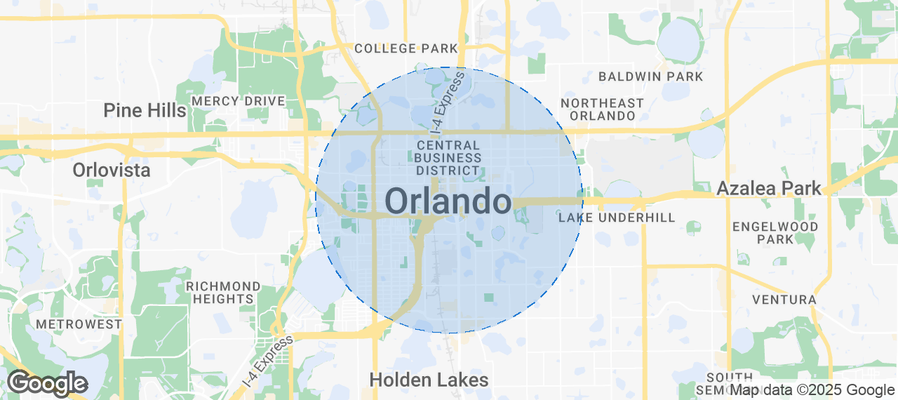 Browse the live Orlando Airbnb market See Every Orlando Listing
Revenue, occupancy and nightly rates are in the Orlando Airbnb market report .
At a glance
Orlando Airbnb Rules at a Glance
- Registration required
- Yes
- Taxes on a stay
- 12.5%
- Fine for hosting without a permit
- Up to $5,000
- Listings showing a permit number
- 0%
- Latest rule change
- Jul 1, 2025
Listing figures: AirROI, 12 months to September 2026. A number on a listing doesn't prove the permit or license is valid, and a missing one doesn't prove there is none.
The rules in brief
The rules an Orlando host meets first, each linked to the ordinance, statute or official page it comes from. Details and exceptions follow below.
| Topic | Rule |
|---|---|
| Permit | Home sharing needs a city registration with an annual fee1,10 |
| Who can host | The host must live on site and be present1,10 |
| Where | Whole-property rentals are a Commercial Dwelling Unit in limited zones10,11 |
| Building rules | A mandatory HOA must approve in writing10 |
| Minimum stay | Home sharing covers stays under 30 days11 |
| Guests | Four unrelated guests, or two per room1,10 |
| Listing display | Show the registration on every online ad1,10 |
| Platforms | Airbnb collects the state tax, the surtax and Orange County's tourist tax22 |
| Safety | Converted spaces must be inspected before they are rented11 |
| Neighbors | No group-home set-ups10 |
Your home
Can You Host an Airbnb in Orlando? It Depends on the Home
Whether you can host in Orlando turns on whose home it is and whether you live there.
Your own home, rented whole while you're away
Not allowedNot allowed as home sharing, which requires the host on site and at most half the bedrooms. A whole-property rental is a Commercial Dwelling Unit, limited to certain zoning districts and requiring a Business Tax Receipt, and a whole unit also needs the DBPR license.10,11,13
Permit
Do You Need a Permit for Airbnb in Orlando?
Yes. Short-term rental hosts in Orlando need the Home Sharing Registration from the City of Orlando, City Planning Division. It costs $275 in the first year ($275 the first year, then $100 a year for an owner who lives on the property or $125 a year otherwise; no Business Tax Receipt applies to home sharing.) and $100 a year to renew.1,2,10,11
- Who needs it
- Any Orlando resident who rents bedrooms or another part of the home they live in for stays under 30 days, including through Airbnb or VRBO.1,2,10,11
- Issued by
- City of Orlando, City Planning Division
- Valid for
- The registration is paid for each year; the city charges an annual fee to keep it active, and a violation of the home sharing rules leads to revocation.
- On listings
- The number must appear on every listing
- Platform checks
- The registration approval must appear with every online listing; the city's pages describe no platform verification of registration numbers.
Fees
| Fee | Amount |
|---|---|
| First-year registrationPaid when applying online for the first year. | $275 |
| Annual fee, owner lives on the propertyEach year after the first. | $100 |
| Annual fee, non-owner-occupied propertyEach year after the first, for example when a tenant is the registrant. | $125 |
Who qualifies
- The registrant lives on site and is present when hosting guests, and provides two forms of proof of residence to establish primary residency.
- The home is inside the City of Orlando limits; unincorporated Orange County has separate rules.
- No more than half of the dwelling unit (half the bedrooms) is used for home sharing, with one booking at a time.
- A tenant registrant provides notarized permission from the landlord or owner.
- A home in a mandatory homeowners' association includes an approval letter from the HOA.
- One half of a duplex may be home-shared only if both units are on the same lot and under one ownership.
- The home is not set up as a group home (for example with locks or partitions limiting access to parts of the home).
How to apply
- Confirm the address is inside the City of Orlando limits (the Orange County Property Appraiser lists the municipality); unincorporated addresses follow Orange County rules.
- Check the property's zoning on the city's Zoning Portal and gather two forms of proof of residence, the bedroom count, a notarized owner permission letter if you are a tenant, and an HOA approval letter if the home is in a mandatory HOA.
- Apply online for the Home Sharing Registration and pay the $275 first-year fee.
- Link the proof of registration to every online advertisement and describe the listing as the part of the home you rent, for example one bedroom in a three-bedroom house.
Applications go through the City of Orlando, City Planning Division application portal .
Permit rules
- Home sharing needs a city registration with an annual fee
- The host applies online and pays a $275 first-year fee, then $100 a year if the owner lives on the property or $125 a year if not.1,10 In force since July 1, 2018
- Show the registration on every online ad
- Proof of registration must be linked to any online advertising, and the ad must describe only the part of the home that is rented, for example one bedroom in a three-bedroom house.1,10
- Violations lead to revocation of the registration
- Any violation of the home sharing standards or of another law applicable to the property results in revocation of the registration approval. Taxes on the stays must be remitted.1
- Whole-unit rentals need the Florida DBPR vacation rental license
- A whole unit rented more than three times a year for under 30 days needs a state vacation rental license from DBPR. For Orange County, the license renews each April 1 and costs $50 to apply, $10 for education and $170 a year for one unit ($90 for a half-year license).13,14 Applies to: entire units
- Renting only a room does not need the DBPR license
- Renting a single room or rooms rather than the whole unit is not classified as public lodging, so no state license applies. The city registration still does.13 Applies to: room rentals
- Airbnb collects the state tax, the surtax and Orange County's tourist tax
- On stays of 182 nights or fewer, Airbnb collects and remits the 6% Florida transient rental tax, the county surtax and the 6% Orange County tourist development tax.22 Applies to: Airbnb bookings
Who can host
Who Can Host an Airbnb in Orlando, and Where
Florida state law applies on top of Orlando's own rules: the Florida short-term rental regulations page covers the state license and what cities and counties can and can't regulate.
- The host must live on site and be present
- Home sharing is for hosted visits only. The registered resident, an owner or a tenant, lives on the property and is there while guests stay.1,10 In force since July 1, 2018
- Renting an entire home is not allowed as home sharing
- An owner cannot rent all the bedrooms or the whole unit for 1 to 29 days under the home share rules. Whole-property rentals are a separate category with their own zoning and tax receipt.10,11 Applies to: entire homes and units · In force since July 1, 2018
- Two proofs of residence establish primary residency
- The application includes two forms of proof that the applicant lives at the property, plus the total bedroom count and how many bedrooms will be used for guests.1,10
- No more than half the home can be used
- Only half of the bedrooms, at most, can be devoted to guests: one bedroom in a three-bedroom house, or two in a four-bedroom house.10
- A mandatory HOA must approve in writing
- If the home is in a mandatory homeowners' association, the registration includes an approval letter from the HOA. HOA covenants can add further limits.10 Applies to: homes in HOAs
- Tenants need notarized permission from the owner
- A tenant can register if the tenant lives on site and provides notarized permission from the landlord or owner.1,10 Applies to: tenants
- Duplex halves and two-family units
- Home sharing is an accessory use to houses, attached homes, multifamily homes and similar residential uses. In a two-family dwelling the owner may rent the entire other unit if the owner lives in the first unit, the rented unit is no larger, and both are under one ownership.1,10 Applies to: two-family dwellings
- Whole-property rentals are a Commercial Dwelling Unit in limited zones
- The city classifies a whole-property rental as a Commercial Dwelling Unit, which is limited to certain zoning districts and requires a Business Tax Receipt. The city's Zoning Portal shows which districts allow it.10,11 Applies to: entire homes and units
- Outside city limits, Orange County rules apply
- The city's home share rules apply only inside Orlando. The county collecting a tourist tax does not make short-term rentals allowed everywhere: the city says only about 4% of Orange County is zoned for short-term rentals.10 Applies to: properties outside the City of Orlando
- State law limits local bans and caps, except rules from 2011 or earlier
- Florida bars local rules that prohibit vacation rentals or regulate how long or how often they are rented, unless the local rule was adopted on or before June 1, 2011.4 In force since June 1, 2011
Operating rules
Operating Rules for Orlando Short-Term Rentals
- One booking at a time
- Only a single booking is allowed at one time, so a host cannot rent separate rooms to different parties on the same nights.1,10
- Four unrelated guests, or two per room
- A single booking can have no more than four unrelated people, or two people per room, whichever is less.1,10
- Home sharing covers stays under 30 days
- In Orlando a short-term rental is a stay of less than 30 days. Stays of 30 days or more are ordinary residential leases outside the home share rules.11
- Commercial Dwelling Unit stays run 7 to 29 consecutive days
- A Commercial Dwelling Unit is a self-contained unit rented for 7 to 29 consecutive days. A unit rented for fewer than 7 consecutive days is classified as a motel.2 Applies to: entire homes and units
- Home sharing is an accessory use, not a business or vacation rental
- The city code defines owner-occupied home sharing as an accessory residential use. It is not treated as a transient establishment or vacation rental under Chapter 509, Florida Statutes, or as a business for the city's business tax chapter.2
- Converted spaces must be inspected before they are rented
- Living spaces must be properly inspected and permitted. A garage or carport enclosure cannot be rented until its inspection is finalized.11 Applies to: converted spaces
- No group-home set-ups
- A home sharing property cannot be arranged as a group home, for example with locks, partitions or individually kept kitchen equipment that limit free access to parts of the home.10
- Renting a whole homestead can end the homestead exemption
- Renting all or substantially all of a home previously claimed as homestead counts as abandoning the homestead for tax purposes.8 Applies to: homestead-exempt owners renting the whole home
- Hosts remit the tourist tax monthly when they collect it themselves
- Whoever collects the rent from the guest must collect the 6% Orange County tourist development tax and remit it to the Orange County Comptroller. Returns are monthly, due on the 1st of the following month and delinquent after the 20th.21 Applies to: bookings made outside Airbnb
Taxes
How Much Are Airbnb Taxes in Orlando?
About 12.5% on the nightly price and cleaning fee (6% state, 0.5% county surtax, 6% Orange County tourist tax), all collected by Airbnb.
12.5% in all
How the 12.5% on a Orlando stay splits between the taxes in the table below
- Florida state transient rental tax (sales tax on short-term rentals) 6%
- Orange County Tourist Development Tax 6%
- Orange County discretionary sales surtax 0.5%
- Median nightly rate, booked nights
- $175
- Taxes on that night (12.5%)
- $22
- Guest pays, before Airbnb and cleaning fees
- $197
| Tax | Rate | Collected by |
|---|---|---|
| Florida state transient rental tax (sales tax on short-term rentals) 6% of the room price, including the cleaning fee, on stays of six months or less | 6%7,22 | Airbnb |
| Orange County discretionary sales surtax 0.5% of the rent in Orange County, in place through December 31, 2035 | 0.5%16,22 | Airbnb |
| Orange County Tourist Development Tax 6% of the listing price, including the cleaning fee, on stays of 182 nights or fewer | 6%15,21,22 | Airbnb |
At Orlando's median booked rate of $175 a night, the taxes collected on a booking come to about $22 a night.
Rates for every Florida county, with which ones Airbnb collects, are on the Florida short-term rental regulations page.
What the host still handles
- Florida Department of Revenue: register (DR-1) to collect, report and remit sales tax on transient rentals; Airbnb remits the state tax and surtax on its own bookings, so an Airbnb-only host should confirm with DOR whether returns are still needed.
- Orange County tourist development tax: the person who collects the rent from the guest, owner or manager, collects the tax and remits it to the Orange County Comptroller; for bookings outside Airbnb this is a monthly return, due on the 1st and delinquent after the 20th.
- Business Tax Receipt and Certificate of Use with the City of Orlando for a Commercial Dwelling Unit (whole-property rental); home sharing is not treated as a business for the city's business tax.
- DBPR vacation rental license for any whole unit rented more than three times a year for under 30 days.7,15,16,17,20,21,22
Fines
How to Avoid Airbnb Fines in Orlando
Fines in Orlando fall on hosting without the Home Sharing Registration, or outside the rules above. With it in hand and the rules followed, none of the fines below apply.
- Code Enforcement Board: up to $1,000 per day for a first violation after the compliance date, up to $5,000 per day for a repeat violation, and up to $15,000 per violation if the violation is irreparable or irreversible.3
- Citation: home sharing violations are a Class II civil infraction, with a reduced penalty of $100 for a first offense and $200 for a second, then a mandatory court hearing; the maximum civil penalty is $500 per violation, and each day is a separate violation.3
- Registration revocation: a violation of any home sharing standard or other law applying to the property leads to revocation of the registration.1
- Late or missing tourist development tax: a penalty of 10% of the tax due on the return or $50, whichever is greater, plus interest.21
- State: operating a whole-unit rental without the DBPR license is a second-degree misdemeanor, and DBPR can fine a licensee up to $1,000 per offense.5,6
Changes
What's Changed in Orlando's Airbnb Rules
No change was scheduled when the rules were checked on October 17, 2026; the most recent are listed first.
- July 1, 2025
- June 27, 2024Governor vetoes CS/SB 280 (vetoed, not struck down by a court)
Governor DeSantis vetoed the bill that would have moved vacation rental registration and platform rules to the state, leaving the s. 509.032(7) limits on local rules unchanged.19
- July 19, 2021Ordinance 2021-45 amends the home sharing registration procedure
Ordinance 2021-45, adopted July 19, 2021, is the latest amendment listed in the city code for the home sharing registration procedure (Sec. 58.990).1
- July 1, 2018Orlando home sharing ordinance takes effect
The city's home share ordinance took effect on July 1, 2018, creating the registration for residents who rent part of the home they live in.10
Listing data
What Orlando's Listings Show
AirROI, a short-term-rental data firm, counted 4,620 active Airbnb listings in Orlando over the 12 months to September 2026. 0% of them display a permit, license or registration number on the listing.
Minimum stay set on Orlando listings
Share of active listings by the shortest stay they accept, 12 months to September 2026
Minimum stay in numbers
| Shortest stay accepted | Share of listings |
|---|---|
| 1 night | 27% |
| 2 nights | 34% |
| 3 nights | 24% |
| 4–6 nights | 7% |
| 7–13 nights | 3% |
| 14–29 nights | 3% |
| 30 nights or more | 2% |
Hosts with more than one entire home account for 71% of Orlando's active entire-home listings, and hosts with five or more for 50%. The count is by Airbnb host account, so a company running homes for several owners counts as one host, and listings that take only monthly stays are included.
What officials report
- 110
- Home sharing licenses with Active status · as of October 17, 2026The city's open data set lists 110 home sharing license records with an Active status: 54 at the Active stage, 32 waiting for renewal and the rest in review, inspection or payment. Records run through September 23, 2026.12
- 531
- Home sharing license applications since 2018 · as of October 17, 2026531 applications have been submitted since June 2018; 305 were withdrawn and 83 have expired.12
Earnings
What Could an Orlando Short-Term Rental Earn?
The rules shape the numbers: a registration that costs $275 in the first year and taxes of 12.5% that Airbnb adds to guests' bills. For a specific address, the Airbnb profit calculator estimates revenue, occupancy and nightly rate from comparable listings, so you can test the numbers before applying.
FAQ
Orlando Airbnb Rules: Frequently Asked Questions
Is Airbnb legal in Orlando?
Do I need a permit for Airbnb in Orlando?
Yes. The City of Orlando requires a Home Sharing Registration, and the proof of registration must be linked to any online advertising.10
How much is the Orlando home sharing registration?
$275 the first year, then $100 a year if the owner lives on the property or $125 a year for a non-owner-occupied property.10
Can I rent out my whole house on Airbnb in Orlando?
Can I rent a home I don't live in?
How many guests and bedrooms are allowed?
No more than half of the bedrooms, one booking at a time, and no more than four unrelated people per booking or two per room, whichever is less.10
Does Airbnb collect hotel tax in Orlando?
Yes. On stays of 182 nights or fewer Airbnb collects the 6% Florida transient rental tax, the county surtax and the 6% Orange County tourist development tax.22
What is the hotel tax in Orlando?
What is the fine for an illegal Airbnb in Orlando?
Do I need a Florida DBPR license in Orlando?
Only for a whole unit rented more than three times a year for under 30 days. Renting only a room or rooms does not need the state license.13
Do the rules apply outside Orlando city limits, such as near Disney?
How many Orlando Airbnbs are registered?
Home sharing licenses with Active status: 110 as of October 17, 202612. In AirROI's listing data, 0% of the 4,620 Orlando Airbnb listings active in the 12 months to September 2026 displayed a permit, license or registration number. A number on a listing shows the host entered one; it doesn't confirm the permit is valid.
How much does an Airbnb make in Orlando?
The average Orlando listing earned $31,600 in the 12 months to September 2026, according to AirROI, averaged across every active listing including those booked for only part of the year. The Orlando Airbnb market report breaks it down by month, property size and neighborhood.
Method
How These Rules Were Checked
Each rule on this page was checked in October 2026 against the official source cited beside it: the ordinance or statute, the permit office's own pages and the tax authority. Airbnb's help pages are cited on their own only for what Airbnb itself does, such as the taxes it collects and the permit checks it runs, and otherwise only beside an official source; news reports only for when a change was announced. Rules that could not be confirmed on an official page are left out. The City of Orlando Code of Ordinances on Municode and the Orange County Comptroller FAQ page were read in a browser.
Rules change with council votes, court rulings and new state laws, so the page is rechecked every three months and whenever a scheduled change takes effect. It summarizes the rules for information and is not legal advice; the local authority has the final word on any application.
Listing figures come from AirROI's tracking of 4,620 active Orlando Airbnb listings over the 12 months to September 2026.
Sources
Sources
Each rule above links to the source it comes from. Official ordinances, statutes and government pages come first, then Airbnb's own help pages.
- 1. Orlando Code of Ordinances, Chapter 58, Part 5B(19) Owner-Occupied Home Sharing (Secs. 58.989 and 58.990) · City of Orlando (Municode)
- 2. Orlando Code of Ordinances, Chapter 66 Definitions · City of Orlando (Municode)
- 3. Orlando Code of Ordinances, Chapter 5 Code Enforcement (Secs. 5.03, 5.07, 5.12, 5.19) · City of Orlando (Municode)
- 4. Florida Statutes s. 509.032 (Duties; preemption of vacation rental regulation) · The Florida Legislature
- 5. Florida Statutes s. 509.241 (Licenses required) · The Florida Legislature
- 6. Florida Statutes s. 509.261 (Revocation or suspension of licenses; fines) · The Florida Legislature
- 7. Florida Statutes s. 212.03 (Transient rentals tax) · The Florida Legislature
- 8. Florida Statutes s. 196.061 (Rental of homestead to constitute abandonment) · The Florida Legislature
- 9. Florida Statutes s. 509.013 (Definitions) · The Florida Legislature
- 10. Home Sharing Registration · City of Orlando
- 11. Fact Sheet: Short-Term Rentals (August 2021) · City of Orlando, City Planning
- 12. Short Term Rental Licenses · City of Orlando Open Data Portal
- 13. Vacation Rentals and Timeshare Projects: licensing guide · Florida DBPR, Division of Hotels and Restaurants
- 14. Lodging license fees · Florida DBPR, Division of Hotels and Restaurants
- 15. Local Option Transient Rental Tax Rates (DR-15TDT, R. 03/25) · Florida Department of Revenue
- 16. Discretionary Sales Surtax Information for Calendar Year 2026 (DR-15DSS, R. 11/25) · Florida Department of Revenue
- 17. Tax Information for Hotels, Motels, and Other Transient Accommodations (GT-800034, R. 10/25) · Florida Department of Revenue
- 18. SB 606 (2025): Public Lodging and Public Food Service Establishments, bill page (Chapter 2025-113) · The Florida Senate
- 19. Governor Ron DeSantis Vetoes One Bill (2024-06-27) · Executive Office of the Governor of Florida
- 20. Florida Business Tax Application (DR-1, R. 01/26) · Florida Department of Revenue
- 21. Finance - Tourist Development Tax FAQs · Orange County Comptroller
- 22. Occupancy tax collection and remittance by Airbnb in Florida · Airbnb Help Center