Local Airbnb rules2026 20 sources cited
Is Airbnb Legal in Indianapolis? 2026 Rules, Permits & Taxes
Airbnb is legal in Indianapolis with a city short-term rental permit: $150 once, free annual renewal, one permit per unit. Lodging taxes total 17%, collected by Airbnb; renting without a permit risks up to $500 per booking.1,4,7,13,14,20
From 18 official sources and 2 Airbnb help pages. Not legal advice.
The short answer
Indianapolis Airbnb Rules in Brief
- One permit per rental unit from the Department of Business and Neighborhood Services: $150 once, renewed free every year.
- The unit must be a legally built dwelling that meets building code, and an inspection may be required.
- Taxes: 7% Indiana sales tax plus the 10% Marion County innkeeper's tax, 17% in all, collected by Airbnb.
- Renting without the permit is a Class C infraction: up to $500, and each booking counts as a separate violation.
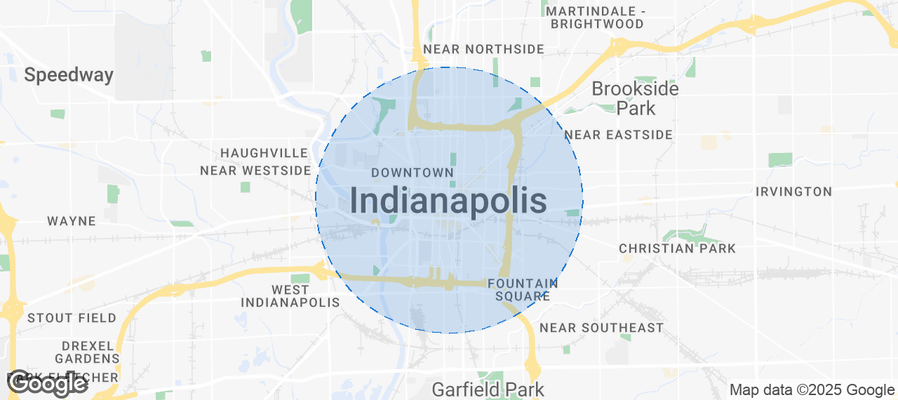 Browse the live Indianapolis Airbnb market See Every Indianapolis Listing
Revenue, occupancy and nightly rates are in the Indianapolis Airbnb market report .
At a glance
Indianapolis Airbnb Rules at a Glance
- Permit required
- Yes
- Taxes on a stay
- 17%
- Fine for hosting without a permit
- Up to $500
- Listings showing a permit number
- 28%
- Next rule change
- Jan 1, 2028
Listing figures: AirROI, 12 months to September 2026. A number on a listing doesn't prove the permit or license is valid, and a missing one doesn't prove there is none.
The rules in brief
The rules an Indianapolis host meets first, each linked to the ordinance, statute or official page it comes from. Details and exceptions follow below.
| Topic | Rule |
|---|---|
| Permit | Hosts need a city short-term rental permit7,13,20 |
| Who can host | Your primary residence is protected1 |
| Where | No development plan approval7 |
| Building rules | HOA and condo rules still apply1 |
| Night cap | No local rental caps since July 1, 20262,3 |
| Minimum stay | Stays under 30 days booked through a platform1,7,20 |
| Listing display | Add the permit number to your Airbnb listing20 |
| Platforms | Airbnb collects the state and county taxes8,19 |
| Safety | Legally built dwelling that meets building code7,13 |
| Neighbors | Parking and signs follow the city's commercial standards7 |
Your home
Can You Host an Airbnb in Indianapolis? It Depends on the Home
Whether you can host in Indianapolis turns on whose home it is and whether you live there.
A second home or investment property you don't live in
Allowed with conditionsThe permit is issued to an owner for each unit, with the same $150 fee. State law lets a city require a special exception for a home that is not the owner's primary residence but not to prohibit rentals, and since July 1, 2026 local rental restrictions cannot be adopted or enforced.1,2,7
A home in an HOA or condo association
Allowed with conditionsThe association's governing documents decide. State law does not override HOA or condominium rules, which can restrict or ban short-term rentals.1
Permit
Do You Need a Permit for Airbnb in Indianapolis?
Yes. Short-term rental hosts in Indianapolis need the Indianapolis Short-Term Rental Permit from the City of Indianapolis, Department of Business and Neighborhood Services (DBNS). It costs $150 in the first year (A host with one rental unit pays $150 for the first permit and nothing to renew, plus the payment processor's card or e-check charge; there is no state registration fee when every guest pays through Airbnb.) and $0 a year to renew.1,4,7,13,14,20
- Who needs it
- Every owner who rents a home or unit for fewer than 30 days through a booking platform such as Airbnb, with a separate permit for each rental unit. Hotels and motels do not register, and stays of 30 days or more are typically exempt.1,4,7,13,14,20
- Issued by
- City of Indianapolis, Department of Business and Neighborhood Services (DBNS)
- Valid for
- A permit expires one year after the date it is issued and renews every year at no charge. It cannot be transferred when the property is sold.
- Processing
- State law requires the city to issue the permit within 30 days of receiving an application that meets the ordinance.
- On listings
- The number must appear on every listing
- Platform checks
- Airbnb's Indianapolis page tells hosts to add the permit number to their listing once the city emails it.
Fees
| Fee | Amount |
|---|---|
| Initial permitCharged once for the first permit on a property. The city's payment processor adds 3.2% on a card payment or $0.95 on an e-check, according to the city's December 2024 user guide. | $150 |
| Annual renewalNo fee to renew; the permit still has to be renewed every year. | $0 |
| New permit after a revocationCharged again when an owner is issued a new permit after the previous one was revoked, once any outstanding fines are paid. | $150 |
| Indiana retail merchant certificate (direct bookings only)State registration fee per place of business for hosts who take bookings outside Airbnb; hosts whose guests all pay through Airbnb do not need it. | $25 |
Who qualifies
- The applicant must be an owner of the property; a company applies through an officer or agent. State law counts a person with an interest in title or a present possessory interest as an owner.
- Each short-term rental unit is permitted individually, so an owner of several units applies for each one.
- The unit must be a legally built dwelling that meets all applicable building code requirements, in a primary building or in an accessory secondary dwelling unit.
- Recreational vehicles, mobile homes, travel trailers, automobiles, shipping containers and similar structures are not eligible.
- Parking and signs must meet the city's zoning standards for commercial areas; no development plan approval is needed.
- The permit does not transfer when the property is sold; the new owner applies again.
- Homeowners association and condominium rules still apply on top of the city permit.
How to apply
- Create a Citizen Access account on the city's DBNS online portal and confirm the link emailed to you.
- Under Business Licenses choose Create An Application, accept the terms and select the Short-Term Rental record type.
- Enter the owner's details and any property manager's, then the property type, where the home is advertised and the advertised occupancy.
- Review the summary and pay the $150 fee online by card or e-check.
- Wait for DBNS to approve the application and email the permit, then add the permit number to the Airbnb listing.
- Register with the Indiana Department of Revenue through INBiz only if you take any booking outside Airbnb.
Applications go through the official application page .
Permit rules
- Hosts need a city short-term rental permit
- Indianapolis requires hosts to hold a Short-Term Rental Permit from the Department of Business and Neighborhood Services for the home they rent.7,13,20 In force since January 1, 2025
- Each rental unit is permitted individually
- The permit is issued unit by unit, so an owner of several short-term rental units needs a permit for each one.7,13 In force since January 1, 2025
- Renew every year, free of charge
- A permit lasts one year from the day it is issued and must be renewed annually; the renewal fee is $0.13,20 In force since January 1, 2025
- $150 once for the first permit
- The city charges a one-time $150 permit fee for the first permit on a property; the same $150 applies to a new permit issued after a revocation.7,13,20 In force since January 1, 2025
- The permit does not pass to a buyer
- If an owner sells all or part of a permitted property, the permit cannot be transferred and the new owner must apply for a new one.1 In force since July 1, 2018
- Add the permit number to your Airbnb listing
- Once the city emails the permit, Airbnb's Indianapolis page tells hosts to add the registration number to their listing.20
- Advertised price must be the total price
- Since May 12, 2025 a federal rule requires any advertised price for a short-term rental to show the total price, including mandatory fees; taxes and other government charges may be shown separately.6,12 In force since May 12, 2025
- Renting without the permit is a Class C infraction
- An owner who rents a short-term rental without a valid permit commits a Class C infraction, and each booking completed without a permit is a separate violation.1,5 In force since July 1, 2018
Who can host
Who Can Host an Airbnb in Indianapolis, and Where
Indiana state law applies on top of Indianapolis's own rules: the Indiana short-term rental regulations page covers the state license and what cities and counties can and can't regulate.
- The owner applies
- Only an owner can apply for the permit, or an officer or agent of the owner when it is a company. State law counts a person with an interest in title or a present possessory interest as an owner.1,7 In force since January 1, 2025
- Your primary residence is protected
- State law makes short-term rental of an owner's primary residence a permitted use in any zone that allows homes, so Indianapolis cannot zone it out.1 In force since July 1, 2018
- Homes you don't live in: no ban allowed
- For a rental that is not the owner's primary residence, state law lets a city require a special exception, special use or variance but not use it to prohibit or unreasonably restrict short-term rentals.1 In force since July 1, 2018
- No development plan approval
- Short-term rentals do not need development plan approval from the city.7 In force since January 1, 2025
- Vehicles and temporary structures are excluded
- Recreational vehicles, mobile homes, travel trailers, automobiles, shipping containers and any structure not intended for permanent human occupancy cannot be rented as a short-term rental.7 In force since January 1, 2025
- HOA and condo rules still apply
- The city permit does not override a homeowners association, condominium association or similar association, whose rules can restrict or ban short-term rentals.1 In force since July 1, 2018
Operating rules
Operating Rules for Indianapolis Short-Term Rentals
- Legally built dwelling that meets building code
- The unit must be a legally built dwelling that meets all applicable building code requirements; it may be in a primary building or in an accessory secondary dwelling unit.7,13 In force since January 1, 2025
- An inspection may be required
- As part of the annual registration the city may require an inspection to confirm the unit meets building codes and is safe and habitable.7 In force since January 1, 2025
- Parking and signs follow the city's commercial standards
- Parking must meet the parking articles and chapter 931 of the city code, and any signs must meet the sign article, both written for commercial areas.7 In force since January 1, 2025
- Stays under 30 days booked through a platform
- The city uses the state definition: a short-term rental is a home or unit rented for terms of less than 30 days at a time through a short-term rental platform. Longer stays are typically outside the permit.1,7,20 In force since July 1, 2018
- No local rental caps since July 1, 2026
- Since July 1, 2026 state law bars a city, town or county from adopting or enforcing a rule that prohibits or restricts an owner from using residential property as a rental property. Health and safety rules, building and fire codes and reasonable occupancy standards still apply.2,3 In force since July 1, 2026
Taxes
How Much Are Airbnb Taxes in Indianapolis?
17% on the nightly price plus cleaning and guest fees for stays of 29 nights and shorter (7% state plus 10% Marion County).
17% in all
How the 17% on a Indianapolis stay splits between the taxes in the table below
- Marion County innkeeper's tax 10%
- Indiana state sales (gross retail) tax 7%
- Median nightly rate, booked nights
- $175
- Taxes on that night (17%)
- $30
- Guest pays, before Airbnb and cleaning fees
- $205
| Tax | Rate | Collected by |
|---|---|---|
| Indiana state sales (gross retail) tax 7% of the price of stays under 30 nights, including cleaning and guest fees | 7%11,19 | Airbnb |
| Marion County innkeeper's tax 10% of the price of stays under 30 nights, including cleaning and guest fees | 10%8,9,19 | Airbnb |
At Indianapolis's median booked rate of $175 a night, the taxes collected on a booking come to about $30 a night.
Rates for every Indiana county, with which ones Airbnb collects, are on the Indiana short-term rental regulations page.
What the host still handles
- An Indiana Department of Revenue Registered Retail Merchant Certificate through INBiz ($25 per place of business) if any booking is made outside Airbnb or another marketplace
- A Marion County innkeeper's tax account with the Department of Revenue, which collects the tax for Marion County, for direct bookings
- A $0 return for each filing period once registered, even in months with no rentals
- The Indianapolis short-term rental permit from the Department of Business and Neighborhood Services8,9,10,11,19
Fines
How to Avoid Airbnb Fines in Indianapolis
Fines in Indianapolis fall on hosting without the Indianapolis Short-Term Rental Permit, or outside the rules above. With it in hand and the rules followed, none of the fines below apply.
- Renting without the required permit is a Class C infraction, with a judgment of up to $500; each booking completed without a permit counts as a separate violation.1,5
- The city may revoke a permit for up to one year after three or more ordinance citations in a calendar year, and a new permit is not issued until outstanding fines are paid.1,7
- Owners who do not comply may face inspection, citations or revocation of the permit under Chapter 852.7
- Late tax returns carry a penalty of up to 20%, with a minimum of $5, and a $0 return is still required for months without rentals once registered.8
Changes
What's Changed in Indianapolis's Airbnb Rules, and What's Next
One change is scheduled after October 20, 2026; the most recent rules are listed first.
- January 1, 2028 UpcomingGrace period for older local rental limits ends
A local rule adopted before January 1, 2026 that conflicts with the rental-cap ban is exempt until January 1, 2028, when the unit must comply.2
- July 1, 2026
- January 1, 2025
- August 12, 2024
Listing data
What Indianapolis's Listings Show
AirROI, a short-term-rental data firm, counted 2,990 active Airbnb listings in Indianapolis over the 12 months to September 2026. 28% of them displayed a permit, license or registration number.
Minimum stay set on Indianapolis listings
Share of active listings by the shortest stay they accept
Minimum stay in numbers
| Shortest stay accepted | Share of listings |
|---|---|
| 1 night | 35% |
| 2 nights | 44% |
| 3 nights | 6% |
| 4–6 nights | 4% |
| 7–29 nights | 8% |
| 30+ nights | 3% |
What officials report
- 1,157
- Short-term rental permits in the city's registry · as of October 15, 2026The city's Short-Term Rental Registry file, updated October 15, 2026, lists 1,157 permits since the program began on January 1, 2025.13,16
- 1,145
- Permits with status Issued · as of October 15, 2026Of the 1,157 permits in the registry file, 1,145 have the status Issued and 12 are marked Ready for Renewal.16
Earnings
What Could an Indianapolis Short-Term Rental Earn?
The rules shape the numbers: a permit that costs $150 in the first year and taxes of 17% that Airbnb adds to guests' bills. For a specific address, the Airbnb income calculator estimates revenue, occupancy and nightly rate from comparable listings, so you can test the numbers before applying.
FAQ
Indianapolis Airbnb Rules: Frequently Asked Questions
Is Airbnb legal in Indianapolis?
Do I need a permit for Airbnb in Indianapolis?
How much is the Indianapolis short-term rental permit?
Do I have to renew the permit every year?
Can I rent a home I don't live in?
Does Airbnb collect hotel tax in Indianapolis?
What is the total lodging tax on an Airbnb stay in Indianapolis?
What is the fine for renting without a permit in Indianapolis?
Is there a limit on how many nights I can host in Indianapolis?
Do I need to show the permit number on my Airbnb listing?
Airbnb's Indianapolis page tells hosts to add the registration number to their listing once the city emails the permit.20
Can my HOA stop me from hosting in Indianapolis?
Yes. The city permit does not override homeowners association or condominium rules, which can restrict or ban short-term rentals.1
How many short-term rental permits has Indianapolis issued?
How many Indianapolis Airbnbs are registered?
Short-term rental permits in the city's registry: 1,157 as of October 15, 202613,16. In AirROI's listing data, 28% of the 2,990 Indianapolis Airbnb listings active in the 12 months to September 2026 displayed a permit, license or registration number. A number on a listing shows the host entered one; it doesn't confirm the permit is valid.
How much does an Airbnb make in Indianapolis?
The average Indianapolis listing earned $25,500 in the 12 months to September 2026, according to AirROI, averaged across every active listing including those booked for only part of the year. The Indianapolis Airbnb market report breaks it down by month, property size and neighborhood.
Method
How These Rules Were Checked
Each rule on this page was checked in October 2026 against the official source cited beside it: the ordinance or statute, the permit office's own pages and the tax authority. Airbnb's help pages are cited on their own only for what Airbnb itself does, such as the taxes it collects and the permit checks it runs, and otherwise only beside an official source; news reports only for when a change was announced. Rules that could not be confirmed on an official page are left out. The City of Indianapolis permit page and Chapter 852 on Municode were read in a browser; the 2024 ordinance is a scanned PDF read as page images, and the Speedway notice was read from an Internet Archive copy.
Rules change with council votes, court rulings and new state laws, so the page is rechecked every three months and whenever a scheduled change takes effect. It summarizes the rules for information and is not legal advice; the local authority has the final word on any application.
Listing figures come from AirROI's tracking of 2,990 active Indianapolis Airbnb listings over the 12 months to September 2026.
Sources
Sources
Each rule above links to the source it comes from. Official ordinances, statutes and government pages come first, then Airbnb's own help pages.
- 1. Indiana Code 36-1-24: Short Term Rentals · Indiana General Assembly
- 2. Indiana Code 36-1-20: Regulation of Residential Leases · Indiana General Assembly
- 3. House Enrolled Act 1210 (2026), Public Law 157-2026 · Indiana General Assembly
- 4. Indiana Code 6-2.5-8: Registration (retail merchant's certificate) · Indiana General Assembly
- 5. Indiana Code 34-28-5: Infraction and Ordinance Violation Enforcement Proceedings · Indiana General Assembly
- 6. 16 CFR Part 464 - Rule on Unfair or Deceptive Fees · Electronic Code of Federal Regulations
- 7. Chapter 852: Indianapolis Short-Term Rental Permit Program · Indianapolis - Marion County Code of Ordinances (Municode)
- 8. County Innkeeper's Tax · Indiana Department of Revenue
- 9. General Tax Information Bulletin #204: County Innkeeper's Taxes · Indiana Department of Revenue
- 10. Sales Tax Information Bulletin #41: Hotel, Motel and Other Lodging Rentals · Indiana Department of Revenue
- 11. Indiana tax types · Indiana Department of Revenue
- 12. The Rule on Unfair or Deceptive Fees: Frequently Asked Questions · Federal Trade Commission
- 13. Landlord and Short-Term Rental Registries · City of Indianapolis
- 14. Short-Term Rental User Guide (December 2024) · City of Indianapolis, Department of Business and Neighborhood Services
- 15. General Ordinance No. 25, 2024 (Proposal No. 205, 2024): Indianapolis Short-Term Rental Permit Program · Indianapolis City-County Council
- 16. Short-Term Rental Registry (updated October 15, 2026) · City of Indianapolis, Department of Business and Neighborhood Services
- 17. Short-term rental permits now required · Town of Speedway
- 18. Marion County (Indiana Counties Directory) · State of Indiana (IN.gov)
- 19. Occupancy tax collection and remittance by Airbnb in Indiana · Airbnb Help Center
- 20. Indianapolis, IN · Airbnb Help Center