Local Airbnb rules2026 41 sources cited
Is Airbnb Legal in Nashville? 2026 Rules, Permits & Taxes
Yes, with a Metro Nashville short-term rental permit (Metro Code § 6.28.030): owner-occupied permits cover most residential zones but not whole-home listings, while non-owner-occupied permits are limited to certain mixed-use, office, commercial and downtown zones.13,16,17,18,19
From 39 official sources and 2 Airbnb help pages. Not legal advice.
The short answer
Nashville Airbnb Rules in Brief
- Owner-occupied permits are for owners living at the property; listings cannot advertise the entire home (limited exceptions).
- New non-owner-occupied permits: none in AR2A, R, RS or RM zones; they are limited to listed mixed-use, office, commercial and downtown districts and must be 100 feet from churches, schools, parks and day cares.
- Permit: $313 for 365 days, renewed yearly. Limits: up to four sleeping rooms, 12 guests, and stays of 24 hours to 30 days.
- Taxes total about 16.75% plus $2.50 a night; Airbnb collects and remits them on its bookings.
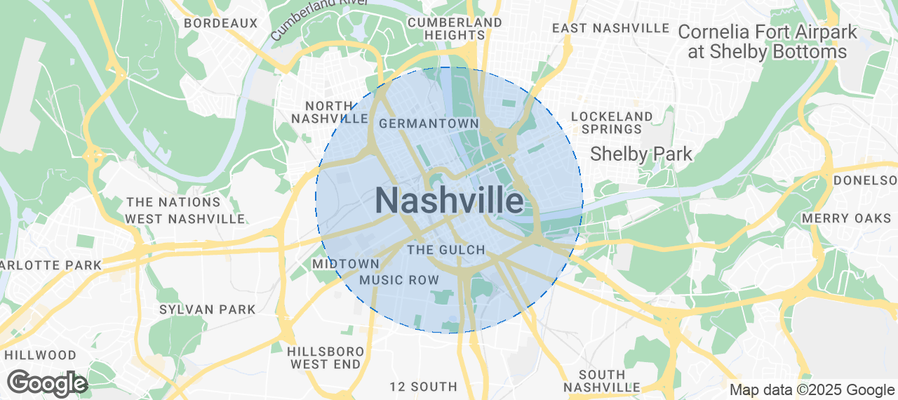 Browse the live Nashville Airbnb market See Every Nashville Listing
Revenue, occupancy and nightly rates are in the Nashville Airbnb market report .
At a glance
Nashville Airbnb Rules at a Glance
- Permit required
- Yes
- Taxes on a stay
- 16.75% + $2.50
- Fine for hosting without a permit
- $50
- Listings showing a permit number
- 19%
- Latest rule change
- Mar 11, 2026
Listing figures: AirROI, 12 months to September 2026. A number on a listing doesn't prove the permit or license is valid, and a missing one doesn't prove there is none.
The rules in brief
The rules a Nashville host meets first, each linked to the ordinance, statute or official page it comes from. Details and exceptions follow below.
| Topic | Rule |
|---|---|
| Permit | Metro Codes STRP permit needed before you list13,14 |
| Who can host | Owner-occupied permit: natural-person owners who live there3,14,16 |
| Where | Owner-occupied rentals allowed in nearly every residential district2,41 |
| Building rules | HOA, condo and lease rules can be stricter than Metro5,17,18 |
| Minimum stay | At least 24 hours per stay, at most 30 consecutive days13 |
| Guests | Guest cap: twice the sleeping rooms plus four, maximum 122,15 |
| Listing display | Do not list until the permit is issued17 |
| Safety | UL 217 smoke detectors and a floor plan2,16 |
| Insurance | Homeowner's fire, hazard and liability insurance with $1 million liability limit16,18 |
| Neighbors | Local responsible party reachable 24/7, posted in the unit15 |
Your home
Can You Host an Airbnb in Nashville? It Depends on the Home
Whether you can host in Nashville turns on whose home it is and whether you live there.
The home you live in, rented whole while you are away, in a residential zone
Not allowedAn owner-occupied permit does not cover this: its listings may not advertise availability of the entire/whole home, except for a legally permitted detached accessory dwelling unit, accessory apartment or a duplex unit under common ownership. Renting the whole house would need a non-owner-occupied permit, and new ones are not issued in AR2A, R, RS or RM zones.1,9,14
A room or rooms in the home you live in
AllowedAllowed with an owner-occupied STRP permit: you must be a natural-person owner living there as your primary residence, the rental is limited to a single party at a time, and at least one sleeping room and a bathroom must be included if only part of the home is rented. Codes may deny an application on documents or neighbor affidavits showing you do not live there or will stop living there during the permit year.1,3,14,15
A second home or investment property in an AR2A, R, RS or RM residential zone
Not allowedNew not-owner-occupied permits are not issued for properties zoned AR2A, R, RS or RM. An existing permit there can be renewed but is not transferable, and a sale cancels it, so buying a house that already has a permit does not give you one.3,14,15,18
A second home or investment property in a mixed-use, office, commercial or downtown zone
Allowed with conditionsA new not-owner-occupied permit can be issued in the listed districts (MUN, MUL, MUG, MUI, OG, OR20 to OR40-A, ORI, CN, CL, CS, CA, CF, DTC, SCN, SCC, SCR; SP and PUD only if the plan allows) for up to four sleeping rooms, and an entity such as an LLC may own the property. The unit must be at least 100 feet from a church, school, park or licensed day care unless the Metro Council exempts it by resolution with 21 votes; check the address in Metro's Short Term Rental Permit Eligibility Viewer.3,14,17,38
A place you rent as a tenant (only through your landlord's permit)
Allowed with conditionsA tenant cannot get an STRP permit in their own name: the permit must be obtained by the property owner and the application must match the recorded deed. The only route is a landlord who holds a permit and signs a notarized Owner Authorization Form, and a lease can still forbid short-term rental under Tennessee law.2,5,15,16,41
A condo or apartment in a building with an HOA, co-op or condo board
Allowed with conditionsMetro requires a statement with every application that the rental would not violate any HOA, condominium or co-op agreement or covenants, and those associations can be stricter than Metro; Tennessee law expressly lets them restrict short-term rentals. Buildings with 3+ dwellings or a shared hallway also need a Fire Marshal inspection.5,16,17,18,41
Permit
Do You Need a Permit for Airbnb in Nashville?
Yes. Short-term rental hosts in Nashville need the short-term rental property permit from the Metro Nashville Department of Codes and Building Safety (Short Term Rental Department). It costs $313.13,16,17,18,19
- Who needs it
- Anyone who lists a property on short-term rental websites (Airbnb, Vrbo and similar) in Nashville and Davidson County, before the listing goes live.13,16,17,18,19
- Issued by
- Metro Nashville Department of Codes and Building Safety (Short Term Rental Department)
- Valid for
- 365 days from issue; a renewal extends the existing permit one year from the original issue day and month
- On listings
- The number must appear on every listing
- Platform checks
- Both Metro and Airbnb's Nashville help page require a Metro Codes permit before listing; neither page describes Airbnb verifying permit numbers.
Fees
| Fee | Amount |
|---|---|
| Permit fee (new application and each annual renewal)$313.00 due when the application is approved; renewal is also $313.00 plus proof of current property insurance and Hotel Occupancy Tax payment. Credit-card payments carry a 2.3% processing fee; cash or check must be exact. | $313 |
Who qualifies
- Owner-occupied: a natural-person owner who lives at the property as their primary residence (listings cannot advertise the entire home, with limited exceptions), with four current proof-of-residence documents matching the deed (two from Group A such as a Tennessee driver license, voter registration, IRS form or vehicle registration, and two from Group B such as insurance, pay stub, bank statement or employer letter).
- Not owner-occupied: available for new permits only in the listed mixed-use, office, commercial and downtown districts (not AR2A, R, RS or RM), at least 100 feet from churches, schools, parks and licensed day cares unless the Metro Council exempts the unit; entity owners must document the chain of ownership.
- No more than four sleeping rooms.
- Proof that all property taxes are paid (and for renewals, room, occupancy and sales taxes).
- Proof of homeowner's fire, hazard and liability insurance with at least $1,000,000 liability per occurrence.
- Floor plan with UL 217 smoke detectors; certification from a state-licensed architect, engineer or home inspector (single- and two-family homes) or Fire Marshal inspection (multifamily, 3+ dwellings).
- Notarized affidavit that the application is true and accurate, plus a notarized owner authorization form if someone else applies.
- Written notice to owners of adjacent properties.
- Statement that the rental does not violate any HOA, condominium, covenant or lease restriction, and a responsible party living within 25 miles.
How to apply
- Check whether your address can get a permit in the Metro Short Term Rental Permit Eligibility Viewer (Property Search page).
- Email proof of residency (owner-occupied) or documents linking the applicant to the owning entity (not owner-occupied) to the Short Term Rental applications mailbox, using the property address as the subject.
- Prepare PDFs: notarized True and Accurate affidavit, property tax receipt, floor plan, architect/engineer/home-inspector certification (or arrange Fire Marshal inspection for multifamily), insurance proof, neighbor notification letters and receipts, and the HOA/responsible-party statement.
- Complete the online application in Metro ePermits and upload the PDFs from the previous step; Short Term Rental Department staff then coordinate the rest of the permit application.
- Pay the $313 fee after approval, then post the permit number or a picture of the permit in every listing, and post the responsible-party contact and occupancy limit inside the unit.
Applications go through the official application page .
Permit rules
- Metro Codes STRP permit needed before you list
- Anyone renting a property on short-term rental websites in Nashville and Davidson County must hold a Short Term Rental Property (STRP) permit from Metro Codes before listing. There are two types: owner-occupied and not owner-occupied.13,14
- Do not list until the permit is issued
- Until the permit is issued you are not authorized to list the property for rent on any website. Operating or advertising first triggers the penalties below.17
- Show the permit number (or a picture of the permit) in every listing
- The permit number, or an image of the permit with a legible number, must appear in every short-term rental listing on all websites.2,17
- Permit lasts 365 days and must be renewed every year
- A permit expires 365 days after issue unless renewed before expiry. Metro emails renewal notices 60 and 45 days ahead, but renewal is the owner's responsibility; the permit is not renewed until the affidavit is accepted and the fee is paid. Renewal needs proof of current property insurance, proof of paid property taxes and proof of Hotel Occupancy Tax payment.15,18,19
- Permits cannot be transferred; a change of owner cancels them
- A permit cannot be transferred or assigned to another person, entity or address, and changes in ownership cancel it (including moving the property from a person to a trust or LLC, or the reverse). Since November 12, 2024 the new owner must apply under the rules in effect when the new application is received, so a buyer cannot inherit an existing permit, and in AR2A, R, RS and RM zones cannot get a new non-owner-occupied one.3,15,18 In force since November 12, 2024
Who can host
Who Can Host an Airbnb in Nashville, and Where
Tennessee state law applies on top of Nashville's own rules: the Tennessee short-term rental regulations page covers the state license and what cities and counties can and can't regulate.
- Owner-occupied permit: natural-person owners who live there
- An owner-occupied permit is only for a natural person owner who lives at the property (four proof-of-residence documents matching the recorded deed are required). LLCs, corporations, trusts, partnerships and other entities cannot hold one. It covers up to four sleeping rooms rented to a single party, or at least one sleeping room and a bathroom if only part of the home is rented.3,14,16 Applies to: owner-occupied
- Owner-occupied listings cannot advertise the entire home
- Advertisements for an owner-occupied STRP may not advertise availability of the entire/whole home. The only exceptions are a legally permitted detached accessory dwelling unit, a legally permitted accessory apartment, or a two-family (duplex) unit under common ownership with the other unit on the same lot. Renting out a whole home you live in while you are away therefore does not fit an owner-occupied permit, and new non-owner-occupied permits are not issued in AR2A, R, RS or RM zones.1,9,10 Applies to: owner-occupied · In force since November 2020
- Owner-occupied rentals allowed in nearly every residential district
- An owner-occupied STRP is an accessory use in all zoning districts that allow residential use except NS districts, once a permit is issued. In the IWD, IR and IG industrial districts it is allowed only as an accessory to a multi-family use tied to manufacturing/artisan use.2,41 Applies to: owner-occupied
- One permit per lot in single- and two-family zones
- In single-family and two-family zoning districts only one STRP permit is issued per lot. Two-family (duplex) properties must be owned by one person, with one unit as the owner's primary residence, and cannot have divided ownership.14 Applies to: single-family and two-family zoning districts
- Duplex owner must live in one of the two units
- For an owner-occupied permit on a two-family property the ownership of the two units cannot be divided; the same person must own both and one unit must be the owner's primary residence.14 Applies to: owner-occupied, two-family units
- No new non-owner-occupied permits in AR2A, R, RS or RM zones
- New not-owner-occupied (investor) permits are not issued for properties zoned AR2A, R, RS or RM. Existing permit holders in those districts may be eligible to renew, but their permits are not transferable if the property is sold or transferred.14 Applies to: non-owner-occupied, AR2A/R/RS/RM zoned properties
- Non-owner-occupied permits only in listed mixed-use, office, commercial and downtown districts
- New not-owner-occupied permits are issued only as a use permitted with conditions in MUN, MUL, MUG, MUI, OG, OR20 to OR40-A, ORI, CN, CL, CS, CA, CF, the DTC districts (North, South, West, Central), SCN, SCC and SCR zoning (including the -A variants). Specific Plan (SP) and Planned Unit Development (PUD) properties get a permit only if the SP or PUD allows it.14 Applies to: non-owner-occupied, new permits
- SP and PUD properties follow their own plan
- Permits for Specific Plan (SP) zoned properties or properties inside a Planned Unit Development (PUD) are issued only if the SP or PUD allows short-term rental. Metro Planning can confirm the conditions.14
- New non-owner-occupied permits must be 100 ft from churches, schools, parks and day cares
- New not-owner-occupied permits are not issued for units within 100 feet of a religious institution, a school or its playground, a park, or a licensed day care center or its playground. The Metro Council can exempt a unit or a whole multifamily development by resolution after a public hearing with 21 affirmative votes; it has granted such exemptions repeatedly, most recently for three units at 178 2nd Avenue North (resolutions passed September 1, 2026 and October 6, 2026).3,6,8,11,12 Applies to: non-owner-occupied, new permits
- No owner-occupied STRP in new backyard cottages (DADUs) on single-family lots
- Since December 12, 2025 an owner-occupied STRP is not a permitted use in a detached accessory dwelling unit that is newly built, or newly converted from an existing accessory structure, on a single-family, Residential Neighborhood or Residential Limited zoned lot.4 Applies to: new DADUs on single-family, Residential Neighborhood or Residential Limited lots · In force since December 12, 2025
- Multifamily buildings need a Fire Marshal inspection
- Single- and two-family homes need a certification from a state-licensed architect, engineer or home inspector. Multifamily structures (3+ dwellings on the property, or a shared hallway or walkway to the entrance) still require an inspection by the Fire Marshal after the application is generated.16,17 Applies to: multifamily structures (3+ dwellings)
- HOA, condo and lease rules can be stricter than Metro
- Homeowner associations can be more restrictive than Metro rules. Every application must include a statement that the applicant has confirmed the rental would not violate any HOA agreement, condominium agreement, covenants or other agreement limiting the use. Tennessee's Short-Term Rental Unit Act expressly preserves HOA, condo, co-op and lease restrictions.5,17,18
Operating rules
Operating Rules for Nashville Short-Term Rentals
- Maximum four sleeping rooms
- A permit covers no more than four sleeping rooms, so a property with more than four bedrooms cannot be permitted as a short-term rental.16
- Guest cap: twice the sleeping rooms plus four, maximum 12
- At any one time the number of occupants may not exceed twice the number of permitted sleeping rooms plus four, and never more than 12. Renting to more than one party at the same time under separate contracts is not allowed, and the occupancy maximum must be posted in the unit.2,15
- At least 24 hours per stay, at most 30 consecutive days
- The owner may not accept compensation for occupancy of less than 24 hours, and no guest may stay more than 30 consecutive days.13
- Principal renter must be 21 or older
- The principal renter of the unit must be at least 21 years old.15
- Local responsible party reachable 24/7, posted in the unit
- The name and telephone number of the local responsible party must be conspicuously posted inside the unit, and that person must answer calls 24 hours a day for the whole rental period.15
- Responsible party must live within 25 miles
- The application must name a responsible party (the owner or a business) who lives or is located within 25 miles of the property and handles maintenance and safety concerns.2,17
- Permit holder answers for guest noise, trash, parking and food service
- Guests must follow the Metropolitan Code noise and waste rules and the permit holder is responsible for their activity. No recreational vehicles, buses or trailers may be visible on the street or property, and no food may be prepared for or served to guests by the permit holder or manager.15
- Homeowner's fire, hazard and liability insurance with $1 million liability limit
- Applicants must show homeowner's fire, hazard and liability insurance with liability limits of at least $1,000,000 per occurrence. Metro says a platform such as Airbnb may offer qualifying insurance, in which case the host's profile page can be submitted as proof of coverage. Proof of current property insurance is also needed to renew.16,18
- UL 217 smoke detectors and a floor plan
- The application needs a floor plan showing rooms, windows, doors and smoke detectors on each floor. UL 217 certified smoke detectors are required in all sleeping areas, in each room on the escape path, and on each story, including basements and garages. Single- and two-family homes must also submit a certification from a state-licensed architect, engineer or home inspector.2,16
- Notify adjacent property owners in writing
- The applicant must prove written notification of the owner of each adjacent property (in front, behind, beside and, if applicable, above and below) before applying, by signature or certified mail.16
- Keep a guest register
- Every person operating a hotel, rooming house or Short Term Rental Property must keep a register listing each guest's name and address and the dates of arrival and departure.3 In force since November 12, 2024
- Permit holder collects and remits room, occupancy and sales taxes
- The permit holder is responsible for collecting and remitting all applicable room, occupancy and sales taxes required by state law or the Metropolitan Code. Bookings made through a registered marketplace such as Airbnb are collected and remitted by the marketplace (see taxes).15
- Tennessee law protects units already operating lawfully before a new rule
- Under the Short-Term Rental Unit Act (effective May 17, 2018), a unit already operating lawfully keeps the rules in force when it started until the property is sold or transferred, stops operating for 30 continuous months, or racks up three violations of generally applicable local laws. The Act does not stop local governments from requiring permits (13-7-604) or condos, HOAs and landlords from restricting short-term rentals (13-7-605).5,21 Applies to: units already operating under a permit before a rule change · In force since May 17, 2018
Taxes
How Much Are Airbnb Taxes in Nashville?
About 16.75% of the listing price (7% state sales tax + 2.75% Davidson County local sales tax and transit surcharge + 7% Metro hotel occupancy tax), plus $2.50 per night booked. Sales taxes also apply to cleaning and guest fees; Airbnb says local occupancy taxes apply to the listing price including cleaning fees.
16.75% in all, plus $2.50 a night
How the 16.75% on a Nashville stay splits between the taxes in the table below; the flat nightly fee comes on top
- Tennessee state sales tax on lodging 7%
- Metro Nashville hotel occupancy privilege tax 7%
- Davidson County local option sales tax 2.25%
- Davidson County local transit surcharge 0.5%
- Median nightly rate, booked nights
- $275
- Taxes on that night (16.75% + $2.50)
- $49
- Guest pays, before Airbnb and cleaning fees
- $324
| Tax | Rate | Collected by |
|---|---|---|
| Tennessee state sales tax on lodging 7% of the listing price including cleaning and guest fees, for stays under 90 continuous nights | 7%29,40 | Airbnb |
| Davidson County local option sales tax 2.25% local option sales tax (part of the 2.75% Davidson County local rate together with the transit surcharge) | 2.25%27,35,40 | Airbnb |
| Davidson County local transit surcharge 0.5% surcharge on the local option sales tax, effective February 1, 2025, raising the local sales tax rate to 2.75% | 0.5%27,28,40 | Airbnb |
| Metro Nashville hotel occupancy privilege tax 7% of gross rental receipts (includes a 1% stadium tax added July 1, 2023) | 7%22,23,24,26,31,40,41 | Airbnb |
| Metro Nashville nightly occupancy fee $2.50 per night booked (Metro's return counts nightly rentals; the Department of Revenue describes it as $2.50 per room), on top of the percentage taxes | $2.50 a night24,25,36 | Airbnb |
At Nashville's median booked rate of $275 a night, the taxes collected on a booking come to about $49 a night.
What the host still handles
- Metro STRP permit from Metro Codes before listing; renewals need proof of paid property taxes and proof of Hotel Occupancy Tax payment.
- Davidson County Clerk business tax license: none under $3,000 annual gross income; an annual minimal-activity license from $3,000 to $99,999 ($15/$30 depending on GSD/USD district, per the Clerk's chart); a business tax license (one-time $15/$30 fee) plus a return filed with the Tennessee Department of Revenue at $100,000 or more.
- Metro Finance Collections hotel occupancy tax account for any bookings not made through a marketplace registered with the state (monthly return due by the 20th; 7% plus $2.50 per night booked).22,24,25,26,27,28,29,30,32,34,35,36,40,41
Fines
How to Avoid Airbnb Fines in Nashville
Fines in Nashville fall on hosting without the short-term rental property permit, or outside the rules above. With it in hand and the rules followed, none of the fines below apply.
- Operating without a permit: a court fine of $50 per day of operation, with each day without a permit a separate offense (Metro Code § 6.28.030.A.5.l and B.5.l).1,2
- Operating without a permit also triggers enforcement action including citations and a mandatory one-year wait before the property can apply for a permit.1,18
- Operating without having renewed a permit: six-month wait before the property is eligible for a permit again. After a court finding of operating without a permit, the wait is three years instead of one.1,2
- Revocation: the permit may be revoked by a court or by Codes upon determination of three violations of any ordinance or law of general application.15
- Revocation is also possible if the zoning administrator finds the permit application contained false or misleading information.15
- Before a permit is revoked Codes must give the permit holder 15 days written notice of the alleged violations, and a revoked property cannot receive a new permit for one year. Decisions can be appealed to the Short Term Rental Appeals Board (Metro Code § 6.28.030.A.5.l and B.5.l; appeals under § 6.28.035).1,2,37
- Advertising for more occupants than the permit allows is grounds for revoking the permit (Metro Code § 6.28.030.A.5.f and B.5.f).2
- After a final denial of an owner-occupied application, no new application for the same property may be filed for six months (Metro Code § 6.28.030.A.5.l, added by BL2024-478).3
Changes
What's Changed in Nashville's Airbnb Rules
No change was scheduled when the rules were checked on October 18, 2026; the most recent are listed first.
- March 11, 2026
- December 12, 2025BL2025-1007 bars owner-occupied STRPs in new DADUs on single-family lots
The DADU ordinance, passed December 4, 2025 and approved by the mayor December 8, 2025, says owner-occupied short term rental is not a permitted use in new detached accessory dwelling units on single-family, Residential Neighborhood and Residential Limited lots.4
- July 1, 2025First 30 days of any stay are subject to local occupancy tax
Public Chapter 364 (2025) means marketplaces must collect and remit local occupancy tax for the first 30 days of occupancy regardless of stay length, and it can no longer be refunded or credited.30
- February 1, 2025
- November 12, 2024BL2024-478 tightens owner-occupied proof and ownership-change rules
Owner-occupied applicants must supply four proof documents; the zoning administrator may deny on residency evidence or neighbor affidavits; a change in ownership invalidates a permit and the new owner must apply under current rules; six-month wait after a final denial; guest registers required. Passed November 7, 2024, approved by the mayor November 12, 2024.3,20
- February 6, 2024BL2023-136 changes review of appeals to the STR Appeals Board
Council passed an amendment to section 6.28.035 on how the Short Term Rental Appeals Board reviews appeals.7
- August 1, 2023
- July 1, 2023
- November 17, 2020BL2019-79 bars whole-home advertising on owner-occupied permits
Council adopted BL2019-79 on November 17, 2020 (approved by the mayor November 18, 2020): advertisements for an owner-occupied STRP may not advertise availability of the entire/whole home, except for a permitted detached accessory dwelling unit, accessory apartment or common-ownership duplex unit. The proposed rule requiring the owner to be onsite at all times was struck from the adopted version.1,9,10,20
- July 10, 2020
- May 17, 2018Tennessee Short-Term Rental Unit Act
Public Chapter 972 (2018) lets local governments require STR permits but protects units already operating lawfully under earlier rules (legacy status) until sale or transfer, 30 continuous months of non-use, or three violations of generally applicable local laws.5,20,21
Listing data
What Nashville's Listings Show
AirROI, a short-term-rental data firm, counted 3,240 active Airbnb listings in Nashville over the 12 months to September 2026. 19% of them display a permit, license or registration number on the listing.
Minimum stay set on Nashville listings
Share of active listings by the shortest stay they accept, 12 months to September 2026
Minimum stay in numbers
| Shortest stay accepted | Share of listings |
|---|---|
| 1 night | 28% |
| 2 nights | 52% |
| 3 nights | 10% |
| 4–6 nights | 1% |
| 7–13 nights | <1% |
| 14–29 nights | 2% |
| 30 nights or more | 6% |
Hosts with more than one entire home account for 71% of Nashville's active entire-home listings, and hosts with five or more for 58%. The count is by Airbnb host account, so a company running homes for several owners counts as one host, and listings that take only monthly stays are included.
What officials report
- 7,008
- Currently valid STRP permits (all types) · as of September 28, 2026Records in Metro's Residential Short Term Rental Permits open dataset with status ISSUED and an expiration date on or after September 29, 2026 (data last edited September 28, 2026); the owner-occupied and not-owner-occupied counts below add up to this figure. Another 60 records are in the EXPIREEXT status. 343 of the issued records carry expiration dates more than a year out (some as far as 2099); they are included in the count.33
- 2,004
- Currently valid owner-occupied STRP permits · as of September 28, 2026Subtype "Short Term Rental - Owner Occupied", status ISSUED, unexpired.33
- 5,004
- Currently valid not-owner-occupied STRP permits · as of September 28, 2026Subtypes "Short Term Rental - Not Owner Occupied" (4,668) and "Short Term Rental - Non-Owner Occupied" (336), status ISSUED, unexpired. The dataset does not report zoning, so it does not show how many sit in residential zones.33
- 17,592
- STRP permit records ever created · as of September 28, 2026All records in the dataset: 8,004 expired, 7,014 with status ISSUED, 2,257 cancelled, 163 revoked, 60 expired-extended, 35 denied, 34 pending, plus a few on hold, refunded, void or awaiting payment. Of the 7,014 ISSUED records, 6 have an expiration date before September 29, 2026, which is why the count of currently valid permits above is 7,008.33
- 163
- Revoked STRP permit records · as of September 28, 2026Permits with status REVOKED in the same dataset. Metro does not publish citation or fine totals.33
Earnings
What Could a Nashville Short-Term Rental Earn?
The rules shape the numbers: a permit that costs $313 a year, a maximum of 12 guests and taxes of 16.75% plus $2.50 a night that Airbnb adds to guests' bills. For a specific address, the Airbnb income calculator estimates revenue, occupancy and nightly rate from comparable listings, so you can test the numbers before applying.
FAQ
Nashville Airbnb Rules: Frequently Asked Questions
Is Airbnb legal in Nashville?
Can I rent my whole house on Airbnb in Nashville while I'm away?
Generally not with an owner-occupied permit: its listings may not advertise the entire home, except for a permitted detached accessory dwelling unit, accessory apartment or duplex unit under common ownership. A whole-house rental would need a non-owner-occupied permit, and those are no longer issued in AR2A, R, RS or RM zones.1,9,14
Can I Airbnb a non-owner-occupied house in Nashville?
Usually not in a residential zone: new not-owner-occupied permits are not issued in AR2A, R, RS or RM zoned properties, only in listed mixed-use, office, commercial and downtown districts, and generally at least 100 feet from churches, schools, parks and day cares. Existing permits in residential zones can be renewed but cannot be transferred when the property is sold.3,14
Do I have to be home while guests stay at my Nashville Airbnb?
Metro's operating rules do not require the owner to be on site during a stay, and a 2020 proposal to require it (with absences capped at 15 hours in any 24) was struck from the ordinance the Metro Council adopted. Metro does require a local responsible party who answers calls 24 hours a day for every rental period. An owner-occupied permit is only for owners who live at the property, so its listings may not advertise the entire home, except for a permitted accessory dwelling unit, accessory apartment or duplex unit.9,10,14,15
How can I check if a Nashville address can get an Airbnb permit?
Search the property address in Metro's Short Term Rental Permit Eligibility Viewer, linked from the Metro Codes Property Search page, to see which permit type the property can get. If the result is in doubt, Metro Codes asks you to email the Short Term Rental office.38
How can I check whether a Nashville property already has an Airbnb permit?
Search the address in Metro's Residential Short Term Rental Permits open dataset, which lists each permit's type (owner-occupied or not), status and expiration date. A current permit shows the status ISSUED and an expiration date that has not passed, and every listing must display the permit number or a picture of the permit, so you can compare the two. Permits cannot be transferred, so a valid permit does not carry over to a new owner.15,17,33
Can I buy a Nashville house that already has an Airbnb permit?
Not to keep operating it as is: permits cannot be transferred, and a change of ownership (even from a person to your own LLC or trust) cancels the permit, so the buyer must apply under the rules in effect at that time. For a house zoned AR2A, R, RS or RM, that means no new not-owner-occupied permit.3,14,15,18
Can I Airbnb my condo or apartment in Nashville?
Only if your building's rules allow it, and you still need an STRP permit. Metro requires a statement that the rental does not violate any HOA, condominium, co-op or lease restriction, and Tennessee law lets those associations restrict short-term rentals. Buildings with three or more dwellings also need a Fire Marshal inspection.5,16,17,18
Can tenants Airbnb in Nashville?
Generally not on their own: the STRP permit must be obtained by the property owner and the application must match the recorded deed. The only route is a landlord who holds a permit and signs a notarized owner authorization form, and a lease can still forbid short-term rental under Tennessee law.2,5,15,16
How much is a Nashville STRP permit?
What happens if I Airbnb without a permit in Nashville?
What is the hotel tax on Airbnb in Nashville?
Do I also need a Davidson County business license for my Nashville Airbnb?
Possibly, depending on your income, and it is separate from the Metro STRP permit. The Davidson County Clerk lists no license under $3,000 of annual gross income, an annual minimal-activity license ($15 or $30, depending on the district rate) from $3,000 to $99,999, and at $100,000 or more a business tax license (one-time $15 or $30 fee) plus a return filed with the Tennessee Department of Revenue.13,32
How many Nashville Airbnbs are registered?
Currently valid STRP permits (all types): 7,008 as of September 28, 202633. In AirROI's listing data, 19% of the 3,240 Nashville Airbnb listings active in the 12 months to September 2026 displayed a permit, license or registration number. A number on a listing shows the host entered one; it doesn't confirm the permit is valid.
How much does an Airbnb make in Nashville?
The average Nashville listing earned $43,200 in the 12 months to September 2026, according to AirROI, averaged across every active listing including those booked for only part of the year. The Nashville Airbnb market report breaks it down by month, property size and neighborhood.
Method
How These Rules Were Checked
Each rule on this page was checked in October 2026 against the official source cited beside it: the ordinance or statute, the permit office's own pages and the tax authority. Airbnb's help pages are cited on their own only for what Airbnb itself does, such as the taxes it collects and the permit checks it runs, and otherwise only beside an official source; news reports only for when a change was announced. Rules that could not be confirmed on an official page are left out.
Rules change with council votes, court rulings and new state laws, so the page is rechecked every three months and whenever a scheduled change takes effect. It summarizes the rules for information and is not legal advice; the Metro Nashville Department of Codes and Building Safety has the final word on any application.
Listing figures come from AirROI's tracking of 3,240 active Nashville Airbnb listings over the 12 months to September 2026.
Sources
Sources
Each rule above links to the source it comes from. Official ordinances, statutes and government pages come first, then Airbnb's own help pages.
- 1. Metropolitan Code of Laws, Chapter 6.28 (Hotels and Roominghouses), section 6.28.030 Short term rental property permit · Metro Government of Nashville and Davidson County (Municode)
- 2. Substitute Ordinance BL2020-187 (short term rental property permits, Title 6) · Metropolitan Council of Nashville and Davidson County
- 3. BL2024-478, an ordinance to amend Chapter 6.28 of the Metropolitan Code pertaining to Short Term Rental Properties · Metropolitan Council of Nashville and Davidson County (Legistar)
- 4. BL2025-1007, an ordinance amending accessory buildings, detached accessory dwelling units and the DADU Overlay District · Metropolitan Council of Nashville and Davidson County (Legistar)
- 5. Public Chapter No. 972 (2018), House Bill 1020, the Short-Term Rental Unit Act (Tenn. Code Ann. 13-7-601 to 13-7-606) · Tennessee General Assembly
- 6. Legistar record for BL2023-1884 (non-owner-occupied STRP minimum distance) · Metropolitan Clerk, Nashville and Davidson County (Legistar Web API)
- 7. Legistar record for BL2023-136 (Short Term Rental Appeals Board review of appeals) · Metropolitan Clerk, Nashville and Davidson County (Legistar Web API)
- 8. Legistar record for RS2026-2222 (minimum-distance exemption for 178 2nd Avenue North, Unit 103) · Metropolitan Clerk, Nashville and Davidson County (Legistar Web API)
- 9. Substitute Ordinance BL2019-79, advertisement and occupancy of a Short Term Rental Property - Owner-Occupied (adopted version) · Metropolitan Council of Nashville and Davidson County (Legistar attachment)
- 10. BL2019-79, an ordinance to amend Section 6.28.030 regarding advertisement and occupancy of a Short Term Rental Property - Owner-Occupied (Legistar record: adopted 2020-11-17, approved by the mayor 2020-11-18) · Metropolitan Clerk, Nashville and Davidson County (Legistar Web API)
- 11. Legistar record for RS2026-2223 (minimum-distance exemption for 178 2nd Avenue North, Unit 305) · Metropolitan Clerk, Nashville and Davidson County (Legistar Web API)
- 12. Legistar record for RS2026-2293 (minimum-distance exemption for 178 Second Avenue North, Unit 205) · Metropolitan Clerk, Nashville and Davidson County (Legistar Web API)
- 13. Short Term Rental Property · Metro Nashville Codes and Building Safety
- 14. Short Term Rental Property Permit Types · Metro Nashville Codes and Building Safety
- 15. Short Term Rental Property Operation Rules and Requirements · Metro Nashville Codes and Building Safety
- 16. Apply for Short Term Rental Property Permit · Metro Nashville Codes and Building Safety
- 17. Not-Owner Occupied Short Term Rental Permit Application Checklist · Metro Nashville Codes and Building Safety
- 18. Short Term Rental Property Frequently Asked Questions · Metro Nashville Codes and Building Safety
- 19. Renew Short Term Rental Property Permit · Metro Nashville Codes and Building Safety
- 20. Legislative History of Short Term Rental Property Permits · Metro Nashville Codes and Building Safety
- 21. Summary of the Short-Term Rental Unit Act · University of Tennessee Municipal Technical Advisory Service (MTAS)
- 22. Increase of Hotel Occupancy Tax: Metropolitan Nashville-Davidson County · Metro Nashville Finance Department
- 23. Pay Short Term Rental Property Occupancy Tax · Metro Nashville Finance Collections
- 24. Short-Term Rental Tax return (Form 510), taxes payable after July 1, 2023 · Metro Nashville Finance Collections
- 25. Finance Collections Office Frequently Asked Questions · Metro Nashville Finance Collections
- 26. 2024 Hotel Occupancy Tax Revenue Report (Tenn. Code Ann. 67-4-1403(c)(1)) · Metro Nashville Finance Department
- 27. Sales and Use Tax Notice 24-11: Change of Local Tax Rate, Davidson County · Tennessee Department of Revenue
- 28. Local Sales Tax Rates Map · Tennessee Department of Revenue
- 29. Taxation of Short-Term Rental Units (June 2025) · Tennessee Department of Revenue
- 30. Occupancy Tax Notice 25-07: Short-Term Rental Unit, 30 Day Occupancy · Tennessee Department of Revenue
- 31. Local Occupancy Tax · Tennessee Department of Revenue
- 32. Short-Term Rental Property Business License · Davidson County Clerk (Nashville.gov)
- 33. Residential Short Term Rental Permits (open data feature service, layer 0) · Metro Nashville Open Data
- 34. Sales and Use Tax Notice 25-27: Central Business Improvement District Fee Increase · Tennessee Department of Revenue
- 35. Local Sales Tax Notice 26-19: Local Sales Tax on Food and Food Ingredients, Davidson County · Tennessee Department of Revenue
- 36. State and Local Sales and Use Tax Return Instructions (SLS 450), Schedule F: Local Occupancy Tax on Short-term Rentals · Tennessee Department of Revenue
- 37. Short Term Rental Appeals Board · Metro Nashville Codes and Building Safety
- 38. Short Term Rental Property Search (permit eligibility viewer) · Metro Nashville Codes and Building Safety
- 39. Topic no. 415, Renting residential and vacation property · Internal Revenue Service
- 40. Occupancy tax collection and remittance by Airbnb in Tennessee · Airbnb Help Center
- 41. Nashville, TN (responsible hosting page) · Airbnb Help Center