US Tourism Slump Hits STR Markets: Which Cities Face the Biggest International Revenue Risk in 2026

International visitors to the United States fell 5.5% in 2025 while global tourism surged by 80 million travelers — making America the only country among 184 economies forecast to see international visitor spending decline, according to the World Travel & Tourism Council. For short-term rental markets, the US tourism slump runs deeper than those headlines suggest. Canadian bookings have plummeted 22% year-over-year, European advance bookings for July 2026 are down 15.3%, and AirROI data across seven major US markets reveals World Cup-window fill rates that look more like a quiet November week than the prelude to the biggest sporting event on Earth.
The gap between what hosts expected from international demand and what the data actually shows is now quantifiable — and for markets like Miami, Las Vegas, and Orlando, the revenue at risk runs into the billions.
The Scale No One Is Talking About: International STR Demand Is Falling Faster Than Tourism Headlines Suggest
The 5.5% decline in US international arrivals that the Department of Commerce reported for 2025 dramatically understates the damage to short-term rental markets with high international guest concentration. The aggregate number masks country-level collapses that disproportionately affect STR-heavy tourism hubs.
According to Statistics Canada data released in April 2026, Canadian return trips from the United States fell 14.5% in February 2026 compared to February 2025 — and 31.5% compared to February 2024, before trade tensions began. This marks 14 consecutive months of year-over-year declines. Land travel, which accounts for more than two-thirds of all Canadian trips to the US, dropped 30.9% across all of 2025 — a difference of roughly 7.6 million vehicle crossings.
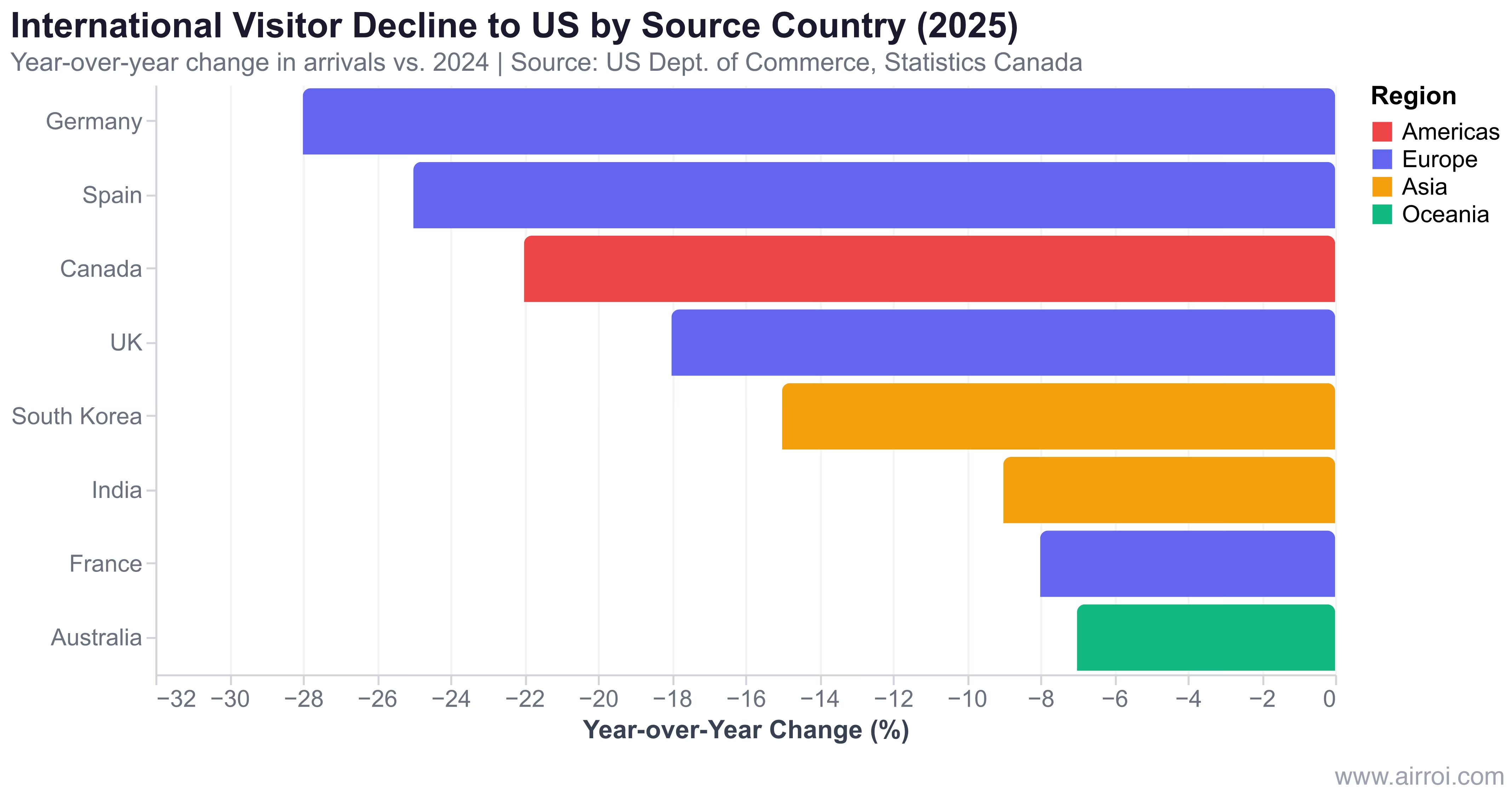
The March 2025 federal data paints an even starker picture across multiple source markets: Germany down 28%, Spain down 25%, the United Kingdom down 18%, South Korea down 15%, and Australia down 7%. These are not marginal shifts — they represent millions of lost visitor-nights concentrated in exactly the markets where STR hosts operate.
"The U.S. is the only country among 184 economies analyzed forecast to see international visitor spending decline in 2025." — World Travel & Tourism Council
The financial impact is staggering. The WTTC estimated foreign tourists in the US spent $176 billion in 2025 — more than $14 billion less than in 2024. The US Travel Association calculated every 1% drop in international visitor spending equals $1.8 billion in lost export revenue annually. By that math, the 5.5% decline translates to roughly $10 billion in economic damage — before the 2026 acceleration is even factored in.
Meanwhile, domestic STR demand grew just 2.2% according to the US Travel Association's latest dashboard. That modest growth cannot offset the loss of international guests who stay longer, book further ahead, and spend more per night.
The Most Exposed STR Markets: Quantifying Revenue at Risk
AirROI data reveals which US short-term rental markets carry the highest exposure to the airbnb international demand decline. The markets most vulnerable share three characteristics: gateway-city status attracting international arrivals, high concentrations of Canadian and European guests historically, and STR inventory built around longer-stay, higher-ADR demand.
| Market | Active Listings | TTM Avg Revenue | ADR | Occupancy | Lead Time | Exposure |
|---|---|---|---|---|---|---|
| Miami | 7,905 | $34,738 | $291 | 49% | 35 days | Very High |
| New York City | 11,468 | $21,970 | $225 | 49% | 47 days | Very High |
| Los Angeles | 10,134 | $30,001 | $312 | 48% | 36 days | High |
| San Francisco | 4,355 | $33,932 | $274 | 55% | 45 days | High |
| Orlando | 3,913 | $30,219 | $248 | 50% | 53 days | High |
| Las Vegas | 3,419 | $23,819 | $274 | 42% | 39 days | Very High |
| Honolulu | 5,553 | $41,659 | $268 | 60% | 63 days | High |
Source: AirROI market data, trailing 24-month averages, May 2026
A new federal report from the National Travel and Tourism Office confirms the geographic concentration: five states — New York ($32.1B), California ($26.9B), Florida ($25.2B), Texas ($7.9B), and Massachusetts ($7.7B) — accounted for nearly 60% of overseas visitor spending in 2024, totaling almost $100 billion. These are precisely the states where STR inventory is densest.
Miami and South Florida: Canada's Favorite Winter Escape Runs Cold
Florida lost approximately 500,000 Canadian visitors in 2025, representing a 14.7% decline for what has historically been Canada's top US destination. For Miami's 7,905 active short-term rental listings averaging $291 per night, the Canadian absence creates a structural gap in winter-season bookings that once filled December-through-April calendars.
AirROI future pacing data tells the summer story. For the World Cup window (June 11-July 19), Miami's fill rates sit at just 17-23% for weekends and 10-14% for midweek dates. Available rates are inflated to $469-533 per night — dramatically above the $350-400 booked rates — indicating hosts are pricing for international tournament demand that has not materialized.
The gap between booked and available rates is a classic speculative pricing signal. The premium inventory that moved early was priced at normal summer levels. The remaining 77-90% of available inventory is listed at World Cup premiums with no matching demand.
Las Vegas: The 82,000 Empty Seats
Las Vegas faces perhaps the most concentrated version of the international demand decline. Canadian airline capacity to Las Vegas was cut by 82,000 seats in Q1 2026 alone. The city finished 2025 with its lowest visitor count since 2010, excluding COVID years.
With a 42% occupancy rate and $274 ADR across 3,419 active listings, Las Vegas already showed demand weakness before the boycott accelerated. AirROI pacing data shows the June 11-July 19 window at fill rates of just 14-22% — despite Las Vegas being a natural stopover market for World Cup attendees traveling between host cities.
"Canadian visitation to the U.S. is down 35% since President Trump returned to office — dealing a massive, sustained economic blow to the U.S. economy that shows no sign of reversing in 2026." — Suzanne Rowan Kelleher, Forbes
New York, LA, and San Francisco: Gateway Cities Losing Their International Edge
New York City's 11,468 active listings operate at 49% occupancy with a 47-day average booking lead time — a metric that reflects the market's historical dependence on international travelers who plan further ahead. At $225 ADR, NYC listings generate $21,970 in average trailing revenue, but the longer lead time means hosts will feel the international decline later than Miami or Las Vegas, as bookings made 2-3 months ago still fill near-term calendars.
Why International Guests Are Staying Away — And Why Domestic Demand Cannot Replace Them
Four structural forces are driving international travelers away from the US, and none are likely to reverse before summer 2026.
The Canadian boycott is now self-sustaining. A Nanos Research survey for CTV News found 43% of Canadians say they are less likely to visit the United States in 2026. More Canadians now fly to international destinations than drive south to the US — flipping a pattern that held for decades. In 2024, Canadian tourists generated $20.5 billion in US spending and supported 140,000 American jobs. Even a partial permanent diversion represents a multi-billion-dollar structural loss.
The strong dollar makes the US expensive. For European and Canadian visitors, a strong USD adds 10-20% to already-high US travel costs. Combined with US lodging, food, and transport prices that rank among the world's highest, the strong dollar pushes price-sensitive international travelers toward cheaper alternatives in Mexico, southern Europe, and Southeast Asia.
Visa friction and perception barriers persist. According to Cirium aviation analytics, advance bookings from Europe to the United States for July 2026 have fallen 15.3% year-over-year — despite the World Cup. This signals that perception and cost barriers are overriding even major event pull factors.
Domestic demand grows too slowly to compensate. The US Travel Association reported STR demand grew 2.2% domestically. But international guests generate fundamentally different economics:
| Metric | International Guest | Domestic Guest |
|---|---|---|
| Average length of stay | 5-10 nights | 2-4 nights |
| Booking lead time | 45-65 days | 20-35 days |
| Revenue per booking | $1,500-3,000+ | $500-1,200 |
| Weekday demand | High (full-week stays) | Low (weekend-concentrated) |
| Min-night tolerance | 5-7 nights acceptable | Prefers 2-3 nights |
Each lost international booking requires 2-3 additional domestic bookings to replace the same revenue. A 2.2% domestic demand increase cannot offset a 15-22% international decline in revenue terms.
The World Cup Wildcard: Will International Fans Show Up?
FIFA projected 1.24 million international visitors would deliver a $30.5 billion economic boost to the United States during the 2026 World Cup. The industry banked on this forecast as the antidote to declining inbound tourism. Six weeks before kickoff, the evidence suggests the tournament may disappoint.
"The 'soft bookings' are fueling some concern that this World Cup won't attract as many visitors as first thought. The posited reasons range from a broader U.S. tourism slump to ticket prices that have dissuaded foreign fans, plus costs that have made a World Cup trip unaffordable for the vast majority of the world." — The Athletic / New York Times, April 2026
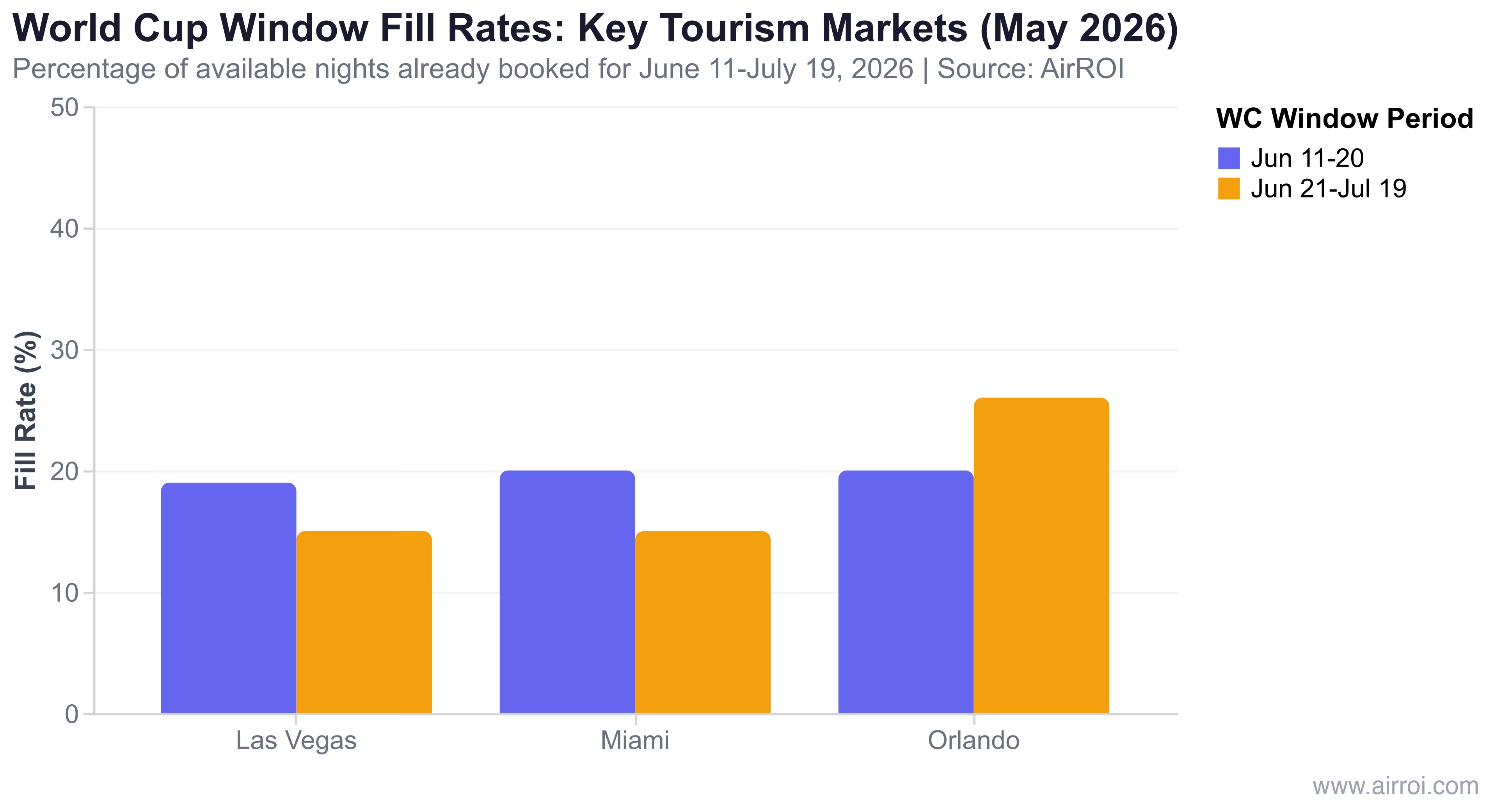
AirROI future-pacing data quantifies the softness. Miami's fill rate for the June 11-July 19 World Cup window averages just 18% — comparable to a normal off-season week. Orlando sits at 18-33% depending on the specific week, with the strongest pacing around the June 15-27 window when matches are densest. Las Vegas, a natural stopover market for fans traveling between host cities, shows 14-22% fill rates for the same window.
The hotel market tells a parallel story. In Atlanta, a World Cup host city, average hotel prices for the June 14-16 match window fell from $968 in December to $390 in April — a 60% crash as "soft bookings" forced revenue managers to capitulate on rate.
What Hosts in Exposed Markets Should Do Now
The data is clear: international demand for US short-term rentals is not recovering before summer 2026. Hosts in Miami, Las Vegas, Orlando, NYC, LA, and San Francisco need to pivot now rather than wait for bookings that increasingly appear unlikely to materialize.
Price from realized demand, not speculative premiums. If your WC-window listing is priced 3x+ above your trailing ADR and you haven't booked, the premium isn't supported. AirROI future pacing data shows booked rates in Miami averaging $350-400 while available rates sit at $469-533. The market has spoken — the clearing price is 20-30% below where many hosts are listed.
Target domestic travelers within a 3-hour flight radius. International guests found your listing through global searches with long lead times. Domestic replacements book closer to arrival and respond to different triggers — weekend getaway positioning, family-friendly messaging, road-trip convenience. Adjust your listing title and first photo to speak to this audience.
Offer mid-week discounts. International leisure guests filled Monday-through-Thursday nights with their week-long stays. Domestic guests cluster on weekends. Bridge the gap with 15-25% midweek discounts that make your listing attractive for remote workers or early-week arrivals.
The hosts who accept the international demand gap now and pivot their strategy will capture domestic revenue that would otherwise go to more aggressively-priced competitors. The hosts who hold speculative rates into June face a World Cup window that delivers vacancy instead of windfall.
Frequently Asked Questions
Canadian STR bookings fell over 22% year-over-year through early 2026, with cumulative two-year drops exceeding 30%. European advance bookings for the July 2026 World Cup window fell 15.3% per Cirium aviation data. Overall US international arrivals declined 5.5% in 2025 and January 2026 showed a further 3.5% year-over-year decline.
Markets most exposed include Miami, New York City, Los Angeles, San Francisco, Las Vegas, Orlando, and Honolulu. Five states — New York, California, Florida, Texas, and Massachusetts — account for nearly 60% of overseas visitor spending totaling roughly $100 billion. Florida alone lost 500,000 Canadian visitors in 2025.
Projections are weakening. While FIFA forecasted 1.24 million international visitors, Cirium aviation data shows European advance bookings to the US for July 2026 are down 15.3% year-over-year. AirROI future-pacing data shows World Cup-window fill rates in Miami at only 17-23% and Orlando at 18-33%, well below what tournament-driven demand would produce.
The Canadian boycott cost the US an estimated $4.5 billion in direct visitor spending in 2025, according to the US Travel Association. Canadian visits fell 22% — representing 4.2 million fewer visitors — with Las Vegas, Florida, and border states hit hardest. Florida lost approximately 500,000 Canadian visitors, a 14.7% decline for that market alone.
Pivot pricing and marketing toward domestic travelers by shortening minimum-stay requirements from 5-7 nights to 2-3 nights, reducing lead-time assumptions, offering mid-week discounts to replace international weekday demand, and pricing from realized forward booking data rather than speculative event premiums. AirROI Atlas provides real-time pacing data to inform these decisions.