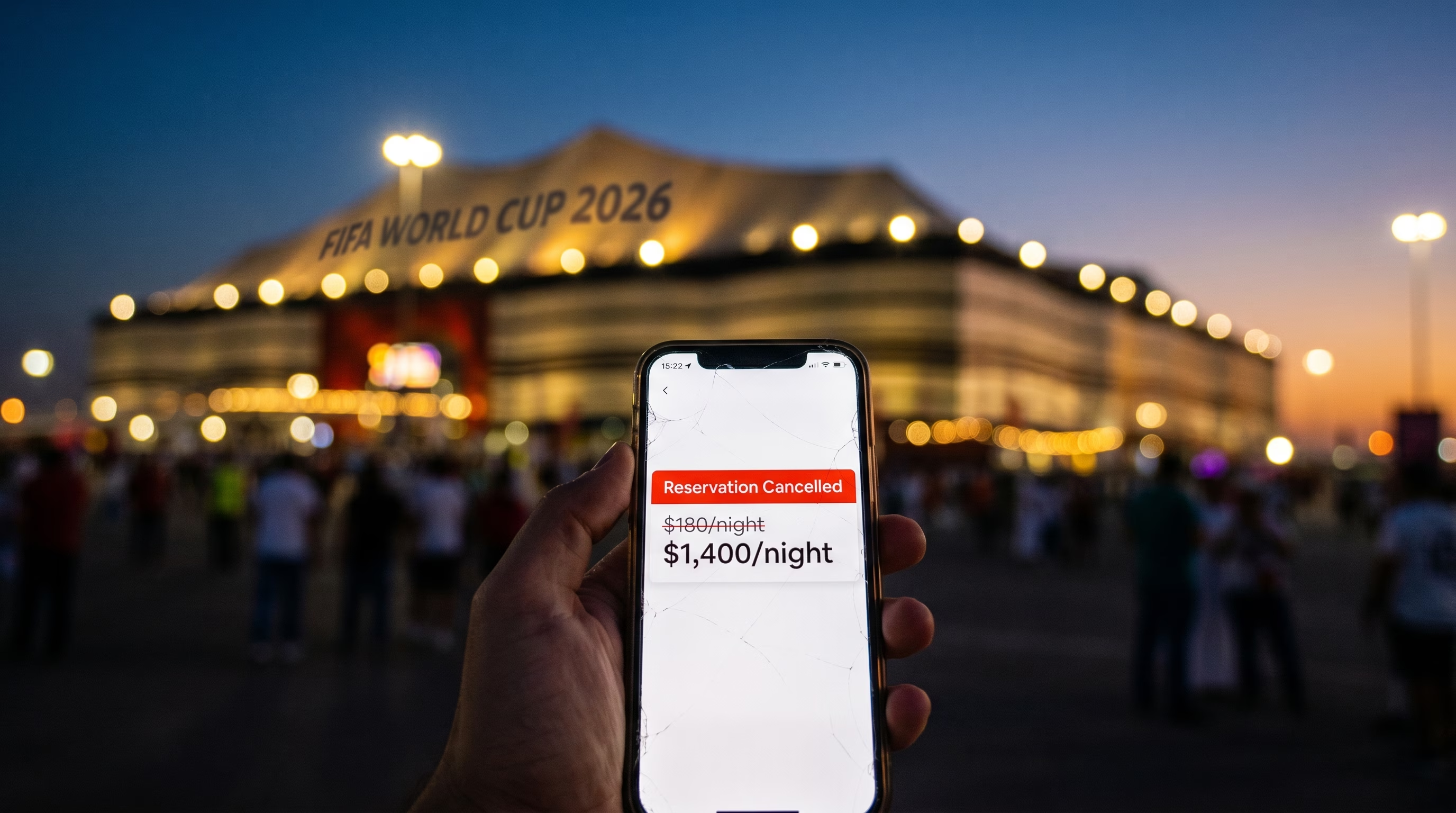
World Cup 2026 Airbnb Cancellation Arbitrage: The Data That Makes It Rational

A Kansas City host locked in a 3-night World Cup booking at $273 a night back in October. AirROI stadium-ring data shows the current top-tenth asking rate for the same match-window nights is $2,411. Cancel, pay Airbnb's 25% penalty on the original $819 booking ($205), and rebook at $7,233. Net profit: $5,888. That is a 719% return on the original reservation value -- after the penalty.
Sixteen days before the June 11 opener, this math is playing out across all 16 host cities. Reddit hosts are reporting cancellation scam attempts from both directions. Guests on Twitter are documenting forced rebookings at hundreds of dollars more per night. One user reported paying an additional 900 euros after a host cancellation in Dallas. The world cup 2026 airbnb cancellation wave is not a breakdown in platform trust. It is the predictable output of a rate gap so wide that Airbnb's cancellation penalty cannot close it.
The Rate Gap That Creates the Incentive
AirROI data from our stadium-ring price analysis shows every World Cup host city exceeds the 25% cancellation penalty threshold -- most by a factor of six to thirty. The table below compares each city's 2025 same-window baseline ADR against the current top-tenth match-window asking rate. The "spread" column is what matters: it quantifies the financial incentive to cancel.
| City | 2025 Baseline ADR | WC Match ADR (Top-Tenth) | Spread ($) | Spread (%) |
|---|---|---|---|---|
| Arlington (Dallas) | $316 | $3,092 | +$2,776 | +878% |
| Kansas City | $273 | $2,411 | +$2,138 | +783% |
| Monterrey | $99 | $711 | +$612 | +618% |
| Mexico City | $92 | $579 | +$487 | +530% |
| New York-NJ | $322 | $1,862 | +$1,540 | +478% |
| Atlanta | $302 | $1,483 | +$1,181 | +391% |
| Vancouver | $388 | $1,804 | +$1,416 | +365% |
| Guadalajara | $134 | $617 | +$483 | +360% |
| Houston | $477 | $1,969 | +$1,492 | +313% |
| Miami | $527 | $1,899 | +$1,372 | +260% |
| Seattle | $541 | $1,762 | +$1,221 | +226% |
| Boston Area | $359 | $1,082 | +$723 | +201% |
| Philadelphia | $418 | $1,181 | +$763 | +183% |
| Toronto | $426 | $1,157 | +$731 | +172% |
| Los Angeles | $305 | $803 | +$498 | +163% |
| SF Bay Area | $339 | $870 | +$531 | +157% |
Source: AirROI stadium-ring radius search, top-tenth (90th percentile) host match-window ADR vs same-window 2025 rate. Data as of May 2026.
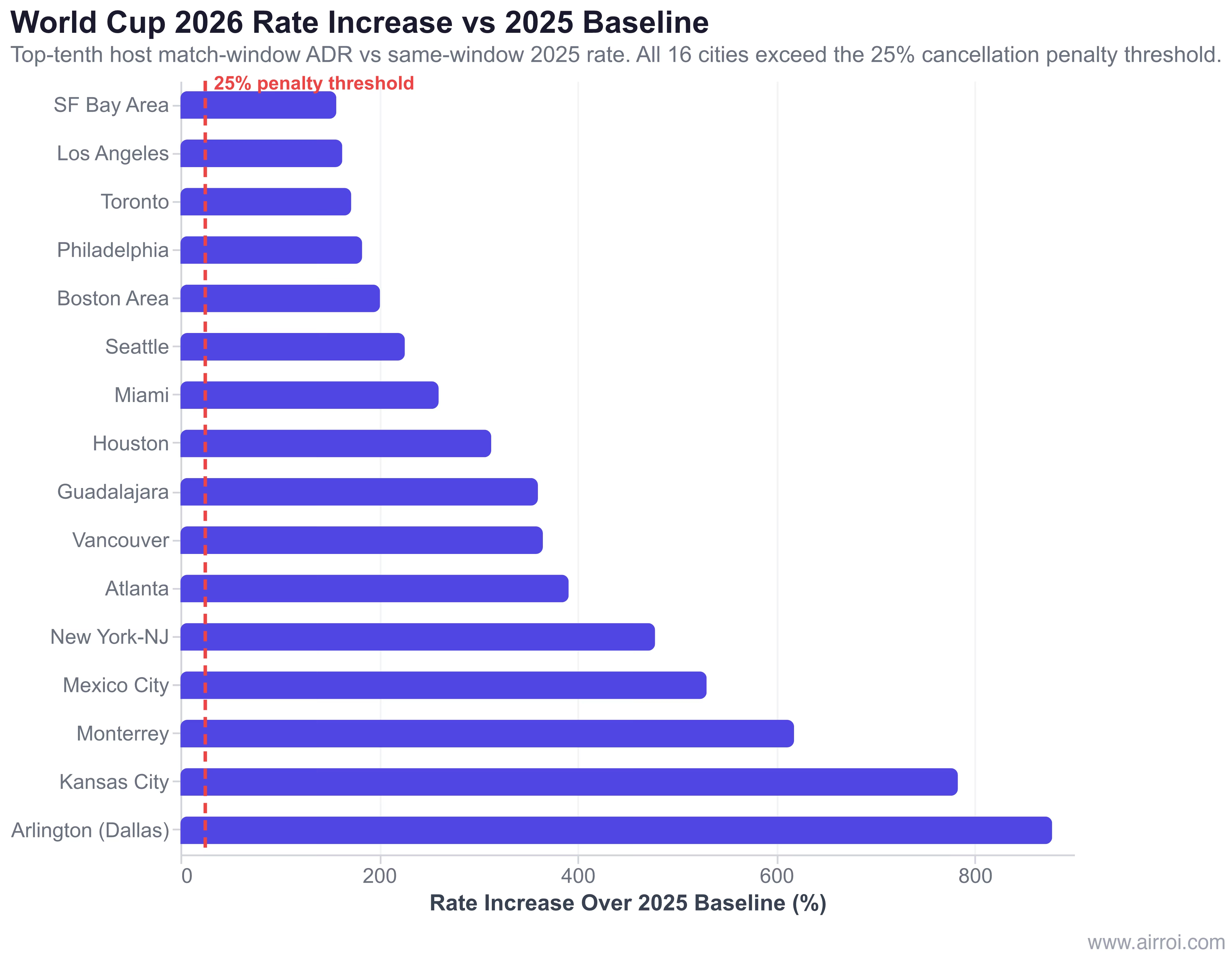
The lowest spread in the tournament belongs to the SF Bay Area at +157%. Even that is more than six times the 25% cancellation penalty threshold. At the top of the range, Arlington's +878% spread means a host would need to pay eight full cancellation penalties before the rebook stopped being profitable. The penalty isn't a deterrent at these levels. It is a rounding error.
For context, our Coachella analysis found that a 109% spread in Indio was sufficient to make cancellation rational at every penalty tier. The World Cup data shows that 14 of 16 host cities have spreads exceeding 157% -- all of them far above the threshold where cancellation becomes positive-expected-value.
The Cancel-and-Rebook Math, City by City
A host who locked in a 3-night stay at the 2025 baseline rate and cancels 16 days before check-in (25% penalty bracket) nets between $1,197 and $7,380 in pure profit by rebooking at the current top-tenth match-window rate. The arbitrage is positive in every single host city.
The math follows the same structure we documented in the Coachella analysis: original booking value, minus the 25% cancellation penalty, plus the rebook revenue at the current market rate. The difference is the net gain. Here is what that looks like across all 16 cities.
| City | Original 3-Night Booking | 25% Penalty | Rebook Revenue (3 Nights) | Net Profit | Profit as % of Original |
|---|---|---|---|---|---|
| Arlington (Dallas) | $948 | $237 | $9,276 | +$7,380 | 778% |
| Kansas City | $819 | $205 | $7,233 | +$5,888 | 719% |
| Houston | $1,431 | $358 | $5,907 | +$3,418 | 239% |
| New York-NJ | $966 | $242 | $5,586 | +$3,413 | 353% |
| Vancouver | $1,164 | $291 | $5,412 | +$3,102 | 266% |
| Atlanta | $906 | $227 | $4,449 | +$2,795 | 308% |
| Miami | $1,581 | $395 | $5,697 | +$2,535 | 160% |
| Seattle | $1,623 | $406 | $5,286 | +$2,257 | 139% |
| Philadelphia | $1,254 | $314 | $3,543 | +$1,662 | 132% |
| Toronto | $1,278 | $320 | $3,471 | +$1,554 | 122% |
| Monterrey | $297 | $74 | $2,133 | +$1,539 | 518% |
| Boston Area | $1,077 | $269 | $3,246 | +$1,450 | 135% |
| Mexico City | $276 | $69 | $1,737 | +$1,323 | 479% |
| Guadalajara | $402 | $101 | $1,851 | +$1,248 | 310% |
| Los Angeles | $915 | $229 | $2,409 | +$1,037 | 113% |
| SF Bay Area | $1,017 | $254 | $2,610 | +$1,197 | 118% |
Calculation: Original = 2025 baseline ADR x 3 nights. Penalty = 25% of original. Rebook = top-tenth WC match-window ADR x 3 nights. Net profit = rebook - original - penalty.
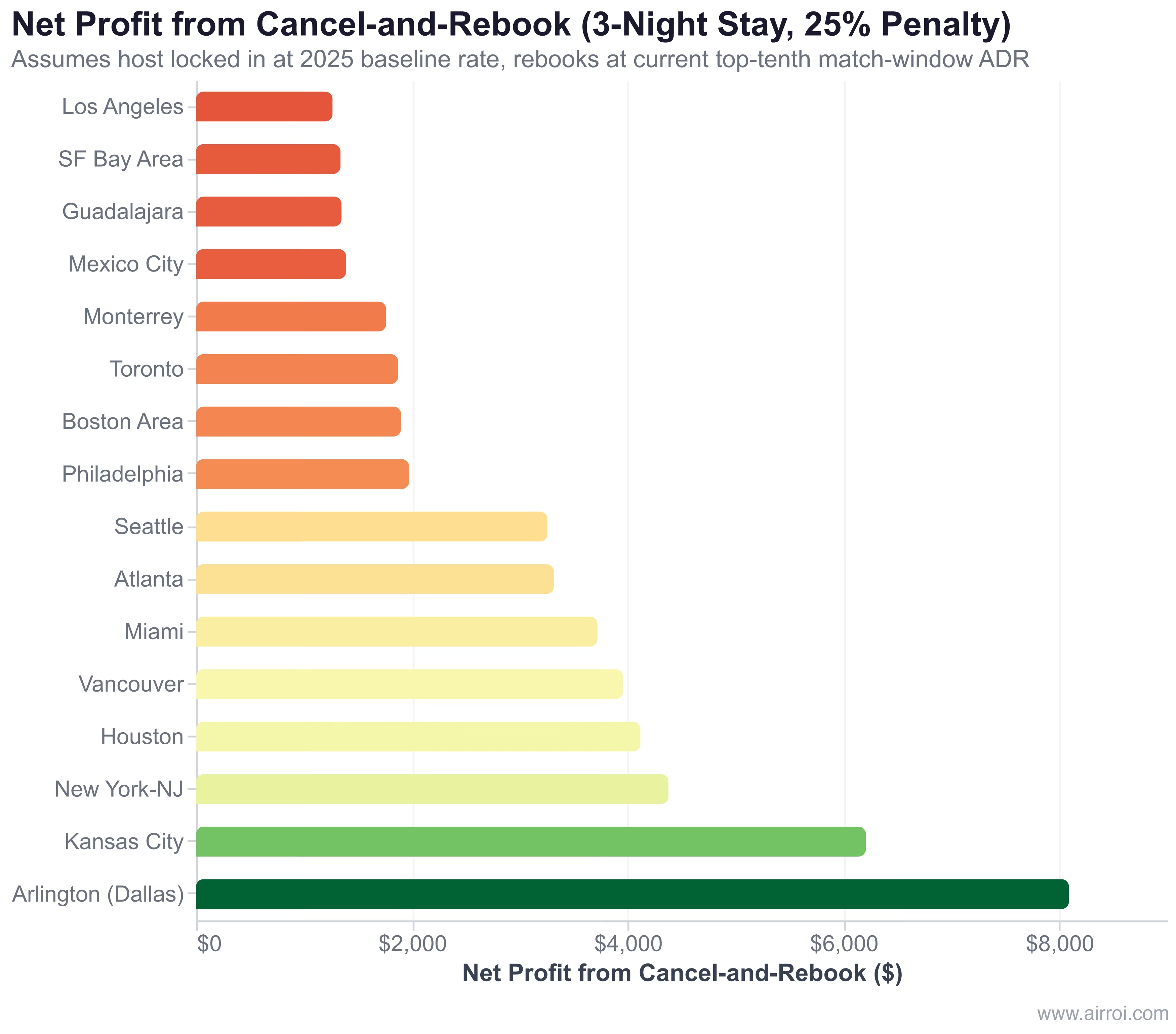
Even in the harshest penalty bracket -- 50% for cancellations within 48 hours of check-in -- every city still delivers positive arbitrage. Arlington at the 50% tier: $9,276 rebook minus $474 penalty minus $948 original = $6,906 net gain. The penalty would need to be approximately 90% of the original booking to make cancellation irrational in Arlington. At Kansas City, the break-even penalty would be roughly 88%.
The Guest-Side Scam
Not all cancellation gaming flows from host to guest. Some guests are exploiting the reverse: booking early at pre-tournament rates, extending stays to block the host's calendar, and then cancelling under more favorable long-term policies.
The mechanics work like this. A guest books a 3-night stay in Kansas City for late June at the rate available six months ago. Once confirmed, the guest requests an extension to cover the full June 11 to July 19 match window -- or even a portion of it. If the host accepts the extension, the calendar is now blocked for weeks. The guest then cancels the extended booking under long-term stay cancellation policies, which in many cases provide 30-day cancellation rights with a full refund minus the first 30 days.
The damage to the host is not the lost revenue from the cancelled booking itself. It is the lost revenue from the calendar block during the highest-demand period of the year. A host whose June 15-25 window was blocked by a guest extension that later cancelled cannot relist those nights with the booking lead time that tournament pricing requires. As our data report showed, average World Cup booking lead times range from 118 to 160 days. A host relisting 10 days before check-in is pricing into a last-minute window where demand that can still act has already been absorbed.
Multiple Reddit threads in r/AirBnB and r/airbnb_hosts describe variations of this pattern. Some guests book overlapping reservations on multiple listings to hold options, cancelling all but one. Others request alterations that shift dates into the match window after the original booking was confirmed for non-match dates. The financial damage per incident is smaller than the host-side arbitrage, but the frequency appears to be growing as the tournament approaches.
Why Airbnb's Deterrents Were Not Built for This
Airbnb's three deterrents -- cancellation fees, calendar blocks, and a ban on relisting at higher prices -- were designed for 10-20% rate volatility, not the 157-878% spreads the World Cup creates. This is the same structural failure we documented for Coachella, but at continental scale.
| Deterrent | Airbnb's Intent | What WC Data Shows |
|---|---|---|
| Cancellation fee (10%/25%/50%) | Financial penalty that makes cancellation irrational | Covered 3-35x by the rebook spread -- positive-EV in all 16 cities at all penalty tiers |
| Calendar blocks | Host cannot re-book cancelled dates on Airbnb | Hosts rebook on Vrbo, Booking.com, or direct channels -- cross-platform relisting is unconstrained |
| Ban on relisting at higher price | Host cannot immediately relist the same unit at a markup on Airbnb | Rule is platform-local and enforcement depends on same-listing-ID detection -- hosts simply use a different channel |
Three structural gaps persist from the Coachella analysis and are amplified by the World Cup's scale.
First, the penalty does not scale with the spike. A percentage-based penalty works when the spread between the locked rate and the current rate is small. At a 25% penalty on a $273/night Kansas City booking, the fee is $205 on a 3-night stay. The rebook premium is $6,414. The penalty would need to be a function of the current market rate, not the original booking rate, to have any deterrent effect at event-scale price spikes.
Second, the 39-day tournament window multiplies the cross-platform leakage. Coachella was a single weekend. A host who cancels a World Cup booking has 39 calendar days of premium inventory to relist across Vrbo, Booking.com, Furnished Finder, or direct booking sites. The longer the event window, the more channels a host can work simultaneously, and the less Airbnb's platform-local enforcement matters.
Third, the World Cup's geographic spread dilutes platform enforcement resources. Airbnb can concentrate trust-and-safety attention on Palm Springs during Coachella weekend. It cannot simultaneously monitor cancellation patterns across 16 cities in 3 countries over 39 days. The enforcement surface area is roughly 250x larger (16 cities times 39 days vs one market times 2.5 weekends), and the team is the same size.
What Hosts Should Do in the Final 16 Days
If you priced the World Cup correctly months ago, honor every booking. The long-run economics of Superhost status, repeat bookings, and platform standing compound in ways a single tournament cannot match. Our data on Superhost cohorts shows 50-60% annual revenue lifts that far exceed the one-event arbitrage gain -- even in Arlington.
If you have not yet priced the tournament window:
- Pull current pacing data now. AirROI Atlas shows real-time forward pacing for every host city. The gap between booked rates and asking rates in our data report reveals where pricing has cleared and where it has overshot.
- Set match-day rates 30-50% above your current asking rate for group stage nights. Our match-day premium analysis shows group stage dates command 40-65% premiums over baseline. If you are still at baseline, you are underpriced.
- Enforce a minimum 3-night stay for the match window. This reduces the guest-side calendar-blocking risk and aligns with tournament travel patterns.
- Do not accept extension requests that span the full tournament. A guest who wants to extend a 3-night stay into a 39-night booking during the World Cup window is not planning a vacation -- they are blocking your calendar.
What Guests Should Do in the Final 16 Days
Assume your host might cancel. Budget accordingly.
The rate gap data above shows that cancellation is rational for hosts in every World Cup city. Not every host will act on it -- most will honor their commitments -- but the financial incentive exists, and it is large. Here is the protective framework:
- Book with verified Superhosts who have 50+ reviews. Superhosts have a < 1% cancellation rate requirement and a multi-year reputation investment that makes the one-event arbitrage less attractive.
- Screenshot your confirmed reservation with the nightly rate on the day of booking. If the host cancels, this documentation supports your Airbnb customer service escalation.
- Budget a 2x replacement cost buffer. If you booked at $300/night and the host cancels, the current market rate in most World Cup cities is $600-$2,400/night. Rebooking at the original rate is not possible.
- Consider lower-spread cities. The SF Bay Area (+157%), Los Angeles (+163%), and the Boston area (+201%) have structurally lower cancellation incentives than Kansas City (+783%) or Arlington (+878%). Hosts in those markets have less to gain from cancelling.
- Check our hotels-vs-Airbnb accommodation analysis for fallback options. Hotels in some markets are releasing FIFA-cancelled room blocks back to the open market, and their pricing may now undercut inflated Airbnb rates.
Frequently Asked Questions
Because the rate gap between what hosts locked in months ago and current match-window asking rates ranges from +157% in the SF Bay Area to +878% in Arlington. AirROI data shows a Kansas City host who cancels a 3-night stay booked at the 2025 baseline rate and rebooks at the current top-tenth asking rate nets $5,888 in profit -- even after paying Airbnb's 25% cancellation penalty. The penalty was sized for normal booking volatility, not 100-800% event-driven rate spikes.
Airbnb charges 50% of the reservation amount if a host cancels within 48 hours of check-in, 25% if cancelled 48 hours to 30 days before check-in, and 10% if cancelled 30+ days out, with a $50 minimum. For World Cup bookings cancelled now (16 days before the June 11 opener), hosts fall into the 25% bracket. At current World Cup rate spreads, this penalty is covered many times over by the rebook premium in every host city.
Arlington (Dallas) has the highest absolute net profit from cancel-and-rebook at $7,380 on a 3-night stay, followed by Kansas City at $5,888 and Houston at $3,418. These three cities combine thin baseline supply, aggressive host repricing, and strong match schedules that create the widest spread between locked rates and current asking rates.
Book with verified Superhosts who have 50+ reviews and multi-year track records. Screenshot every confirmed reservation with the price. Budget a 2x replacement cost buffer. Consider booking in lower-spread cities like the SF Bay Area, Los Angeles, or the Boston area where the cancellation incentive is structurally weaker. If cancelled, document everything and escalate through Airbnb's customer service for rebooking credits.
Yes. Some guests are booking early at pre-tournament rates, requesting stay extensions to block the host's calendar across the entire match window, and then cancelling under long-term stay policies that offer more favorable refund terms. This locks the host's inventory during the highest-demand period and forces last-minute relisting at compressed lead times. Hosts should set minimum-stay requirements for the tournament window and avoid accepting extension requests that span the full June 11 to July 19 period.