Local Airbnb rules2026 35 sources cited
Is Airbnb Legal in Miami Beach? 2026 Rules, Permits & Taxes
Short stays under six months and one day are banned in Miami Beach single-family homes and many apartment districts; owners elsewhere need a city receipt and Resort Tax account, and taxes run about 14%.9,19,20,21,22,23,29
From 33 official sources, 1 Airbnb help page and 1 news report. Not legal advice.
The short answer
Miami Beach Airbnb Rules in Brief
- Stays under six months and one day are banned in single-family homes and the RM-1, RM-PRD, RM-PRD-2, RPS-1, RPS-2, CD-1, RO and TH districts.
- Legal hosts need a DBPR license, a city Certificate of Use, a Business Tax Receipt and a Resort Tax account, and must show the receipt and Resort Tax numbers in every listing.
- Taxes total about 14%: 6% state, 1% county surtax, 3% county convention tax and 4% city resort tax, and Airbnb does not collect the resort tax.
- Fines run up to $1,000 a day for a first violation and $5,000 a day for a repeat, and the rental must end immediately.
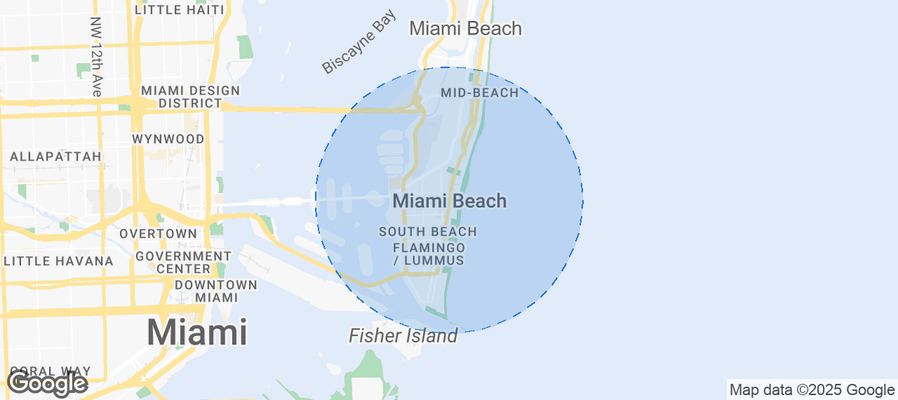 Browse the live Miami Beach Airbnb market See Every Miami Beach Listing
Revenue, occupancy and nightly rates are in the Miami Beach Airbnb market report .
At a glance
Miami Beach Airbnb Rules at a Glance
- Permit required
- Yes
- Taxes on a stay
- 14%
- Fine for hosting without a permit
- $15,000
- Listings showing a permit number
- 88%
- Latest rule change
- Jul 1, 2025
Listing figures: AirROI, 12 months to September 2026. A number on a listing doesn't prove the permit or license is valid, and a missing one doesn't prove there is none.
The rules in brief
The rules a Miami Beach host meets first, each linked to the ordinance, statute or official page it comes from. Details and exceptions follow below.
| Topic | Rule |
|---|---|
| Permit | The city business license bundles a Certificate of Use, fire fee and Business Tax Receipt22,23 |
| Who can host | Single-family homes cannot be rented short term19,24 |
| Where | Short stays are banned in most low-rise apartment districts10,24 |
| Building rules | Condo units need an association letter dated within 60 days6,20 |
| Minimum stay | Short term means less than six months and one day2,19 |
| Guests | Two guests per bedroom9 |
| Listing display | Show the receipt and Resort Tax numbers in every listing9,19 |
| Platforms | Platforms may not process payments for unregistered units9 |
| Safety | The Fire Department inspects before the certificate issues9,22 |
| Insurance | Liability insurance must be in force9 |
| Neighbors | Guest parking is limited to two vehicles9 |
Your home
Can You Host an Airbnb in Miami Beach? It Depends on the Home
Whether you can host in Miami Beach turns on whose home it is and whether you live there.
An apartment or townhome in RM-1, RM-PRD, RM-PRD-2, RPS-1, RPS-2, CD-1, RO or TH
Not allowedShort stays are not a permitted use in these districts unless the building was approved under one of the code's grandfather routes, such as the Flamingo Park and Espanola Way, Collins Waterfront and North Beach Harding Avenue routes.10,24
An apartment or condo in a qualified zone or on the authorized building list
Allowed with conditionsThe owner needs a DBPR license, a Certificate of Use after a fire inspection, a Business Tax Receipt and a Resort Tax account, and must show the receipt and Resort Tax numbers in every listing.19,20,22,23
A tenant renting out a leased unit
Not allowedThe city issues Business Tax Receipts for transient rentals only to unit owners, so a tenant cannot register a short-term rental.21
Permit
Do You Need a Permit for Airbnb in Miami Beach?
Yes. Short-term rental hosts in Miami Beach need the short-term rental business Tax Receipt from the City of Miami Beach (Planning Department for the Certificate of Use, Fire Department for the inspection, Finance Department for the Business Tax Receipt and Resort Tax account), alongside a Florida DBPR vacation rental license. It costs $230 in the first year (State license only: $50 application + $10 education fee + $170 license fee in the first year, $180 to renew. The city Business Tax Receipt, Certificate of Use, fire inspection and Resort Tax registration fees are charged on top under the city fee schedule.) and $180 a year to renew.9,19,20,21,22,23,29
- Who needs it
- Any owner renting a residential unit for less than six months and one day in a district that allows it. Only unit owners can obtain the receipt, and tenants cannot.9,19,20,21,22,23,29
- Issued by
- City of Miami Beach (Planning Department for the Certificate of Use, Fire Department for the inspection, Finance Department for the Business Tax Receipt and Resort Tax account), alongside a Florida DBPR vacation rental license
- Valid for
- The Business Tax Receipt runs on the city tax year from October 1 to September 30 and must be renewed; the Certificate of Use stays with the location and is not renewed each year; the state license renews every year.
- Processing
- The city publishes no processing time; an application left idle for 90 days after the first review is treated as abandoned, and the fire inspection must be completed within 90 days of Planning approval.
- On listings
- The number must appear on every listing
- Platform checks
- City Code section 102-387 requires platforms to display each owner's Business Tax Receipt and Resort Tax numbers and bars them from processing payment for a unit without a valid receipt and Certificate of Use.
Fees
| Fee | Amount |
|---|---|
| DBPR application (state license)Florida DBPR application fee for a new vacation rental license, paid in addition to the license fee. | $50 |
| DBPR hospitality education fee (state license)Paid on new applications and on every renewal. | $10 |
| DBPR license fee, single rental unit (state license)Full-year fee for a single rental unit; $90 if applying within six months of the district renewal date. | $170 |
| City Certificate of Use application, grandfathered districtsApplication fee in the code for a short-term rental Certificate of Use in the restricted districts; the North Beach Harding Avenue route is $1,000. | $600 |
| City Business Tax Receipt, application and Resort Tax registration | Amounts follow the city schedule of taxes in City Code section 102-379 and change each fiscal year with the Consumer Price Index. |
Who qualifies
- The address must be in a qualified zone on the city's Short-Term Rental Zoning Map or in a building on the city's authorized apartment building list; single-family homes cannot qualify.
- The applicant must own the unit; the application needs an approved Certificate of Use, a recorded warranty deed or bill of sale, a federal ID number, a Florida annual resale certificate for sales tax and the state license.
- Condominium units need a letter from the association, dated within the last 60 days, saying short-term rental is allowed for the specific unit, and the association must hold its own Business Tax Receipt.
- The owner must acknowledge in writing that short-term rental could cost the homestead exemption, list every hosting platform used, and carry liability insurance.
- A separate Certificate of Use is needed for each unit.
How to apply
- Check the address on the city's Short-Term Rental Zoning Map and its list of apartment buildings authorized for short-term rental; single-family homes do not qualify.
- Obtain the Florida DBPR vacation rental license and a Florida sales tax registration.
- For a condominium unit, obtain the association's letter dated within 60 days; the association must already hold its own Business Tax Receipt.
- Create a Civic Access account, choose "Certificate of Use – Short Term Rental", and upload the checklist documents.
- After Planning approves, schedule the Fire Department inspection on Civic Access within 90 days; the certificate issues automatically once the inspection and Finance review pass.
- Apply for the Business Tax Receipt and register for Resort Tax, with the notarized affidavit, the platform list and the homestead notice.
- Put the Business Tax Receipt and Resort Tax certificate numbers in every listing, and file Resort Tax each month.
Applications go through the official application page .
Permit rules
- A Florida DBPR vacation rental license is required
- Renting a whole unit more than three times a year for under 30 days needs a state vacation rental license, and the license number is part of the city application.3,12,20 Applies to: whole-home rentals under 30 days
- The city business license bundles a Certificate of Use, fire fee and Business Tax Receipt
- Every business in Miami Beach needs a Business License made up of a Certificate of Use, an annual fire fee and a Business Tax Receipt. A separate Certificate of Use is needed for each unit run as a short-term rental, and the receipt is applied for only after the certificate and fire inspection clear.22,23
- A Resort Tax account is part of registration
- A short-term rental needs both a Business Tax Receipt and a city Resort Tax account, and the city lists no situation where a transient rental can lawfully run without them.19,21
- Miami-Dade County also requires a local business tax receipt
- A business inside a Miami-Dade city holds both a city and a county receipt, so a Miami Beach host also needs the county Local Business Tax Receipt.18
- Show the receipt and Resort Tax numbers in every listing
- Every advertisement or listing must conspicuously show the city-issued Business Tax Receipt number and the Resort Tax certificate number. Leaving them out creates a presumption that the unit runs without registration.9,19
- No advertising before the owner files a sworn affidavit
- An owner may not advertise a residential property for transient rental until filing an affidavit, under penalty of perjury, that the zoning allows it, a receipt and Resort Tax certificate are held, insurance is in place and the condominium association has authorized it in writing.9
- Platforms may not process payments for unregistered units
- Under the city code a hosting platform may not list a short-term rental without showing the owner's receipt and Resort Tax numbers, and may not process payment for a unit without a valid Business Tax Receipt and Certificate of Use. Platform violations carry fines from $1,000 to $5,000.9 Applies to: booking platforms
Who can host
Who Can Host an Airbnb in Miami Beach, and Where
Florida state law applies on top of Miami Beach's own rules: the Florida short-term rental regulations page covers the state license and what cities and counties can and can't regulate.
- Single-family homes cannot be rented short term
- Renting a single-family home in Miami Beach for less than six months and one day is prohibited, and so is advertising it for that use.19,24
- Short stays are banned in most low-rise apartment districts
- Renting an apartment or townhome for less than six months and one day is not a permitted use in the RM-1, RM-PRD, RM-PRD-2, RPS-1, RPS-2, CD-1, RO and TH districts, unless a specific exemption in the code applies.10,24 Applies to: apartments and townhomes in the listed districts · In force since June 2010
- A few older buildings were approved under grandfather routes
- The code lets certain buildings in the restricted districts hold a certificate of use for short-term rental: RM-1 and TH properties in the Flamingo Park and Espanola Way historic districts that were already renting short term in 2010, certain historic buildings in the Collins Waterfront district, and certain historic buildings fronting Harding Avenue in North Beach. The application windows for the Flamingo Park and Espanola Way route (2010, with late filings to 2012) and the Collins Waterfront route (April to September 2017) have closed, and only entire units may be rented, not rooms.10,19 Applies to: buildings approved under the grandfather routes · In force since June 19, 2010
- Outside the restricted districts, qualified zones may operate
- A property in a qualified zone on the city's Short-Term Rental Zoning Map may operate a short-term rental once it holds a Vacation/Short-Term Rental Business Tax Receipt. The city also publishes a list of apartment buildings authorized for short-term rental.19 Applies to: properties in qualified zones
- Only the unit owner can get the receipt
- Business Tax Receipts for transient rentals are issued only to unit owners, so a tenant cannot obtain one. A recorded warranty deed or bill of sale is part of the application.20,21 Applies to: owners
- Condo units need an association letter dated within 60 days
- A unit in a condominium or association building needs a letter, dated within the last 60 days, saying short-term rental is allowed for that specific unit. The association must hold its own Business Tax Receipt first, and under state law a condo rental ban binds owners who consent or buy after it takes effect.6,20 Applies to: condominium and association units
- Florida's ban on local limits does not cover this ordinance
- State law bars local rules on vacation rentals only for rules adopted after June 1, 2011. Miami Beach enacted its apartment and townhome restriction in 2010, and a state appeals court upheld the prohibition while striking only the city's excess fines.1,26 In force since June 1, 2011
Operating rules
Operating Rules for Miami Beach Short-Term Rentals
- Short term means less than six months and one day
- The city treats any stay of less than six months and one day as a vacation or short-term rental, a far longer threshold than the 30-day line in Florida's licensing law. A lease of at least six months and one day is not a short-term rental under the city rules.2,19
- Grandfathered rentals can be booked no more than once every seven days
- Units approved under the grandfather route may not be rented more frequently than once every seven days, and the North Beach and Collins Waterfront routes require at least a seven-night reservation.10 Applies to: units approved under the grandfather routes
- Two guests per bedroom
- Occupancy of a short-term rental is limited to two persons per bedroom, not counting children under two, and never above the occupant load set by the Florida Building Code or Fire Prevention Code.9
- Guest parking is limited to two vehicles
- Guest vehicles must park in the driveway or designated parking area, or on the street or swale in front of the property where none exists, and no more than two vehicles may be parked at once.9
- Noise rules apply and outdoor amplified sound is banned
- Guests must follow the city noise ordinance (City Code section 46-152), and outdoor amplified sound at a short-term rental is prohibited at all times.9
- Problems must be resolved around the clock
- The owner must make sure violations at the rental are addressed and resolved 24 hours a day, seven days a week, and give guests written notice of the city standards before they arrive.9
- Liability insurance must be in force
- Insurance covering liability for injury or harm to guests and their invitees must be in effect at all times while the property is rented short term.9
- The Fire Department inspects before the certificate issues
- After Planning approves the Certificate of Use, the Fire Department inspects the unit on site, and the inspection must be completed within 90 days or the application is treated as abandoned. The rental can also be inspected when the receipt is issued or renewed.9,22
- State safety rules apply: smoke detectors in every unit
- The state license requires smoke detectors in every living unit and compliance with the Life Safety Code, and buildings of three or more stories need a balcony inspection certificate every three years.12
- Keep a guest register open to city inspection
- The owner must keep a register with the names and dates of stay of all guests and their invitees, open to inspection by the city, and give the city the names of every platform where the unit is listed.9,20
- Renting a homestead can end the exemption
- The city application requires a written acknowledgement that short-term rental can cost the owner the homestead exemption, and Florida law treats renting all or substantially all of a homestead as abandoning it.8,20 Applies to: owners with a homestead exemption
Taxes
How Much Are Airbnb Taxes in Miami Beach?
About 14% of the rent: 6% state, 1% county surtax, 3% county convention development tax and 4% city resort tax. Airbnb collects the first 10% and the host files the 4% resort tax.
14% in all
How the 14% on a Miami Beach stay splits between the taxes in the table below
- Florida state transient rental tax (sales tax on short-term rentals) 6%
- Miami Beach municipal resort tax 4%
- Miami-Dade County convention development tax 3%
- Miami-Dade County discretionary sales surtax 1%
- Median nightly rate, booked nights
- $275
- Taxes on that night (14%)
- $39
- Guest pays, before Airbnb and cleaning fees
- $314
| Tax | Rate | Collected by |
|---|---|---|
| Florida state transient rental tax (sales tax on short-term rentals) 6% of the rent, including cleaning and other required charges | 6%5,14,34 | Airbnb |
| Miami-Dade County discretionary sales surtax 1% of the rent, reported with the state tax | 1%16,34 | Airbnb |
| Miami-Dade County convention development tax 3% of the rent; applies in Miami Beach, which is exempt from the 2% tourist development and 1% sports facility taxes | 3%17,18,34 | Airbnb |
| Miami Beach municipal resort tax 4% of the rent on transient rentals of six months or less | 4%15,18,21 | Host |
At Miami Beach's median booked rate of $275 a night, the taxes collected on a booking come to about $39 a night.
Rates for every Florida county, with which ones Airbnb collects, are on the Florida short-term rental regulations page.
What the host still handles
- Florida DBPR vacation rental license for whole-home rentals of less than 30 days, renewed every year.
- Florida Department of Revenue sales tax registration for short-term living accommodations; Airbnb remits the 6% state tax and 1% surtax on its own bookings, and taxes on other bookings are the host's to report.
- City of Miami Beach Business Tax Receipt, renewed each October 1 to September 30, and a Resort Tax account with a monthly return due by the 20th of the following month, including sales made through Airbnb.
- Miami-Dade County Local Business Tax Receipt in addition to the city receipt, and a county tourist tax account for convention development tax on bookings a platform does not collect; collectors of these taxes must file monthly even when no tax is collected.5,14,15,16,17,18,21,34
Fines
How to Avoid Airbnb Fines in Miami Beach
Fines in Miami Beach fall on hosting without the short-term rental business Tax Receipt, or outside the rules above. With it in hand and the rules followed, none of the fines below apply.
- Renting where the zoning bans it: fines under Florida's code enforcement caps of up to $1,000 a day for a first violation, $5,000 a day for a repeat violation and $15,000 per violation if found irreparable or irreversible, plus immediate termination of the rental and a lien on the owner's property.10,11,26
- Breaking the owner duties in City Code section 102-386 (advertising without registration, missing numbers, insurance, parking, noise): a $1,000 civil fine for a first offense.9
- A second or later violation of those owner duties within six months: a $5,000 civil fine and revocation of the Business Tax Receipt and Certificate of Use.9
- Platforms that list or process payment for unregistered units face fines of $1,000 for a first offense, rising to $5,000 for a fourth or later violation within six months.9
- Special Magistrate notices for a short-term rental whose Business Tax Receipt was not renewed carry a $1,000 fine for a first offense.25
- If a building or unit is found to be operating a short-term rental illegally, the city can have the guests evicted and fines assessed against the owner.28
- Operating a vacation rental without a DBPR license is a second-degree misdemeanor.3
- DBPR may fine a licensee up to $1,000 per offense and may suspend, revoke or refuse a license.4
Changes
What's Changed in Miami Beach's Airbnb Rules
No change was scheduled when the rules were checked on October 17, 2026; the most recent are listed first.
- July 1, 2025
- October 1, 2024Miami-Dade County Business Section takes over convention and tourist tax collection
Short-term rental taxes in Miami-Dade, including the 3% convention development tax, are collected by the Department of Regulatory and Economic Resources Business Section from this date.18
- June 27, 2024Governor vetoes CS/SB 280, which would have preempted local vacation rental registration
The Legislature passed a bill that would have preempted vacation rental licensing and capped local fines for registration violations at $500; the Governor vetoed it, and the state preemption in section 509.032(7) is unchanged.31,32
- February 1, 2023Land development rules recodified as the Resiliency Code
The City Commission adopted the new Resiliency Code, which carries the short-term rental rules as sections 7.5.4.11 and 7.5.4.13(d)(E) and was expected to take effect by June 1, 2023.30
- October 14, 2020
- September 23, 2020Appeals court strikes the $20,000 to $100,000 fines but keeps the prohibition
The Third District Court of Appeal held that Miami Beach's escalating fines of $20,000 to $100,000 exceeded the Chapter 162 caps, and on rehearing it severed the fines while rejecting the view that the short-term rental prohibition must fall.26
- December 14, 2016Owner duties and advertising rules added to City Code section 102-386
Ordinance 2016-4062 created the owner duties for short-term rentals, including the affidavit and the display of the receipt and Resort Tax numbers in ads; the section was amended in 2018 and again by Ordinance 2021-4442 on September 17, 2021.9
- June 1, 2011Florida preemption cutoff date
Section 509.032(7)(b) bars local limits on vacation rentals but does not apply to rules adopted on or before this date, which keeps the Miami Beach rule enforceable.1
- June 2010Miami Beach restricts short-term rental of apartments and townhomes
The city enacted City Code section 142-1111 in 2010, prohibiting stays of less than six months and one day in apartment and townhome districts, with approval routes for buildings that were already renting short term. The same rule now sits in Resiliency Code section 7.5.4.11.10,26
Listing data
What Miami Beach's Listings Show
AirROI, a short-term-rental data firm, counted 4,560 active Airbnb listings in Miami Beach over the 12 months to September 2026. 88% of them display a permit, license or registration number on the listing.
Minimum stay set on Miami Beach listings
Share of active listings by the shortest stay they accept, 12 months to September 2026
Minimum stay in numbers
| Shortest stay accepted | Share of listings |
|---|---|
| 1 night | 34% |
| 2 nights | 22% |
| 3 nights | 26% |
| 4–6 nights | 11% |
| 7–13 nights | 2% |
| 14–29 nights | 2% |
| 30 nights or more | 3% |
Share of Miami Beach listings showing a permit number
Active Airbnb listings displaying a permit, license or registration number, by monthly snapshot
Monthly figures
| Snapshot | Share |
|---|---|
| Sep 2025 | 70% |
| Oct 2025 | 76% |
| Nov 2025 | 78% |
| Dec 2025 | 83% |
| Jan 2026 | 84% |
| Feb 2026 | 84% |
| Mar 2026 | 84% |
| Apr 2026 | 85% |
| May 2026 | 87% |
| Jun 2026 | 87% |
| Jul 2026 | 86% |
| Aug 2026 | 87% |
| Sep 2026 | 88% |
The share rose from 70% in Sep 2025 to 88% in the latest snapshot (the series starts in Sep 2025, when AirROI began capturing the number consistently).
Active Airbnb listings in Miami Beach
Listings with a full year of history and at least one booked or blocked stretch, by monthly snapshot
Monthly figures
| Snapshot | Listings |
|---|---|
| Jul 2025 | 4,000 |
| Aug 2025 | 3,920 |
| Sep 2025 | 3,860 |
| Oct 2025 | 3,800 |
| Nov 2025 | 4,100 |
| Dec 2025 | 4,180 |
| Jan 2026 | 4,190 |
| Feb 2026 | 4,130 |
| Mar 2026 | 4,110 |
| Apr 2026 | 4,040 |
| May 2026 | 4,140 |
| Jun 2026 | 4,430 |
| Jul 2026 | 4,640 |
| Aug 2026 | 4,660 |
| Sep 2026 | 4,560 |
What officials report
- 434
- Apartment buildings authorized for short-term rental · as of October 2026The city's Vacation Short-Term Rentals page lists 434 apartment buildings authorized for short-term rental; the largest groups are in the RM-2 (116), RM-3 (81), RM-1 (40) and MXE (38) business license districts.19
- 5
- Properties with short-term rental zoning cases on one Special Magistrate agenda · as of July 17, 2025Five properties were set for hearing under the single-family or apartment short-term rental bans on the July 17, 2025 agenda of 83 cases; three of the notices cite bookings on Airbnb.com or Booking.com.24
Earnings
What Could a Miami Beach Short-Term Rental Earn?
The rules shape the numbers: a permit that costs $230 in the first year and taxes of 14% added to guests' bills. For a specific address, the short-term rental calculator estimates revenue, occupancy and nightly rate from comparable listings, so you can test the numbers before applying.
FAQ
Miami Beach Airbnb Rules: Frequently Asked Questions
Is Airbnb legal in Miami Beach?
Only in part. Rentals of less than six months and one day are prohibited in all single-family homes and in many apartment districts, but owners of units in qualified zones or authorized buildings can rent legally with a DBPR license, Certificate of Use, Business Tax Receipt and Resort Tax account.10,19
Can I Airbnb my single-family home in Miami Beach?
Do I need a permit for Airbnb in Miami Beach?
How much does the license cost?
The state vacation rental license costs $230 in the first year ($50 application, $10 education fee, $170 license) and $180 to renew. City fees for the Business Tax Receipt and Resort Tax registration follow the city's fee schedule, and the Certificate of Use application in the grandfathered districts is $600.10,12,13,29
Can I rent a home I don't live in?
How do I know whether my building allows short-term rentals?
Does Airbnb collect hotel tax in Miami Beach?
What is the Miami Beach resort tax and when is it due?
It is a 4% city tax on transient rentals of six months or less, and sales through Airbnb must be included in the host's monthly filing, due by the 20th of the following month.21
What is the fine for an illegal short-term rental in Miami Beach?
Fines are capped by Florida law at $1,000 a day for a first violation, $5,000 a day for a repeat and $15,000 for an irreparable violation, and the rental must be ended immediately. Breaking the owner duties in City Code section 102-386 carries $1,000, then $5,000 and revocation of the receipt.9,10,11
Do I have to put my permit numbers in my Airbnb listing?
How many guests can stay at a Miami Beach short-term rental?
Occupancy is limited to two persons per bedroom, not counting children under two, and no more than two guest vehicles may be parked at the property.9
Can the state override Miami Beach's ban?
How many Miami Beach Airbnbs are registered?
In AirROI's listing data, 88% of the 4,560 Miami Beach Airbnb listings active in the 12 months to September 2026 displayed a permit, license or registration number. A number on a listing shows the host entered one; it doesn't confirm the permit is valid.
How much does an Airbnb make in Miami Beach?
The average Miami Beach listing earned $47,900 in the 12 months to September 2026, according to AirROI, averaged across every active listing including those booked for only part of the year. The Miami Beach Airbnb market report breaks it down by month, property size and neighborhood.
Method
How These Rules Were Checked
Each rule on this page was checked in October 2026 against the official source cited beside it: the ordinance or statute, the permit office's own pages and the tax authority. Airbnb's help pages are cited on their own only for what Airbnb itself does, such as the taxes it collects and the permit checks it runs, and otherwise only beside an official source; news reports only for when a change was announced. Rules that could not be confirmed on an official page are left out. City Code chapter 102 (Municode) and Resiliency Code section 7.5.4.11 (Gridics code hub) were read in a browser because those sites block script readers.
Rules change with council votes, court rulings and new state laws, so the page is rechecked every three months and whenever a scheduled change takes effect. It summarizes the rules for information and is not legal advice; the local authority has the final word on any application.
Listing figures come from AirROI's tracking of 4,560 active Miami Beach Airbnb listings over the 12 months to September 2026.
Sources
Sources
Each rule above links to the source it comes from. Official ordinances, statutes and government pages come first, then Airbnb's own help pages.
- 1. Florida Statutes s. 509.032 (Duties; preemption of vacation rental regulation) · The Florida Legislature
- 2. Florida Statutes s. 509.013 (Definitions) · The Florida Legislature
- 3. Florida Statutes s. 509.241 (Licenses required) · The Florida Legislature
- 4. Florida Statutes s. 509.261 (Revocation or suspension of licenses; fines) · The Florida Legislature
- 5. Florida Statutes s. 212.03 (Transient rentals tax) · The Florida Legislature
- 6. Florida Statutes s. 718.110 (Amendment of declaration) · The Florida Legislature
- 7. Florida Statutes s. 720.306 (Meetings of members; voting and election; amendments) · The Florida Legislature
- 8. Florida Statutes s. 196.061 (Rental of homestead to constitute abandonment) · The Florida Legislature
- 9. City Code ch. 102, art. V, secs. 102-386 and 102-387 (short-term rental owner and platform duties) · City of Miami Beach (Municode)
- 10. Miami Beach Resiliency Code, sec. 7.5.4.11 (short-term rental of apartment units or townhomes) · City of Miami Beach (Gridics code hub)
- 11. Florida Statutes s. 162.09 (Administrative fines; costs of repair; liens) · Florida Legislature
- 12. Vacation Rentals and Timeshare Projects: licensing guide · Florida DBPR, Division of Hotels and Restaurants
- 13. Lodging license fees · Florida DBPR, Division of Hotels and Restaurants
- 14. Florida Sales and Use Tax: who must register · Florida Department of Revenue
- 15. Local Option Transient Rental Tax Rates (DR-15TDT, R. 03/25) · Florida Department of Revenue
- 16. Discretionary Sales Surtax Information for Calendar Year 2026 (DR-15DSS, R. 11/25) · Florida Department of Revenue
- 17. History of Local Sales Tax and Current Rates (R. 02/26) · Florida Department of Revenue
- 18. Convention and Tourist Development Taxes · Miami-Dade County Tax Collector
- 19. Vacation Short Term Rentals · City of Miami Beach
- 20. Short-term Rental Requirements · City of Miami Beach
- 21. File/Pay Resort Tax (FAQ) · City of Miami Beach
- 22. Get a Certificate of Use (CU) · City of Miami Beach Planning Department
- 23. Business Tax Receipt, Certificate of Use, and Annual Fire Inspection · City of Miami Beach Finance Department
- 24. Special Magistrate agenda, July 17, 2025 · City of Miami Beach Code Compliance
- 25. Special Magistrate agenda, April 14, 2025 · City of Miami Beach Code Compliance
- 26. City of Miami Beach v. Nichols, No. 3D19-1954 (Fla. 3d DCA, opinion on rehearing filed Sept. 23, 2020) · Florida Third District Court of Appeal
- 27. Ordinance amending City Code secs. 142-905 and 142-1111 to replace short-term rental fines (Commission agenda attachment, first reading Sept. 29, 2020) · City of Miami Beach City Commission
- 28. Practice Safe Renting (legal rentals lookup) · City of Miami Beach
- 29. Business Tax Receipt Application · City of Miami Beach Finance Department
- 30. Miami Beach Updates Land Development Regulations and Adopts New Resiliency Code (press release, Feb. 2, 2023) · City of Miami Beach
- 31. CS/SB 280 (2024): Vacation Rentals, bill page and history · The Florida Senate
- 32. Governor Ron DeSantis Vetoes One Bill (2024-06-27) · Executive Office of the Governor
- 33. SB 606 (2025): Public Lodging and Public Food Service Establishments, bill page (Chapter 2025-113) · The Florida Senate
- 34. Occupancy tax collection and remittance by Airbnb in Florida · Airbnb Help Center
- 35. Miami Beach slashes fines for illegal short-term rentals (Oct. 14, 2020) · The Real Deal