Local Airbnb rules2026 20 sources cited
Is Airbnb Legal in Richmond? 2026 Rules, Permits & Taxes
Airbnb is legal in Richmond, VA with a $600 two-year permit; in residential zones the owner must live on the lot, nights are unlimited, up to 8 adults can stay, and Airbnb collects 14% tax.3,7,19
From 18 official sources and 2 Airbnb help pages. Not legal advice.
The short answer
Richmond Airbnb Rules in Brief
- Permit: $600 for two years from the city's Zoning Administration, valid 730 days, with the approval number on every advertisement.
- Residential zoning districts: the owner's primary residence only, one rental per lot; no limit on nights and no need to be present during a stay.
- Up to eight adults, no double bookings, no events, and smoke detectors, carbon monoxide detectors and a fire extinguisher.
- Taxes: 6% Virginia sales tax plus 8% Richmond lodging tax (14%), collected by Airbnb; a Richmond business license is also required.
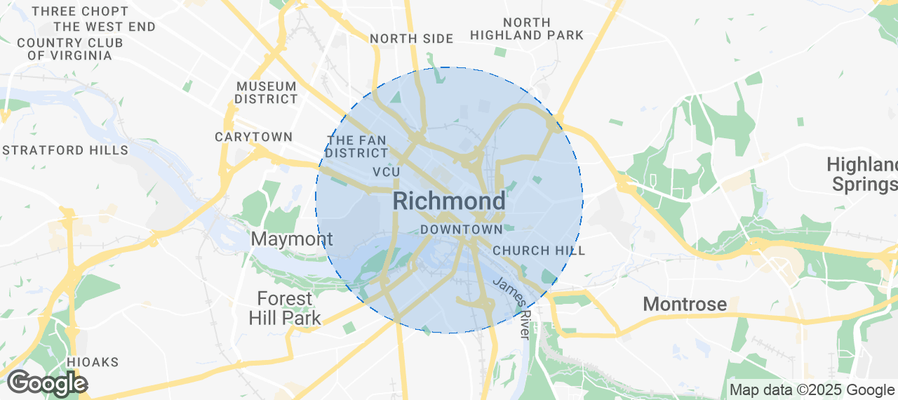 Browse the live Richmond Airbnb market See Every Richmond Listing
Revenue, occupancy and nightly rates are in the Richmond Airbnb market report .
At a glance
Richmond Airbnb Rules at a Glance
- Permit required
- Yes
- Taxes on a stay
- 14%
- Fine for hosting without a permit
- Up to $2,500
- Listings showing a permit number
- 7%
- Latest rule change
- January 2025
Listing figures: AirROI, 12 months to September 2026. A number on a listing doesn't prove the permit or license is valid, and a missing one doesn't prove there is none.
The rules in brief
The rules a Richmond host meets first, each linked to the ordinance, statute or official page it comes from. Details and exceptions follow below.
| Topic | Rule |
|---|---|
| Permit | Permit required: Certificate of Zoning Compliance3,7,19 |
| Who can host | Residential zones: your primary residence only3,7 |
| Where | Other districts: multifamily buildings capped3,7 |
| Building rules | Condo and co-op units need board approval3,6 |
| Night cap | No limit on nights7,19 |
| Minimum stay | The rules cover stays under 30 nights7 |
| Guests | Up to eight adults3,7,15 |
| Listing display | Permit number on every advertisement3,7 |
| Safety | Smoke and CO detectors and a fire extinguisher7 |
| Neighbors | No events or gatherings7,15 |
Your home
Can You Host an Airbnb in Richmond? It Depends on the Home
Whether you can host in Richmond turns on whose home it is and whether you live there.
A room in your home with you present
Allowed with conditionsAllowed under the same permit and rules as a whole-home rental: up to eight adults, the permit number on the listing, and the safety equipment in place.7
A second home or investment property you don't live in
Allowed with conditionsNot allowed in a residential zoning district, where the rental must be on the lot of the owner's primary residence. In non-residential districts an owner can hold a permit without living there, with multifamily buildings capped at ten units or one-third of the units.3,7
A rented home or apartment (tenant hosting)
Allowed with conditionsState law bars a locality from prohibiting hosting solely because the operator is a tenant with the owner's permission, but Richmond's rules name the owner as the operator. A tenant settles the permit with the Zoning Administration office, and gets the owner's written permission, before listing.1,7
Permit
Do You Need a Permit for Airbnb in Richmond?
Yes. Short-term rental hosts in Richmond need the short-term rental permit from the City of Richmond Planning and Development Review, Zoning Administration. It costs $600 in the first year ($600 covers two years, and the same $600 is due again on renewal; the Richmond business license and lodging taxes are separate.) and $600 a year to renew.3,7,19
- Who needs it
- Every owner who rents a home, a room or a unit for fewer than 30 consecutive days.3,7,19
- Issued by
- City of Richmond Planning and Development Review, Zoning Administration
- Valid for
- Two years: the certificate expires 730 days after it is issued, and a new application can be filed no sooner than 30 days before it expires.
- On listings
- The number must appear on every listing
- Platform checks
- The city requires the permit approval number in every advertisement, and Airbnb's Richmond help page lists applying for the permit as the first host step. The city's published rules describe no platform check or delisting process; enforcement runs through complaint investigations, zoning inspections and the city's listing-screening software.
Fees
| Fee | Amount |
|---|---|
| Short-term rental permitBiennial fee that covers administration and monitoring costs; each permit stays active for two years from the date it is issued. | $600 |
Who qualifies
- The operator must be the property owner.
- In residential zoning districts the rental must be on the lot of the operator's primary residence, checked against Virginia DMV or City registrar records, and only one rental is allowed per lot.
- In other districts a multifamily building may have up to ten or one-third of its units as short-term rentals, whichever is less.
- Condominium and co-op units need evidence that the board approved short-term rental use.
- Delinquent real estate taxes on the property must be paid before the permit is approved.
How to apply
- Check that the owner will apply (not a tenant) and, in a residential zoning district, that the home is the owner's primary residence; condominium and co-op owners attach evidence of board approval.
- Create an account in the City's Online Permit Portal and apply for a Short-Term Rental Permit.
- Upload the signed Short-Term Rental Owner Affidavit, proof of primary residency (a DMV-issued ID card or a Virginia voter registration card showing the current address) and a dimensioned floor plan labeled with each room's use, sleeping-room occupancy, emergency egress openings, and the location of fire extinguishers and smoke and carbon monoxide detectors.
- Pass the building inspection that the city requires before it issues the Certificate of Zoning Compliance.
- Put the permit approval number on every advertisement, and obtain a Richmond business license and a lodging tax account for any bookings made outside Airbnb.
Applications go through the City of Richmond Planning and Development Review, Zoning Administration application portal .
Permit rules
- Permit required: Certificate of Zoning Compliance
- An owner who rents a home, a room or a unit for fewer than 30 consecutive days needs a Short-Term Rental Permit, issued by the city as a Certificate of Zoning Compliance, before operating.3,7,19 In force since July 1, 2020
- Permit number on every advertisement
- The Short-Term Rental Permit approval number must appear on every advertisement for the property, including the Airbnb listing.3,7
- Permit lasts 730 days
- Each certificate expires 730 days after it is issued; the operator can apply for a new one no sooner than 30 days before expiry.3,7,19 In force since September 25, 2023
- Permit can be revoked; inspections on notice
- The Zoning Administrator can revoke a permit that no longer complies with the rules, and the owner agrees that city staff may enter the property on reasonable notice to check compliance.15
- Real estate taxes must be current
- The city will not approve the Certificate of Zoning Compliance until any delinquent real estate taxes on the property are paid.3
Who can host
Who Can Host an Airbnb in Richmond, and Where
Virginia state law applies on top of Richmond's own rules: the Virginia short-term rental regulations page covers the state license and what cities and counties can and can't regulate.
- The operator must be the owner
- Richmond's rules name the property owner as the short-term rental operator, and the permit is issued to the owner.7
- Residential zones: your primary residence only
- In a residential zoning district the rental must be on the same lot as the operator's primary residence, which the city checks against Virginia DMV or City registrar records.3,7 Applies to: Residential zoning districts · In force since September 25, 2023
- Proof of primary residence
- Applicants prove residence with a DMV-issued ID card or a Virginia voter registration card showing the current address. The City Code has had no 185-day stay rule since the 2023 amendment: primary residence is judged by DMV or City registrar records on the application date. The city's June 2024 owner affidavit still describes the rule as occupying the lot at least 185 days each year.3,6,15 Applies to: Residential zoning districts
- Which districts the primary-residence rule covers
- The primary-residence rule applies in the R-1 to R-8, R-5A, R-43, R-48, R-53, R-63, R-73, R-MH, RO-1, RO-2 and RO-3 zoning districts; it is not written for other districts.3,7 Applies to: Residential zoning districts · In force since September 25, 2023
- Other districts: multifamily buildings capped
- In non-residential zoning districts, a multifamily building may have at most ten of its units, or one-third of them if that is fewer, used as short-term rentals.3,7 Applies to: Non-residential zoning districts · In force since September 25, 2023
- One rental per lot in residential zones
- Only one short-term rental is allowed on any lot in a residential zoning district.7 Applies to: Residential zoning districts
- Whole-home rentals without the host on site are allowed
- The rules do not distinguish hosted from unhosted stays, so an owner can rent the whole house without being on site during the stay.7
- Companies and trusts as owners
- When the owner is a company or trust, a rental in a residential district must be on the lot of the primary residence of the person who manages its day-to-day operations, or of its trustee or beneficiary.3,6 Applies to: Owners that are companies or trusts · In force since September 25, 2023
- Tenants: state law and the city's owner rule
- State law bars a locality from prohibiting a short-term rental solely because the operator is a tenant, if the owner gives permission, while Richmond's rules name the property owner as the operator; a tenant confirms the permit with the Zoning Administration office before listing.1,7 Applies to: Tenants
Operating rules
Operating Rules for Richmond Short-Term Rentals
- No limit on nights
- Richmond does not cap the number of nights a short-term rental can operate in a year.7,19
- The rules cover stays under 30 nights
- The permit and rules apply to rentals of fewer than 30 consecutive days; longer stays fall outside the short-term rental rules.7
- Up to eight adults
- A rental may house at most eight adults and at most two people over 18 per sleeping room, with at least one adult among the renters; the number of children is not limited, and the building code can set a lower limit.3,7,15 In force since September 25, 2023
- No double bookings
- An operator may not accept more than one booking for the same dates that would put two separately booked parties in the rental at the same time.7,15
- Smoke and CO detectors and a fire extinguisher
- Smoke detectors must meet the Virginia Residential Construction Code, a fire extinguisher must be accessible at all times, and carbon monoxide detectors are required in every room used for sleeping or cooking.7
- Inspection before the permit is issued
- The city inspects the building before it issues the Certificate of Zoning Compliance, to confirm it matches the floor plan and the safety rules.7,19
- No events or gatherings
- Events and gatherings of people other than the renters are prohibited; the owner's affidavit names parties, banquets, weddings, meetings and filming as barred uses.7,15
- No extra parking required
- The city requires no additional parking for a short-term rental.7
Taxes
How Much Are Airbnb Taxes in Richmond?
About 14% of the booking: 6% Virginia sales tax plus 8% Richmond lodging tax, collected by Airbnb on the nightly price, cleaning fee and guest fee.
14% in all
How the 14% on a Richmond stay splits between the taxes in the table below
- Richmond transient lodging tax (short-term rental tax) 8%
- Virginia sales and use tax (Central Virginia rate) 6%
- Median nightly rate, booked nights
- $160
- Taxes on that night (14%)
- $22
- Guest pays, before Airbnb and cleaning fees
- $182
| Tax | Rate | Collected by |
|---|---|---|
| Virginia sales and use tax (Central Virginia rate) 6% of the total charge (5% state and 1% local); the City of Richmond is in the Central Virginia region | 6%12,13,20 | Airbnb |
| Richmond transient lodging tax (short-term rental tax) 8% of the total room charge | 8%2,8,9,20 | Airbnb |
At Richmond's median booked rate of $160 a night, the taxes collected on a booking come to about $22 a night.
What the host still handles
- A City of Richmond business license from the Department of Finance (new businesses within 30 days of opening; licenses expire each December 31).
- A Richmond lodging tax account with the Department of Finance and a Virginia sales tax account with Virginia Tax for bookings made outside Airbnb, with monthly lodging tax returns due by the 20th.2,8,9,10,12,13,20
Fines
How to Avoid Airbnb Fines in Richmond
Fines in Richmond fall on hosting without the short-term rental permit, or outside the rules above. With it in hand and the rules followed, none of the fines below apply.
- Operating without a permit or outside the rules is a zoning violation, a Class I misdemeanor with a fine of up to $2,500 and up to a year in jail.7
- A confirmed violation first brings a Violation Notice and Correction Order, and the owner is normally given 30 days to correct it before a summons can be issued.7
- The Zoning Administrator can revoke any short-term rental permit that no longer complies with the rules.15
- Lodging tax paid after the 20th of the month draws a penalty of 10% or $10, whichever is greater, plus 10% annual interest.8
Changes
What's Changed in Richmond's Airbnb Rules
No change was scheduled when the rules were checked on October 17, 2026; the most recent are listed first.
- August 17, 2026 Not in forceCode Refresh draft zoning code keeps the short-term rental rules
Draft Three of the city's zoning rewrite, released August 17, 2026, carries the same short-term rental conditions forward: eight adults, a 730-day certificate, a $600 fee for two years and the primary-residence rule in its RC, RD, RA and RM districts. City Council has not set a date to adopt the new code.4,17
- January 2025New RVA Business Portal for business licenses
In January 2025 the Department of Finance launched the RVA Business Portal for filing business license applications and tax filings for the 2025 filing period.11
- State law bars special use permits for a host's primary residence
Chapters 700 and 792 of the 2024 Acts of Assembly amended Virginia Code section 15.2-983 so that ordinances adopted after 2023 cannot require a special exception or special use permit for a home the owner lives in. Richmond issues its permit as a Certificate of Zoning Compliance.1,7
- September 25, 2023Ordinance 2023-235 revises the rules
City Council adopted Ordinance No. 2023-235 on September 25, 2023, in force on adoption. The permit fee rose from $300 to $600 for a two-year term of 730 days, the cap went from ten to eight adults, the primary-residence rule was limited to residential districts, and multifamily buildings in other districts were capped at ten units or one-third.3,7,14
- City starts identifying listings with compliance software
In 2021 the city began using Host Compliance software to identify short-term rentals operating in the city.14
- July 1, 2020
Listing data
What Richmond's Listings Show
AirROI, a short-term-rental data firm, counted 1,040 active Airbnb listings in Richmond over the 12 months to September 2026. 7% of them displayed a permit, license or registration number.
Minimum stay set on Richmond listings
Share of active listings by the shortest stay they accept
Minimum stay in numbers
| Shortest stay accepted | Share of listings |
|---|---|
| 1 night | 32% |
| 2 nights | 33% |
| 3 nights | 8% |
| 4–6 nights | 5% |
| 7–29 nights | 11% |
| 30+ nights | 10% |
What officials report
- 749
- Short-term rental units active in Richmond (March 2018 study, before the 2020 rules) · as of March 2018A March 2018 city study counted 749 unique short-term rental units active within city limits, before the permit system began on July 1, 2020.16
Earnings
What Could a Richmond Short-Term Rental Earn?
The rules shape the numbers: a permit that costs $600 in the first year and taxes of 14% that Airbnb adds to guests' bills. For a specific address, the short-term rental calculator estimates revenue, occupancy and nightly rate from comparable listings, so you can test the numbers before applying.
FAQ
Richmond Airbnb Rules: Frequently Asked Questions
Is Airbnb legal in Richmond?
Do I need a permit for Airbnb in Richmond?
How much is the Richmond short-term rental permit?
Can I rent a home I don't live in?
Is there a limit on how many nights I can host in Richmond?
How many guests can stay at a Richmond Airbnb?
Does Airbnb collect hotel tax in Richmond?
What is the total lodging tax on a Richmond Airbnb stay?
What is the fine for an illegal Airbnb in Richmond?
Do I need a business license to host in Richmond?
Do I have to show my permit number on my Airbnb listing?
Can I host in a condo or as a tenant in Richmond?
A condominium or co-op unit needs evidence of board approval, and association rules can still ban short stays. For tenants, state law bars a ban based only on tenant status when the owner agrees, but the city's rules name the owner as the operator, so a tenant checks with the Zoning Administration office first.1,3,7
How many Richmond Airbnbs are registered?
In AirROI's listing data, 7% of the 1,040 Richmond Airbnb listings active in the 12 months to September 2026 displayed a permit, license or registration number. A number on a listing shows the host entered one; it doesn't confirm the permit is valid.
How much does an Airbnb make in Richmond?
The average Richmond listing earned $27,800 in the 12 months to September 2026, according to AirROI, averaged across every active listing including those booked for only part of the year. The Richmond Airbnb market report breaks it down by month, property size and neighborhood.
Method
How These Rules Were Checked
Each rule on this page was checked in October 2026 against the official source cited beside it: the ordinance or statute, the permit office's own pages and the tax authority. Airbnb's help pages are cited on their own only for what Airbnb itself does, such as the taxes it collects and the permit checks it runs, and otherwise only beside an official source; news reports only for when a change was announced. Rules that could not be confirmed on an official page are left out. The City Code on Municode could not be opened, so the zoning conditions are read from rva.gov pages and from the Legistar copy of Ordinance No. 2023-235 as amended, and the Code Refresh draft repeats them.
Rules change with council votes, court rulings and new state laws, so the page is rechecked every three months and whenever a scheduled change takes effect. It summarizes the rules for information and is not legal advice; the local authority has the final word on any application.
Listing figures come from AirROI's tracking of 1,040 active Richmond Airbnb listings over the 12 months to September 2026.
Sources
Sources
Each rule above links to the source it comes from. Official ordinances, statutes and government pages come first, then Airbnb's own help pages.
- 1. Code of Virginia section 15.2-983: Creation of registry for short-term rental of property · Virginia General Assembly (Legislative Information System)
- 2. Code of Virginia section 58.1-3826: Scope of transient occupancy tax · Virginia General Assembly (Legislative Information System)
- 3. Ordinance No. 2023-235 as amended September 11, 2023 (City Code sections 30-697.1, 30-697.2, 30-1020.4) · City of Richmond (Legistar)
- 4. Richmond Zoning Code, Public Review Draft #3 (August 17, 2026), section 3.5.2.N Short-Term Rental · City of Richmond Planning and Development Review
- 5. 16 CFR Part 464 - Rule on Unfair or Deceptive Fees · Electronic Code of Federal Regulations
- 6. Richmond City Code Chapter 30, Article VI, Division 14 - Short-Term Rentals (sections 30-697 to 30-697.3) · City of Richmond (Municode Library)
- 7. Short-Term Rentals · City of Richmond Planning and Development Review
- 8. Transient Occupancy Short-Term Rental (S-TR) Tax · City of Richmond Department of Finance
- 9. Transient Occupancy Tax · City of Richmond Department of Finance
- 10. Tourism Improvement District (TID) Fee · City of Richmond Department of Finance
- 11. Business, Professional, and Occupational License (BPOL) Tax · City of Richmond Department of Finance
- 12. Retail Sales Tax on Accommodations · Virginia Department of Taxation
- 13. Temporary Sales Tax Certificate/Return, form ST-50 (state, local and regional sales tax rates) · Virginia Department of Taxation
- 14. Staff report on Ordinance No. 2023-235 (short-term rentals) · City of Richmond Planning and Development Review (Legistar)
- 15. Short-Term Rental Permit: Owner's Affidavit (June 2024) · City of Richmond Planning and Development Review
- 16. Short-term rental regulations to go into effect after extensive public input, best practices research · City of Richmond Mayor's Office
- 17. Code Refresh · City of Richmond Planning and Development Review
- 18. The Rule on Unfair or Deceptive Fees: Frequently Asked Questions · Federal Trade Commission
- 19. Richmond, VA: hosting rules and steps · Airbnb Help Center
- 20. Occupancy tax collection and remittance by Airbnb in Virginia · Airbnb Help Center