Airbnb vs Hotel 2026: All-In Price Math Across 28 US Markets

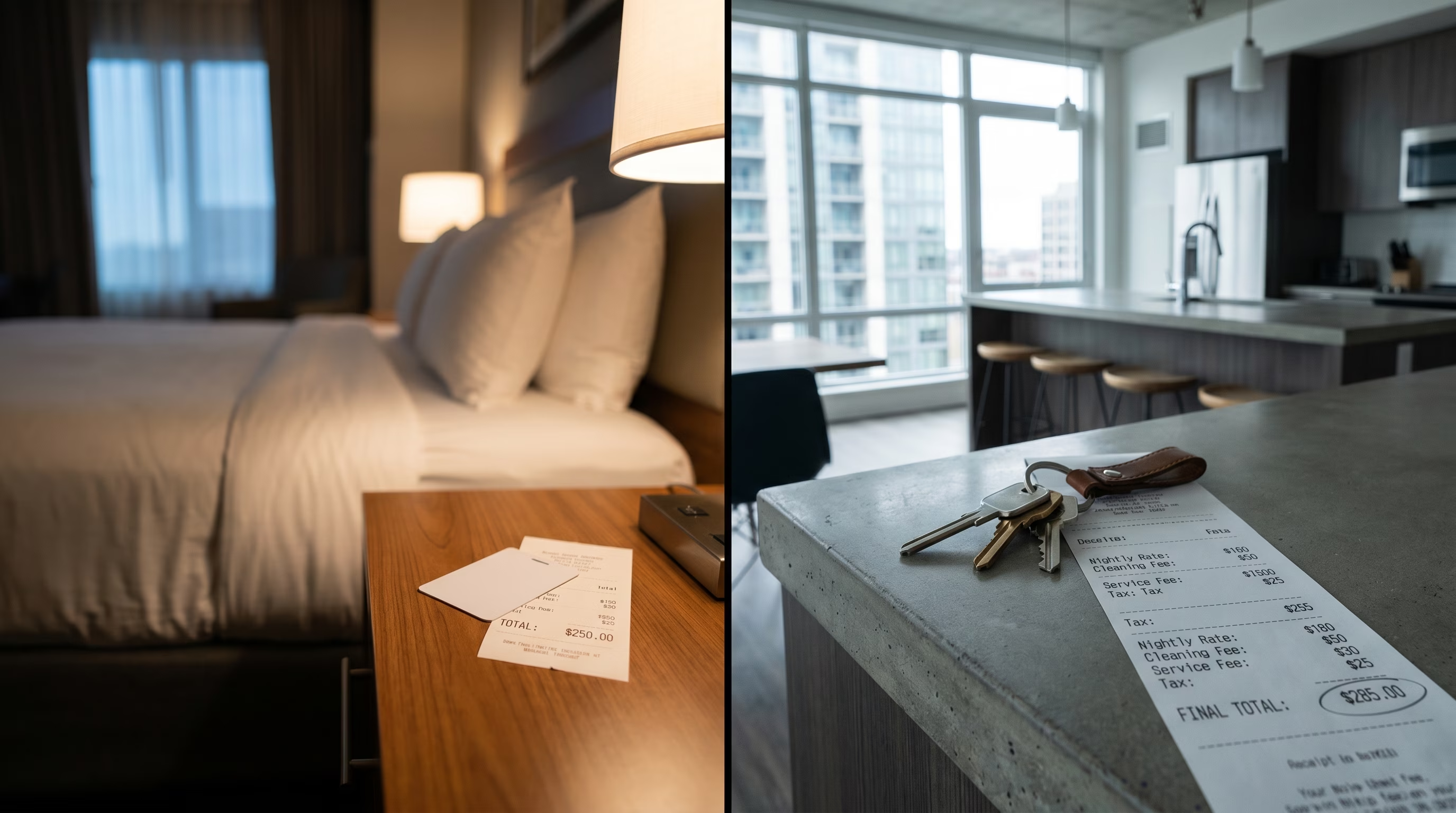
Every honest Airbnb vs hotel price comparison 2026 starts with the same 2026 number: hotels beat whole-unit Airbnbs on total cost in 27 of 28 AirROI-analyzed US markets for a 3-night solo or couple stay. That is the headline result from running every checkout line item — nightly rate, cleaning fee, 14% Airbnb guest service fee, and local lodging tax — against 2025 published hotel ADR plus resort fees for the same markets. The only market where whole-unit Airbnb still wins at 3 nights for a single room is New York City, because NYC's $338 hotel ADR outruns the city's $226 market-wide Airbnb ADR.
This does not contradict — it amplifies — the widely-cited Upgraded Points finding that hotels were cheaper in 46 of 50 major US cities once fees were factored in. What is different in our 2026 update is the size of the gap. Running a full Airbnb total cost calculator across 28 markets shows the real median Airbnb markup over the nightly-rate subtotal is 55.9%, not 40% — with a range of 45.0% to 72.9%. Fees are not "drifting higher." They have already drifted.
But the contrarian turn here is important: for families that would need two hotel rooms, Airbnb still wins in 19 of 28 markets. The number flips by 65 percentage points as soon as you add a third traveler. The all-in math is not pro-hotel or pro-Airbnb. It is pro-party-size, pro-stay-length, and ruthlessly numerical.
The 40% Markup Number Is Conservative — Here Is the Real One
The median 3-night Airbnb checkout total across 28 markets sits 55.9% above the listed nightly-rate subtotal. The minimum is 45.0% (Portland, OR). The maximum is 72.9% (also Portland, driven by a 16.3% combined lodging tax on top of a $160 cleaning fee on a relatively cheap $175 ADR). Seven of 28 markets exceed a 60% markup. The airbnb 40 percent markup figure repeated in travel press since 2024 was a sensible estimate based on Upgraded Points' national weighted average. Two years later, across a diverse 28-market sample, the real number is higher.
Here is the component breakdown for a representative 3-night stay in Nashville — the kind of trip where "Airbnb is cheaper" is a cultural expectation:
| Line item | Calculation | Amount |
|---|---|---|
| Nightly rate | $368 ADR × 3 nights | $1,103 |
| Cleaning fee | Flat per stay | $175 |
| Guest service fee | 14% of ($1,103 + $175) | $179 |
| Lodging tax | 15.25% of ($1,103 + $175 + $179) | $223 |
| Airbnb total | $1,680 | |
| Markup vs nightly subtotal | +52.3% |
The same 3-night stay at a midscale Nashville hotel — the Hyatt Place Nashville Downtown is a representative example — totals roughly $857 including the 15.25% occupancy tax and a $30 destination fee. That is 49% cheaper than the Airbnb. A Nashville host charging $368 nightly with a $175 cleaning fee is not competing with a hotel. They are losing to it.
NerdWallet's Airbnb cleaning-fees analysis by Sally French anchored the baseline every subsequent industry piece has run from: a NerdWallet survey of 1,000 US Airbnb reservations found a $75 median cleaning fee for a one-night stay — an effective 62% add-on against a $120 base rate. That add-on only amortizes on longer stays. Our 28-market analysis confirms the same mechanism at scale. Readers who want a hosts' perspective on the cleaning-fee decision can cross-reference our earlier analysis of cleaning fee economics across 2.4 million listings — that post showed 73% of listings charge a fee averaging 55% of ADR. This one shows what that produces at checkout.
Upgraded Points' consumer survey found 64% of Americans now believe hotels are cheaper than Airbnb for domestic travel, and 76% believe hotels are more transparent on pricing. Those perception numbers were a leading indicator. The 2026 checkout math is the confirmation.
The 28-Market Scorecard: Who Wins at 3 Nights
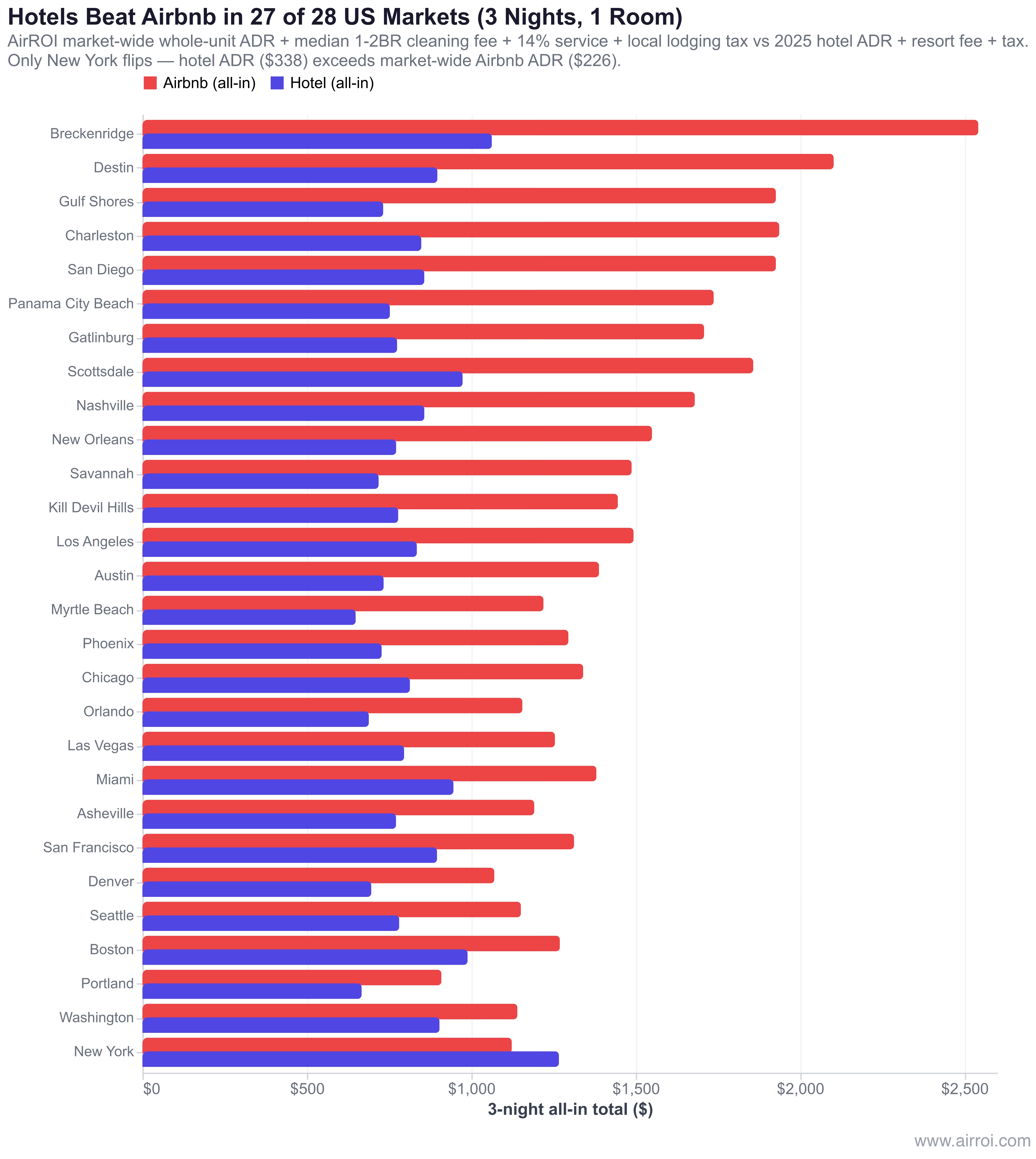
The scorecard below is the full 28-market result, sorted by the size of the 3-night gap (Airbnb total minus hotel total). Positive gap-% means Airbnb is more expensive; negative means Airbnb is cheaper. AB ADR is AirROI's market-wide trailing-12-month whole-unit average daily rate. Cleaning fee is the median of a 60-listing sample of 1-2 bedroom entire-home listings with 4.5+ ratings and at least $10,000 TTM revenue per market — the representative "hotel-room-comparable" segment.
| # | Market | AB ADR | Hotel ADR | Cleaning Fee | 3n Airbnb | 3n Hotel | Gap % | 1-Room Breakeven |
|---|---|---|---|---|---|---|---|---|
| 1 | New York, NY | $226 | $338 | $180 | $1,123 | $1,267 | -11.3% | 1.9 nights |
| 2 | Washington, DC | $243 | $232 | $140 | $1,140 | $904 | +26.2% | never |
| 3 | Boston, MA | $288 | $258 | $110 | $1,270 | $989 | +28.4% | never |
| 4 | Portland, OR | $175 | $161 | $160 | $909 | $666 | +36.5% | never |
| 5 | Miami, FL | $291 | $249 | $200 | $1,381 | $946 | +46.0% | never |
| 6 | San Francisco, CA | $278 | $232 | $175 | $1,313 | $896 | +46.5% | never |
| 7 | Seattle, WA | $238 | $195 | $160 | $1,151 | $781 | +47.4% | never |
| 8 | Asheville, NC | $260 | $188 | $148 | $1,192 | $771 | +54.5% | never |
| 9 | Denver, CO | $223 | $172 | $150 | $1,070 | $696 | +53.8% | never |
| 10 | Las Vegas, NV | $277 | $199 | $140 | $1,255 | $796 | +57.6% | never |
| 11 | Chicago, IL | $277 | $201 | $170 | $1,340 | $814 | +64.8% | never |
| 12 | Orlando, FL | $247 | $169 | $160 | $1,156 | $689 | +67.8% | never |
| 13 | Phoenix, AZ | $289 | $181 | $144 | $1,295 | $728 | +78.1% | never |
| 14 | Los Angeles, CA | $317 | $214 | $199 | $1,494 | $834 | +79.0% | never |
| 15 | Kill Devil Hills, NC (Outer Banks) | $332 | $195 | $129 | $1,446 | $778 | +85.9% | never |
| 16 | Myrtle Beach, SC | $260 | $158 | $175 | $1,220 | $648 | +88.1% | never |
| 17 | Austin, TX | $300 | $174 | $140 | $1,389 | $734 | +89.3% | never |
| 18 | Scottsdale, AZ | $424 | $251 | $165 | $1,858 | $974 | +90.8% | never |
| 19 | Nashville, TN | $368 | $213 | $175 | $1,680 | $857 | +95.9% | never |
| 20 | New Orleans, LA | $334 | $186 | $165 | $1,550 | $772 | +100.8% | never |
| 21 | Savannah, GA | $311 | $185 | $211 | $1,488 | $718 | +107.2% | never |
| 22 | Gatlinburg, TN | $378 | $189 | $196 | $1,708 | $775 | +120.6% | never |
| 23 | San Diego, CA | $398 | $219 | $307 | $1,927 | $857 | +124.7% | never |
| 24 | Charleston, SC | $434 | $223 | $189 | $1,937 | $848 | +128.4% | never |
| 25 | Panama City Beach, FL | $352 | $189 | $306 | $1,737 | $753 | +130.9% | never |
| 26 | Destin, FL | $476 | $232 | $218 | $2,102 | $897 | +134.3% | never |
| 27 | Breckenridge, CO | $584 | $279 | $255 | $2,542 | $1,063 | +139.2% | never |
| 28 | Gulf Shores, AL | $419 | $181 | $240 | $1,927 | $732 | +163.1% | never |
Three patterns fall out.
Urban markets cluster around a 30-80% Airbnb premium. Washington, DC, Boston, and Portland are the tightest — close enough that a specific listing with an aggressive cleaning fee could flip the decision. Miami, San Francisco, Seattle, Denver, Chicago, Orlando, Phoenix, and Los Angeles all sit in a 46-79% Airbnb-premium band, consistent with the "hotels beat Airbnb for short city stays" story but never with the "Airbnb is 15% cheaper" story.
Leisure destinations (Nashville, Austin, New Orleans, Las Vegas, Scottsdale) are the worst value for short Airbnb stays. The combination of a high whole-unit ADR (hosts price to capture weekend tourist demand) and a standard cleaning fee creates an 85-100% markup over the hotel at 3 nights. Nashville at 95.9% and New Orleans at 100.8% are outlier-bad.
Beach and mountain markets show the widest gaps of all. Gulf Shores (163.1%), Breckenridge (139.2%), Destin (134.3%), and Panama City Beach (130.9%) share a common structure: Airbnb ADR is 2-3x the hotel ADR because the product is multi-bedroom vacation rentals competing against thin midscale hotel supply. For a 1-room traveler, the comparison is structurally unfair — but when guests search "Airbnb Gulf Shores" they rarely see any hotel option at all, so the unfairness still governs their decision.
The one market where Airbnb wins — New York City at -11.3% — is not a trend. It is a math artifact: Manhattan hotel ADR hit $338 in 2025 per CoStar, which is higher than the market-wide Airbnb ADR of $226 weighed down by outer-borough listings. A guest booking a hotel in Midtown and an Airbnb in Williamsburg is not comparing the same neighborhood, but they are comparing the two decisions they would actually make. That arbitrage is what powers NYC's 1.9-night breakeven — the lowest in the sample.
Where the All-In Bill Comes From (The Math, Transparently)
A guest who sees "$368/night" in a Nashville search result and $1,680 at checkout has suffered what pricing researchers call drip pricing — sequential fees appearing only after initial commitment. Here is the full mechanical breakdown, applied the way Airbnb's checkout actually applies it.
Line 1 — Nightly rate × nights. This is the number the guest sees in the search grid. Airbnb's 2025 total-price display now folds cleaning and service into the headline, but for budget planning the ADR × N is still the "base."
Line 2 — Cleaning fee. Flat, per-stay, not per-night. The shorter the stay, the more it hurts. A $175 cleaning fee on a 2-night stay is an effective $87.50/night surcharge. The same fee on a 10-night stay is $17.50/night. This is the entire mechanism behind airbnb stay length breakeven math.
Line 3 — Guest service fee. Airbnb charges a guest service fee of approximately 14% on the subtotal of (nightly × N + cleaning), capped in most cases around 20%. This is separate from the host service fee — covered in our direct booking recapture analysis — and is what guests pay on top of what hosts receive. A minority of stays (certain hotels, some international markets) use Airbnb's split-fee structure where the guest fee is higher and host fee is ~3%; our math assumes the simplified US default.
Line 4 — Lodging tax. Municipal + state + occupancy tax, applied to the subtotal + service fee. Rates in our sample run from 11.05% (Breckenridge / Summit County, CO) to 17.40% (Chicago). Austin (17%) and New Orleans (16.4%) are the highest tax leisure markets.
The formula is straightforward:
Total = [(ADR × N) + cleaning_fee] × (1 + service_rate) × (1 + tax_rate)
Worked example — Austin, 3 nights:
- Nightly: $300 × 3 = $900
- Cleaning: $140
- Subtotal: $1,040
- Service 14%: $146
- Subtotal + service: $1,186
- Tax 17%: $202
- Total: $1,388 (+54.3% vs nightly subtotal)
And Orlando, 3 nights (lower tax, lower hotel ADR):
- Nightly: $247 × 3 = $741
- Cleaning: $160
- Subtotal: $901
- Service 14%: $126
- Subtotal + service: $1,027
- Tax 12.5%: $128
- Total: $1,156 (+55.9% vs nightly subtotal)
The tax-rate spread between Austin and Orlando (17% vs 12.5%) shifts the total by about $74 for a 3-night stay — meaningful but not decisive. The bigger structural driver is the cleaning fee's fixed weight spread across a short stay. Our market-level lodging tax breakdown shows the full tax-rate map for investors modeling net-of-tax revenue.
For guests who want the formal Airbnb fee definition, see the Airbnb Help Center service fee documentation.
Stay-Length Breakeven: When Does Airbnb Actually Win?
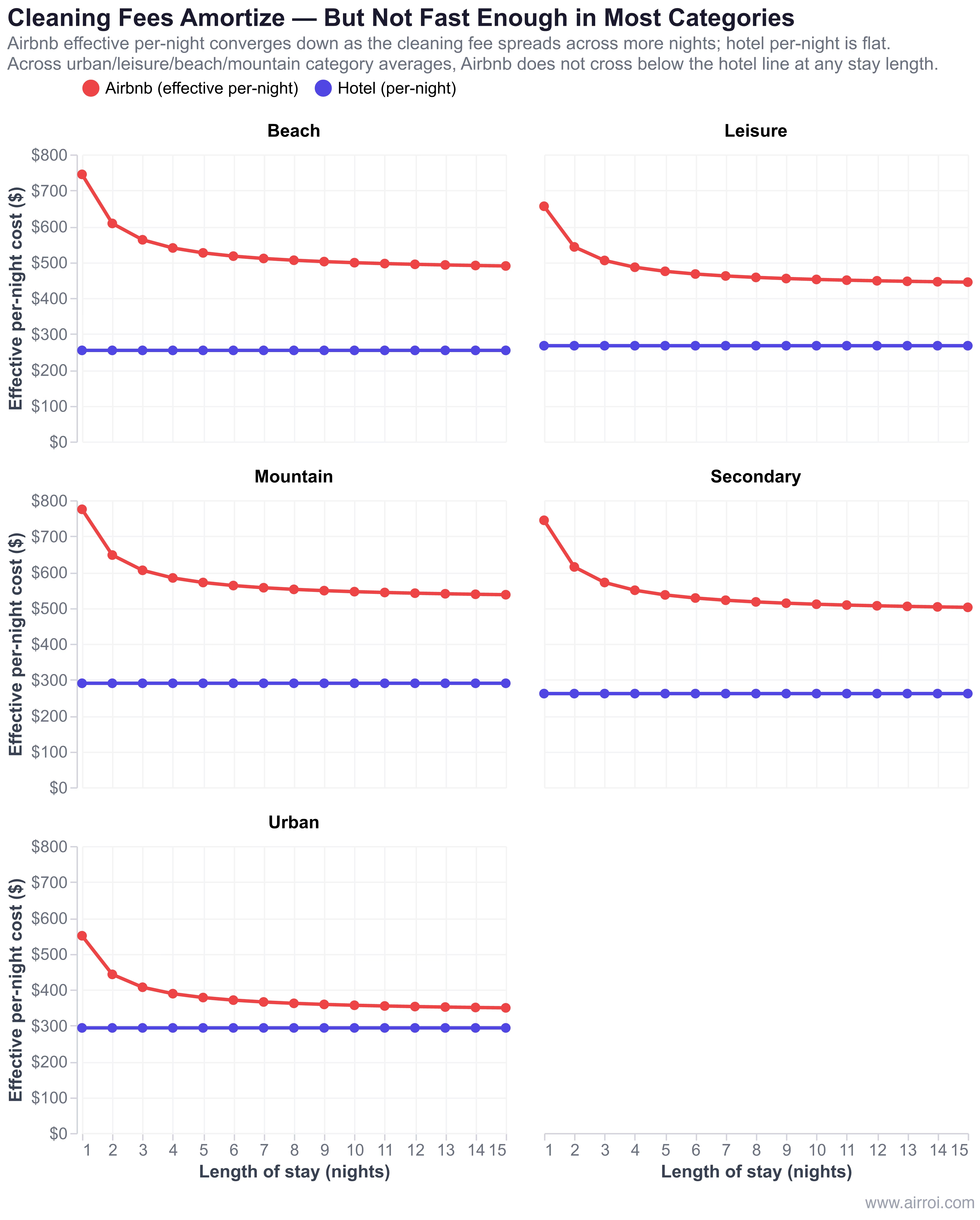
The chart above is the conceptual heart of the all-in math. On the y-axis is effective per-night cost — what a guest actually pays per night once the full bill is divided by stay length. On the x-axis is length of stay, 1 to 15 nights. Red is Airbnb; blue is hotel.
The Airbnb line starts high (the cleaning fee is concentrated on night 1) and descends as nights increase (the cleaning fee spreads thinner). The hotel line is flat, because hotels charge the same nightly rate plus taxes and resort fee for every night equally.
Across all five market-category averages (urban, leisure, beach, mountain, secondary), the Airbnb line never crosses below the hotel line at any stay length between 1 and 15 nights. This is because our starting condition — Airbnb ADR already exceeds hotel ADR — means even zero-cleaning-fee Airbnb is more expensive per night on a like-for-like comparison. The amortization curve converges toward Airbnb ADR × (1 + service) × (1 + tax), which is higher than hotel ADR × (1 + tax) in every category averaged.
For individual markets, breakeven does exist:
- New York, NY — 1.9 nights. The outlier.
- Every other market in the 28-market sample — never.
The practical takeaway for a 1-person or 2-person traveler is uncomfortable: stay-length does not rescue Airbnb's value proposition for hotel-comparable stays. The cleaning fee amortizes, but the nightly rate gap does not. A guest stretching a 3-night trip to 7 nights specifically to "amortize the cleaning fee" is optimizing the wrong line item.
The hosts who solve for this problem solve for ADR, not just cleaning fees. Our ADR pricing strategy analysis across 15 US markets shows how market-wide ADR compression in 2025-26 has narrowed — but not closed — the structural whole-unit-vs-hotel-room gap.
The Family Flip: Where Airbnb Still Wins
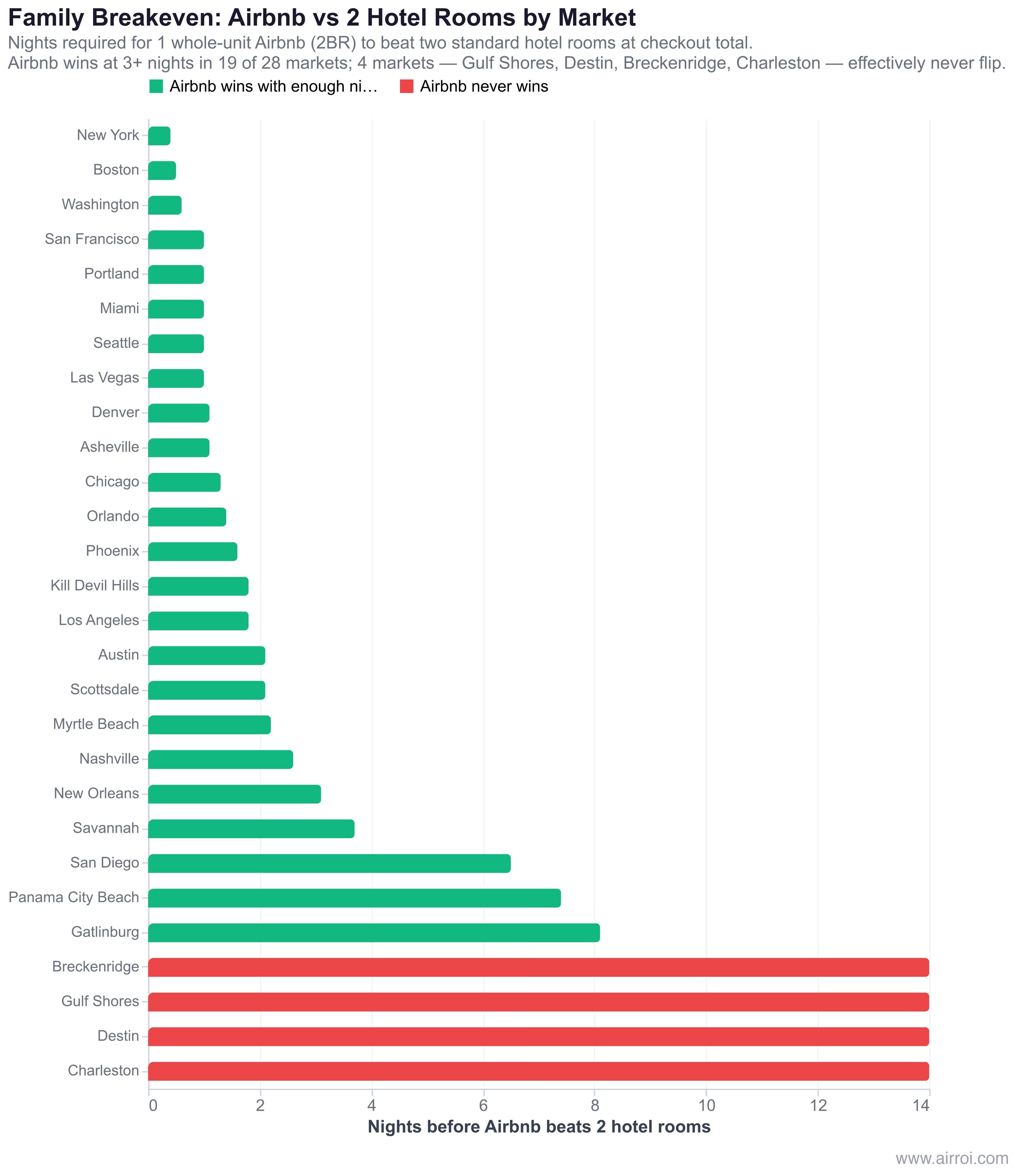
Reframe the comparison and the picture inverts. If the traveling party is a family of 4 or a group of 5 that cannot fit in a single hotel room, the fair comparison is one whole-unit Airbnb versus two hotel rooms. The hotel side of the bill doubles — 2 × ADR × nights, 2 × resort fee × nights, all taxed. The Airbnb side stays the same. In 19 of 28 markets, Airbnb wins a 3-night family trip. At 7 nights it wins 22 of 28.
The breakeven rank order tells the story:
| Rank | Market | Family Breakeven |
|---|---|---|
| 1 | New York, NY | 0.4 nights |
| 2 | Boston, MA | 0.5 nights |
| 3 | Washington, DC | 0.6 nights |
| 4 | San Francisco, CA | 1.0 night |
| 5 | Portland, OR | 1.0 night |
| 6 | Miami, FL | 1.0 night |
| 7 | Seattle, WA | 1.0 night |
| 8 | Las Vegas, NV | 1.0 night |
| 9 | Denver, CO | 1.1 nights |
| 10 | Asheville, NC | 1.1 nights |
| 11 | Chicago, IL | 1.3 nights |
| 12 | Orlando, FL | 1.4 nights |
| 13 | Phoenix, AZ | 1.6 nights |
| 14 | Kill Devil Hills, NC | 1.8 nights |
| 15 | Los Angeles, CA | 1.8 nights |
| 16 | Austin, TX | 2.1 nights |
| 17 | Scottsdale, AZ | 2.1 nights |
| 18 | Myrtle Beach, SC | 2.2 nights |
| 19 | Nashville, TN | 2.6 nights |
| 20 | New Orleans, LA | 3.1 nights |
| 21 | Savannah, GA | 3.7 nights |
| 22 | San Diego, CA | 6.5 nights |
| 23 | Panama City Beach, FL | 7.4 nights |
| 24 | Gatlinburg, TN | 8.1 nights |
| 25 | Charleston, SC | 147 nights (effectively never) |
| 26 | Gulf Shores, AL | Never |
| 27 | Destin, FL | Never |
| 28 | Breckenridge, CO | Never |
A worked Orlando example for a family of 4, 5 nights:
- Airbnb 2BR: $247 × 5 + $160 cleaning = $1,395 × 1.14 × 1.125 = $1,790
- 2 hotel rooms: ($169 + $30 resort) × 5 × 2 = $1,990 × 1.125 = $2,239
- Airbnb saves $449 — 20% cheaper.
At 7 nights Orlando saves $713. At 10 nights, $1,109. The family cleaning-fee amortization kicks in fast because the cleaning fee is being spread over not just more nights but a doubled hotel bill.
The "Airbnb never wins" markets — Gulf Shores, Destin, Breckenridge — share a specific structure: the Airbnb whole-unit product is priced for large groups (3-5 bedrooms, $400-600 ADR), and the cleaning fee is sized for that property ($220-$260 median). Against two midscale hotel rooms at $180-280 ADR, the Airbnb 2BR sample we priced cannot close the per-night gap even before cleaning. In these markets, the honest Airbnb value proposition is not "cheaper than a hotel" — it is "the only product large enough for my group," and that value shows up at 6+ travelers, not at 4.
Charleston is a separate case worth flagging. Our data puts Charleston's family breakeven at 147 nights — technically a real number, but for practical purposes identical to "never." The math behind it: Charleston's Airbnb ADR ($434) and two-hotel-room ADR ($496, before tax) are nearly identical per night once fees are applied, so the $189 cleaning fee takes 147 nights to amortize across a per-night saving of only $1.67. No family books a 5-month vacation rental, so Charleston sits in the same practical category as the true "never" markets — just for a subtly different reason.
This is the same structural point our STR demand outpacing hotels analysis made from the demand side: STRs are capturing hotel market share because they offer space-per-dollar for groups, not because they are cheaper per night.
The Cleaning-Fee Trap Markets: Where Hosts Are Losing Bookings
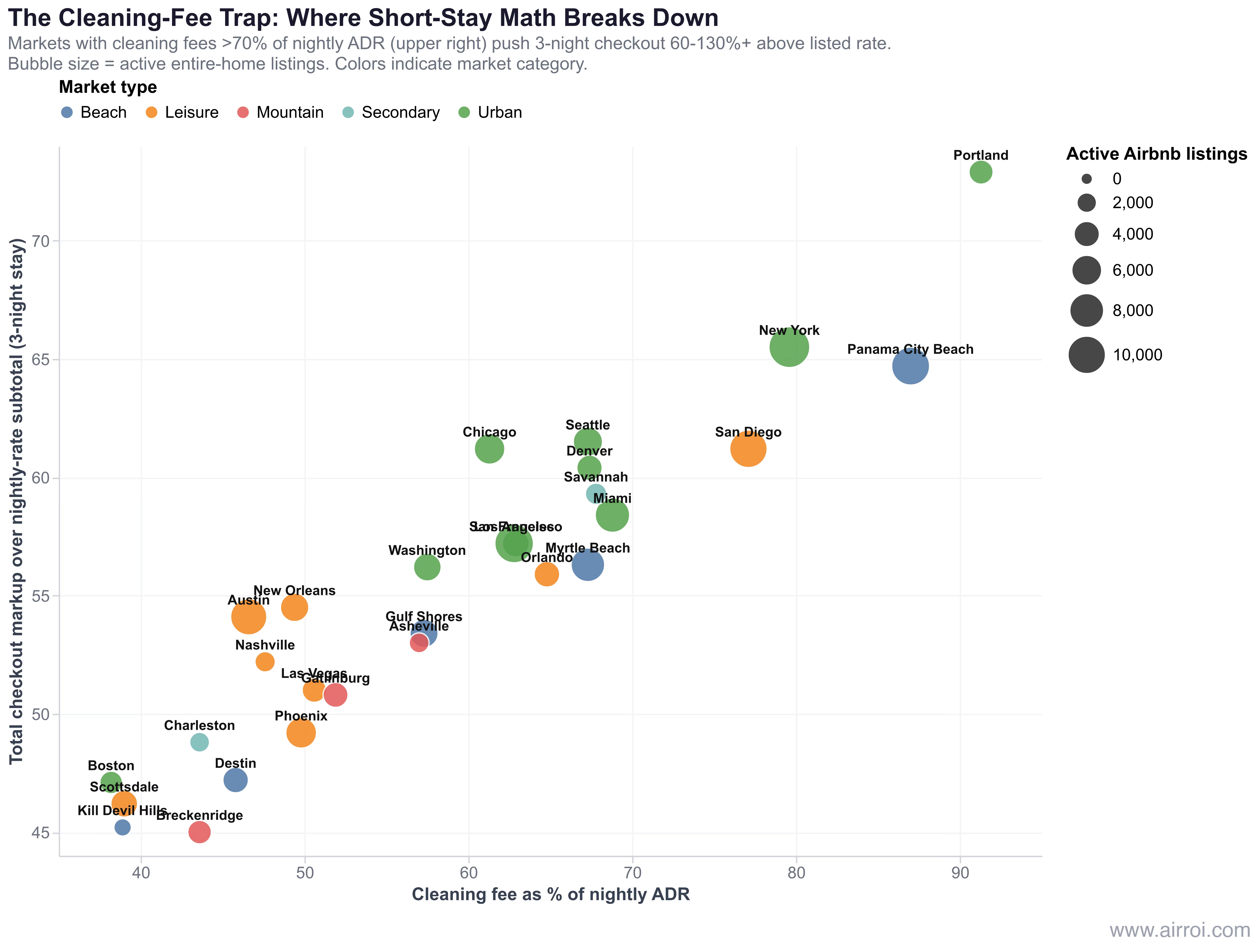
The scatter above plots cleaning-fee-as-percent-of-ADR on the x-axis against 3-night total markup on the y-axis. Bubble size is active whole-unit listings. The upper-right quadrant is the cleaning-fee trap zone — markets where the fee consumes more than 70% of the nightly rate and drives the checkout total 60%+ above the listed rate. Four markets sit clearly in that zone:
- Panama City Beach, FL — cleaning fee 87% of ADR, 3-night markup 64.8%
- Portland, OR — cleaning fee 91% of ADR, 3-night markup 72.9%
- San Diego, CA — cleaning fee 77% of ADR, 3-night markup 62.1%
- New York, NY — cleaning fee 80% of ADR, 3-night markup 65.7% (but still wins because hotel ADR is even higher)
Hosts in these markets are leaving money on the table on exactly the trips Airbnb is best positioned to capture: the 2-3 night "try a local neighborhood" stay. A recurring experiment discussed across r/airbnb_hosts threads — rolling the cleaning fee into the nightly rate and removing the standalone cleaning-fee line — tends to lift short-stay conversion. The counterintuitive part: folding cleaning into ADR raises the visible nightly rate, but it removes the sticker-shock moment at checkout that causes abandoned carts.
For hosts whose market is on the "hotel always wins for 1 room" list (27 of the 28 markets here), there are two disciplined moves:
1. Fold cleaning into the nightly rate. Set a minimum 2-night stay, spread the cleaning cost across it, and let dynamic pricing tools raise the visible ADR by $30-50 rather than show an $80-150 cleaning fee at checkout. This converts short-stay demand that would have gone to hotels.
2. Impose a 4-night minimum if cleaning-fee-to-ADR exceeds 60%. This forces every booking to be long enough for the amortization to help. It intentionally surrenders the 1-2 night market to hotels, but defends ADR integrity on longer stays. It is the right move for beach and mountain markets where the whole-home product is already misaligned with short hotel stays.
A third option — absorbing some or all of the cleaning fee cost into operations — makes sense for Superhost-eligible portfolios where the operational efficiency is already tight. Our cleaning fee economics analysis across 2.4 million listings found the revenue sweet spot at a fee between 25-50% of ADR; anything above 60% is structurally pushing bookings to hotels.
A fourth lever to consider: the host keeps the 15% Airbnb host service fee in mind when setting ADR. A host who moves 30-40% of bookings to a direct channel recaptures that fee — our direct booking breakeven math shows the specific dollar impact by market, which compounds with any cleaning-fee discipline gains.
Guest Rule of Thumb: When to Book Which
Strip out the market names and the math reduces to five decision rules.
Rule 1 — One or two travelers, weekend trip (2-3 nights) → book the hotel. This holds in 27 of 28 markets. The only reason to choose Airbnb here is a specific listing or neighborhood preference. Do not expect price savings.
Rule 2 — One or two travelers, week-plus stay (7+ nights), urban market with lower ADR (NYC, Portland, DC) → compare specific listings. Airbnb has a realistic chance to win here, but breakeven is close. Check the cleaning-fee-to-ADR ratio before booking.
Rule 3 — Family of 3-5 needing a second room, any stay length ≥ 3 nights → default to Airbnb in 19 of 28 markets. Orlando, Miami, Las Vegas, Denver, Asheville, Phoenix, and most urban markets are reliable. Run the math anyway.
Rule 4 — Group of 6+ in a beach or mountain market → book Airbnb regardless of headline markup. Hotels do not have 3-bedroom rooms; you would need 3 hotel rooms, and the Airbnb whole-home economics dominate.
Rule 5 — Cleaning fee is more than 70% of nightly rate → treat Airbnb as long-stay-only. Look up the cleaning fee using AirROI Atlas or inspect the price breakdown before committing. If you are booking 2-3 nights, a hotel is almost certainly cheaper in that market.
For a practical host-side reference on fee structures, see our breakdown of Airbnb fees for hosts.
What Changed in 2025 That Tightened the Math
Three developments in 2025 stacked to widen the hotel advantage at the 1-room level.
Airbnb's total-price display update (rolled out December 2022, enforced by default globally by 2025). Guests now see the all-in price in search results instead of discovering it at checkout. Airbnb CEO Brian Chesky announced the change in a public post stating guests "feel like prices aren't transparent," and Airbnb later reported that nearly 260,000 listings lowered or removed cleaning fees after the display change went live. The policy fixed the disclosure gap but not the underlying price — guests who would have been misled at checkout now self-filter to hotels at the search stage.
Hotel resort-fee creep. Urban hotels now average $30-35 per night in mandatory destination/amenity fees; resort-concentrated markets (Las Vegas, Orlando, Scottsdale) push $40-50. These fees are now also subject to lodging tax in most jurisdictions, which compounds the hotel all-in. Resort fees closed some of Airbnb's relative transparency gap — but not enough to invert the checkout comparison.
Lodging tax increases in several key Airbnb markets. Austin raised its combined lodging tax toward 17%, Chicago pushed to 17.4%, Seattle to 15.7% in 2024-25. Because the tax applies to the subtotal plus service fee, higher tax compounds on the Airbnb bill proportionally more than on the hotel bill (which has no flat cleaning fee inflating the taxable base).
Going forward, CoStar's February 2026 US hotel forecast projects hotel RevPAR growth of just 0.6% for 2026, following 2025's -0.3% decline — the first non-recessionary RevPAR decline ever recorded in the US hotel industry. Translation: hotels will not get more expensive on their own. Airbnb's fee structure will need to compress significantly, or the cross-comparison headline stays as it is today: airbnb vs hotel price comparison 2026 favors hotels for the most common trip — a 3-night, 1-room stay.
FAQ
Is Airbnb really more expensive than a hotel in 2026?
Across 28 AirROI-analyzed US markets, hotels beat whole-unit Airbnbs on 3-night all-in total in 27 of 28 markets for a 1-room solo or couple stay. The only exception is New York City, where 2025 hotel ADR of $338 exceeds the market-wide Airbnb ADR of $226. For family travel requiring two hotel rooms, Airbnb wins in 19 of 28 markets at 3 nights and 22 of 28 at 7 nights. The answer depends entirely on party size and stay length.
Why are Airbnb fees so much higher than the listed nightly rate?
Three line items stack on top of the nightly rate at checkout: a cleaning fee (flat, per-stay), a guest service fee of approximately 14% of the nightly-plus-cleaning subtotal, and a local lodging tax ranging from 11% to 17.4% applied to the combined subtotal. Across 28 markets, the median 3-night checkout total sits 55.9% above the nightly-rate subtotal, with a range of 45.0% to 72.9%. The Upgraded Points 2024 study put the figure at approximately 40% — our 2026 data shows the real markup is higher.
When does Airbnb become cheaper than a hotel by stay length?
For 1-room / solo-couple travelers, almost never — in 27 of 28 markets the Airbnb nightly ADR already exceeds the hotel ADR, so cleaning-fee amortization cannot close the gap at any stay length. For families comparing one Airbnb against two hotel rooms, breakeven ranges from 0.4 nights in New York to 8 nights in Gatlinburg, with three markets (Gulf Shores, Destin, Breckenridge) where Airbnb never wins even for families, plus Charleston where breakeven is a meaningless 147 nights.
Do resort fees make hotels just as expensive as Airbnb?
Resort and destination fees of $30-40 per night add roughly 15-25% to a hotel's all-in total once taxed, but they still do not close the Airbnb cleaning-fee gap on short stays. A 3-night hotel stay at $200 ADR with a $35 resort fee and 14% tax totals approximately $804 — a 3-night Airbnb at the same nightly rate with a $175 cleaning fee and 14% service fee and tax totals approximately $980. Resort fees erode hotel transparency but do not invert the math.
Should I book Airbnb or a hotel for a weekend trip?
For a weekend (2-3 nights) trip with one or two travelers, book the hotel in 27 of 28 major US markets — only New York flips. For a weekend family trip with 3 or more travelers needing two rooms, book the Airbnb in 19 of 28 markets, and run the specific numbers in beach and mountain destinations where cleaning fees on whole-home properties can exceed $250. A simple rule: if the Airbnb cleaning fee exceeds 70% of the nightly rate, treat Airbnb as a long-stay-only option.
The Bottom Line
Hotels won the short-stay, one-room race in 2026. Airbnb did not lose the accommodation market — it lost the "pack a bag, go somewhere for a weekend" market. Those are not the same thing. The week-long family rental, the ski-house for six, the 10-night digital-nomad stay in Portland — Airbnb still owns those segments, and the all-in math is not remotely close.
For hosts, the question is not whether the checkout total is too high. It is whether the property is priced for the trip it actually competes for. A cleaning fee above 70% of nightly rate combined with a 2-night minimum is a setup that loses bookings to hotels before the guest even clicks "book." A cleaning fee under 40% of ADR combined with a 4-night minimum is a setup that wins the trips Airbnb should win.
The platform is the platform. The math is the math. Hosts who watch the math win.
Want to check your market before your next booking — or before setting your own cleaning fee? Look up your city in AirROI Atlas for live ADR, occupancy, cleaning-fee benchmarks, and hotel-comparable analytics.