Workforce-Driven Airbnb Markets 2026: Why Boring Cities Beat Beach Towns on Cap Rate

Abilene, Texas — a West Texas city of 100,000 with no beaches, no ski slopes, and no tourist board — topped AirDNA's 2026 best small city Airbnb investment ranking with a 16.4% estimated yield. AirROI data now confirms that ranking with independent numbers: a 13.1% gross yield on $200K median home prices. The demand driver is not tourism. It is Oracle's $500 billion Stargate AI data center, which brought roughly 6,000 construction and technology workers to a market with just 381 active Airbnb listings. According to AirDNA Chief Economist Jamie Lane, "it's been more of these small and mid-sized cities, not traditional leisure markets, that have been driving growth" in the 2026 STR landscape.
AirROI data confirms the pattern extends well beyond Abilene. Across five workforce-driven Airbnb markets — cities anchored by data centers, military bases, healthcare systems, and aerospace installations — the investment math tells a story that headline revenue figures alone cannot. These markets generate 61% less gross revenue than leisure destinations like Gatlinburg and Destin, but they require roughly half the capital to enter, produce flatter cash flow curves, and face a fraction of the competition. For investors who prioritize cap rate over ADR bragging rights, the boring cities are winning in 2026.
What Makes a Market "Workforce-Driven"?
A workforce-driven STR market is one where the primary demand comes from people who must be there for work, not people who choose to be there for vacation. This distinction creates fundamentally different booking patterns: shorter lead times, longer stays, weekday-heavy demand, and minimal seasonality. The five major demand drivers fall into distinct categories, each with different risk and reward profiles.
Data Centers and Tech Infrastructure
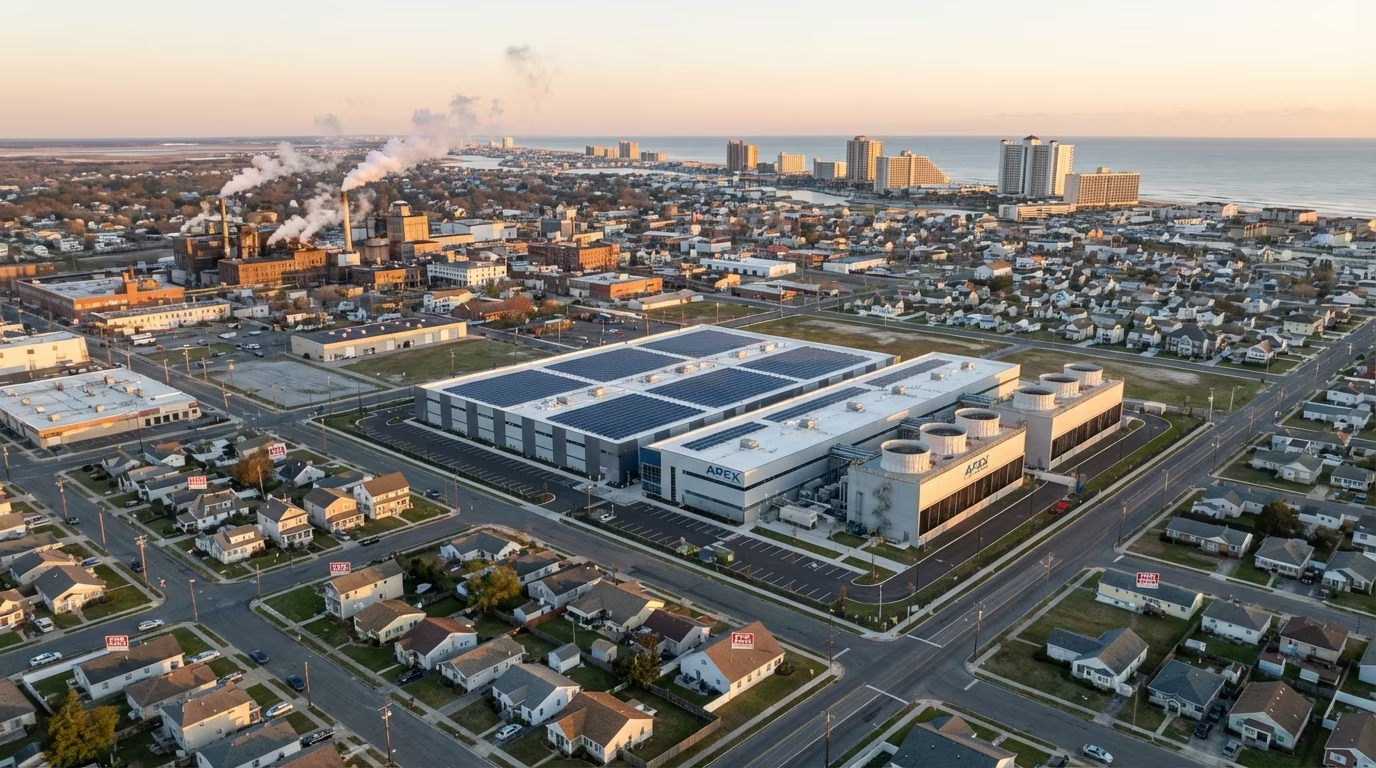
Abilene, Texas exemplifies the data center workforce model. The Stargate project — a 4-million-square-foot complex on over 1,000 acres, led by OpenAI, Oracle, and SoftBank — represents the largest AI infrastructure buildout in American history. Phase 1 opened in September 2025, with Phase 2 expected to complete by late 2026. According to TIME Magazine, the influx of approximately 6,000 workers into a city of just over 100,000 has triggered a housing crisis — one Abilene resident told TIME, "Nobody can find a place to live."
That housing pressure is the STR investor's opportunity. AirROI data shows Abilene delivering 60% occupancy at $191 ADR, producing $26,129 in average annual revenue from 381 active listings. Mayor Weldon Hurt confirmed to TIME that "Oracle's data center has contributed thousands of direct jobs to Abilene and fueled the local economy."
Military Installations
Fort Cavazos (formerly Fort Hood) in Killeen, Texas is the largest active-duty armored post in the country, housing approximately 36,000 soldiers and their families. Fort Campbell, straddling the Tennessee-Kentucky border near Clarksville, is home to the 101st Airborne Division. Redstone Arsenal in Huntsville, Alabama supports both Army missile defense programs and NASA's Marshall Space Flight Center.
Military demand is uniquely durable. PCS (Permanent Change of Station) orders create a constant churn of families needing temporary housing. TDY (Temporary Duty) assignments generate short-term stays. Visiting families fill weekends. According to HonestCasa's military investing guide, Clarksville is among America's fastest-growing cities at 2.8% annual population growth, driven by base expansion and Nashville proximity.
Healthcare Systems
Rochester, Minnesota exists as an STR market almost entirely because of Mayo Clinic, which draws over 1.3 million patients annually. Many require extended stays for treatment protocols — and AirROI data confirms this with an average length of stay of 8.4 days, the longest among all 9 markets analyzed. The Serenity House Network and hundreds of furnished rental listings cater specifically to medical travelers, creating a year-round demand floor that is largely recession-proof.
Aerospace and Defense Contractors
Huntsville, Alabama — known as "Rocket City" — hosts NASA's Marshall Space Flight Center, Boeing, Lockheed Martin, Northrop Grumman, and the FBI's Huntsville campus, all clustered around Redstone Arsenal. Will Woodworth, Senior VP of Investments at Peachtree Group, described the city as having "enduring demand generators" when announcing a new hotel near the base. Huntsville's workforce demand comes from defense contractors, aerospace engineers, and government personnel on rotating assignments — a diversified employer base that reduces single-company risk.
AirROI Data: How 5 Workforce Markets Stack Up Against 4 Leisure Destinations
The raw numbers reveal a counterintuitive investment thesis. Workforce markets underperform leisure markets on every glamorous metric — ADR, RevPAR, gross revenue — yet match or exceed them on the metric that matters most to investors: return on capital deployed.
| Market | Type | Occupancy | ADR | RevPAR | Annual Revenue | Lead Time | Avg LOS | Active Listings |
|---|---|---|---|---|---|---|---|---|
| Abilene TX | Workforce | 60% | $191 | $117 | $26,129 | 33 days | 7.0 | 381 |
| Rochester MN | Workforce | 56% | $156 | $91 | $19,875 | 31 days | 8.4 | 511 |
| Clarksville TN | Workforce | 46% | $190 | $90 | $19,786 | 27 days | 6.5 | 453 |
| Huntsville AL | Workforce | 43% | $158 | $69 | $14,937 | 32 days | 5.2 | 554 |
| Killeen TX | Workforce | 40% | $123 | $52 | $11,115 | 17 days | 7.5 | 319 |
| Workforce Avg | -- | 49% | $164 | $84 | $18,368 | 28 days | 6.9 | 444 |
| Gatlinburg TN | Leisure | 48% | $378 | $180 | $51,030 | 57 days | 3.4 | 3,618 |
| Scottsdale AZ | Leisure | 49% | $424 | $210 | $47,693 | 55 days | 5.6 | 4,350 |
| Destin FL | Leisure | 42% | $476 | $213 | $46,823 | 65 days | 4.9 | 3,849 |
| Nashville TN | Leisure | 47% | $356 | $162 | $44,651 | 55 days | 3.7 | 6,253 |
| Leisure Avg | -- | 47% | $408 | $191 | $47,549 | 58 days | 4.4 | 4,518 |
Source: AirROI market data, April 2026. Revenue and ADR figures are trailing-twelve-month averages.
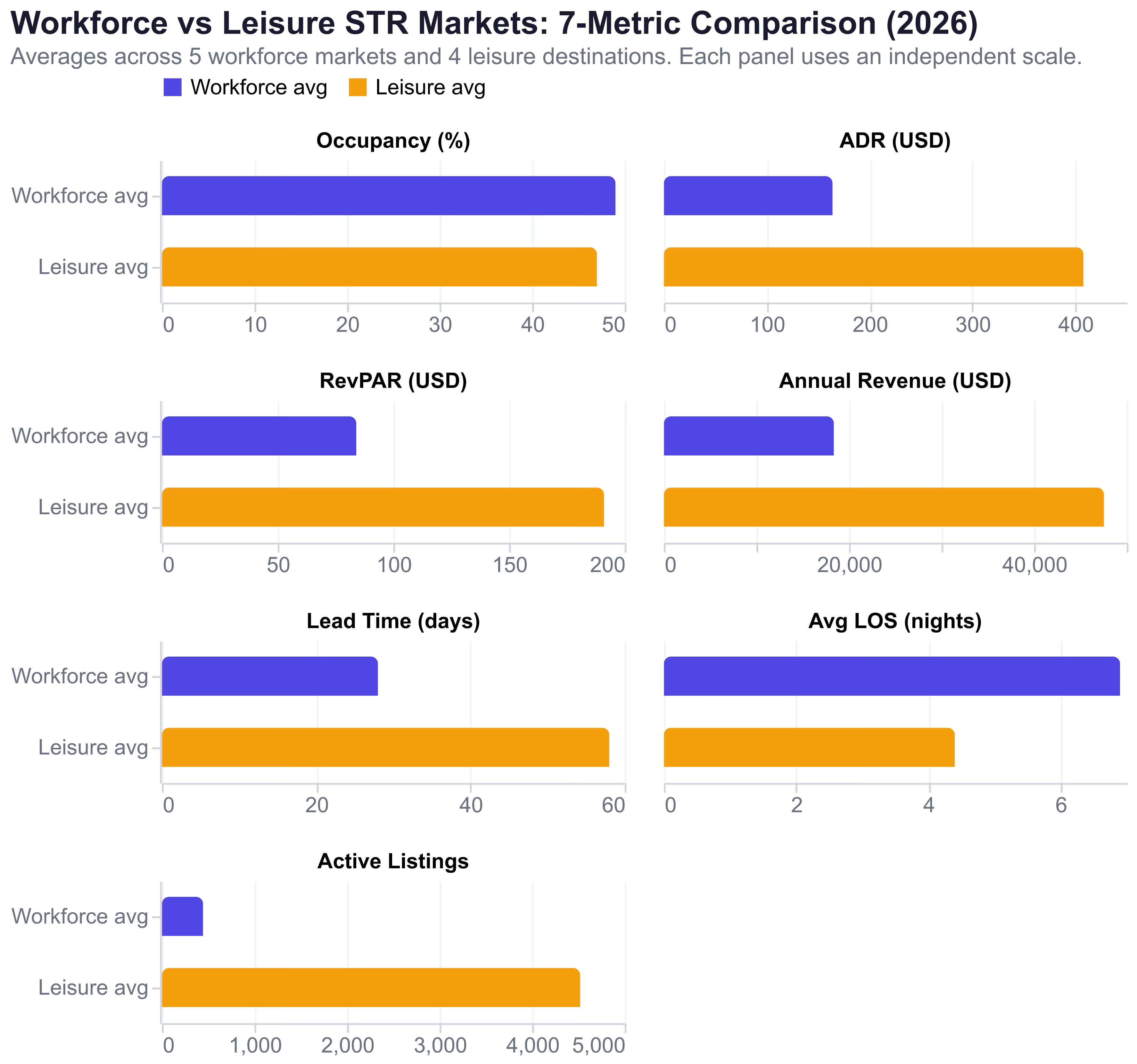
Three findings stand out from the AirROI data. First, workforce markets match leisure markets on average occupancy (49% vs 47%) despite charging 60% less per night. The demand is less visible but more consistent. Second, workforce markets average just 444 active listings compared to 4,518 in leisure markets — roughly 10x less competition per city. Third, the booking lead time gap is dramatic: workforce travelers book an average of 28 days before check-in versus 58 days for leisure travelers, reflecting the urgent, non-discretionary nature of work assignments.
For a deeper analysis of how these markets rank on overall investment potential, see our best Airbnb markets for 2026 comparison.
The Seasonality Advantage: Flat Revenue Curves Beat Holiday Spikes
For investors financing with debt — which describes most STR investors in 2026 — the monthly revenue distribution matters as much as the annual total. A market generating $51,000 per year sounds compelling until you realize that $7,797 arrives in December and just $3,030 in February, creating months where the property may not cover its mortgage.
AirROI monthly revenue data exposes a stark contrast between workforce and leisure seasonality patterns.
| Month | Abilene TX (Workforce) | Gatlinburg TN (Leisure) |
|---|---|---|
| Apr | $3,178 | $4,315 |
| May | $3,488 | $4,221 |
| Jun | $3,788 | $6,906 |
| Jul | $3,637 | $7,372 |
| Aug | $3,514 | $5,171 |
| Sep | $3,479 | $4,311 |
| Oct | $4,111 | $7,385 |
| Nov | $3,979 | $6,181 |
| Dec | $3,987 | $7,797 |
| Jan | $3,140 | $3,594 |
| Feb | $3,047 | $3,030 |
| Mar | $3,149 | $4,685 |
| Peak:Trough | 1.35x | 2.57x |
Source: AirROI monthly revenue data, Apr 2025 - Mar 2026.
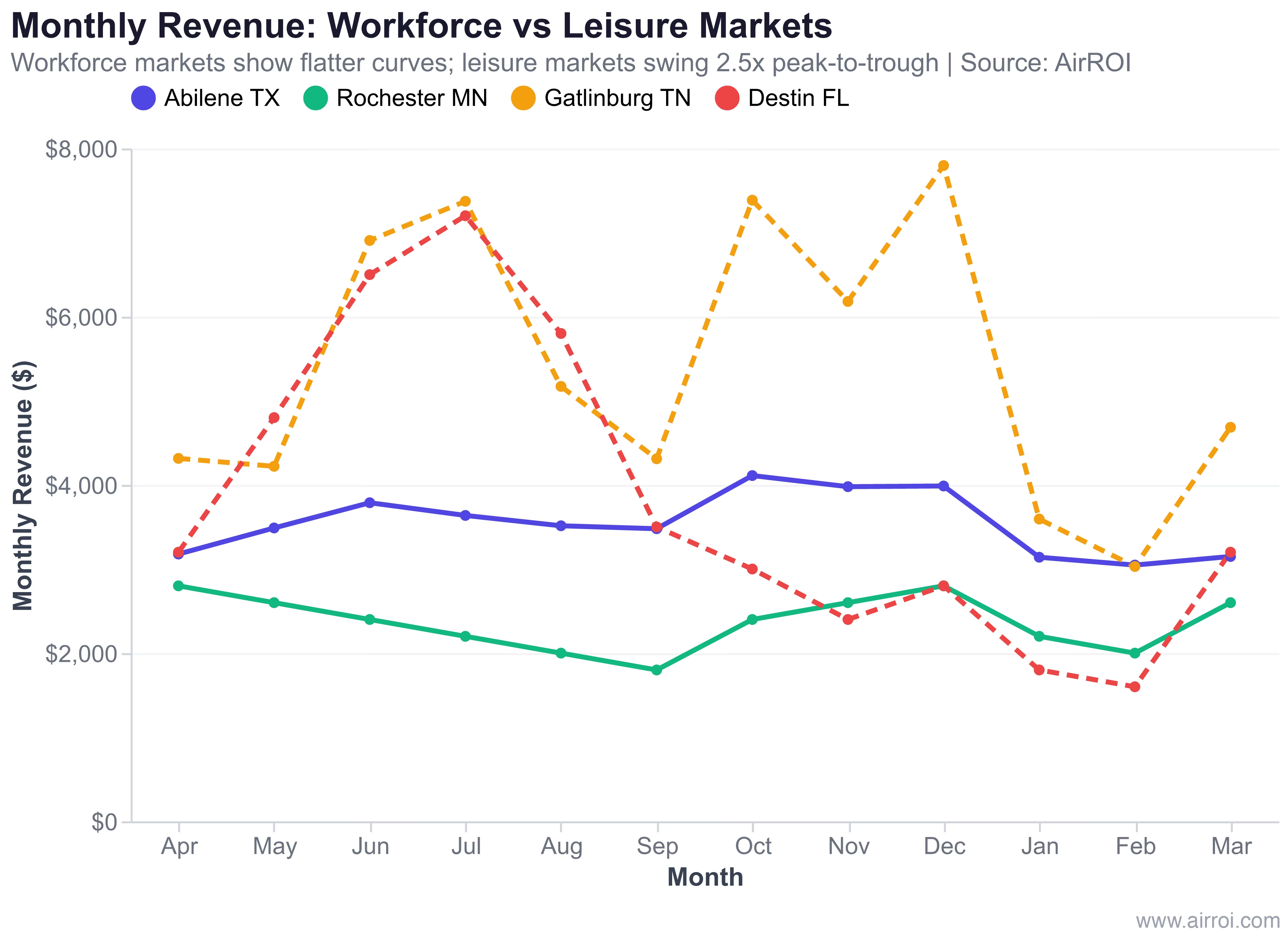
Abilene's revenue curve is remarkably flat. The best month ($4,111 in October) produces only 35% more revenue than the worst month ($3,047 in February) — a 1.35x peak-to-trough ratio. Gatlinburg swings 2.57x, with December generating 2.6 times what February produces. For an investor with a $1,800/month mortgage payment, Abilene's worst month still generates $3,047 (1.7x coverage), while Gatlinburg's worst month produces $3,030 — barely covering the payment on a property that likely carries a $2,500+ mortgage given its higher price point.
This seasonality advantage is not unique to Abilene. Workforce demand is inherently steady because military orders, medical appointments, and construction schedules do not follow vacation calendars. For more on how booking lead time patterns reflect traveler intent, see our dedicated analysis.
Booking Lead Time and Length of Stay: The Workforce Traveler Profile
The way guests book tells you who they are. Leisure travelers plan weeks or months in advance — families comparing Gatlinburg cabins in October for a December holiday. Workforce travelers book when orders arrive, when the project timeline shifts, or when the specialist appointment is confirmed.
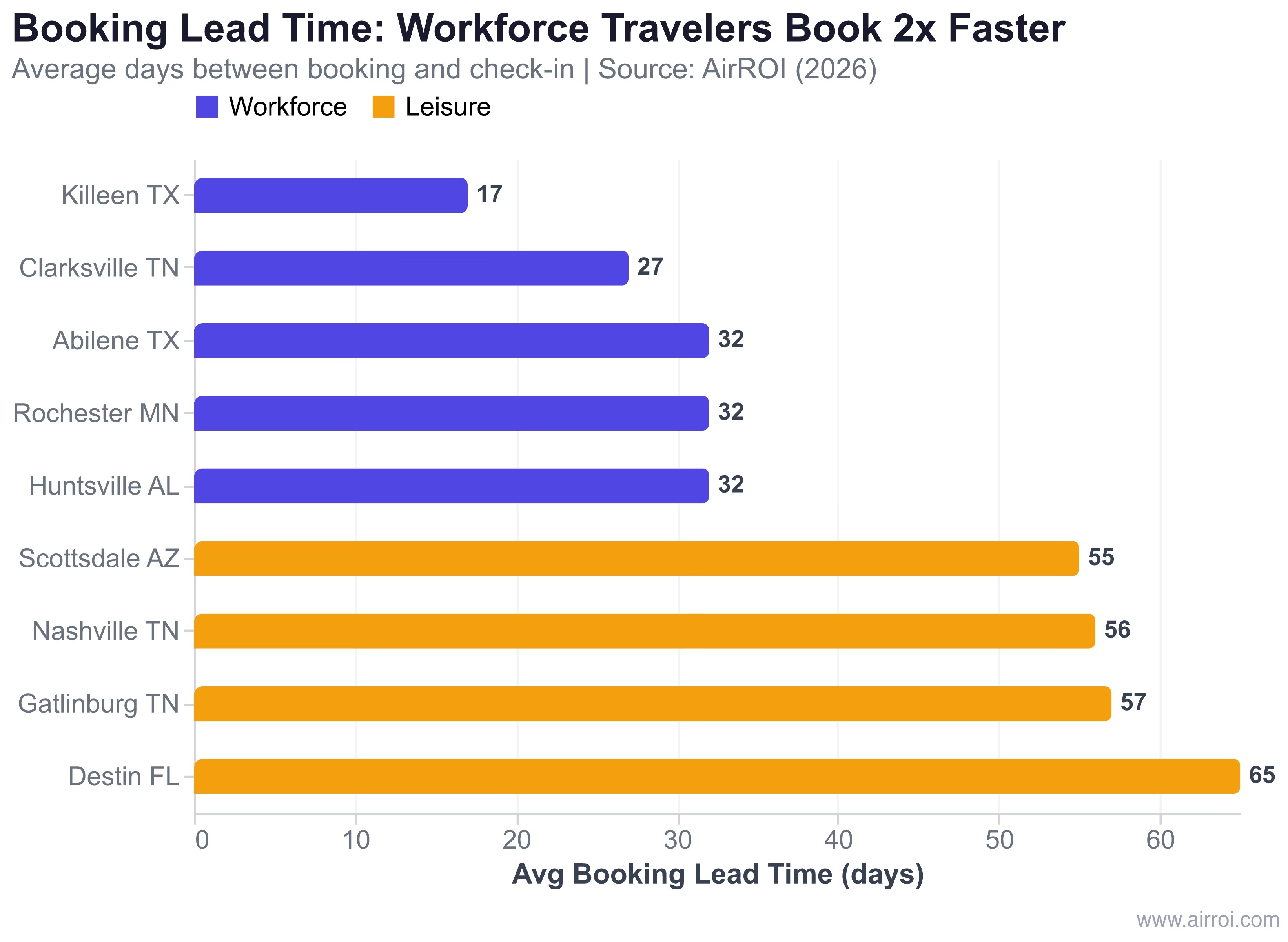
Killeen's 17-day average booking lead time is the shortest among all markets analyzed — military PCS orders often give families just 2-4 weeks to relocate. Rochester's 32-day lead time reflects the scheduling cadence of Mayo Clinic appointments. Compare these to Destin's 65-day lead time, where families planning beach vacations book two months out.
The length of stay difference is equally significant. Workforce markets average 6.9 nights per booking compared to 4.4 nights for leisure markets. Rochester leads at 8.4 nights, reflecting multi-week medical treatment stays. Killeen averages 7.5 nights, consistent with military temporary duty assignments. Longer stays directly reduce turnover costs — fewer cleanings, fewer guest communications, less wear and tear per revenue dollar.
This length of stay has a tax implication worth noting. The STR tax loophole requires an average guest stay of 7 days or fewer. Most workforce markets qualify — Abilene at 7.0 days, Clarksville at 6.5 days, Huntsville at 5.2 days. Killeen's 7.5-day average is borderline, and Rochester's 8.4 days may push it toward mid-term rental territory where different tax rules apply.
The Entry Cost Advantage: $200K vs $500K+
Revenue per listing is only half the equation. The other half is how much capital you deployed to generate it.
| Market | Type | Annual Revenue | Est. Median Home Price | Gross Yield |
|---|---|---|---|---|
| Abilene TX | Workforce | $26,129 | ~$200K | 13.1% |
| Clarksville TN | Workforce | $19,786 | ~$275K | 7.2% |
| Rochester MN | Workforce | $19,875 | ~$280K | 7.1% |
| Huntsville AL | Workforce | $14,937 | ~$270K | 5.5% |
| Killeen TX | Workforce | $11,115 | ~$225K | 4.9% |
| Gatlinburg TN | Leisure | $51,030 | ~$450K | 11.3% |
| Destin FL | Leisure | $46,823 | ~$500K | 9.4% |
| Nashville TN | Leisure | $44,651 | ~$500K | 8.9% |
| Scottsdale AZ | Leisure | $47,693 | ~$600K | 7.9% |
Sources: Revenue from AirROI (TTM avg). Home prices estimated from Redfin, Zillow, and local market data. Gross yield = annual revenue / home price, before expenses.
The gross yield comparison reveals that Abilene (13.1%) actually beats every leisure market in the study on gross yield, including top-ranked Gatlinburg (11.3%). After applying the industry-standard 45% expense ratio, Abilene produces a ~7% net cap rate against Gatlinburg's ~6.2%. And Abilene requires $200K in capital versus $450K+ for Gatlinburg — meaning an investor can acquire two workforce properties for the cost of one leisure property, with diversified risk.
According to Lodgify's 2026 STR investment analysis, Jackson, Mississippi leads the national cap rate ranking at 15.95% — another workforce/institutional city, not a leisure destination. The U.S. STR industry, valued at $72 billion in 2025 and projected to grow at 7.4% CAGR through 2030, is increasingly rewarding investors who follow employment centers rather than tourism boards.
For investors exploring data-driven STR investment analysis, the capital efficiency of workforce markets is the central insight.
The Risks: Single-Employer Dependency, ADR Ceilings, and Gold Rush Dilution
Workforce markets are not risk-free. The same concentration of demand that creates opportunity also creates vulnerability. Responsible underwriting requires confronting three structural risks.
What Happens When the Project Ends?
Abilene's Stargate data center is a construction project. Construction projects end. The 4-million-square-foot complex is expected to complete by late 2026, and while the operational phase will require permanent technical staff, the 6,000-person construction workforce will largely disperse. According to Texas Standard, Abilene also received a 10-year, 85% property tax abatement for Stargate — meaning the city's fiscal capacity to manage post-construction transitions is constrained.
Military markets carry BRAC (Base Realignment and Closure) risk, though Fort Cavazos's permanent armored warfare training mission and Fort Campbell's 101st Airborne mission are considered structurally durable. Healthcare markets like Rochester face virtually no demand risk — Mayo Clinic is not relocating.
Limited ADR Upside
Workforce travelers are cost-conscious. A data center construction worker on per diem does not pay $400 per night. A military family receiving $1,695 in BAH (Basic Allowance for Housing) for an E-5 with dependents will not book a $200/night Airbnb for a month. Revenue growth in workforce markets comes from occupancy improvements and supply constraint, not rate increases. Investors expecting ADR appreciation comparable to Scottsdale or Nashville will be disappointed.
The Gold Rush Problem
When AirDNA publicly ranks Abilene as the #1 small-city investment market, capital follows. Abilene's active listings sit at roughly 381 today after aggressive growth from the mid-300s a year ago. If supply grows faster than the workforce does, occupancy — currently a healthy 60% — will compress. The market oversaturation analysis we published earlier this year shows this pattern repeating across publicized markets.
Disclaimer: This analysis is for informational purposes only and does not constitute investment advice. STR investments carry risk including but not limited to regulatory changes, market saturation, property-specific issues, and demand volatility. Consult qualified financial and legal professionals before making investment decisions.
How to Evaluate Workforce Markets with AirROI
Identifying the next workforce market opportunity requires a systematic approach. Here is the five-step framework using AirROI data.
Step 1: Use AirROI Atlas to search the target city. Look for markets with 200-800 active listings — large enough to validate demand, small enough to limit competition.
Step 2: Compare occupancy, ADR, and RevPAR against the benchmarks in this article. Workforce markets should show 40-60% occupancy with $100-$200 ADR. If ADR exceeds $250, the market likely has a leisure or event-driven component (like Augusta's Masters tournament inflating its $311 ADR).
Step 3: Check the seasonality curve. Look for a peak-to-trough revenue ratio under 1.5x. Anything above 2x signals leisure-driven demand that may not support year-round debt service.
Step 4: Verify supply density. Workforce markets with fewer than 500 active listings and a clear employment anchor (military base, hospital system, construction project) are ideal. Cross-reference with the optimal bedroom count for the market's traveler profile.
Step 5: Cross-reference the median home price against AirROI's revenue data to calculate estimated gross yield. Target markets where gross yield exceeds 5% — after the 45% expense ratio, that produces a net cap rate competitive with most real estate investment alternatives.
Frequently Asked Questions
Abilene tops AirDNA's 2026 list because Oracle's $500B Stargate AI data center brought roughly 6,000 construction and tech workers to a city of just 100,000 residents. AirROI data shows 60% occupancy and $26,129 annual revenue against a median home price around $200K, producing a 13% gross yield.
Military base cities like Killeen TX (Fort Cavazos), Clarksville TN (Fort Campbell), and Huntsville AL (Redstone Arsenal) offer consistent STR demand from PCS families, TDY personnel, and visiting relatives. AirROI data shows Clarksville generating $19,786 annual revenue with 46% occupancy, and base missions are permanent, creating durable demand floors.
Workforce markets generate roughly 61% less gross revenue than leisure markets — $18,368 versus $47,549 on average according to AirROI data. However, median home prices are approximately half ($250K vs $513K+), producing comparable or superior cap rates. Workforce markets also show flatter seasonality, with a 1.35x peak-to-trough ratio versus 2.57x for Gatlinburg.
Single-employer dependency is the primary risk. If a military base faces BRAC closure or a construction project like Abilene's Stargate completes, demand can contract. Mitigation strategies include targeting markets with permanent demand drivers (military bases with enduring missions) and diversifying across multiple workforce cities — at $200-280K per property, two workforce properties can be acquired for roughly the price of one Gatlinburg cabin.