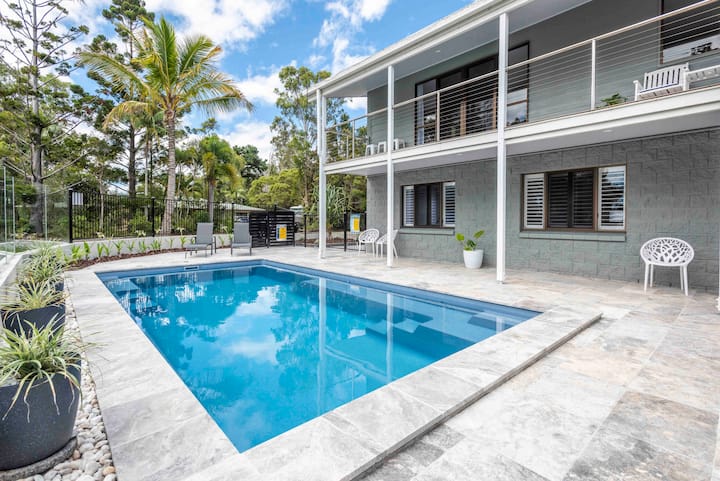
 Waterfront Escape •Pool • Sleeps 10 • Boat Parking Entire home · 3 bedrooms Rated 4.95
 - Revenue
- A$87,050
- Occupancy
- 50.7%
- Daily rate
- A$464
Airbnb market data · 202612 months to September 2026
The average Airbnb in Tin Can Bay brought in A$31,357 over the 12 months through September 2026, about 35% less than the Queensland average of A$48,565.
The short answer
Rates and bookings both trail the Queensland average. Listings averaged A$255 a night and were booked on 43% of available nights, against A$385 and 46% for the Queensland average.
Timing matters: in December, usually the best month, the average listing earns about 2.4 times as much as in February, usually the slowest. With only 45 active listings, a few bookings can reorder the months.
With 45 active listings, Tin Can Bay is the 69th-largest of 134 Queensland markets AirROI tracks.
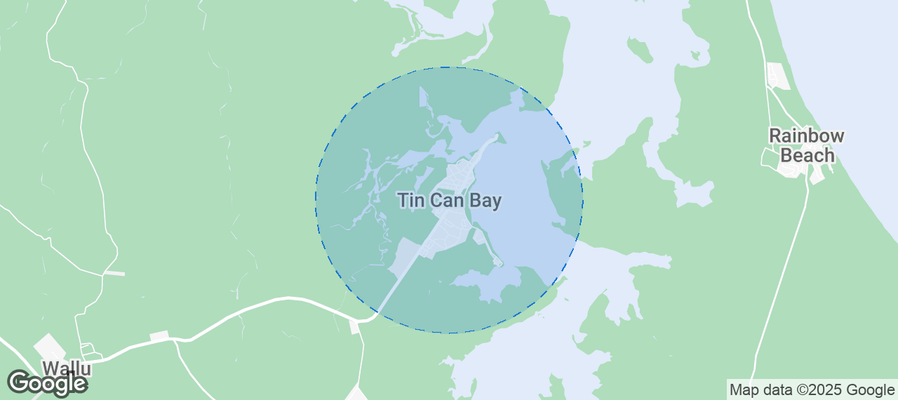 Browse the live Tin Can Bay Airbnb market See Every Tin Can Bay Listing
Revenue
Gross bookings per Tin Can Bay listing averaged A$31,357 over the 12 months to September 2026 (Queensland average: A$48,565), before cleaning, platform and management costs and taxes.
In a typical year, the average Tin Can Bay listing brings in A$4,610 in December, its best month, and A$1,940 in February, its slowest. The three strongest months bring in 33% of a full year's revenue, where an even calendar would give any three months 25%.
In a typical month, a top-quarter listing earns at least 2.2 times as much as a bottom-quarter one.
These are monthly figures for listings active in each month. The annual average above also counts listings that operated for only part of the year, so it runs below twelve times these figures.
December earns about 2.4 times what February does
Average revenue per active listing, by month, September 2024 to August 2026
The dashed line is the average of the months shown, A$3,080. Each point is one month as recorded, averaged over the listings active in it. The best and slowest months in the text average each calendar month over the past two years, so they can differ from the highest and lowest points here.
Latest 12 months in the September 2026 data. September's figures are still coming in, so the rows run to August.
December 2025 led on revenue and bookings; nightly rates peaked in July 2026.
| Month | Avg. Revenue | Occupancy | Avg. Nightly Rate | RevPAR | Booking Lead Time | Avg. Length of Stay |
|---|---|---|---|---|---|---|
| Sep 2025 | A$3,024 | 48.0% | A$245 | A$101 | 58 days | 5.2 nights |
| Oct 2025 | A$3,713 | 56.0% | A$249 | A$120 | 43 days | 3.9 nights |
| Nov 2025 | A$2,640 | 39.4% | A$244 | A$88 | 39 days | 3.3 nights |
| Dec 2025 | A$4,971 | 61.8% | A$254 | A$160 | 73 days | 5.1 nights |
| Jan 2026 | A$4,078 | 55.3% | A$249 | A$132 | 57 days | 4.5 nights |
| Feb 2026 | A$2,022 | 31.6% | A$244 | A$72 | 29 days | 3.6 nights |
| Mar 2026 | A$2,554 | 34.2% | A$250 | A$82 | 28 days | 3.1 nights |
| Apr 2026 | A$3,014 | 41.0% | A$259 | A$100 | 59 days | 3.9 nights |
| May 2026 | A$2,967 | 37.5% | A$256 | A$96 | 31 days | 4.1 nights |
| Jun 2026 | A$2,798 | 37.6% | A$265 | A$93 | 41 days | 4.3 nights |
| Jul 2026 | A$3,311 | 38.9% | A$268 | A$107 | 33 days | 3.2 nights |
| Aug 2026 | A$3,439 | 43.1% | A$259 | A$111 | 38 days | 3.9 nights |
Averages per active listing in each month. Highlighted: the highest-revenue month of the 12. RevPAR is the month's revenue spread over its nights, booked or not. Booking lead time is the days between booking and check-in, and length of stay the nights per booking, for stays in that month.
These are market-wide figures. To see what one particular Tin Can Bay home could earn, enter its address, bedrooms and guests in the Airbnb calculator; it compares the home with similar listings nearby.
Profit
Yes, when it's run well. The average Tin Can Bay Airbnb took in A$31,357 in the 12 months to September 2026, and run by its owner at everyday costs, about A$1,610 a month of that is left after running costs, so a home that costs less than that to own or rent makes money. A listing in the top quarter leaves about A$2,350 a month.
Cleaning it yourself keeps the A$4,060 a year guests pay in cleaning fees, for about A$1,940 a month. Handing the listing to a co-host at about 10% of nightly bookings still leaves about A$1,380 a month.
These amounts come before housing costs. Where the mortgage or rent is less each month, the difference is profit; a home owned outright keeps it all after property tax, home insurance and any building or condo fees.
| Line | Average listing | Top-quarter listing |
|---|---|---|
| Money in | ||
| Nightly bookings | A$27,297 | A$39,700 |
| Cleaning fees guests pay13% of Tin Can Bay bookings | A$4,060 | A$5,900 |
| Gross bookings | A$31,357 | A$45,600 |
| Running costs | ||
| Airbnb's feeAbout 14%: 15.5% for the 89% of Tin Can Bay listings on Simplified Pricing, 3% for the rest | −A$4,420 | −A$6,430 |
| Cleaning and laundryPaid for by the cleaning fee; A$0 if you clean yourself | −A$4,060 | −A$5,900 |
| Utilities and internetAbout 5% of bookings | −A$1,570 | −A$2,280 |
| Guest suppliesToiletries, coffee, paper goods: about 2% | −A$630 | −A$910 |
| Repairs and upkeepIncluding linens and small replacements: about 3% | −A$940 | −A$1,370 |
| Short-term rental insuranceOne policy, on top of Airbnb's free AirCover | −A$310 | −A$310 |
| Permit and registrationWhere one is required | −A$160 | −A$160 |
| ManagementA$0 when you run it; co-hosts charge from about 10% of nightly bookings | A$0 | A$0 |
| Pricing and messaging toolsOptional; Airbnb's own tools are free | A$0 | A$0 |
| Lodging taxesAdded to the guest's bill and passed on | A$0 | A$0 |
| Total running costsAbout 26% of bookings, plus cleaning paid for by the cleaning fee | −A$12,090 | −A$17,360 |
| Left for housing costs, then profit | A$19,267about A$1,610 a month | A$28,240about A$2,350 a month |
| Housing costs | ||
| Mortgage or rent, property tax, home insurance, building or condo fees | Depend on the home | |
The estimate starts from Tin Can Bay's average listing, run by its owner. Change how the listing performs, who runs it and who cleans to see what is left for the mortgage or rent.
To work out the profit on one Tin Can Bay home, with its price, its mortgage or rent and your own costs, use the Airbnb profit calculator. It starts from the comparable listings around the address.
What a listing keeps comes down to the figures this page measures: nightly rate, nights booked and the months it's open. A listing at the top-quarter mark takes in about A$3,800 a month, against A$2,610 for the average one.
Occupancy
Tin Can Bay listings were booked on 43% of the nights they were open over the past year, 3 percentage points below the Queensland average (46%) and in line with the Australia average. In a typical year, occupancy swings from 35% in February to 63% in December.
The busiest tenth of listings are booked about three times as often as the bottom quarter.
December is usually the busiest month in Tin Can Bay, February the quietest
Share of open nights booked, by month, September 2024 to August 2026
The 12-month rate of 43% averages each listing's whole year, slow months included; each month here counts only the listings booked in it.
Nightly rates
The average nightly rate in Tin Can Bay, known as ADR (average daily rate), was A$255 over the past year, about 34% below the Queensland and Australia averages (both about A$385). Averaged month by month over the past two years, rates peak in June and July at about A$255 and bottom out in September and November at about A$220.
The top 10% charge about twice the rate of the bottom quarter.
July rates run 17% above September's
Average nightly rate (ADR), by month, September 2024 to August 2026
The dashed line is the average of the months shown, A$238. The 12-month ADR of A$255 averages each listing's own rate across its whole year; the monthly points average listings month by month, so the two differ.
RevPAR, or revenue per available night, divides a listing's income by every night it was open to book, so it rises with both price and bookings. In Tin Can Bay it averaged A$107 over the past year, from about A$69 in a typical February to about A$149 in a typical December.
Per open night, by tier:
December RevPAR is about 2.1 times February's
Revenue per open night (RevPAR), by month, September 2024 to August 2026
The dashed line is the average of the months shown, A$101. The 12-month RevPAR of A$107 averages each listing's whole year, slow months included; each month here counts only the listings booked in it.
Seasonality
With only 45 active listings, the monthly pattern in Tin Can Bay is noisy, since a few long or pricey stays can lift a month; revenue has tended to peak in December and bottom out in February.
Average revenue by month in Tin Can Bay
Average revenue per active listing, each calendar month averaged over the past two years
The dashed line is the average of the 12 calendar months, A$3,080.
| Month | Revenue per listing |
|---|---|
| January | A$4,220 |
| February | A$1,940 |
| March | A$2,360 |
| April | A$3,160 |
| May | A$2,760 |
| June | A$2,420 |
| July | A$3,050 |
| August | A$2,650 |
| September | A$3,370 |
| October | A$3,530 |
| November | A$2,860 |
| December | A$4,610 |
Guests book Tin Can Bay stays 44 days ahead on average (about six weeks). December stays are booked furthest out, about 81 days ahead, and March stays closest to arrival, about 27 days. A typical December booking is made in late September.
December stays are booked furthest ahead
Average days between booking and check-in, by month of stay, September 2024 to August 2026
Permits
None of the 45 active listings in Tin Can Bay display a registration, permit or license number. That doesn't mean no rules apply: some places don't ask hosts to show a number on the listing, and listing data doesn't capture every scheme.
Registration, permit, zoning and tourist-tax rules vary by address and change often, so confirm them with the local authority before buying or listing in Tin Can Bay.
Neighborhoods
AirROI's area guide picks six Tin Can Bay neighborhoods that draw short-term rental guests, led by The Esplanade, Cooloola Cove and Tin Can Bay Town Centre. The picks reflect guest appeal, not earnings data or permit eligibility, so check local permit rules for a specific address before buying.
| Area | Who it suits | Landmarks nearby |
|---|---|---|
| The Esplanade | A beachfront area that offers stunning views and easy access to local attractions. Ideal for tourists who want to enjoy the sun and sea, as well as nearby dining options. | Tin Can Bay Beach, Barnacles Dolphin Centre, Tin Can Bay Marina, Cooloola National Park, Pelican Feeding |
| Cooloola Cove | A quiet and peaceful suburb with access to stunning nature and wildlife. Great for those looking to escape the hustle and bustle and enjoy a relaxing stay. | Cooloola Cove Marina, Local cafes, Boat ramps, Fishing spots, Nature trails |
| Tin Can Bay Town Centre | The heart of Tin Can Bay with shops, restaurants, and local markets. Convenient for guests looking to explore the local culture and amenities. | Tin Can Bay Markets, Local eateries, Fishing charters, Hervey Bay Whale Watching Tours |
| Poona | A secluded area perfect for those wanting to experience nature and tranquility. Attracts guests looking for a quiet getaway with natural surroundings. | Poona Lake, Nature walks, Fishing spots, Wildlife watching, Scenic views |
| Kawungan | A suburb that provides a mix of suburban and coastal living. Attractive to families and those looking for comfortable accommodations close to the beach. | Nearby beaches, Local parks, Shopping centers, Cafes and restaurants, Family-friendly activities |
| Maryborough | Historical city close to Tin Can Bay, offering cultural experiences and attractions. Convenient for those looking to explore the broader region. | Mary Ann Steam Engine, Heritage markets, Maryborough Military and Colonial Museum, Local historical buildings, Stanley Park |
Area descriptions are AI-assisted from public sources and are not checked against zoning.
Listings
Every Airbnb in Tin Can Bay is an entire home: all 45 listings rent the whole place. Houses are the most common property type at 69%, about 3.4 times the share of apartments and condos (20%).
Every listing rents the whole place
Tin Can Bay Airbnb listings by room type
Listings by property type
Tin Can Bay Airbnb listings by property type
| Property type | Share of listings | Listings |
|---|---|---|
| House | 68.9% | 31 |
| Apartment/Condo | 20.0% | 9 |
| Others | 6.7% | 3 |
| Cabin/Outdoor | 2.2% | 1 |
| Hotel/Boutique | 2.2% | 1 |
Most Tin Can Bay homes are built for groups: 60% of entire homes have three or more bedrooms, and three-bedroom homes are the most common size (42%).
Tin Can Bay entire homes by number of bedrooms
Entire homes with each number of bedrooms
| Bedrooms | Share of entire homes | Entire homes |
|---|---|---|
| 1 bedroom | 17.8% | 8 |
| 2 bedrooms | 22.2% | 10 |
| 3 bedrooms | 42.2% | 19 |
| 4 bedrooms | 15.6% | 7 |
| 5+ bedrooms | 2.2% | 1 |
A typical two-bedroom home in Tin Can Bay earned A$24,100 over the past year, against A$31,200 for a three-bedroom home.
| Home size | Listings | Typical annual revenue (median) | Average annual revenue | Avg. nightly rate | Occupancy |
|---|---|---|---|---|---|
| 2 bedrooms | 10 | A$24,100 | A$24,900 | A$235 | 33% |
| 3 bedrooms | 19 | A$31,200 | A$32,900 | A$268 | 44% |
Tin Can Bay is a group-trip market: 33% of listings sleep eight or more guests, about 1.9 times the share of the next most common size, six guests (18%).
Tin Can Bay listings by guest capacity
Share of listings by the number of guests they sleep
| Guest capacity | Share of listings | Listings |
|---|---|---|
| 2 guests | 13.3% | 6 |
| 3 guests | 4.4% | 2 |
| 4 guests | 13.3% | 6 |
| 5 guests | 4.4% | 2 |
| 6 guests | 17.8% | 8 |
| 7 guests | 13.3% | 6 |
| 8+ guests | 33.3% | 15 |
Tin Can Bay hosts set up an average of 3.8 beds per listing. 53% of listings show their exact location on the listing map; the rest show an approximate area.
Beach access is common in Tin Can Bay: 53% of listings offer it, and 98% offer free parking on site.
Share of Tin Can Bay listings with each common amenity
Guests
Tin Can Bay draws mostly domestic guests: nine in ten of those who left reviews live in Australia. No single city dominates: Brisbane is the largest source, at about 9% of reviews. Of the 11% from abroad, the largest groups come from the United Kingdom and New Zealand.
89% of Tin Can Bay guests are domestic
Where guests who left reviews live
Where Tin Can Bay guests come from: top cities
Share of guests who left reviews
| Origin city | Share of guests |
|---|---|
| Brisbane | 8.5% |
| Sunshine Coast | 2.9% |
| Brisbane City | 2.1% |
| Melbourne | 1.3% |
Where Tin Can Bay guests come from: top countries
Share of guests who left reviews
| Origin country | Share of guests |
|---|---|
| Australia | 88.8% |
| United Kingdom | 2.9% |
| New Zealand | 2.3% |
| Germany | 1.6% |
| Canada | 1.0% |
Languages spoken by Tin Can Bay guests
Share of guests who left reviews
| Language | Share of guests |
|---|---|
| English | 75.8% |
| French | 6.1% |
| German | 5.3% |
| Spanish | 3.8% |
| Chinese | 2.3% |
Tin Can Bay Airbnbs average 4.88 stars, and 64% of listings hold Airbnb's Guest Favorite badge. Guests are toughest on value for money: it scores 4.81, against 4.97 for check-in.
Check-in scores highest in Tin Can Bay; value is lowest
Average guest rating out of 5 by category; the bars start at 4.0
| Category | Average rating (out of 5) |
|---|---|
| Accuracy | 4.90 |
| Cleanliness | 4.87 |
| Communication | 4.93 |
| Location | 4.92 |
| Check-in | 4.97 |
| Value | 4.81 |
Booking patterns
About seven in ten Tin Can Bay listings are open to guests more than 180 days a year, but only 33% are booked or blocked that many days. The most common booked-or-blocked total is 91 to 180 days a year, covering 33% of listings; blocked nights include any the host closes off.
Days a year Tin Can Bay listings are open to guests
Share of listings by days a year
| Days a year | Share of listings | Listings |
|---|---|---|
| 271-366 days | 37.8% | 17 |
| 181-270 days | 33.3% | 15 |
| 91-180 days | 26.7% | 12 |
| 1-30 days | 2.2% | 1 |
Days a year Tin Can Bay listings are booked or blocked
Share of listings by days a year
| Days a year | Share of listings | Listings |
|---|---|---|
| 271-366 days | 2.2% | 1 |
| 181-270 days | 31.1% | 14 |
| 91-180 days | 33.3% | 15 |
| 31-90 days | 26.7% | 12 |
| 1-30 days | 6.7% | 3 |
The average Tin Can Bay booking lasts 4.1 nights, longest in December and shortest in July. Listings took about 28 bookings each over the year, some 1,280 in all. More than eight in ten listings that give a check-in time set it at 2 p.m., with check-out usually at 10 a.m.
Average length of stay by month in Tin Can Bay
Average nights per booking, by month of stay
Two-year average by calendar month.
84% of listings in Tin Can Bay accept stays of one or two nights.
Minimum stay set by Tin Can Bay listings
Share of listings by the shortest stay they accept, from one night to 30 or more
Flexible is the most common cancellation policy in Tin Can Bay, used by 38% of listings; it refunds guests in full if they cancel at least a day before check-in. Hosts here lean flexible: about six in ten listings offer Flexible or Moderate terms, against 33% on Firm or stricter ones.
Cancellation policies of Tin Can Bay listings, from most to least flexible
Share of listings by the policy they use
84% of Tin Can Bay listings charge a cleaning fee. The typical fee is about A$175. Spread over the average stay of 4.1 nights, that adds roughly A$45 a night to what guests pay. For listings that charge one, cleaning fees make up about 13% of gross revenue.
Top earners
The top-grossing Airbnb in Tin Can Bay, a three-bedroom home, took in A$87,100 over the past year, about 2.8 times the city's average of A$31,400.
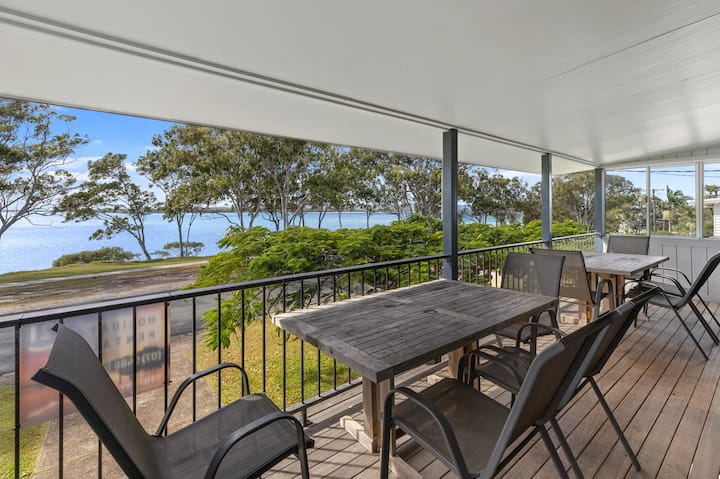
Waterfront Escape •Pool • Sleeps 10 • Boat Parking Entire home · 3 bedrooms Rated 4.95 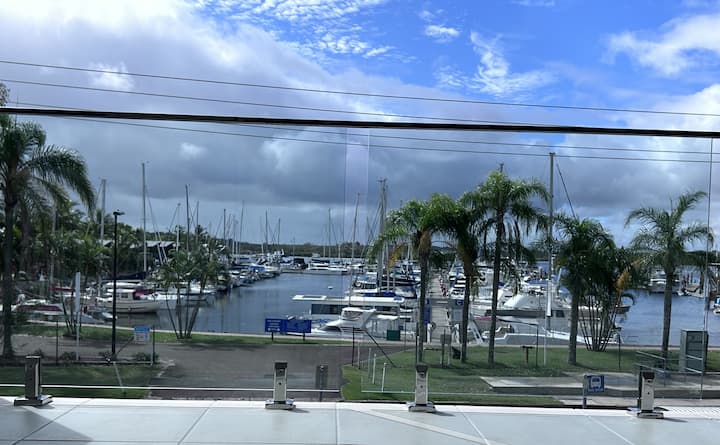 Marina Views Tin Can Bay Entire home · 4 bedrooms Rated 4.99
 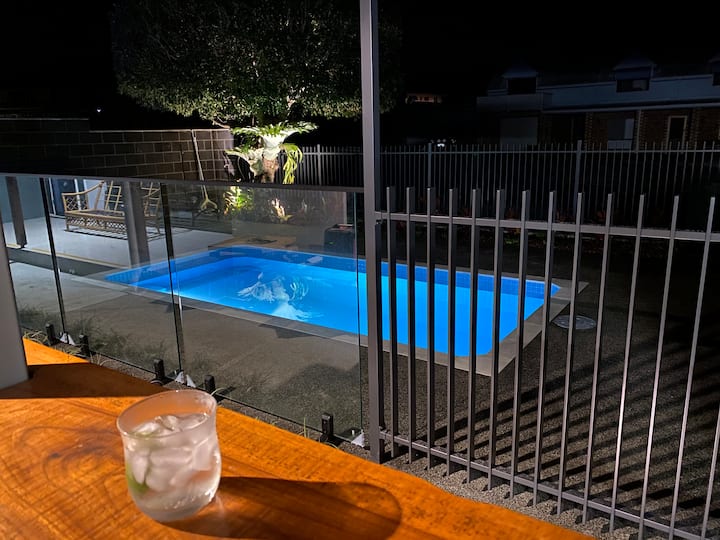 A Fisherman's Haven Villa 1. Entire home · 3 bedrooms Rated 4.95
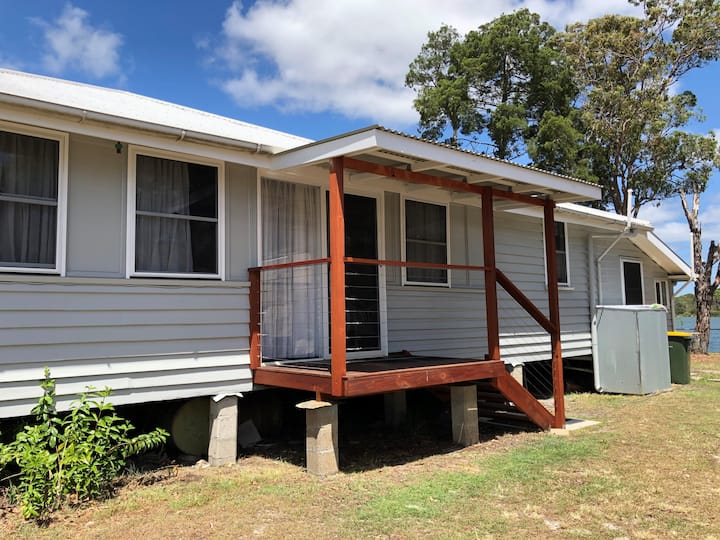
  Beautiful views at Tin Can Bay Entire home · 4 bedrooms Rated 4.81
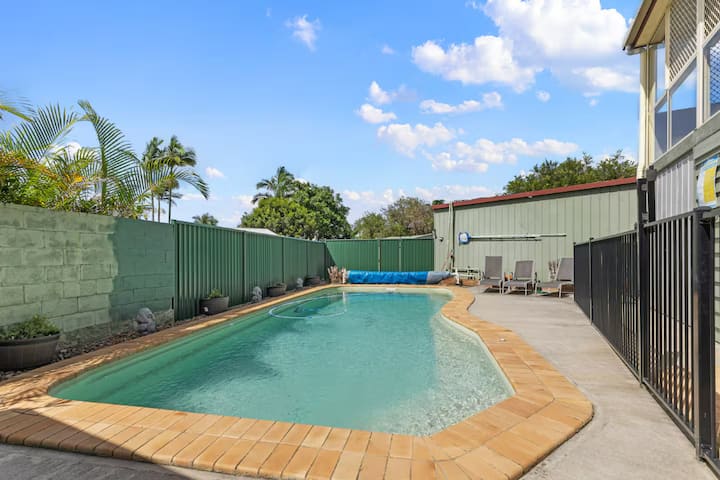
  The Big Anchor, Esplanade, Tin Can Bay Entire home · 3 bedrooms Rated 4.98
  Welcome to "Shore Beats Work!" Entire home · 4 bedrooms Rated 5.00
 Professional management companies run one in five Tin Can Bay listings and owners run the rest. 84% of listings are run by Superhosts, so a strong review record is the norm here rather than an edge. Airbnb's Simplified Pricing, where the host pays the whole service fee and guests see one price with no separate Airbnb charge, covers 89% of listings.
Nearby markets
Of the eight nearby markets in the table, all within 56 km, Noosa Heads (54 km away) earned the most per listing, about 2.5 times as much as Tin Can Bay. Eurong and Noosa Heads were the busiest, each booked on 47% of nights against 43% in Tin Can Bay.
| Market | Listings | Avg. annual revenue | Avg. nightly rate | Occupancy |
|---|---|---|---|---|
| Rainbow Beach 8 km | 203 | A$29,350 | A$331 | 36% |
| Eurong 46 km | 33 | A$45,809 | A$351 | 47% |
| Gympie Regional 47 km | 68 | A$26,071 | A$223 | 40% |
| Noosa Shire 52 km | 187 | A$45,385 | A$417 | 40% |
| Tewantin 54 km | 70 | A$38,644 | A$349 | 44% |
| Noosa Heads 54 km | 1,028 | A$77,053 | A$610 | 47% |
| Noosaville 54 km | 101 | A$37,952 | A$406 | 39% |
| Sunshine Beach 56 km | 295 | A$61,802 | A$623 | 42% |
See all 134 Queensland Airbnb markets
Markets elsewhere in Australia with a similar nightly rate and occupancy to Tin Can Bay:
FAQ
An active Tin Can Bay Airbnb grossed A$31,357 on average in the 12 months to September 2026, according to AirROI's tracking of 45 active listings. That is before cleaning, management, taxes and financing. Busier, better-run listings do far better: the top quarter took in A$4,130 or more in a typical month.
It depends most on the home's size, location and how it's run. The middle half of Tin Can Bay listings earn between A$1,850 and A$4,130 in a typical month, and the top tenth A$5,830 or more. For one home, enter its address and bedroom count in the Airbnb income calculator: it compares the home with similar listings nearby.
Listings in Tin Can Bay were booked on 43% of available nights over the past year. That compares with 46% for the Queensland average. December is usually the busiest month.
The average booked night in Tin Can Bay cost A$255 before fees. Half of listings charge between A$190 and A$310, so bedroom count and location move the price more than the average suggests.
None of the active Tin Can Bay listings display a registration, permit or license number. That doesn't mean no rules apply, so confirm registration, permit and tourist-tax rules with the local authority before buying.
Yes, when it's run well. The average Tin Can Bay Airbnb grossed A$31,357 in the 12 months to September 2026, 35% below the Queensland average of A$48,565. Run by its owner, with the cleaning fee covering the cleaner and everyday costs for Airbnb's fee, utilities, supplies, upkeep and insurance, A$19,267 a year (about A$1,610 a month) is left before the mortgage or rent. A home that costs less than that to own or rent makes a profit, and a listing at the top-quarter mark leaves about A$2,350 a month. Check a specific home in the Airbnb estimator.
December usually pays best, averaging A$4,610 per active listing over the past two years, and February usually pays least. The month-by-month table above shows how the latest 12 months played out.
Each night a Tin Can Bay listing was open to book earned A$107 on average over the past year, booked or not. That figure, revenue per available night (RevPAR), folds price and occupancy into one number; the top 10% of listings made A$166 or more.
Tin Can Bay stays were booked 44 days (about six weeks) before arrival on average over the past year, so most of a month is booked well before it starts.
The average Tin Can Bay Airbnb stay lasted 4.1 nights over the past year. A listing took 28 reservations over the year on average.
Guests rate Tin Can Bay Airbnbs 4.88 out of 5 on average. Guests score check-in highest and value lowest.
The Esplanade, Cooloola Cove and Tin Can Bay Town Centre draw the most short-term rental interest in Tin Can Bay. The neighborhood guide explains what brings guests to each.
AirROI counted 45 active Airbnb listings in Tin Can Bay as of September 2026. The closest tracked market is Rainbow Beach, 8 km away.
In Tin Can Bay, 84% of listings add a cleaning fee, and the typical fee is about A$175.
Method
Figures on this page cover 45 active Airbnb listings in Tin Can Bay from October 2025 to September 2026 (trailing twelve months). AirROI refreshes them monthly from listing-level booking and calendar data covering 20+ million properties worldwide. AirROI measures bookings in US dollars; this page shows them in Australian dollars at A$1.44 per US$, the typical rate from October 2025 to September 2026. Annual revenue averages every listing active during the period, including those listed for only part of it; monthly figures average the listings active in each month; the tier lists show the spread. Neighborhood descriptions are AI-assisted. See the methodology for definitions.
Need this programmatically? The same metrics are available through the AirROI Airbnb Data API and bulk downloads in the data portal.